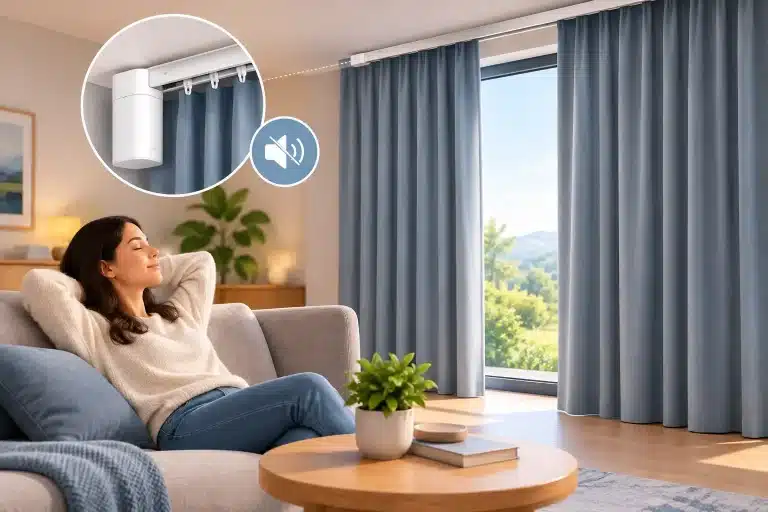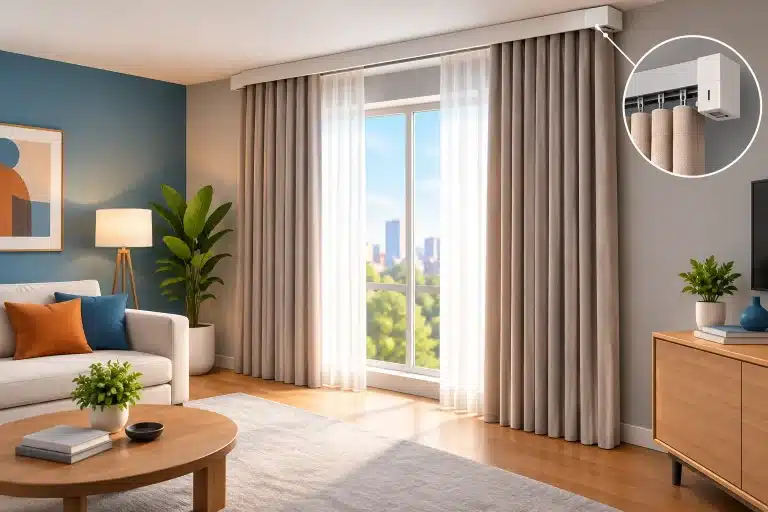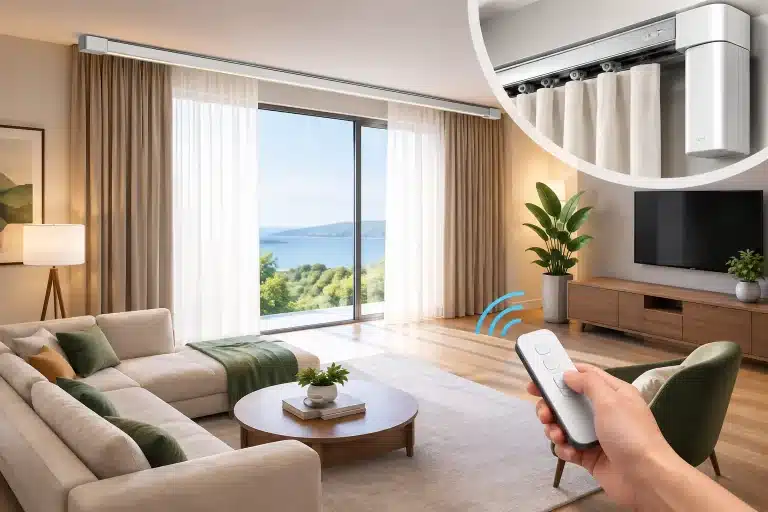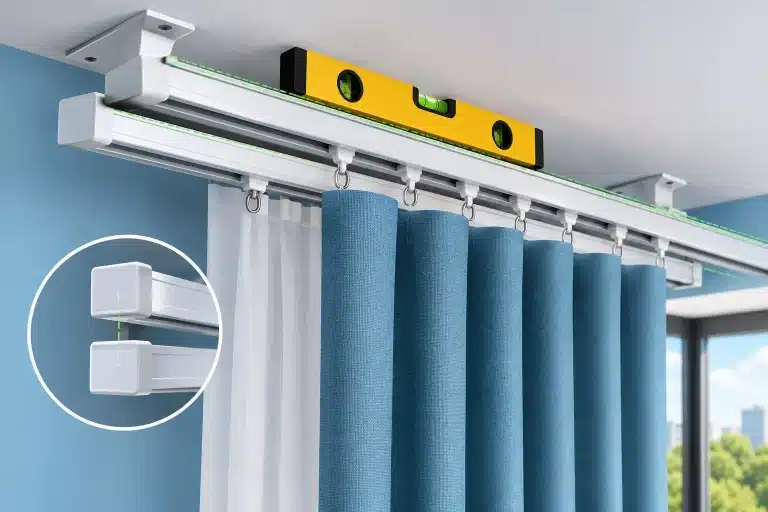
A corner window can look brilliant in a room and still be the one feature that causes the most hesitation when it comes to curtains. Standard poles rarely handle the turn neatly, off-the-shelf tracks often leave awkward gaps, and the last thing most homeowners want is a finished room spoiled by a poor fit. A corner curtain track system is designed to solve exactly that problem, giving you continuous curtain movement around an internal or external angle while keeping the overall result clean, practical and well finished.
Thank you for reading this post, don't forget to subscribe!For many homes, this becomes even more valuable once automation enters the picture. A corner layout is not just about making curtains hang properly. It is also about whether they will stack where you want them to, glide smoothly through the bend, and work reliably every day if the track is motorised. That is where careful planning matters far more than many people expect.
What a corner curtain track system actually does
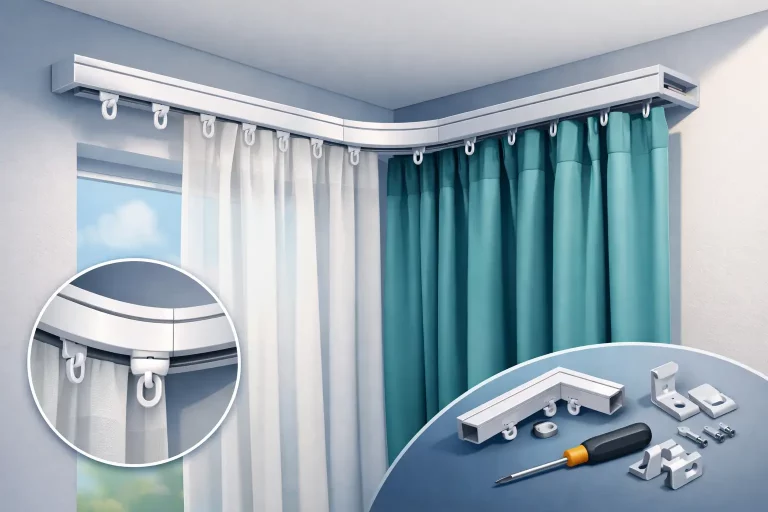
At its simplest, a corner curtain track system allows curtains to travel around a change in direction. That corner might be a 90-degree room corner, a return into a recess, or part of a more complex bay or offset layout. Instead of stopping one curtain run and starting another, the track is formed to suit the shape of the space.
The benefit is not only visual. A continuous track can improve light control, privacy and ease of use because the curtain line follows the room properly. You avoid the unfinished look that often happens when two separate treatments almost meet but never quite solve the gap.
With a motorised setup, the shape of the track also affects performance. Corners introduce forces, drag and stacking considerations that simply do not apply to a straight run. A system that works beautifully on a plain wall is not automatically suitable for a corner application. That is why bespoke specification tends to make such a difference here.
Where corner tracks work best
The most common setting is a room with glazing that wraps around a corner, but that is only one example. We regularly see corner track requirements in open-plan spaces, full-height glass returns, bedroom recesses and living areas where a curtain needs to continue beyond the main window line for a softer, more architectural look.
Some homeowners want the curtain to turn the corner because the glazing does. Others want it because the wall arrangement demands it, or because a return helps block light and improve privacy. Those are two different goals, and they affect the track design. A decorative choice can be more forgiving. A blackout bedroom arrangement usually needs much tighter planning.
This is also where the difference between internal and external corners matters. An internal corner sits into the room shape, while an external corner projects out. Both can be done, but the bend radius, stacking area and curtain fullness need to be considered differently.
Why off-the-shelf solutions often disappoint
There is a reason so many corner curtain projects begin after someone has already tried a standard product and been underwhelmed. Corners expose every small compromise. If the bend is wrong, the gliders hesitate. If the measurements are approximate, the track can stop short or clash with the wall. If the curtain stack has not been allowed for, the fabric ends up crowding the glass or blocking more light than expected when open.
Motorisation raises the stakes further. The system needs to be matched to the curtain weight, the track shape and the opening pattern. A poorly specified bend or an unrealistic stack position can mean a system that works in theory but never feels quite right in use.
That does not mean every corner needs a complicated engineering exercise. It simply means corners are less forgiving than straight runs. Made-to-measure planning usually saves time, avoids rework and gives a much more polished result.
Planning a corner curtain track system properly
The first question is not which control option you want. It is how the curtain should move and where it should finish. In other words, when the curtains are open, where does the stack sit, and when they are closed, what line do they need to cover?
That sounds obvious, but it is the point at which many decisions become clearer. If one side of the corner has limited wall space, the stack may need to favour one direction. If both sides need balanced appearance, a centre-opening arrangement may suit better. If blackout performance matters, returns and overlap become more important than symmetry.
Ceiling fixing versus wall fixing is the next practical consideration. Ceiling fixing often gives the neatest look, especially in contemporary homes or where you want curtains to feel integrated with the architecture. Wall fixing can still work very well, but bracket projection, ceiling height and nearby obstructions all need checking.
Then there is the question of recesses, coving, radiators, doors and handles. Corners nearly always interact with another building detail. A track can be perfectly measured and still be wrong if something in the room prevents the curtains from hanging or travelling as intended.
Motorised or manual – which suits a corner layout?
A manual corner track can be an excellent choice where the curtains are light, the run is modest and the priority is simply achieving a tidy fit. It is often the right answer for occasional-use spaces or projects with a tighter budget.
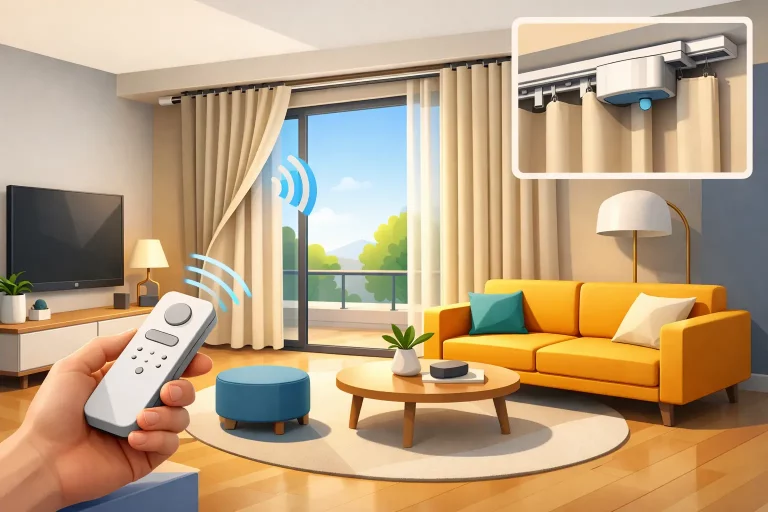
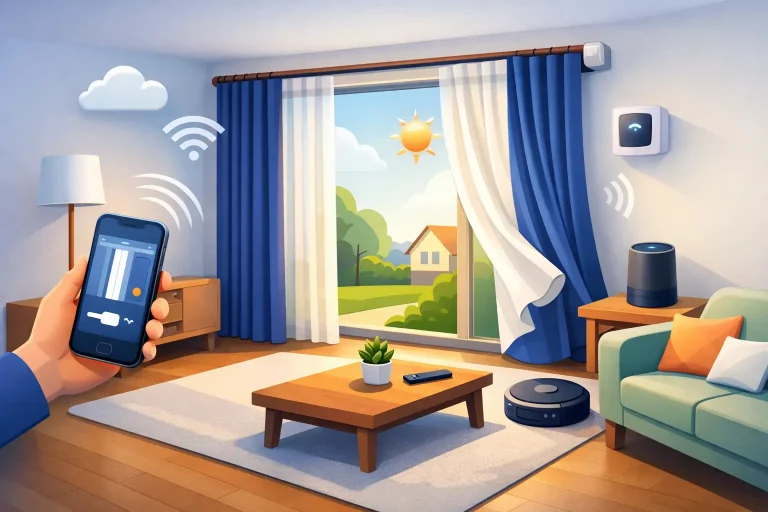
A motorised corner curtain track system becomes especially attractive when the curtains are large, the glazing is difficult to reach or convenience is central to the brief. For many homeowners, that means daily comfort. You open and close the curtains by remote, switch, app or timer rather than walking around furniture or handling heavy fabric by hand.
There are lifestyle benefits too. Automated curtain movement can support privacy in the evening, help protect interiors from strong sunlight and create the impression of occupancy when you are away. For anyone with restricted mobility, it can turn an awkward room feature into something easy to manage.
The trade-off is that motorisation requires more attention at specification stage. Power supply, control preferences, track type and curtain weight all need to align. Done properly, the result feels effortless. Done casually, corners can become the weak point of the system.
Measurements matter more than most people think
With straight tracks, a small measuring error may be hidden. With corners, it usually is not. Every wall return, recess depth and angle influences how the track is made and how the curtains perform.
That is why measured drawings, fitting guidance and early coordination are so useful. If an electrician is involved, cable locations should be agreed before plastering is complete where possible. If a builder is forming a recess or ceiling pocket, the curtain requirements should be understood before those dimensions are fixed. Even in a finished room, checking the practical details in advance avoids surprises once the track arrives.
This is also the point where professional advice adds real value. A bespoke provider such as Smart Curtains can help verify whether the layout itself makes sense, not just whether the numbers have been written down correctly. That distinction can save a great deal of frustration later.
Design choices that affect the final look
Most homeowners begin with function, then quickly realise the track layout influences the style of the room as well. A corner curtain can soften hard glazing lines and make a space feel more complete, especially when the track is discreet and the fabric hangs continuously around the turn.
The heading style, fullness and curtain weight all change the visual effect. A ripple-style wave can look very clean and contemporary, but it needs enough room to stack properly. A fuller curtain may feel richer and improve light control, though it will need more stack space. In tighter corners, the prettiest fabric choice is not always the most practical one.
This is one of those areas where there is no single best answer. It depends on whether your priority is blackout, visual softness, minimal stack, smart home integration or everyday ease. The strongest result usually comes from balancing those aims rather than chasing one at the expense of the others.
When bespoke support is worth it
If your corner is simple and the curtain use is light, a basic solution may be enough. But if you are working with full-height glazing, automation, blackout requirements, unusual angles or a premium interior scheme, bespoke support is usually the safer route.
The benefit is not only the finished product. It is the planning confidence that comes before it. Knowing the track has been designed around the room, the curtain type and the way you want to use the space takes much of the uncertainty out of the project. It also helps everyone involved, from electrician to installer, work from the same plan.
A well-designed corner curtain track system should never feel like a compromise forced by an awkward room shape. It should feel intentional, easy to use and properly resolved. When the track, fabric and control method are planned together, the corner stops being the problem area and becomes one of the smartest details in the room.
If you are considering one for your home, the best starting point is not the product page. It is the layout. Once the movement, measurements and fixing details are right, the technology and finishing choices become much simpler – and the end result is far more likely to look as good as it works.