A curtain that opens before you walk downstairs, closes at dusk, or responds to one button beside the bed changes more than the view. It makes everyday routines easier. The top curtain control options range from familiar wall switches to app-based schedules and fully integrated smart-home scenes, and the right choice depends on how you use each room.
Thank you for reading this post, don't forget to subscribe!For a made-to-measure motorised curtain track, the control method should be considered early. It affects electrical planning, the position of switches, how the system is used by every member of the household, and how neatly it sits within the finished interior. A well-specified system can be simple for guests to operate while still giving you the automation you want.
Top curtain control options at a glance
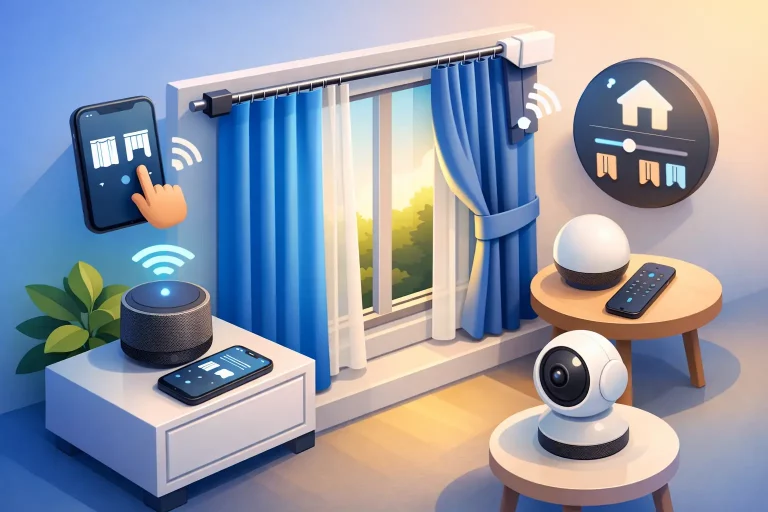
Most homes benefit from a combination rather than a single control method. A wall switch offers an immediate, dependable way to operate curtains on arrival or departure. A remote is particularly useful from the sofa or bed. Smartphone control and timers add routine, while smart-home integration allows curtains to work alongside lighting, heating, security and voice assistants.
The best mix is not necessarily the most technical one. A family room may suit a wall switch and a timer, while a principal bedroom may benefit from a bedside remote and a morning schedule. In a larger renovation, integration with a wider home automation system can create a more considered result.
1. Wall switches for familiar everyday control
A dedicated wall switch is often the most intuitive choice. Positioned near the room entrance, it lets you open, close and stop curtains without finding a phone or remote. It is a particularly sensible option for shared spaces, guest bedrooms and homes where not everyone wants to rely on an app.
For new builds and refurbishments, a wired switch can be planned alongside the electrical installation. This keeps control exactly where it is needed and avoids a last-minute decision after decorating is complete. Switch styles can also be coordinated with the rest of the room’s electrical accessories for a more polished finish.
The trade-off is that a switch works from its fixed location. If you want to close curtains while already in bed, or operate them from another part of the house, it is worth pairing it with another control option. Planning the cable route before plastering is also far easier than retrospectively altering a finished wall.
2. Remote controls for comfort without complication
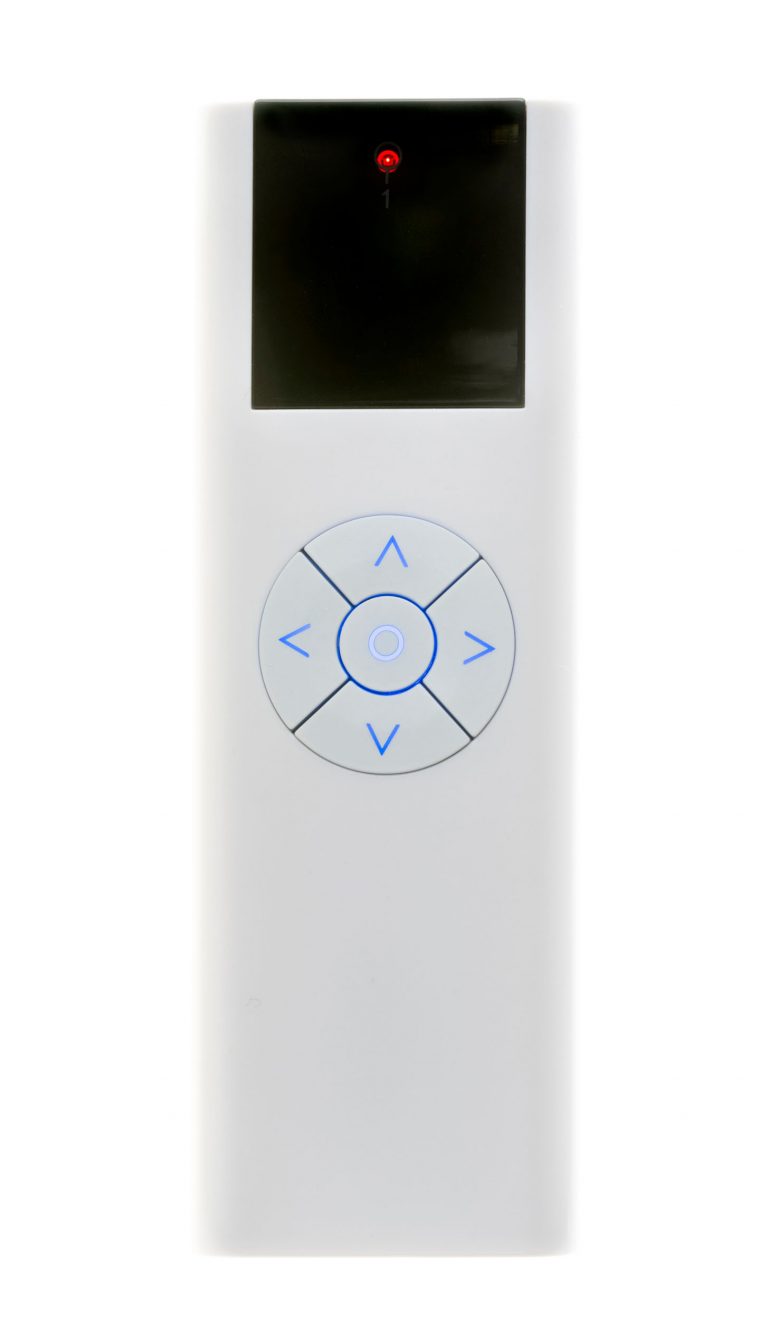
Remote controls remain one of the most popular ways to operate electric curtains. They are straightforward, tactile and useful where a switch is inconvenient. A handheld remote can control one track, while multi-channel versions can operate several windows independently or as grouped zones.
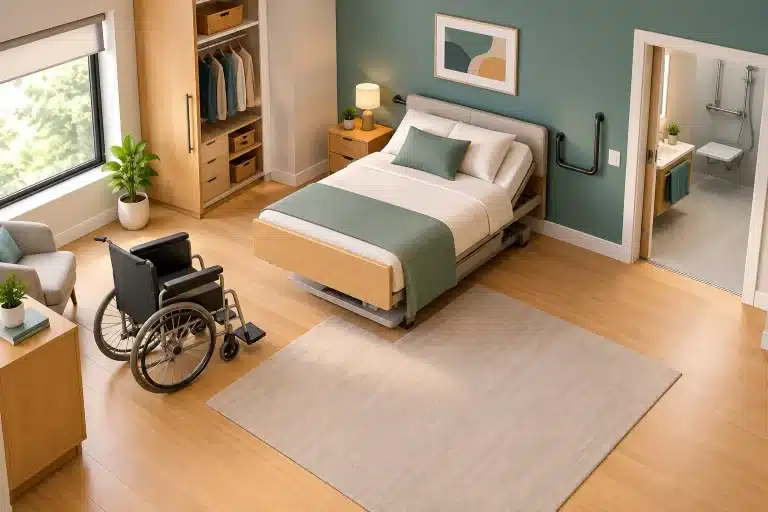
This makes a real difference in rooms with several large openings. Rather than walking from one set of curtains to the next, you can close the whole room with one command, then adjust an individual track if needed. Remote control is also a practical choice for people with restricted mobility, where reaching a curtain pole or crossing the room may be difficult.
A remote does need a sensible home. Wall-mounted holders prevent it disappearing between sofa cushions, and a bedside location makes it part of the evening routine. It is also worth checking whether the chosen motor and remote allow curtains to be stopped at a preferred position, which can be useful for managing glare without losing all natural light.
3. Smartphone control and timers for reliable routines
Smartphone control brings curtain operation into the same place as many other household settings. From an app, you can usually open or close curtains, check their position and create schedules. For homeowners who keep regular working hours or travel frequently, timers are often the feature that earns their place.
A morning schedule can open bedroom curtains gradually at a chosen time. In the evening, closing curtains shortly after sunset supports privacy and helps the house feel settled. Timers can also provide a lived-in appearance while you are away, particularly when coordinated with lighting.
App control is powerful, but it should not be the only way to use a curtain. Phones run out of battery, visitors may not have access, and some people simply prefer a button. A wall switch or remote provides a reassuring fallback and makes the system easier for everyone in the household.
Consider your Wi-Fi coverage too. Reliable app control and smart features depend on a stable network, especially in larger properties or rooms at the edge of the house. This is not usually a reason to avoid app control, but it is a reason to plan it properly rather than assume every room has the same signal strength.
4. Voice control for hands-free moments
Voice control is useful when your hands are full, when you are cooking, or when accessibility is a priority. A simple instruction can open the curtains in the morning, close them for film night or adjust a group of windows without interrupting what you are doing.
Its value is greatest when the command names are clear and the curtains are organised in logical room groups. Asking for the lounge curtains is easier than remembering a technical device name. It also works best as one part of a wider control plan, rather than the sole means of operation. There are times when speaking aloud is less convenient than pressing a switch.
For bedrooms, consider whether voice operation suits your household’s privacy preferences and routines. For living areas and kitchens, it can feel genuinely helpful rather than novel, particularly alongside voice-controlled lighting.
5. Smart-home integration for coordinated scenes
For a home already using a smart-home system, integrated curtain control can create the most refined experience. Curtains can respond as part of scenes: a Good Morning setting may open bedroom curtains and bring on gentle lighting, while a Leaving Home scene may close curtains, switch off selected lights and support the property’s security routine.
Integration is especially worthwhile in projects with multiple rooms, large expanses of glazing or several automated products. It can reduce the number of individual remotes and apps, keeping control consistent across the home. It also gives homeowners the option to automate by time, occupancy, light level or other programmed conditions, depending on the system in use.
There is more to coordinate, however. Your curtain track, motor, control system and installer or automation integrator need to be aligned from the outset. Compatibility should never be assumed from a product description alone. Clear drawings, agreed power locations and a confirmed control strategy avoid costly changes later in the project.
Choosing the right curtain control for each room
Start with the moment you most want the curtains to move. In a bedroom, that might be waking naturally or closing the room from bed. In a kitchen-diner, it may be reducing glare at a particular time of day. In a front-facing lounge, privacy after dark may matter most. This simple question often makes the best control option clear.
Then think about who will use it. A wall switch is welcoming for children, guests and anyone unfamiliar with smart-home technology. A remote adds comfort. Timers support predictable routines. Smart-home integration is ideal where several systems are already being planned together. These options are complementary, not competing choices.
The window layout matters as well. Bay windows, corners, offset tracks and wall-to-wall curtains may require more careful grouping so that each section behaves as intended. A large track can often be controlled as one treatment, but separate zones may be preferable where you want independent privacy or daylight control. This is where bespoke advice is more valuable than choosing a control method in isolation.
Plan controls before the track is installed
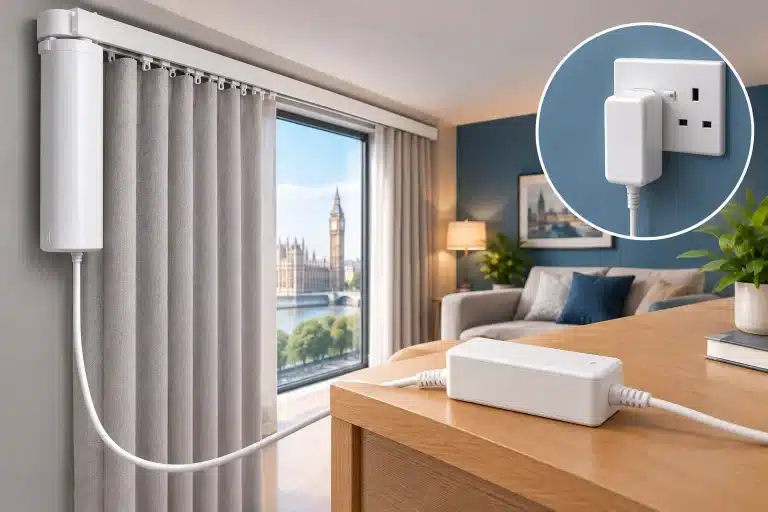
Motorised curtain systems look their best when the practical details are resolved before fitting. Decide where power will be available, whether a wall switch is required, and whether the curtains need to communicate with a wider smart-home system. For recessed tracks, ceiling pockets and curtain pelmets, access for installation and future servicing should also be considered.
At Smart Curtains, planning support can help turn these decisions into a workable specification, including track layouts and fitting drawings for more complex windows. Sharing plans early with your builder, electrician and interior designer helps everyone work to the same dimensions and avoids compromising the finished look.
The most satisfying control system is the one you barely have to think about. Choose the controls that fit your real routines, keep a simple option within easy reach, and let the automation take care of the moments that otherwise get missed.