A striking gable end, a corner of glazing or an angled bay can transform a room – until it is time to manage sunlight, privacy and heat. The right angled window solution should respect the architecture rather than fight it, while giving you curtains that are simple to use every day.
Thank you for reading this post, don't forget to subscribe!For many homeowners, the challenge is not choosing a curtain fabric. It is working out where the track should run, whether the curtains can clear the glass, how they will stack back, and how the system will be powered. With a made-to-measure motorised curtain track, those decisions can be resolved before anything is manufactured or fitted.
Why angled windows need proper planning
“Angled window” can describe several very different layouts. It may mean a bay with returns at 90 degrees or another unusual angle, a corner window where two glazed walls meet, an offset wall, or a window beneath a sloping ceiling. Each calls for a different approach.
A track for a bay or corner can often be bent or configured to follow the shape of the room. This lets curtains travel around the angle, covering the full glazing line when closed and stacking neatly at one or both ends when open. The visual result is calm and considered: one continuous treatment rather than separate curtains interrupted at every section of glass.
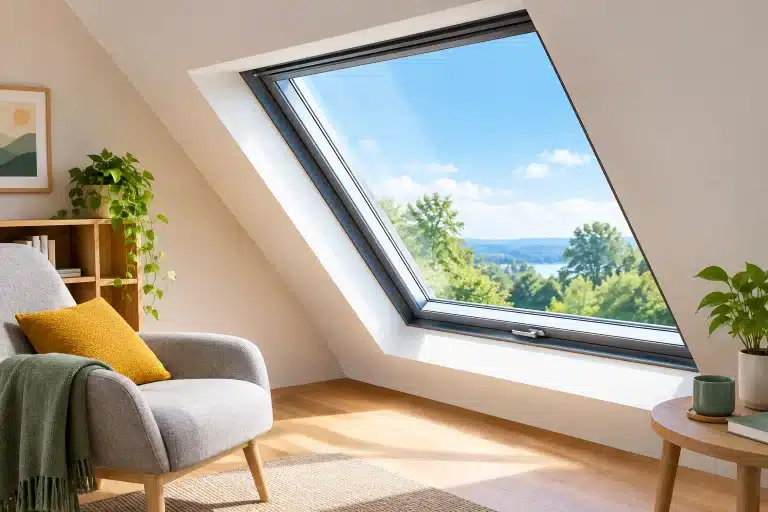
Sloping or triangular glazing needs more careful discussion. Curtains naturally hang vertically, and a conventional motorised curtain track usually runs level. That is often the most practical arrangement, with the track positioned above the highest usable point of the window or across the room. It can soften a dramatic glazed elevation and provide dependable privacy, but it will not trace a diagonal glass line in the way a shaped blind might.
The most successful solution depends on what you need the treatment to do. If evening privacy and reduction of glare are the priority, a level curtain line may be ideal. If every section of sloping glass must be covered precisely, a specialist shaped blind or a combined treatment may be more suitable. Clear advice at the planning stage avoids an expensive compromise later.
Choosing the right angled window solution
The practical starting point is to separate the window shape from the curtain track route. A window may be angled, but the best track route might be straight, curved, segmented around corners or set out in front of the glazing. This distinction makes a surprising difference to both the finished appearance and day-to-day operation.
Bay windows and angled returns
Bay windows are a natural fit for motorised curtains, particularly where manual poles would be awkward to pull around corners. A bespoke track can be shaped to the bay, including shallow angles, square corners and curved sections. The motor quietly draws the curtains across the whole run, without tugging fabric from one section at a time.
Consider where the curtains will gather when open. A pair of curtains that opens from the centre needs stack-back space at both outer ends. A one-way arrangement puts all of the fabric to one side, which can work well where a door, radiator or furniture limits the available room. Neither is automatically better; it depends on sightlines, access and how often you use the opening.
Corner and wraparound glazing
Floor-to-ceiling corner windows create a light-filled room, but they can feel exposed after dark. A continuous track that turns the corner offers an elegant answer, allowing the curtains to wrap around the glazing rather than stopping short of it.
This layout needs accurate measurement of the wall returns, ceiling position and any obstructions. Downlights, sprinkler heads, air-conditioning grilles, coving and curtain pelmets can all affect the route. Planning also matters where the corner is close to a sliding or bifold door, as the curtains need enough clearance to open and stack without blocking the doorway.
Windows below a pitched ceiling
A pitched ceiling can leave little or no level space above the window, especially in loft conversions, extensions and contemporary new-build homes. In some cases, a track can be fixed to a suitable section of ceiling or wall in front of the window. In others, a recess, pelmet or purpose-built bulkhead creates a clean horizontal mounting line.
This is where early coordination with a builder or electrician is valuable. A small detail in the ceiling design can determine whether the track looks integrated or added as an afterthought. It can also provide a discreet route for mains power where that is the preferred choice.
Motorisation makes awkward layouts easier to live with
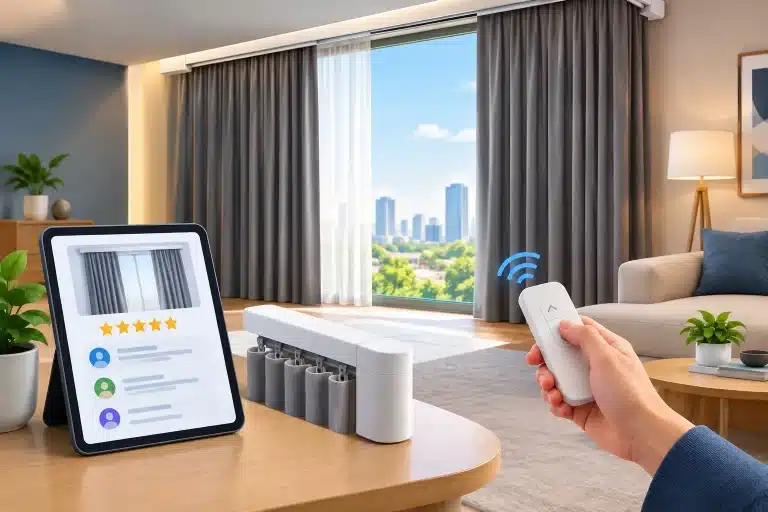
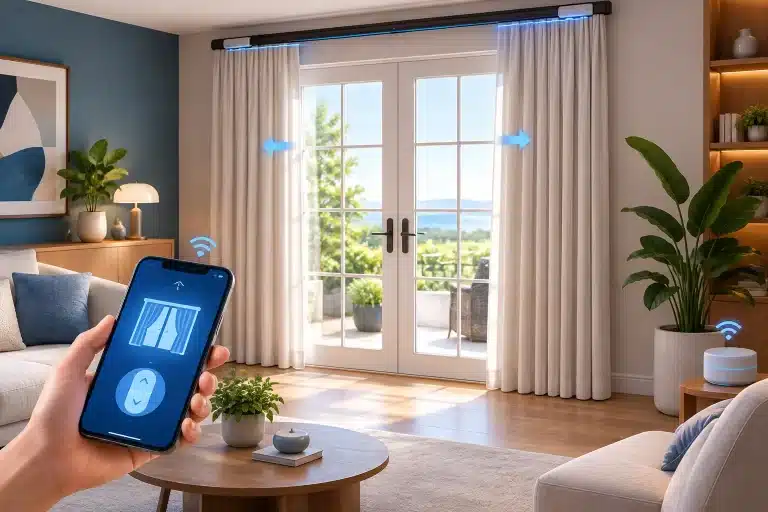
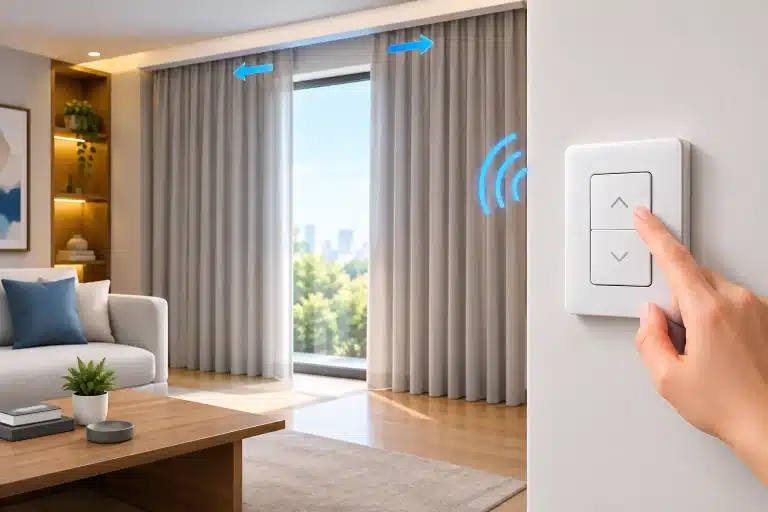
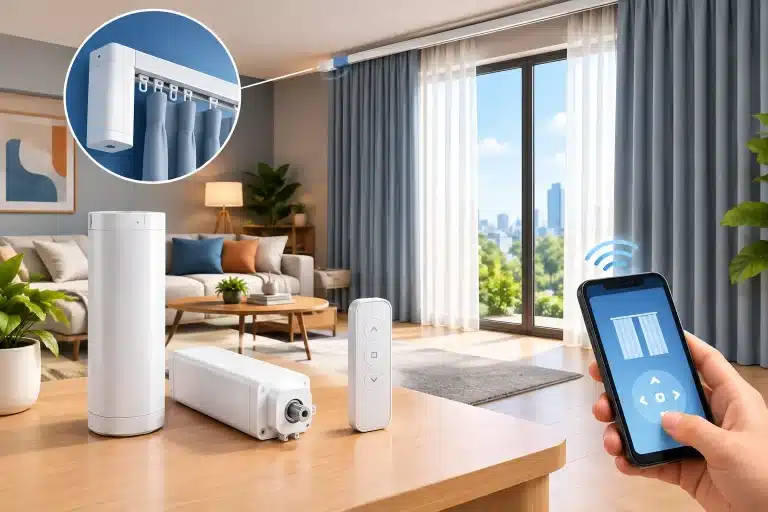
Even a well-designed angled track can be less convenient if it is operated by hand. The more bends, fabric and glazing involved, the more useful motorisation becomes. You can open or close curtains with a wall switch, remote control, phone app, timer or compatible smart home system, rather than reaching around furniture or across wide windows.
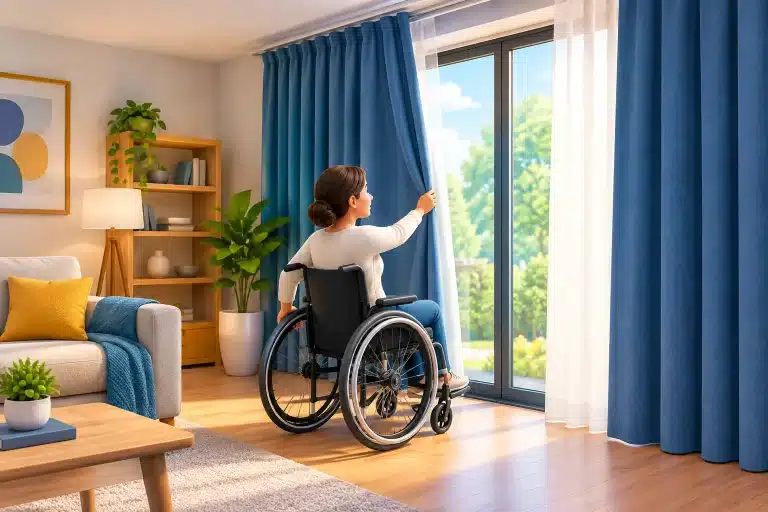
For a large bay, this is more than a luxury. It helps keep the curtain heading even and reduces repeated handling of the fabric. For high-level windows or rooms used by someone with restricted mobility, it can make privacy and light control genuinely accessible.
Timed automation also suits angled glazing particularly well. Large expanses of glass can quickly warm a room in direct sun, while evening privacy may be a daily concern in an overlooked property. Setting curtains to close at a chosen time gives the home a settled feel, whether you are downstairs, away for the weekend or returning from holiday.
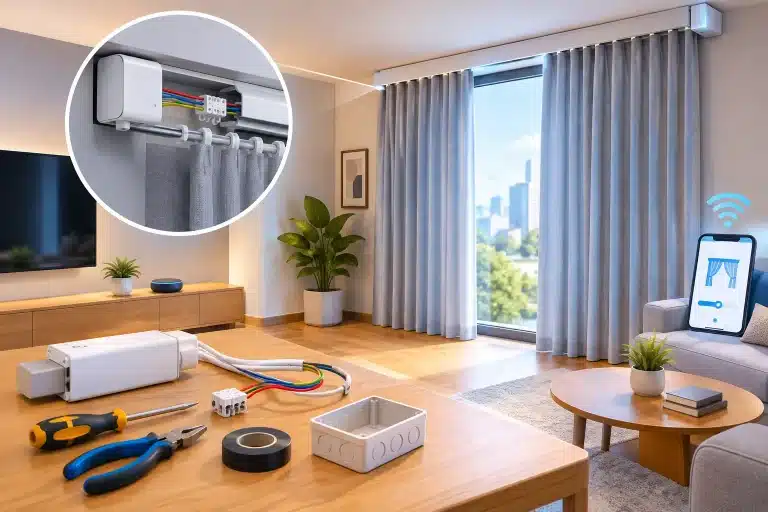
There are trade-offs to consider. Battery-powered systems can reduce the need for electrical work and are useful in completed rooms, but charging access should be realistic once the curtains and furniture are in place. Mains-powered tracks offer a permanent power supply and are often the neatest option during a renovation or build, provided the electrical point is planned in the right location.
Measure the room, not just the glass
With an unusual window shape, a glass width and height are only part of the information needed. The curtain track must relate to the structure around it: walls, ceiling, recesses, door openings, radiators and any feature that prevents fabric from hanging freely.
For an accurate quotation and fitting drawing, it helps to establish the overall track route, including each straight length and angle. The intended fixing surface is equally important. A plasterboard ceiling may need timber noggins or another suitable fixing method, while a recess may be too shallow for curtains to operate without touching handles or projecting frames.
Think about the finished curtain heading too. Wave curtains create a contemporary, even ripple and need enough space to stack. Pencil pleat, pinch pleat and other headings have different fullness and projection. The chosen fabric affects the stack-back as well: a lined blackout curtain will occupy more space than a lightweight sheer.
Good planning should also cover access for installation and future maintenance. A track concealed behind a pelmet can look excellent, but there must still be a sensible way to reach the motor, power connection and carriers if needed. Beautiful detailing works best when it remains practical.
Create a finish that feels intentional
An angled layout does not have to dictate a complicated-looking window treatment. Often, the most refined approach is a simple, uninterrupted curtain line that makes the architecture feel more composed. Ceiling-fixed tracks can make a room appear taller, while curtains extending beyond the window edges can make the glazing feel broader and reduce light gaps at the sides.
For rooms with exceptional views, consider a layered arrangement. A sheer curtain can soften daytime glare and maintain a degree of privacy, while a heavier curtain provides darkness, warmth and security in the evening. The two layers can be controlled independently where the track configuration allows, giving you more flexibility than one fabric alone.
Colour and texture matter, but proportion matters first. A highly patterned fabric can draw attention to a complex window shape, while a quiet fabric and well-positioned track allow the architecture to remain the focal point. There is no universal rule – a bold treatment can be exactly right in a characterful room – but it should be a deliberate design choice.
Get the details agreed before ordering
An angled window treatment is not a product to select from a standard width chart. The track shape, motor position, curtain opening direction, power source and fixing method all need to work together. A small change in one area can affect the rest.
At Smart Curtains, this is approached as a planning exercise, with dimensions checked and fitting drawings prepared before a bespoke system is supplied. That support is particularly useful where homeowners are coordinating decorators, electricians, builders or a smart home installer.
A well-planned angled window solution should disappear into the rhythm of your day: light when you want it, privacy when you need it, and curtains that move exactly as they should. Start with the room’s shape and the way you live in it, then let the track design follow.