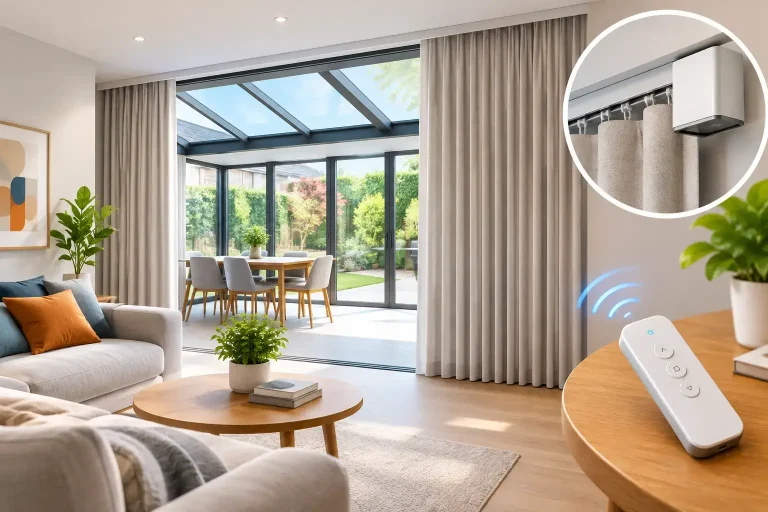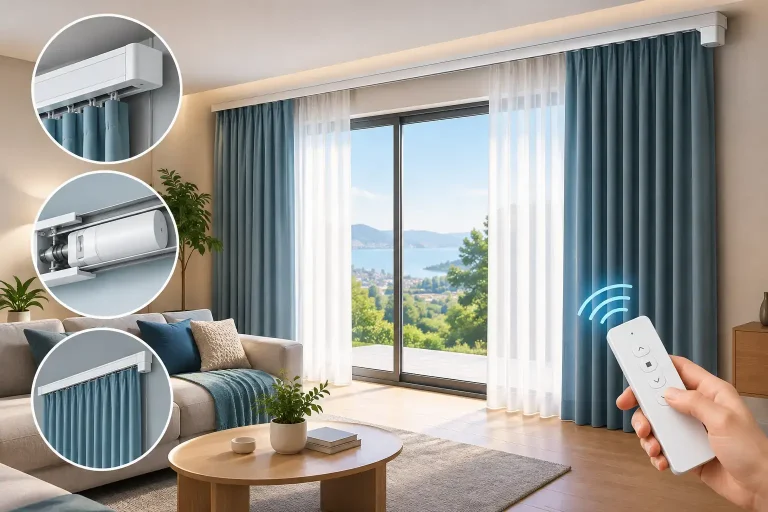
A well-chosen electric curtain system should disappear into daily life. Your curtains open when the morning begins, close at dusk, and still look perfectly proportioned at the window. This motorised curtain track buying guide explains the decisions that make that result possible – before you order a track that is difficult to fit, underpowered for the curtains, or unsuitable for your room.
Thank you for reading this post, don't forget to subscribe!Motorised curtains are not a one-size-fits-all purchase. The best specification depends on the shape of your window, the weight and style of your curtains, the available power supply and how you want to control them. Getting those details right at the planning stage delivers the convenience, privacy and refined finish people expect from a made-to-measure system.
Start with the window, not the motor
The track layout comes first. A straight wall-to-wall window is relatively simple, but bays, corners, recesses and doors can change the design significantly. A motorised track can be made to follow many layouts, including bends and offset sections, but each arrangement needs accurate dimensions and a clear view of where the motor will sit.
Think about where the curtains need to stack when open. If you have a French door, bifold doors or a large picture window, curtains that gather at the wrong end can reduce access or cover more glass than expected. You may need a centre-opening arrangement, with curtains drawing to both sides, or a one-way track that stacks to a single side.
Measure the finished space
Measurements should be taken from the final, finished surfaces. That means after plastering, window boards, ceiling details and any joinery that could affect the track position. For a ceiling-fixed track, check the full width and depth available. For a recess installation, allow sufficient clearance so curtains can move freely without catching on handles, radiators or projecting window boards.
The track length is not always the same as the window width. Extending it beyond the window allows curtains to clear more of the glazing when open, which improves daylight and gives the treatment a more generous appearance. In a recess, however, the available width may dictate the design. This is why a simple measurement can benefit from a fitting drawing rather than an assumption.
Choose a track that suits the curtains
The motor moves the track, but the curtains determine the load. Lined, interlined and blackout curtains can be substantial, particularly across wide spans or tall ceilings. Sheer curtains are lighter, yet their fullness and number of carriers still need to be considered.
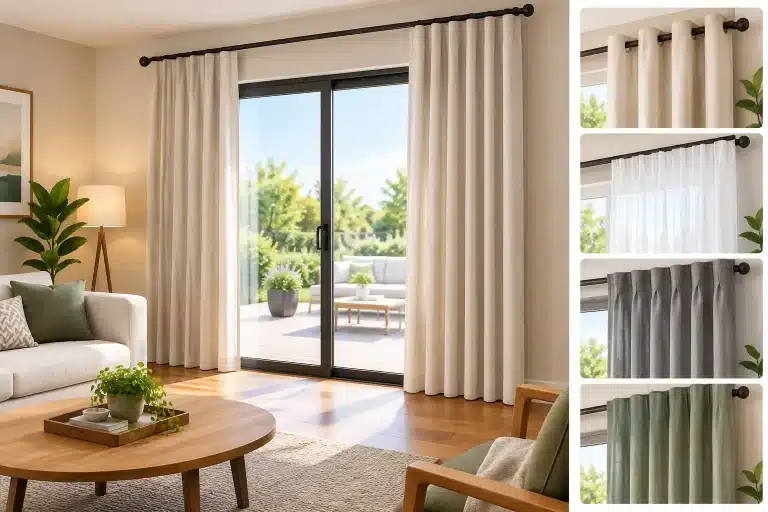
Your supplier should assess the finished curtain weight, not just the fabric sample. Curtain heading style matters too. Wave curtains, pinch pleats and pencil pleats each create different stack-back and carrier requirements. A track that is technically long enough may still be a poor choice if it cannot carry the curtains smoothly or accommodate their finished heading.
For especially wide or heavy curtains, a more capable motor may be required. This is not simply about speed. A correctly specified motor delivers controlled, reliable movement over years of use, without straining or stopping part-way through travel. Quiet operation is also worth prioritising in bedrooms, nurseries and living spaces where curtains may open early or close late.
Decide how you want to control your curtains
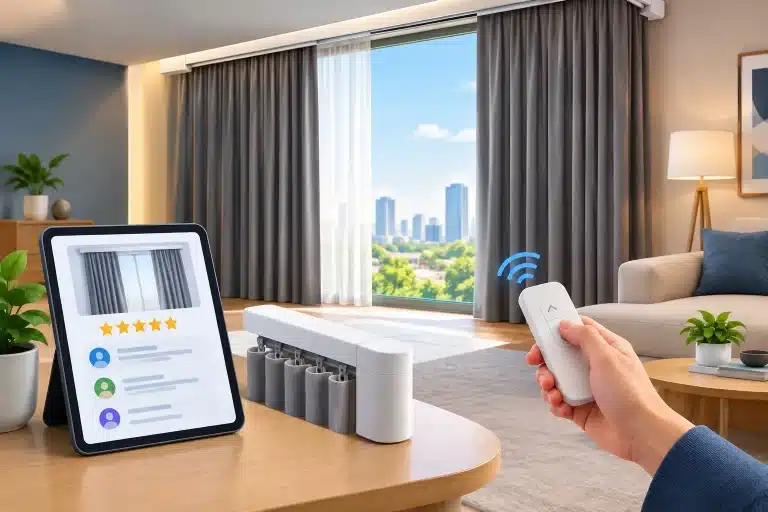
Control is where motorised curtains become genuinely useful, rather than merely impressive. A wall switch offers familiar, immediate operation and works well for rooms where you want a simple fixed control point. A handset remote is flexible and straightforward, especially where adding wiring is impractical.
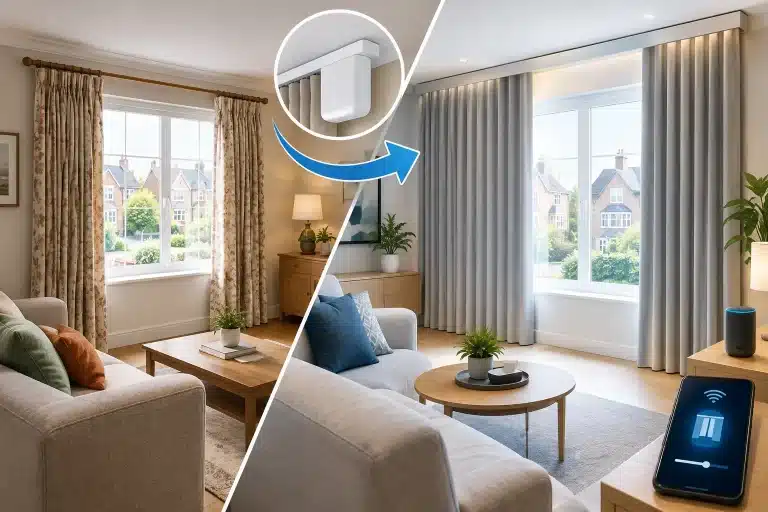
Smartphone control and timers suit households with changing routines. You can schedule curtains to close before evening, open gently in the morning or operate while you are away. That can support privacy, reduce glare and make an unoccupied home look lived in.
Smart home integration needs early planning
If your home already uses a smart home platform, discuss integration before choosing the system. Compatibility varies, and the best approach may depend on whether you use voice control, scenes, sensors or a professionally installed automation system.
For example, curtains can be included in an evening scene alongside lighting and heating, or closed automatically when a cinema room is in use. Yet advanced automation is not essential for every home. A reliable wall switch with a timed schedule may be the most useful option for a guest bedroom or a property where ease of use matters more than extensive programming.
Plan the power supply before decorating
Many installation problems begin when power is considered too late. The motor will need a suitable supply in the correct location, usually close to one end of the track and often concealed behind the curtain stack. The exact position depends on the track layout, motor type and access for future servicing.
In a renovation or new build, involve your electrician early. They can position the supply neatly before walls and ceilings are finished, avoiding visible cable routes later. If the track is being fitted to an existing room, there may still be practical solutions, but the options can be more limited.
Ceiling pockets, pelmets and curtain recesses need careful coordination too. They should be deep enough for the track, motor and curtain heading, while leaving room for the curtains to travel without rubbing. A slim, discreet recess can look excellent, but one designed without allowance for the motor can create an expensive compromise.
Consider the fitting surface and access
A made-to-measure track needs secure fixing along its length. Plasterboard ceilings may require noggins, pattresses or suitable fixings depending on the construction and curtain weight. Timber, concrete and steel all call for different planning. It is far easier to provide solid fixing points during building work than to resolve them once a room is complete.
Also consider how the motor can be reached. It should be visually unobtrusive, but not sealed away behind inaccessible joinery. If future adjustment or servicing is needed, reasonable access protects the long-term practicality of the installation.
Do not overlook curtain design and room use
Motorised tracks work best when curtains are designed for them. Ask your curtain maker to confirm the finished weight, heading, drop and fullness. They should also understand whether the curtains will draw from the centre or one side, and whether the track includes bends.
Room use influences the specification as much as décor. Blackout curtains with timed opening are popular in bedrooms, while a living room may benefit from sheer curtains for daytime privacy and heavier curtains for the evening. For people with restricted mobility, a simple remote, wall switch or voice-controlled routine can remove an everyday physical task without making the room feel overly technical.
Security is another practical consideration. Scheduled movement while you are on holiday can give the home a more occupied appearance. Timers should reflect realistic routines rather than operating at exactly the same minute every day, particularly if they are being used as part of an away-from-home plan.
What bespoke planning should include
A specialist supplier should do more than sell a motor and a length of track. Look for support with verified measurements, track drawings, motor placement, power requirements and the practical details of your particular window. This is especially valuable for bay windows, corner layouts and projects involving builders, electricians or interior designers.
At Smart Curtains, this planning-led approach helps homeowners make decisions before production begins, when changes are still straightforward. It also gives every trade involved a clear reference point, reducing the risk that a beautiful curtain scheme is held up by a missing socket, shallow recess or unsuitable fixing surface.
Ask these questions before requesting a quote
Before you move forward, make sure you can answer a few essentials: where will the motor sit, how will it be powered, what are the final track dimensions, how heavy will the finished curtains be, and which control method will you use most often? For shaped windows, provide clear photographs as well as measurements, since a picture often reveals obstructions and architectural details that numbers alone cannot.
A quote should reflect the complete system rather than an attractive starting price. Confirm what is included: the made-to-measure track, motor, carriers, controls, bends where needed, and the information required for fitting. If you are comparing options, compare the planning support as carefully as the hardware.
The right motorised curtain track feels effortless because the detailed work has been done beforehand. Share your plans early, coordinate the track with the curtains and electrics, and you can enjoy a finished room that works as beautifully as it looks.