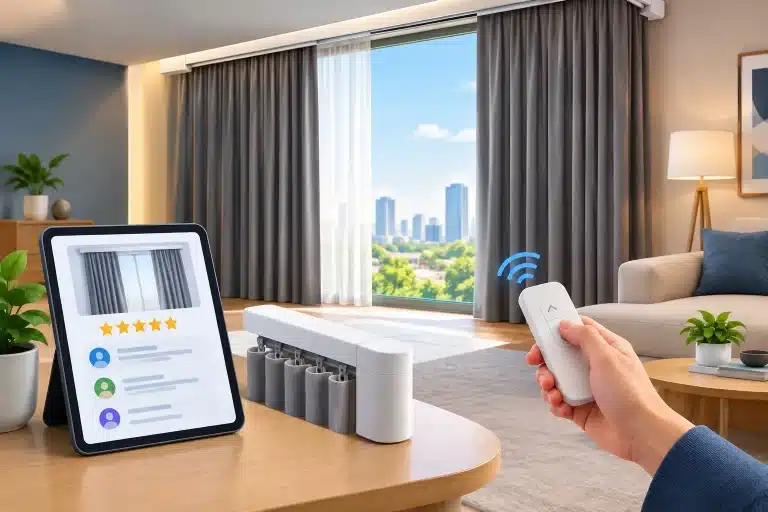
A glowing rating can tell you that an electric curtain system arrived promptly. It cannot always tell you whether the track will suit a bay window, clear a radiator, open fully around a return wall or operate quietly enough for a bedroom. That is why useful electric curtain reviews look beyond first impressions and focus on how a system performs once it is measured, fitted and used every day.
Thank you for reading this post, don't forget to subscribe!For homeowners planning a renovation or refining a finished room, motorised curtains can make a genuine difference. They bring privacy at the touch of a button, make tall or awkward windows easier to manage and allow curtains to close automatically when you are away. The right system should feel like a considered part of the home, rather than another gadget requiring attention.
What electric curtain reviews should tell you
The most helpful reviews explain the setting as well as the product. A straightforward, single window installation has different demands from a wall-to-wall curtain run, a curved bay or a pair of heavy blackout curtains in a master bedroom. When reading customer feedback, look for details about the size and weight of the curtains, the type of room and the chosen controls.
Quiet operation is a common priority, particularly in bedrooms, nurseries and reception rooms. Most quality motors produce a soft mechanical sound rather than silence, so reviews that describe a motor as quiet should be read in context. The more revealing comments mention whether the sound is noticeable at night, whether the curtains travel smoothly and whether the motor starts and stops without an abrupt pull.
Reliability matters more than novelty. A remote control may be all that one household needs, while another wants a wall switch, timed opening and closing, or integration with a wider smart home system. Strong reviews tend to mention controls after several weeks or months of use, not just on the day of installation. They also indicate whether the system remains simple for every member of the household to operate.
A made-to-measure track changes the result
Many reviews of off-the-shelf electric curtain kits are positive until the installation becomes more complex. Standard lengths can be suitable for simple windows, but a track that is too short, poorly supported or incorrectly positioned can leave gaps at the edges, make curtains stack awkwardly or restrict access to the window.
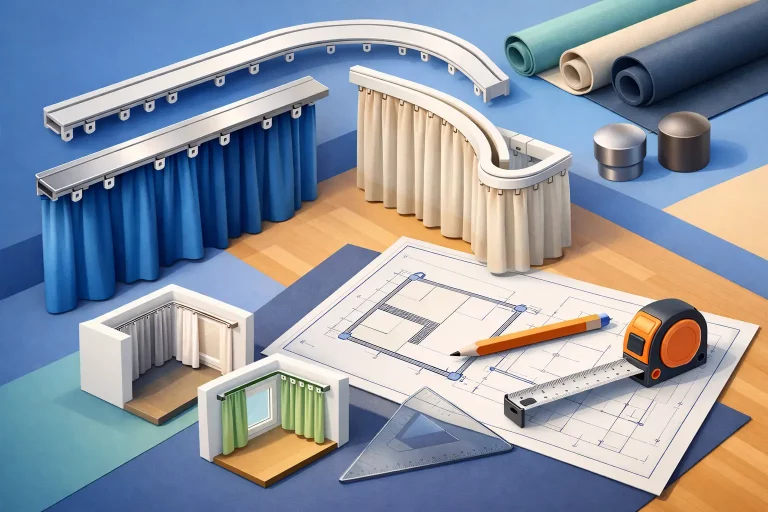
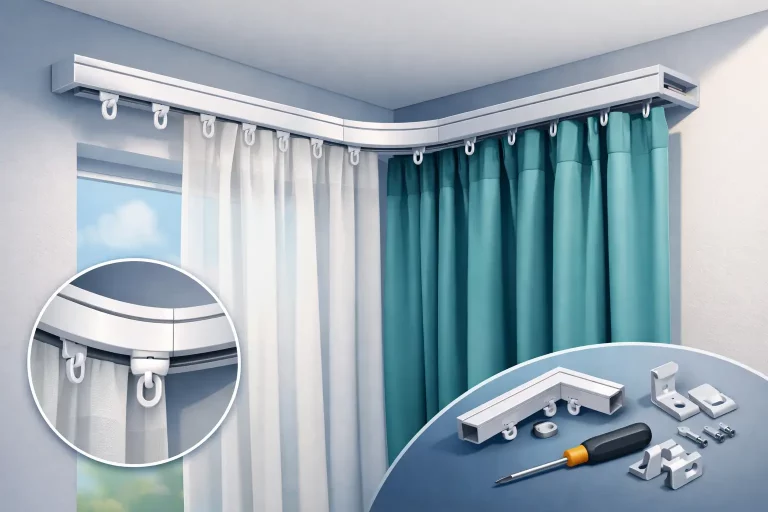
With a made-to-measure system, the track is planned around the room rather than forced to fit it. This is particularly valuable where curtains need to pass a corner, run into a recess or cover a wide expanse of glazing. The exact position of the track affects both appearance and operation: fitting it too close to the wall may cause the fabric to catch, while placing it too far forward can reduce the neat, tailored finish homeowners expect.
It is also worth checking whether a review relates to the motor alone or the complete supplied system. A good motor cannot compensate for a poorly specified track or unsuitable curtain heading. The overall experience depends on all three working together: motor, track and fabric.
Curtain weight and fabric deserve proper attention
Heavy lined curtains, interlined curtains and wide, full fabrics can look exceptional, but they require a system designed to move them comfortably. Reviews that simply state that a motor handles heavy curtains may not explain the width, drop or fullness involved. These details affect the load and the amount of fabric that gathers at each end when open.
Ask for guidance before ordering if you are choosing substantial curtains or working with unusually tall windows. This avoids selecting a system that technically works but operates more slowly, noisily or under greater strain than necessary. A specialist should consider the curtain weight, the desired opening arrangement and the space available for stacking back.
Controls should suit your routine, not complicate it
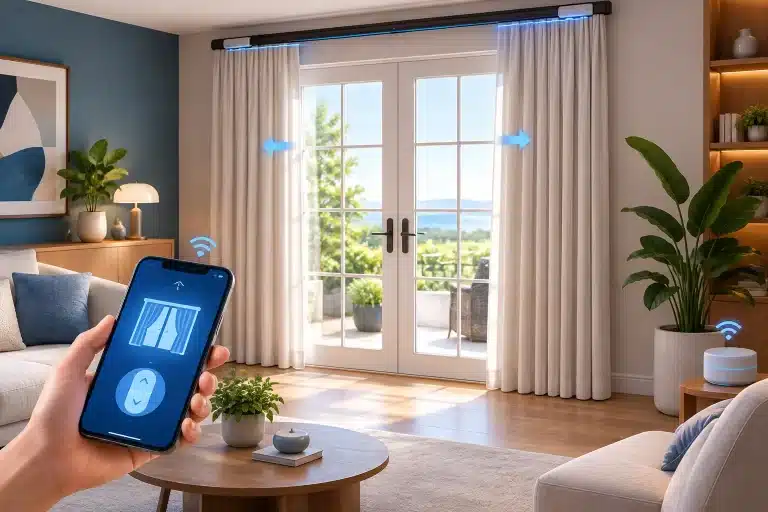
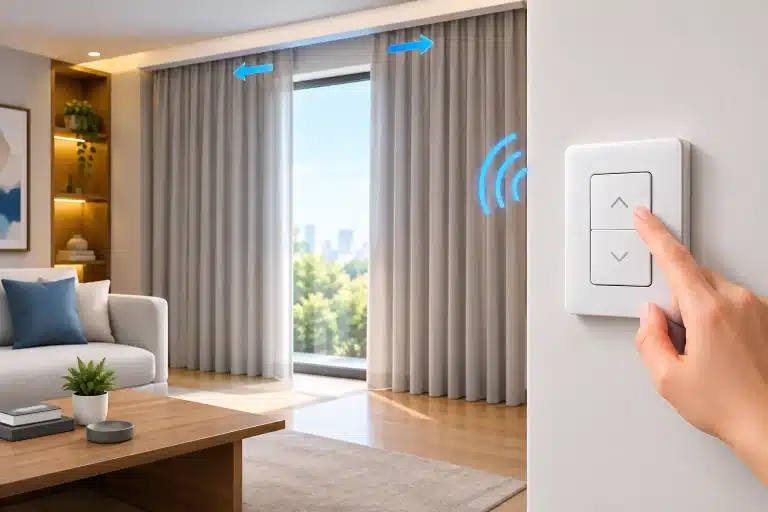
Electric curtains are often chosen for convenience, but convenience means different things in different homes. A simple remote can be ideal where you want to open and close curtains from bed or the sofa. A discreet wall switch offers familiar, immediate control and may suit households that prefer not to rely on an app.
Timers are especially useful for regular routines. Curtains can open in the morning and close at dusk, which is practical during the darker months and reassuring when the house is empty. For people who travel regularly, scheduled operation can help create the impression that someone is at home, although it should sit alongside sensible home security measures rather than replace them.
Smart home integration is worthwhile when it adds something meaningful. It may allow curtains to operate alongside lighting, heating or voice control, but compatibility should be confirmed at the planning stage. Reviews occasionally reflect frustration caused by trying to connect products from different systems after installation. A clear control plan from the outset usually produces a more dependable result.
Why installation feedback matters in electric curtain reviews
Installation is where the difference between a product purchase and a supported project becomes clear. A review may praise an attractive track yet mention uncertainty over measurements, bracket positions or power provision. These are not minor points. They determine whether the finished curtains run neatly and whether the installation proceeds without last-minute alterations.
For mains-powered systems, decide early where the power supply will be located and coordinate this with your electrician or builder. During a renovation, it is often possible to conceal cabling neatly before decorating is complete. In an existing room, the options may be different, but careful planning can still keep the finish tidy.
Fitting drawings are particularly helpful for bay windows, corners and offset layouts. They give installers a clear reference for fixing positions, track direction and motor placement. At Smart Curtains, installation planning support is part of helping customers specify a system that works in their actual space, rather than relying on assumptions from a product photograph.
Reading ratings with the right questions in mind
A five-star rating is encouraging, but it is not a specification. Read both the positive and critical comments, then consider whether the reviewer’s project resembles yours. A complaint about limited app features may be irrelevant if you only want a remote, while a comment about difficult measurement should carry weight if your room has an angled bay.
Pay close attention to recurring themes. Consistent praise for smooth running, helpful advice and accurate made-to-measure tracks is more valuable than a single enthusiastic remark. Equally, repeated concerns about delays, unclear instructions or compatibility should prompt further questions before you commit.
Photographs can help, though they are not always enough to judge the result. Look at how curtains meet in the middle, where they stack when open and whether the track looks proportionate to the room. A well-planned installation should allow the automation to fade into the background while the window treatment remains the visual feature.
The trade-off between price and long-term satisfaction
Budget is naturally part of the decision. Entry-level systems can be appealing for a simple, lightweight curtain on a straightforward window. However, the initial saving can diminish if the system needs adaptation, additional parts or replacement after a short period.
For a prominent room, difficult layout or premium fabric, it is usually better to assess the complete cost of a properly specified solution. That includes measurement advice, track configuration, controls, motor capacity and fitting preparation. A tailored system is not automatically necessary for every window, but it becomes increasingly valuable as the project becomes less standard.
The best value is often a system that feels easy from the first day and continues to do its job without fuss. You should not need to tug a curtain into place, accept a visible gap for privacy or explain a complicated sequence of controls to guests.
Choose the review that resembles your home
Electric curtain reviews are most useful when they help you ask better questions, not when they promise one universal answer. Consider how your curtains are used, how much fabric they will move, who needs to operate them and how the room is being built or renovated.
A carefully measured track, appropriate motor and control method that fits your routine will usually matter far more than the loudest online claim. When the planning is right, electric curtains become one of those small daily luxuries that quickly feels essential: privacy, comfort and a polished finish, all handled with a simple touch.