A curtain that is difficult to reach, heavy to pull or awkward to open can turn a small daily task into a repeated frustration. The top curtain solutions for mobility remove that effort with reliable motorised control, allowing curtains to move at the touch of a button, on a timer, or through a smart home routine. For homeowners with restricted movement, this is not simply a technical upgrade. It is a practical way to make rooms more comfortable, private and easier to manage independently.
Thank you for reading this post, don't forget to subscribe!Motorised curtains are particularly valuable where windows are wide, positioned behind furniture, set into bays, or dressed with substantial fabric. They also suit households planning for future needs, whether that means making a home easier to live in after an injury, supporting an older relative, or reducing unnecessary strain for everyone.
Why manual curtains can become a mobility barrier
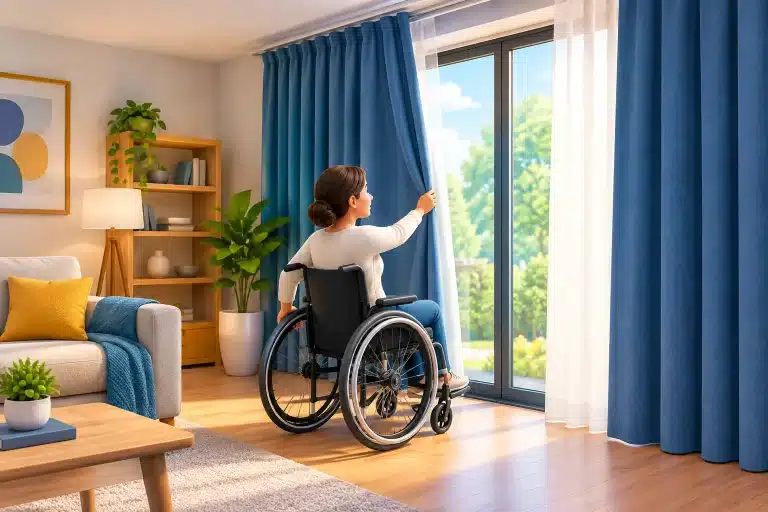
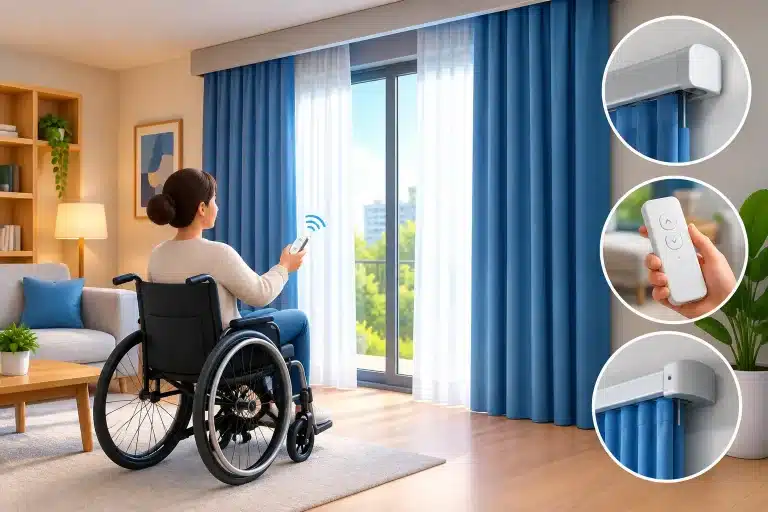
Traditional curtain poles and tracks expect the user to stand close to the window, grip the leading edge or cord, and apply enough force to move the fabric evenly. That can be inconvenient at the best of times. For somebody using a wheelchair, recovering from surgery, living with arthritis or experiencing reduced balance, reach and grip strength, it can be a genuine barrier to everyday independence.
The problem is not always the curtain itself. A sofa, bed or radiator may make access difficult. A large window may require a long stretch. Heavy interlined curtains can be demanding to pull, while cords and chains may be unsuitable or impractical in a room used by children or vulnerable adults.
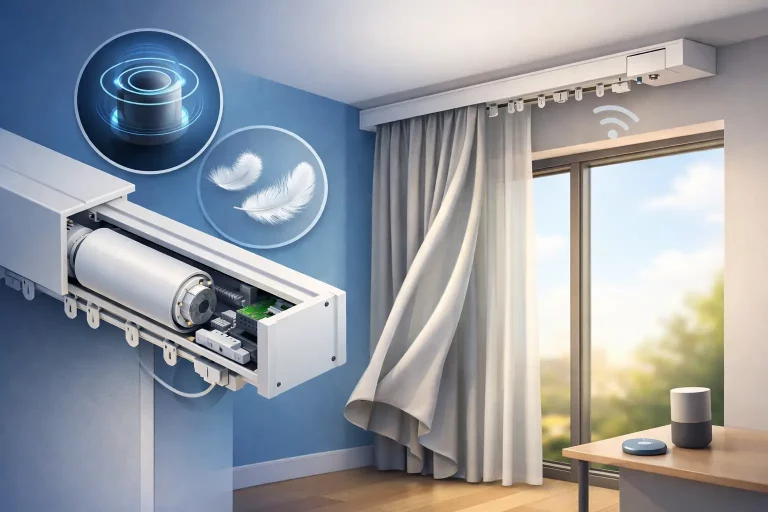
A properly specified electric curtain track changes the interaction completely. The curtains are moved by a motor, while the homeowner chooses the control method that feels most natural for their routines and abilities.
The top curtain solutions for mobility
The best option depends on how the room is used, who needs to operate the curtains and whether the property already has smart home controls. In most cases, the track layout and the control method matter just as much as the motor itself.
Remote-controlled motorised curtains
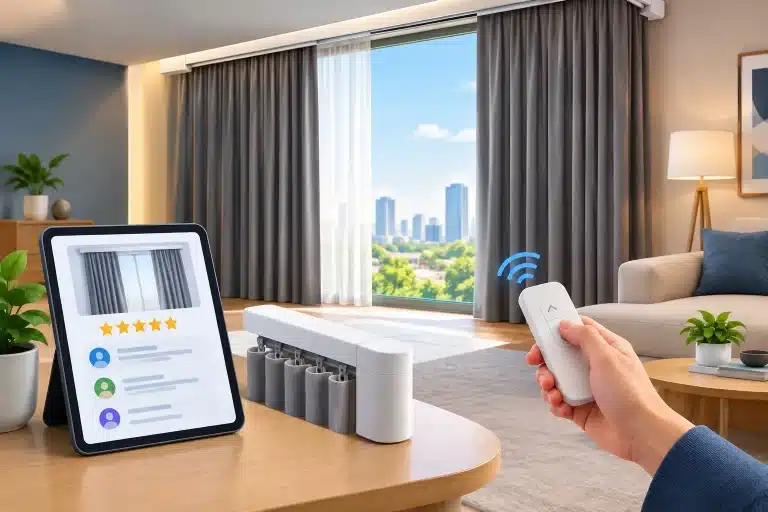
A handheld remote is often the most straightforward place to start. It allows the curtains to be opened, closed or stopped from a chair, bed or elsewhere in the room, without approaching the window. This can be especially useful in bedrooms, lounges and rooms with large glazed doors.
For many households, a simple remote offers the right balance of convenience and familiarity. Physical buttons can be easier to use than a mobile phone screen for people who prefer a clear, tactile control. The trade-off is that the remote needs to be kept within reach and may be misplaced, so it is worth deciding where it will live from the outset.
Wall switches in accessible positions
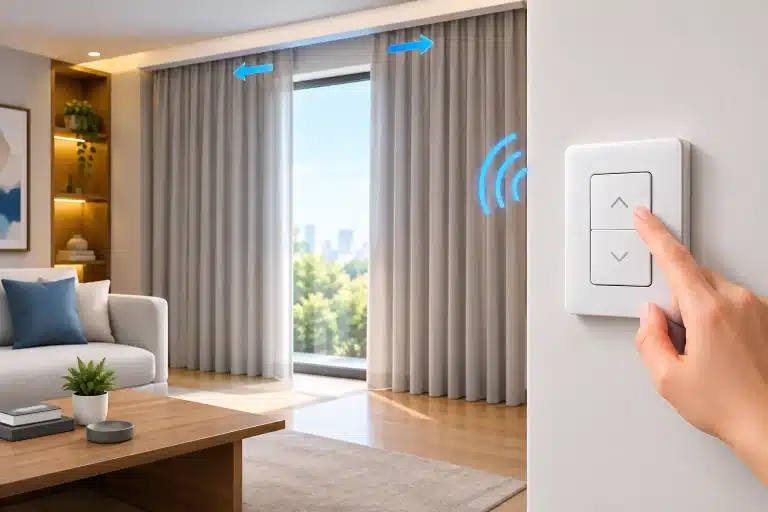
A wall switch provides a permanent, easy-to-find control point. Rather than placing it where a conventional lighting switch happens to be, it can be planned at a sensible height and location for the person using the room. Beside a bed, near a favourite chair or close to the doorway are all common choices.
This approach works well when simplicity is the priority. A dedicated switch requires no charging, no app and no voice command. It also gives family members and visitors an intuitive way to operate the curtains. Electrical planning should happen early, particularly in a renovation or new-build project, so that the power supply and switch positions are coordinated before decorating is complete.
Smartphone control and timed routines
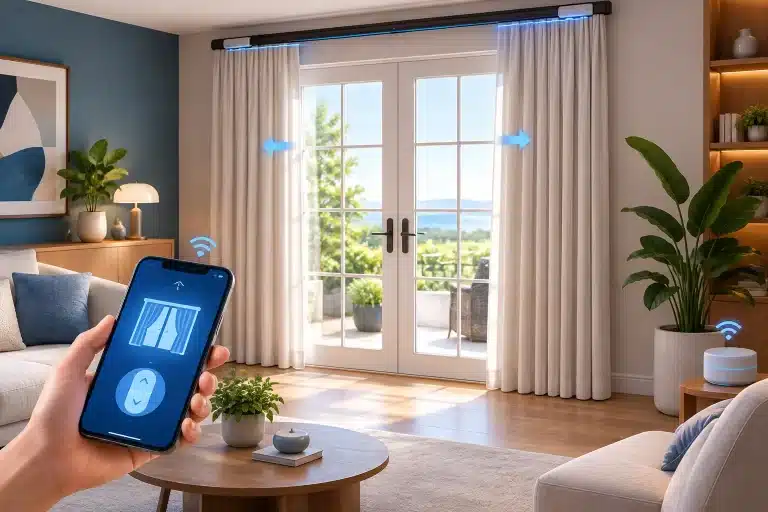
Smartphone control can be a strong choice for homeowners who already manage heating, lighting or security through an app. It makes curtains available from anywhere in the home and, depending on the system, when away from the property too.
Timers add another useful layer. Curtains can open in the morning to bring in daylight without anyone having to reach the window, then close in the evening to support privacy. This can reduce the number of daily tasks for someone with limited mobility, while providing a reassuring routine for carers and family members.
Automation is not always the best answer for every room. A timer should fit real habits, not dictate them. For example, a bedroom may need different opening times at weekends, while a ground-floor lounge might benefit from closing before dusk. The most effective setup combines automatic routines with an easy manual override.
Voice control for hands-free use
Voice-controlled curtains can be helpful where reaching a switch, remote or phone is difficult. A simple spoken command can open the curtains, close them, or include them in a wider routine such as preparing the room for bed.
For users with limited hand movement, voice control can feel transformative. However, it should not be the only method available. Speech recognition can be affected by background noise, changing voices or internet connectivity, and not everyone is comfortable using voice assistants. A wall switch or remote gives an essential back-up and ensures the system remains simple for all members of the household.
Smart home integration for joined-up routines
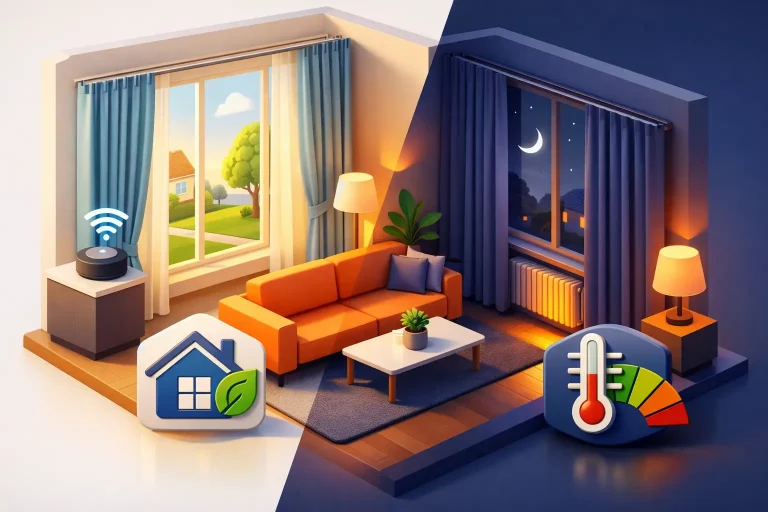
For a fully connected home, motorised curtain tracks can be incorporated into broader smart home scenes. One command might close curtains, lower lights and adjust heating for the evening. Another could open curtains and switch on selected lights in the morning.
This is particularly useful when a homeowner has several accessibility-focused controls already in place. It reduces the number of separate actions needed to manage the home and can create routines that are easier to repeat consistently. Integration requires compatible equipment and careful specification, so it is worth discussing the intended system before choosing a track or motor.
The track matters as much as the controls
An accessible curtain system still needs to work beautifully as a window treatment. If the track is poorly designed, the fabric may stack awkwardly, catch on a corner or leave unwanted gaps at the sides. Those details affect privacy, light control and the finished appearance of the room.
Made-to-measure motorised tracks can be designed for straight windows, bays, corners, recesses and wall-to-wall installations. They can also accommodate centre-opening or one-way drawing curtains, depending on where furniture sits and which side is easiest to access. For a wheelchair user, for instance, opening curtains away from the side of the room used for transfers may make more sense than a standard centre-opening arrangement.
Fabric weight must also be considered. Blackout-lined, interlined or exceptionally wide curtains require a motor and track capable of handling the load reliably. Choosing by window width alone can lead to poor performance. The combined weight of the curtains, the number of bends and the way the fabric stacks all influence the right specification.
Planning an accessible installation
The most successful mobility-focused curtain projects begin with the room rather than the product. Think about where the user sits, sleeps, enters the room and stores everyday items. Consider whether curtains need to be operated independently, by a family member, or through a combination of both.
Measurements should account for the full track route, not only the window opening. Bay windows, offsets, ceiling details and nearby furniture can all affect the design. A fitting drawing is valuable because it confirms where the track will sit, how far it projects and where power needs to be available before work begins.
If building work is planned, involve the electrician and any smart home installer early. A concealed power supply can give a cleaner finish, while a plug-in arrangement may be more practical in an existing room. Neither is universally better. The right choice depends on the building, the desired finish and how much work is already taking place.
Smart Curtains supports customers with made-to-measure planning, track layouts and practical installation guidance, helping to turn a broad accessibility need into a system that fits the room properly.
Questions worth asking before choosing a system
Start with the everyday experience. Who will use the controls most often, and can they operate the chosen method comfortably? Will the curtains need to work during a power or connectivity issue? Is a physical switch needed beside the bed? Do the curtains need to follow a routine, or is on-demand control more useful?
It is also wise to consider future flexibility. A homeowner may begin with a remote and later want timer control or smart home integration. Selecting a system with suitable upgrade options can prevent unnecessary changes later. Equally, there is no value in adding complexity that nobody will use. The best accessible solution is the one that feels dependable every day.
A well-planned motorised curtain system gives people more control over their own space, without making the room look clinical or over-engineered. With the track, controls and fabric considered together, the result can be a calmer, more polished home that is simply easier to live in.