A wide run of glazing can look exceptional in daylight, then become awkward the moment you need privacy. If you are tugging heavy curtains across a broad opening every evening, or avoiding them altogether because they never hang quite right, electric curtains for large windows are usually less of a luxury than a practical fix.
Thank you for reading this post, don't forget to subscribe!The real question is not whether motorised curtains look good on big windows – they do. It is whether the system has been specified properly for the size, weight and shape of the opening. On larger windows, that detail matters far more than the motor badge or the remote control.
Why electric curtains for large windows make sense
Large windows create a different set of demands from a standard bedroom or small living room opening. The curtain stack is heavier, the travel distance is longer, and the finish is far more noticeable because the window itself is such a dominant feature in the room.
That is where automation earns its place. A motorised track removes the daily strain of opening and closing heavy curtains by hand, which helps protect the curtain heading and track over time. It also gives you consistent movement. Instead of one side dragging or the curtains stopping short of where they should meet, the system opens and closes in a controlled, even way.
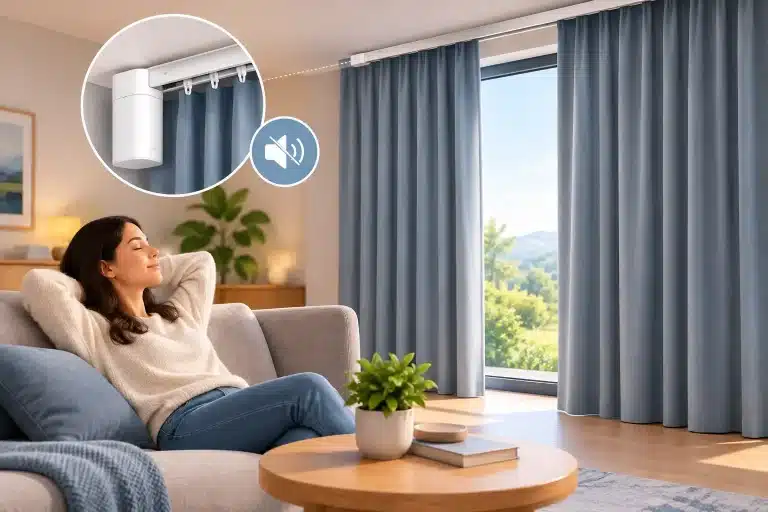
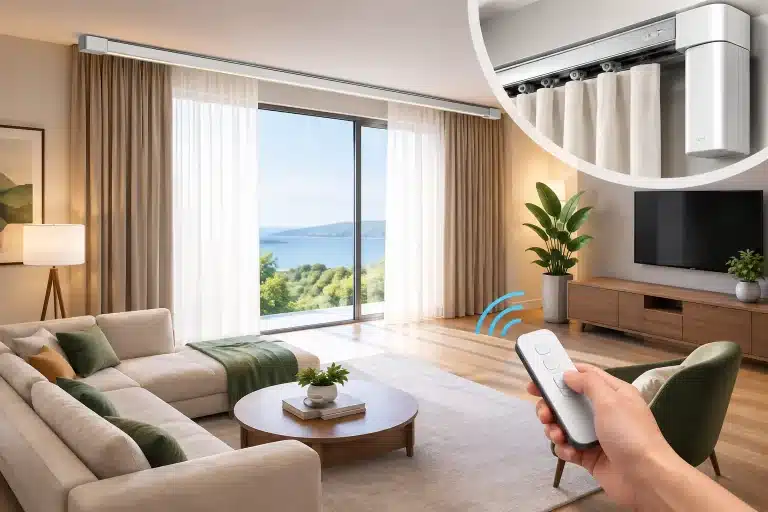
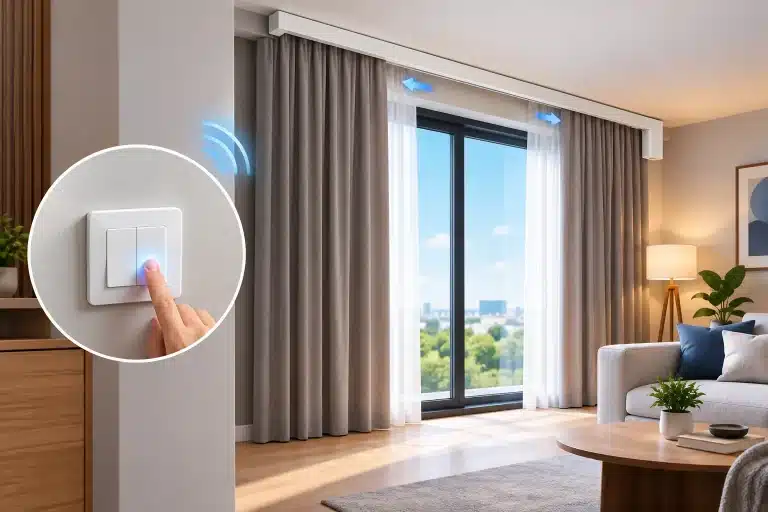
There is also a lifestyle benefit that many homeowners only fully appreciate after installation. Large glazing often sits in open-plan spaces, vaulted rooms or principal bedrooms where curtain control can feel slightly inconvenient. Being able to use a wall switch, handheld remote or mobile phone timer means privacy and shading happen when you want them to, rather than when you remember.
For some households, accessibility is the deciding factor. If manual curtains are hard to reach, heavy to pull, or awkward to manage around furniture, electric operation makes daily use much easier. In homes with very tall windows or corner glazing, that convenience becomes especially valuable.
What matters most when choosing a system
The best electric curtain system for a large window is not simply the strongest motor available. It is the right combination of track layout, curtain weight capacity, control method and power supply.
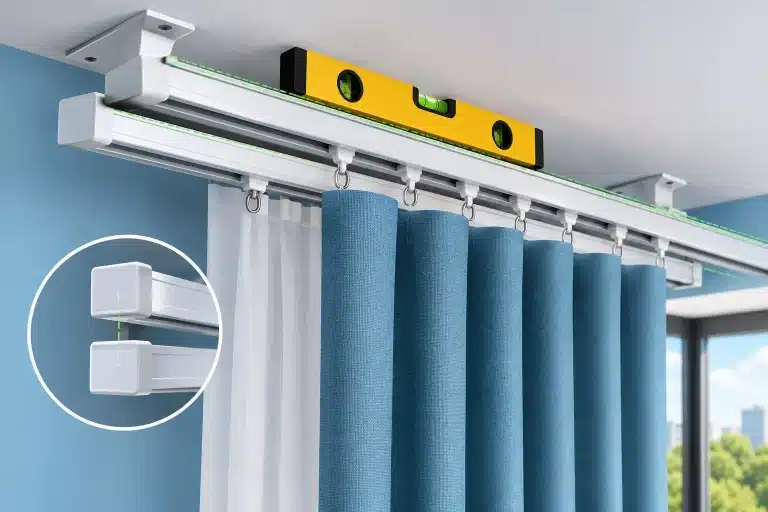
Track quality comes first. On a large opening, the track must stay stable across the full width and move the curtains smoothly without flexing or resistance. If the window is wall-to-wall, recessed, in a bay, or turns a corner, the layout becomes more specialised. In those cases, made-to-measure planning is essential because the track shape and fixing positions directly affect how the curtains will stack and travel.
Curtain weight matters just as much. Full-length, lined or interlined curtains can become surprisingly heavy across a wide span. A system that is under-specified may still work at first, but performance tends to suffer. Slower movement, uneven closing, extra strain on the carriers and avoidable wear are all signs that the setup was not matched properly to the curtain load.
Power choice is another practical decision. Mains-powered systems are often preferred for larger installations because they offer dependable operation without the need to recharge. Battery-powered options can work well in the right setting, particularly where wiring is difficult, but suitability depends on curtain size, usage frequency and access for charging. There is no one-size-fits-all answer here. The better option is the one that suits the room and the installation conditions.
Then there is control. Some homeowners want a simple wall switch near the window. Others prefer remote control from the sofa, timer-based opening in the morning, or integration with a wider smart home setup. All are valid, but it helps to decide early so cabling, switch positions and control interfaces can be planned properly.
The details that make a large window look finished
With big glazing, the visual result matters as much as the mechanics. A well-planned electric curtain installation should not look like an afterthought. It should feel built into the room.
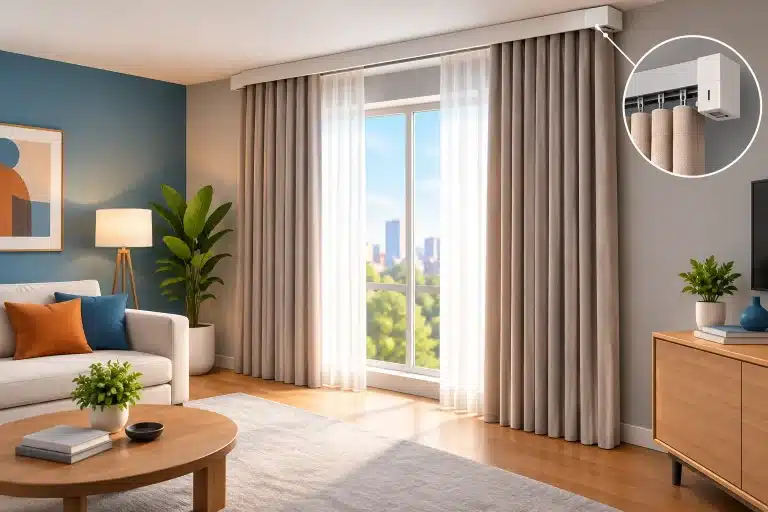
That starts with where the track sits. Ceiling fixing can create a cleaner, more architectural look, especially in contemporary spaces or rooms with tall glazing. Face fixing may be more practical in other situations. The right choice depends on ceiling condition, recess depth, lintel position and how much stack-back space is needed when the curtains are open.
Stack-back is often overlooked. On wide windows, curtains need somewhere to park when fully open. If this is not accounted for, they can cover too much glass even when drawn back, reducing daylight and affecting the overall balance of the room. This is one of the reasons precise measuring and fitting drawings are so useful. They help you see not just whether the track fits, but how the finished installation will behave.
Wave curtains are a popular pairing with motorised tracks because they give a neat, modern fold and a controlled appearance across long spans. Pleated headings can also work very well, particularly in more traditional interiors. The best heading style depends on the room scheme, the fabric and the depth available for the curtain to move freely.
Smart home features – useful, but only if they suit your routine
Smart control can be genuinely helpful on large windows, but it should support daily life rather than complicate it. Timed opening is a good example. In a main living space, curtains can open in the morning and close automatically at dusk, which adds convenience and can make an occupied home look lived-in when you are away.
Voice control and app operation appeal to many homeowners, particularly if lighting, blinds or heating are already automated. But for others, a dedicated remote or wall switch is the simplest and best solution. There is nothing old-fashioned about choosing the control method that feels easiest to use.
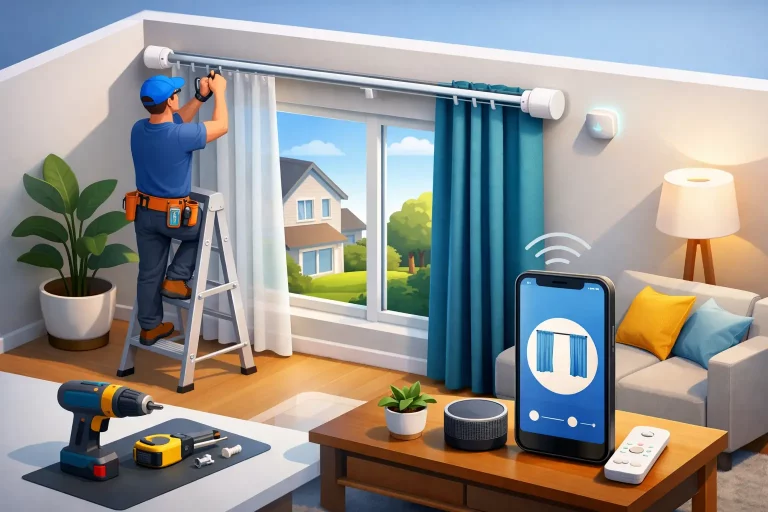
If you are building, renovating or coordinating with an electrician, it is worth thinking about smart integration early. Retrofitting is often possible, but pre-planning tends to give a cleaner result. Cable routes, power positions and switch locations are easier to get right before plastering and decorating are complete.
Common mistakes with large-window curtain automation
Most problems with electric curtains on large windows come from planning shortcuts rather than product faults. Measuring only the visible glass, for example, ignores the room needed for brackets, curtain return, stack-back and track clearance. That can leave you with a system that fits on paper but underperforms in practice.
Another common issue is treating a wide opening as if it were a standard window. Bay windows, angled walls, corner glazing and offset returns all need more careful layout decisions. The same goes for ceiling pockets and recessed installations, where even a small dimensional error can affect the final look.
Control planning is another area where people can get caught out. If you decide on a mains-powered setup after first fix is complete, or realise too late that you wanted a wall switch beside the room entrance, changes become more awkward and expensive than they needed to be.
This is why consultative support matters. A quote-based process with dimension checks, layout advice and fitting guidance tends to produce a better result than simply ordering a motor and hoping the rest can be worked out later.
When bespoke support is worth it
For a simple straight run, some homeowners feel comfortable once they know the track length and control type. But large windows are often not simple. They may sit in a recess, span several doors, run wall-to-wall or continue around a corner. In those settings, support with measurements, drawings and installation planning can save a great deal of uncertainty.
A specialist approach is particularly helpful when other trades are involved. Builders, electricians and smart home integrators all need clear information if the curtain system is to sit neatly within the wider project. Knowing fixing points, recess allowances, motor position and power requirements in advance helps avoid compromises later.
This is where a company such as Smart Curtains adds value beyond supply alone. The difference is not just the product. It is the guidance around fit, layout and coordination, which is often what determines whether the finished result feels polished.
Is it worth the investment?
For large windows, many homeowners find the answer is yes because the practical gains are immediate. Day-to-day operation becomes easier, the room feels more refined, and the curtains are more likely to be used as intended. That affects privacy, comfort and the way the space feels in the evening.
The cost does depend on specification. A single straight track with basic control will sit at a different level from a shaped, made-to-measure system integrated into a smart home. Neither is automatically right or wrong. The better choice depends on the window, the fabric, the room and how you want to live with it.
If you are considering electric curtains for large windows, it helps to think beyond the motor itself. The best result usually comes from getting the fundamentals right first – measurements, layout, power, control and curtain behaviour. Once those pieces are in place, the automation tends to feel remarkably simple, which is exactly how it should be.
A large window should be one of the best features in your home, not the one you avoid adjusting because the curtains are awkward. When the system is planned properly, the room works better every single day.