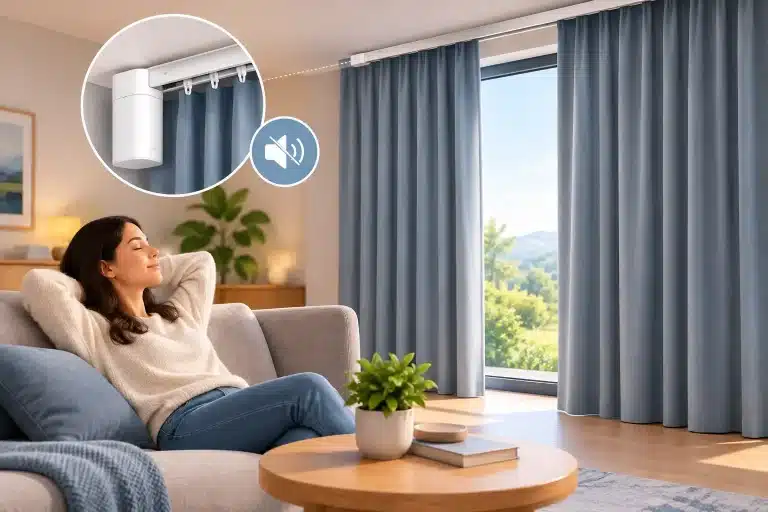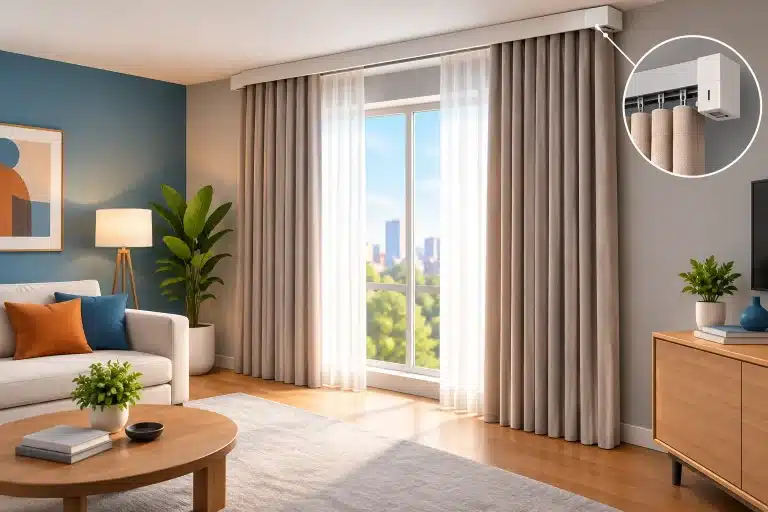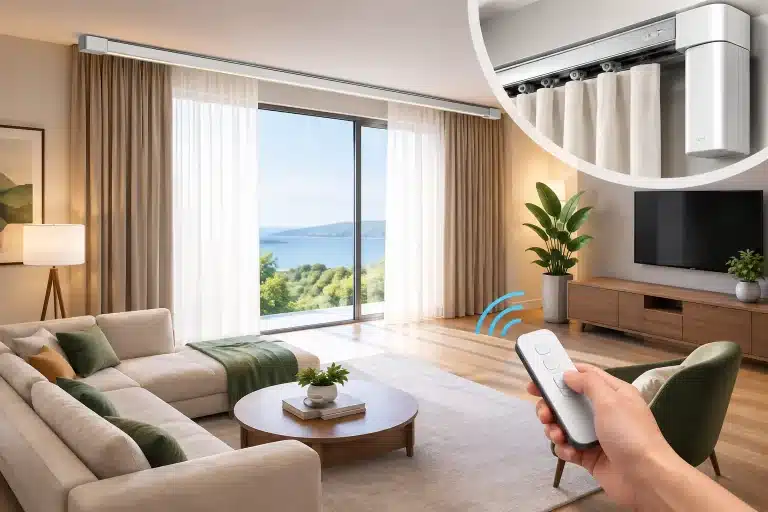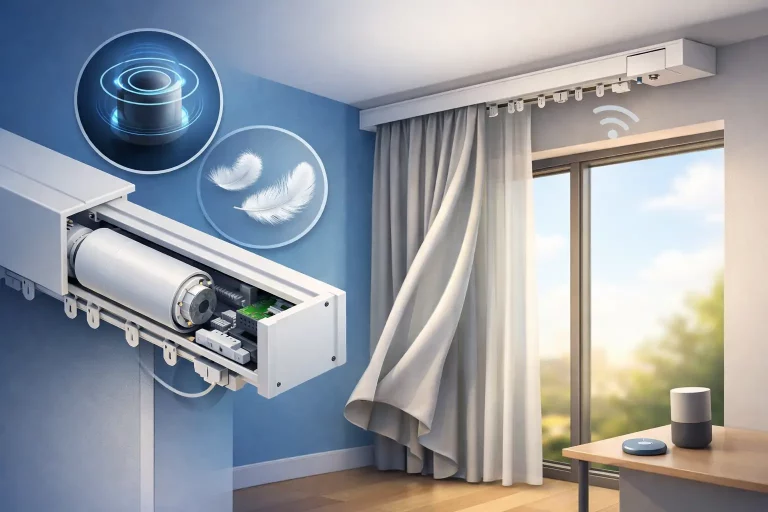
The sound of curtains opening should not compete with a conversation, a film or the first quiet moments of the morning. A quiet motorised curtain system is designed to make daily routines easier without adding an intrusive mechanical noise to the room. For bedrooms, nurseries, home offices and open-plan living spaces in particular, quiet operation is not a minor detail. It is part of what makes automation feel considered.
Thank you for reading this post, don't forget to subscribe!A well-specified system combines a low-noise motor with the right track, curtain weight and installation plan. The result is a made-to-measure solution that opens and closes your curtains reliably, whether you use a wall switch, remote control, smartphone schedule or smart home command.
Why quiet operation matters in a motorised curtain system
Motorised curtains are often chosen for convenience. They can close the room at dusk, open gradually in the morning, protect privacy at the press of a button and make large or hard-to-reach windows far easier to manage. Yet the quality of that experience depends greatly on how the system sounds while it moves.
In a bedroom, a noisy motor can turn an intended gentle wake-up routine into an unwelcome disturbance. In a living room, it may feel out of place against an otherwise refined interior. For households with young children, shift workers or anyone who values a calm home, a quieter system is especially worthwhile.
Sound is not the only consideration, however. A motor that operates quietly still needs enough power for the fabric and track layout. Very heavy interlined curtains, wide wall-to-wall spans and complex bay window arrangements all require careful specification. The aim is not simply to select the quietest motor on paper, but to choose a system that is quiet, capable and correctly fitted for your particular window.
What affects how quiet motorised curtains are?
The motor matters, but it is only one part of the picture. A quiet system is achieved through the way each component works together.
Motor design and speed
Motors vary in their operating sound and travel speed. A quality low-noise motor produces a restrained, consistent hum rather than a harsh whine or abrupt start. Some systems also offer adjustable speed settings, allowing curtains to move more slowly where a softer, more relaxed effect is preferred.
Slower is not automatically better. A very slow opening may be ideal for a bedroom timer, while a family room door or frequently used patio window may benefit from a slightly quicker response. The best choice depends on how the room is used and how often the curtains will move.
Curtain weight and fabric construction
A motor has to pull the full weight of the curtains, including lining, interlining and heading. Heavier fabrics such as velvet can create a luxurious finish and improve insulation, but they place more demand on the system than lighter linen or cotton blends.
This does not mean heavy curtains cannot be motorised quietly. It means the motor and track need to be specified for their weight. An underpowered motor can sound strained, move inconsistently or have a shorter working life. Providing accurate curtain details at the planning stage helps avoid this problem.
Track quality and layout
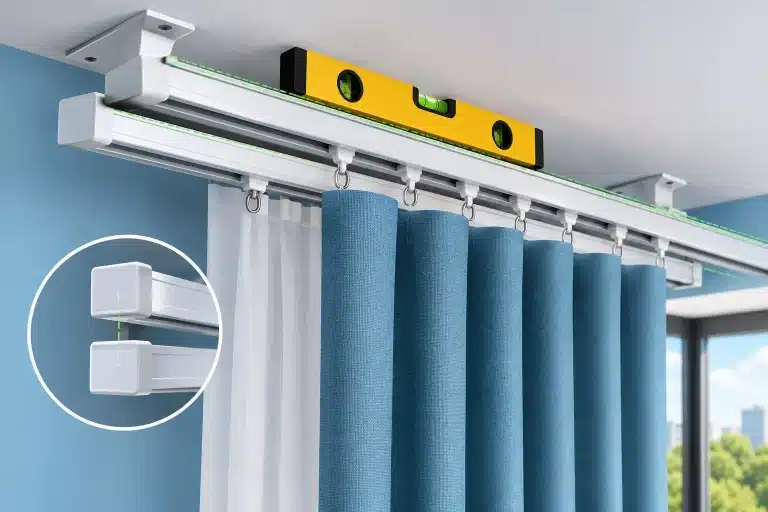
The track is just as important as the motor. Smooth-running carriers, a properly engineered profile and secure mounting all reduce friction and unwanted sound. A well-made track should guide the curtains cleanly across the window rather than allowing them to drag, snag or judder.
Track layout becomes particularly important with bays, corners and offset designs. Each bend changes the path the carriers follow. Tight bends, poorly positioned brackets or an unsuitable track configuration can affect both movement and noise. Straight runs are generally the simplest, but shaped tracks can work beautifully when they are planned around the architecture rather than treated as an afterthought.
Fitting and surrounding finishes
Even a high-quality product can disappoint if it is installed without enough thought. Loose brackets, an uneven fixing surface or a track that is too close to a pelmet, ceiling feature or curtain heading can create rubbing and vibration.
For a polished result, the track position should be agreed before final decoration wherever possible. This is especially useful in renovations, where electricians, plasterers, curtain makers and smart home installers may all be working around the same window area. Early coordination avoids awkward compromises later.
Choosing controls for a quieter, easier routine
The way you control your curtains will not alter the sound of the motor itself, but it can make quiet operation more useful. Rather than closing every curtain individually at the end of the day, you can operate several rooms from one control point or set them to move automatically.
A wall switch offers a familiar, simple option near the door or bedside. A remote control suits homeowners who want convenience without changing their wider home technology. Smartphone control can be useful for timers and routines, particularly when you are away from home. Integration with compatible smart home systems can allow curtains to respond alongside lighting, heating or security settings.
Schedules are often where a quiet motorised curtain system earns its place. You might set bedroom curtains to open at a chosen time on weekday mornings, or close downstairs curtains shortly after sunset. When the movement is discreet, these routines feel like part of the home rather than a feature demanding attention.
There is also a security benefit. Timed curtain movement can make a property appear occupied during a holiday, although it works best as one element of a wider home security plan rather than a substitute for it.
Plan the system around the room, not just the window
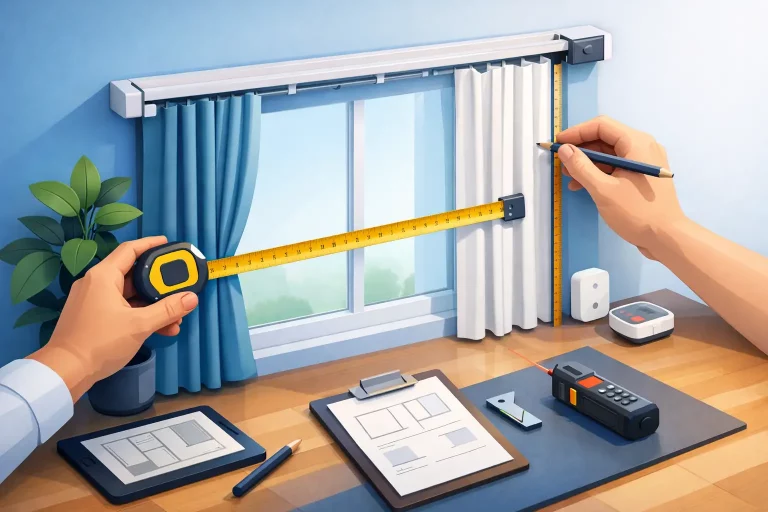
A made-to-measure motorised curtain track should be planned with the whole room in mind. The window dimensions are essential, but so are the curtain stack-back, ceiling height, radiator position, furniture layout and intended control method.
For example, curtains that gather at one side need sufficient clear wall space when open. If that space is limited by shelving, a wardrobe or a return wall, a centre-opening arrangement may be more suitable. At patio doors, consider which side needs the clearest access. In a bay, decide whether curtains should stack at the outer edges or within the bay itself.
Power provision deserves attention early too. A mains-powered system needs an appropriate electrical supply near the motor location, ideally concealed as part of the installation. Battery-powered options can be useful where wiring is impractical, though they introduce charging or battery replacement into the routine. The right choice depends on access, usage and the finish you want to achieve.
It is sensible to share building drawings, photographs and measurements before ordering. A specialist can then confirm track dimensions, motor position, bracket locations and any requirements for recesses or ceiling fixing. At Smart Curtains, this planning support includes fitting drawings so homeowners and their trades can work from a clear specification.
Common mistakes that make automated curtains noisier
The most common problems are usually preventable. Ordering a track based only on the visible window width can leave insufficient allowance for returns or stack-back. Choosing a motor without accounting for lined or interlined fabric can lead to a system working harder than it should. Leaving electrical decisions until after plastering can result in visible cabling or less convenient motor placement.
Another issue is assuming every curtain heading behaves the same way. Wave, pencil pleat and pinch pleat curtains have different fullness, weight and clearance requirements. The heading also affects how the fabric sits beneath a recess or pelmet. These details influence the finished appearance as much as the movement.
Avoid treating a bay window as a standard straight track with a few bends added at the last minute. Measurements must follow the intended track path, and the curtain maker needs to understand the finished configuration. Good planning protects both quiet performance and the way the curtains hang.
Is a quiet motorised curtain system worth it?
For many homeowners, the value is felt in small repeated moments: closing large curtains without crossing the room, adding privacy from bed, or arriving home to rooms that already feel settled for the evening. It can also make window treatments more accessible for people with restricted mobility or for anyone managing wide, heavy curtains.
The investment is best approached as part of the wider window treatment rather than as a standalone gadget. A quiet motor, a precisely sized track, suitable curtains and considered controls create a result that looks intentional and works reliably. Cutting corners on any one element can undermine the experience.
If you are planning a refurbishment or choosing curtains for a new space, decide early how you want the room to feel at the beginning and end of each day. A properly planned quiet system can then do its work almost unnoticed, which is exactly the point.