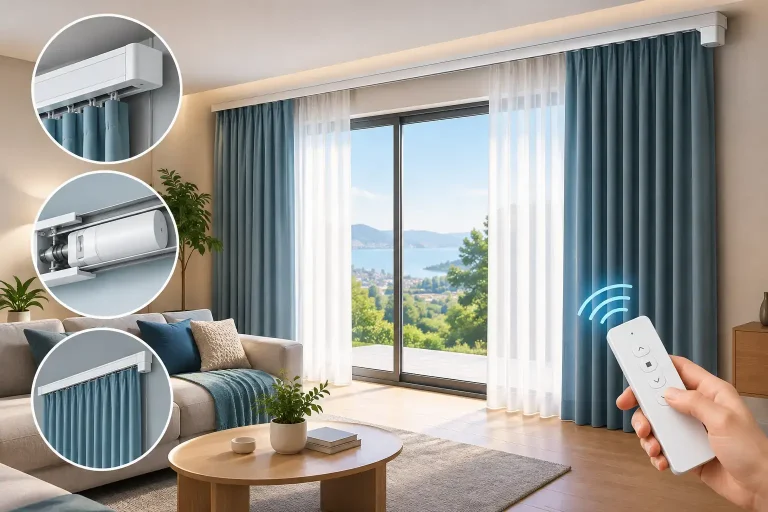
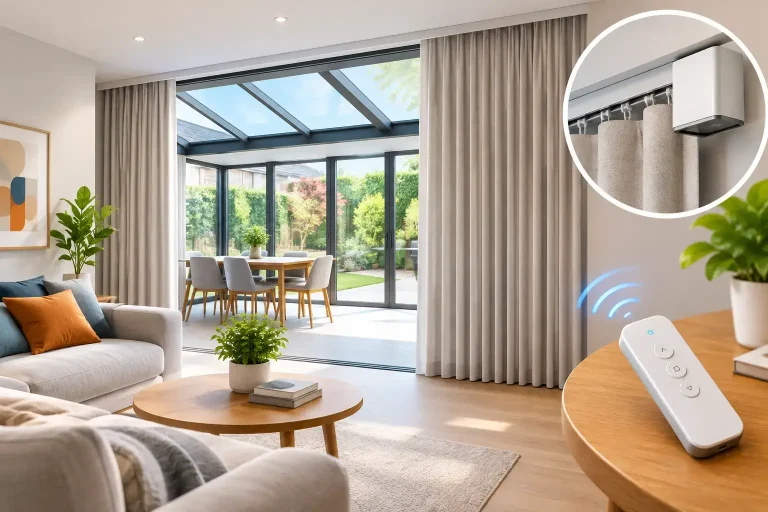
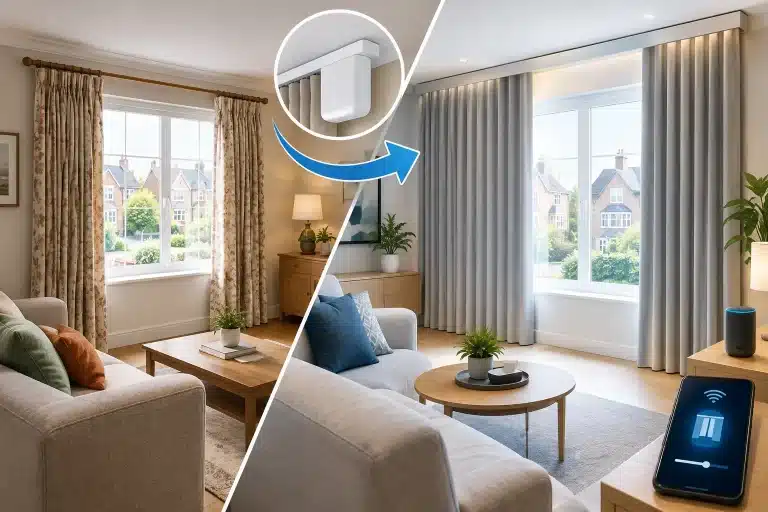
A curtain that closes itself at dusk may sound like a small luxury. In a busy household, it quickly becomes one of those details you would not want to be without. Gadget curtains, more accurately described as motorised or smart curtains, take a familiar part of the home and make it easier to live with – whether you are carrying shopping, settling children for bed or leaving for a holiday.
Thank you for reading this post, don't forget to subscribe!The best systems are not about adding technology for its own sake. They give you reliable control over privacy, daylight and comfort, while keeping the window treatment looking considered and uncluttered. The difference lies in choosing a track, motor and control method that genuinely suit your room, curtains and plans for the property.
What are gadget curtains?
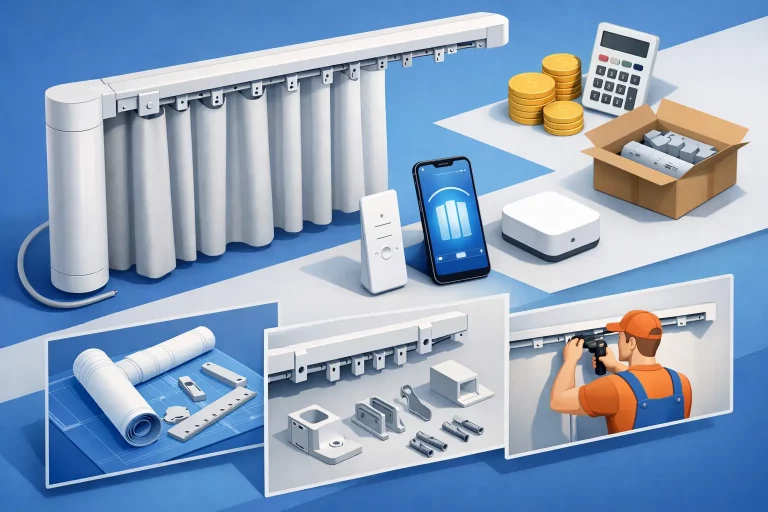
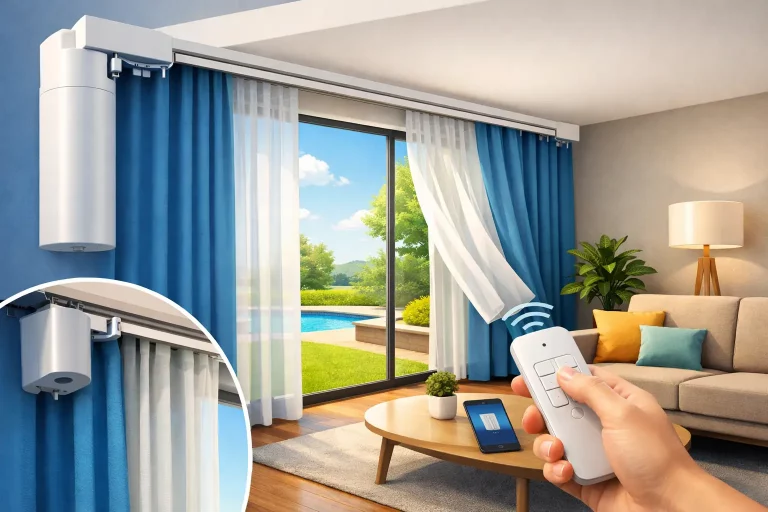
Gadget curtains are curtains fitted to an electric track. A compact motor moves the curtains open and closed, removing the need to pull the fabric by hand. Depending on the specification, you can use a wall switch, handheld remote, mobile app, timer or a wider smart home system.
They are often considered for large glazed doors, wide living-room windows and bedrooms, where curtains are used every day. They can also be a practical answer for high-level windows, awkward bays and spaces where furniture makes the curtains difficult to reach.
The term can imply something novelty-driven, but a well-planned motorised track should feel discreet. The motor is usually positioned at one end of the track, and the curtain heading, fabric and pelmet or recess treatment remain the visual focus. What you notice is the convenience: curtains that move smoothly when you want them to.
The everyday benefits that matter most
Motorised curtains make daily routines easier. A bedroom can be set to open in the morning, helping bring natural light into the room without anyone reaching for a cord. In the evening, one command can close curtains across several rooms, creating privacy without a tour of the house.
There is a security benefit too. Timed opening and closing can make a home look occupied while you are away. This is not a replacement for sensible home security, but it is a useful part of a considered approach when travelling or spending time at a second property.
For homeowners with restricted mobility, the practical value can be more significant. Heavy curtains, deep window recesses and furniture layouts can turn a simple task into an inconvenience. Remote or switch control keeps the room usable without asking someone else to help.
Smart curtains can also support a more comfortable home. Closing curtains before sunset can reduce the feeling of cold radiating from glass in winter, while closing them during strong summer sun may help limit glare. The results depend on the glazing, fabric and room orientation, so automation should complement good window treatment choices rather than compensate for poor insulation.
Choosing the right control for your home
The right control is the one your household will use without thinking about it. A simple remote is often ideal where you want a straightforward upgrade and do not need an app. A wired wall switch suits a clean, permanent arrangement and can be especially useful in bedrooms, where a familiar switch by the door or bedside is intuitive.
Smartphone control and timers offer more flexibility. They allow you to set routines around your day, adjust curtains from another room or check their position when you are away. If you already use a smart home platform, integration can allow your curtains to work alongside lighting, heating or voice control.
There are trade-offs. More connected control can mean more planning, particularly if an electrician or home automation installer is involved. A basic remote-controlled system can be quicker to specify and may be all that is needed. It is worth deciding early whether automation is a central part of your home or simply a convenient way to operate one window treatment.
Why made-to-measure planning is essential
Curtains themselves may be soft and decorative, but the track behind them needs precise thinking. A motorised system must be made to the correct width, with the right stack-back allowance, fixing points and motor position. The track must also suit the weight and heading style of the curtains.
This becomes particularly important with wall-to-wall windows, bays, corners and offset layouts. A track that looks simple on a floor plan may need bends, joins or a carefully positioned motor to make sure the curtains park neatly and clear the glass as intended. The curtain stack at each end should be considered before the track length is finalised, not after it arrives.
Recesses deserve the same attention. If the track sits within a ceiling recess or behind a pelmet, there must be enough depth for the motor, track and curtain heading to operate freely. A shallow recess can create rubbing, restricted movement or an unnecessarily visible installation. At the planning stage, a few accurate measurements and fitting drawings can prevent expensive adjustments later.
Measure the room, not just the window
A common mistake is to measure only the glass or window frame. In many rooms, curtains need to cover a wider area for better light control and a more generous finish. The required track may run wall to wall, extend beyond the window reveal or continue around a corner.
It also helps to consider what sits beneath and beside the window. Radiators, built-in seating, wardrobes and tall lamps can affect how curtains hang and where they stack. Photographing the full wall and noting nearby obstructions gives a clearer picture than measurements alone.
Power and installation: decisions to make early
Most electric curtain systems need a suitable power supply near the motor position. This is easiest to arrange during a renovation, extension or new build, when cables can be concealed and the track recess can be formed at the correct size. It is still possible to add motorised curtains to an existing room, but the options may be more dependent on the available sockets and desired finish.
Discuss the curtain plan with your electrician before plastering or decorating is complete. They need to know where the motor will sit, whether a wall switch is required and if control wiring or smart home equipment is part of the design. If you are using an interior designer, curtain maker or automation integrator, make sure everyone is working from the same track drawing.
Installation should not be treated as an afterthought. The fixing surface needs to support the track and the weight of the curtains, particularly on long runs or with heavier lined fabrics. A made-to-measure system is a precision component, so it deserves the same care you would give fitted joinery or bespoke lighting.
How to make smart curtains feel like part of the interior
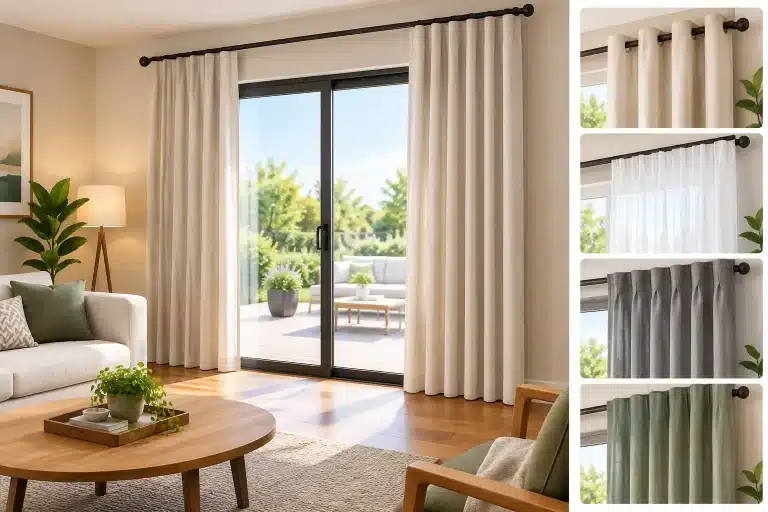
The most successful installations are usually the least showy. Choose the curtain fabric and heading for the room first, then ensure the track can support that design. Wave headings are popular for their regular folds and contemporary appearance, while pinch pleats and other fuller headings can work beautifully in more traditional interiors. Each heading has different space and fullness requirements.
Ceiling-mounted tracks can make a room feel taller, especially when curtains run close to the ceiling and finish near the floor. A recessed track offers an even cleaner look, but only if the recess has been designed with enough room for the complete system. In a period property, a pelmet or decorative treatment can conceal the track while preserving the character of the space.
Noise is another consideration. Quality motors are designed for quiet, controlled movement, but fabric weight, track layout and fitting all influence the finished result. If silence is a priority in a bedroom, mention it while specifying the system rather than assuming every arrangement performs identically.
When gadget curtains are worth the investment
They are especially worthwhile where curtains are large, frequently used or hard to access. They can transform a wide set of patio doors, a double-height window or a bedroom where blackout curtains are opened and closed every day. They also add a useful finishing layer to a broader smart home project.
For a small, rarely used window, manual curtains may remain the sensible choice. Motorisation is not automatically the answer for every room. The value comes from matching the system to how the space is used, then planning the details properly.
Smart Curtains helps homeowners turn initial measurements and ideas into a practical made-to-measure specification, including guidance for bays, recesses, power positions and fitting. Before choosing a motor or control method, start with the room: how you use it, where the curtains need to stack and what you want the finished view to feel like. That is where a smart curtain system earns its place.