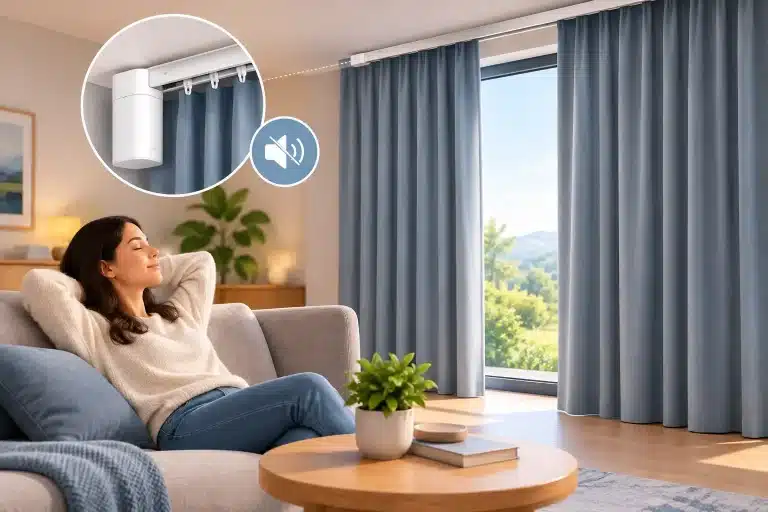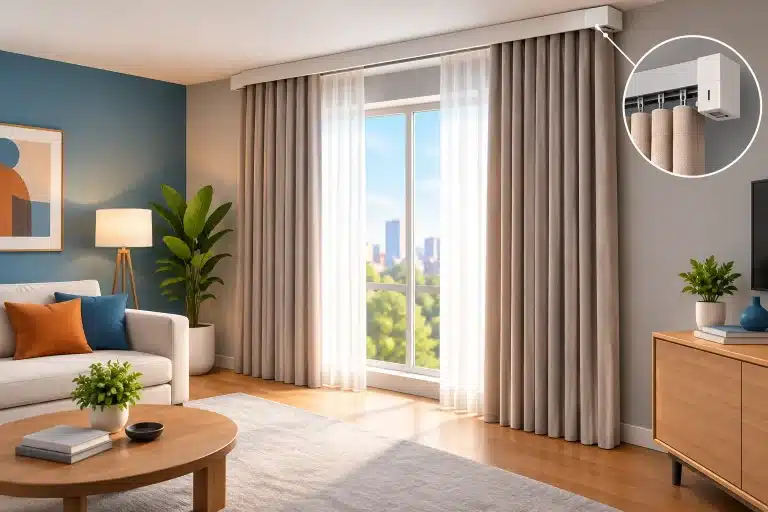
Reaching across a wide bay window or tugging at a heavy pair of lined curtains can be a small task that quickly becomes frustrating when mobility, strength or balance are limited. That is exactly why electric curtains for disabled users are more than a convenience upgrade. In many homes, they remove a daily barrier and give back a little independence at the touch of a button.
Thank you for reading this post, don't forget to subscribe!For some people, the issue is obvious – arthritis, wheelchair use, reduced grip strength or difficulty standing. For others, it is about fatigue, pain management or making the home easier to use without asking for help every morning and evening. Motorised curtains can make a room feel more accessible straight away, but the real value comes from choosing a system that suits the person, the window and the way the home is used.
Why electric curtains for disabled users make such a difference
Curtains are often overlooked in accessibility planning. Yet they are one of the home’s most repeated physical tasks. Opening them in the morning, closing them for privacy, adjusting them when glare becomes uncomfortable – these actions happen every day, and often more than once.
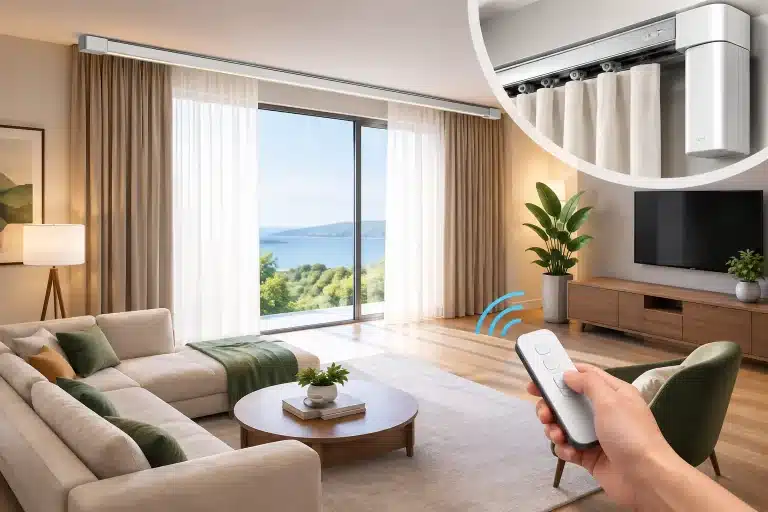
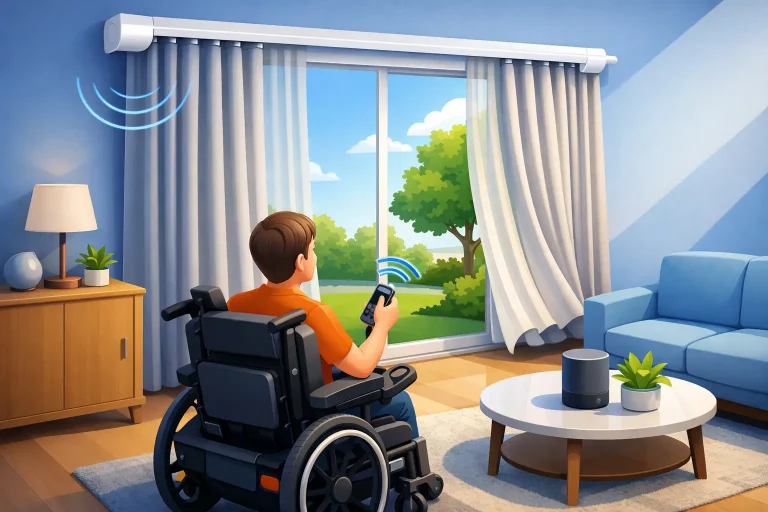
When a curtain is manually operated, it may require reaching, pulling, twisting or walking across the room. That can be inconvenient in a standard setting and genuinely difficult in a home where movement is restricted. An electric curtain system changes that interaction completely. Instead of relying on physical effort, the curtain can be operated by remote control, wall switch, smartphone or home automation.
That shift matters because it is not only about ease. It can also reduce strain, lower the risk of falls and help someone manage privacy without waiting for support from a partner, carer or family member. In bedrooms and living spaces especially, that extra control often has a very direct effect on comfort and confidence.
What accessible curtain control should look like
The best solution depends on the user, not just the window. A wall switch may suit one household perfectly, while another person may need a handheld remote that can stay by the bed or chair. In some cases, voice control is the most useful option, particularly if pressing buttons is difficult.
This is where off-the-shelf thinking tends to fall short. Accessibility is rarely one-size-fits-all. A control method that sounds modern on paper is not always the easiest in practice. For example, a smartphone app can be excellent for scheduling and routine control, but not every user wants to rely on a phone for basic curtain movement. Equally, a remote can be simple and effective, but only if it is easy to hold, clearly labelled and kept within reach.
A well-planned electric curtain system should feel straightforward from day one. It should open and close reliably, respond in a predictable way and fit naturally into the person’s daily routine. Good accessibility is usually quiet and practical rather than flashy.
Choosing the right system for the room
Different rooms bring different priorities. In a bedroom, the main goal may be opening curtains without getting out of bed. In a lounge, it may be avoiding the effort of handling a long or heavy curtain track. In a dining room or extension with tall glazing, it may simply be that the curtains are too large to move comfortably by hand.
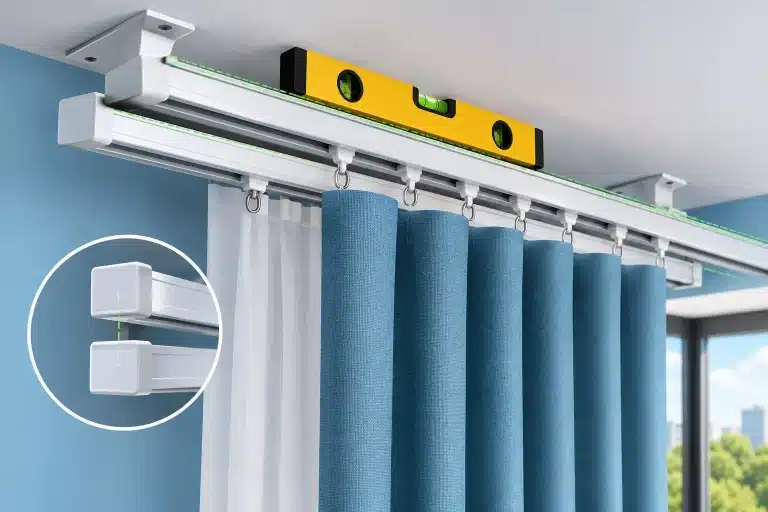
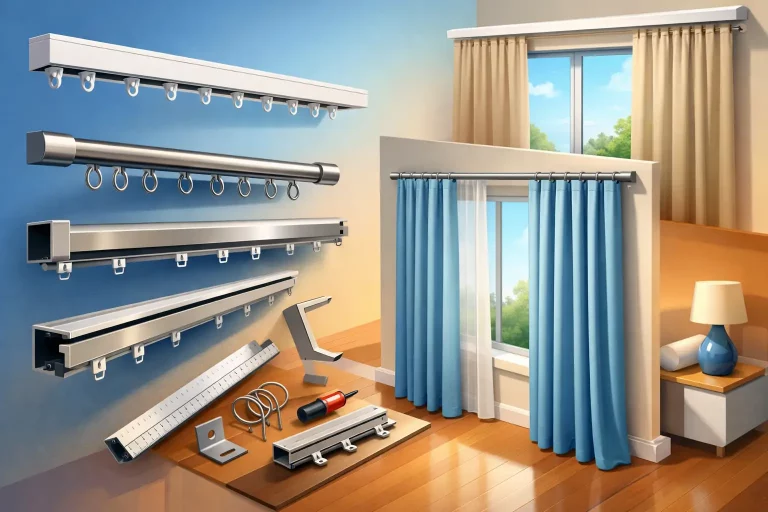
Window shape also plays a part. Straight runs are usually simple, but bay windows, corner layouts and wall-to-wall installations need more careful planning. The motor position, stack-back, power supply and track route all affect how usable the finished system will be.
This is one of the key reasons bespoke specification matters. If a track is made to the correct dimensions and planned around the room properly, the result looks better and works better. If it is treated as a generic add-on, small fitting problems can turn into everyday annoyances.
For disabled users in particular, reliability is not a nice extra. If the curtain is difficult to operate, awkwardly positioned or poorly controlled, the whole point of automation is lost.
Smart home features can help, but simplicity comes first
There is often a temptation to assume that more technology always means a better solution. Sometimes it does. Timers, app control and smart home integration can make curtain automation even more useful, especially when routines are important.
For example, curtains can be set to open in the morning at a chosen time and close automatically in the evening. That can support independence, help regulate light levels and add reassurance if the user is away from home or unable to manage the curtains manually that day.
But smart features only add value when they remain easy to use. If the setup becomes complicated, the benefit can disappear quickly. A simple remote and a dependable motor may be the right answer for one household. Another may benefit from combining remote use with scheduled operation and voice assistant control. It depends on who is using the system and how much flexibility they want.
The best approach is usually layered control. That means having more than one practical way to operate the curtains, so there is a backup if routines change or different family members need access.
Planning matters more than many people expect
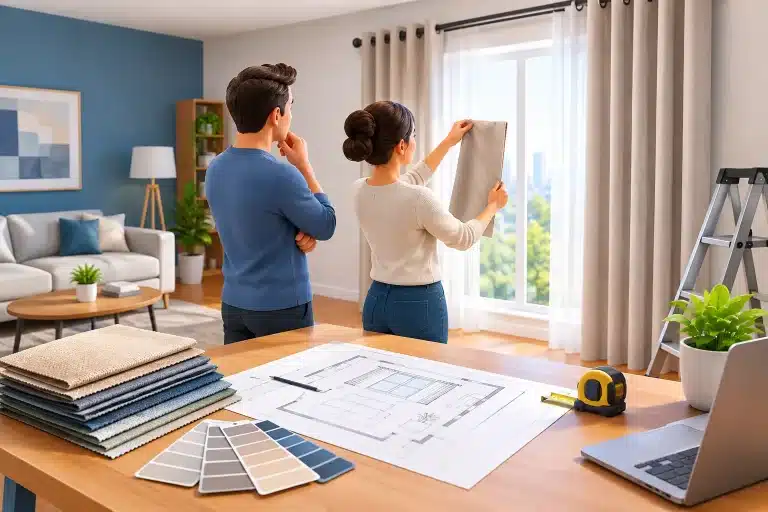
With electric curtains, the buying decision is not just about fabric weight and motor choice. It is also about getting the details right before the system is made. Window width, returns, recess depth, bracket positions and power access all affect the final result.
That is especially important in homes where accessibility is a priority. A curtain that parks on the wrong side, a switch placed out of reach or a motor specified without thinking about furniture layout can make a system less useful than it should be.
This is why consultative support is so valuable. Rather than simply choosing a motor and hoping for the best, homeowners benefit from having dimensions checked, fitting drawings reviewed and practical issues considered early. In a renovation or new-build setting, it can also help to coordinate with electricians and installers before walls are finished.
For many customers, that guidance removes the uncertainty that puts bespoke automation in the too-difficult pile. And in accessibility-focused projects, it often prevents mistakes that are expensive to fix later.
Cost, value and realistic expectations
Electric curtains are not the cheapest way to cover a window, and it is worth being honest about that. A made-to-measure motorised track system is a considered purchase. However, value should be judged against use, reliability and the daily benefit it provides.
For disabled users, the calculation is often different from a standard interiors purchase. This is not purely about appearance or novelty. It is about reducing effort in a task that happens every day. When a system is properly specified, the convenience is constant and the improvement to day-to-day living can be significant.
There are still trade-offs to weigh up. Mains-powered systems offer dependable long-term performance, but they need power planned in the right place. Battery options can suit some spaces, though they may involve recharging and may not be ideal for every window size or usage pattern. Heavier curtains may need a stronger specification than lighter dress curtains. None of these are problems, but they do mean the best solution depends on the project.
A better home can also be an easier home
Well-designed interiors should not ask more of you than necessary. If opening and closing curtains has become awkward, painful or tiring, there is no reason to keep treating it as an unavoidable nuisance. Electric curtains can turn one of the home’s most repetitive manual tasks into something simple, reliable and far more comfortable.
For homeowners planning around accessibility, the strongest results usually come from combining the right product with the right advice. A made-to-measure system, carefully planned around the room and the user, does more than automate a window. It supports independence in a way that feels natural every single day.
At Smart Curtains, that is the thinking behind a bespoke approach. Good automation should fit the space properly, work first time and make life easier without complication. If a home can be more polished and more practical at once, that is usually the right sort of upgrade.