Bifold doors are designed to make a room feel open, but that generous expanse of glass can feel very different after dark. Privacy changes, evening glare becomes noticeable and a large living space can lose warmth quickly. Electric curtains for bifold doors give you control over all of this at the touch of a button, without making the doors awkward to use.
Thank you for reading this post, don't forget to subscribe!The key is not simply choosing a motor. A successful installation depends on where the track sits, how far the curtains stack back, which way the doors fold and how the system will be powered. With made-to-measure planning, motorised curtains can look considered and unobtrusive while making a busy family room, kitchen extension or garden-facing lounge easier to live with.
Why bifold doors need a different approach
Bifold doors are usually wider than a conventional window and often form the main route to the garden. That creates two practical requirements that can pull in different directions: you want full coverage for privacy and insulation, but you also need clear access when the doors are open.
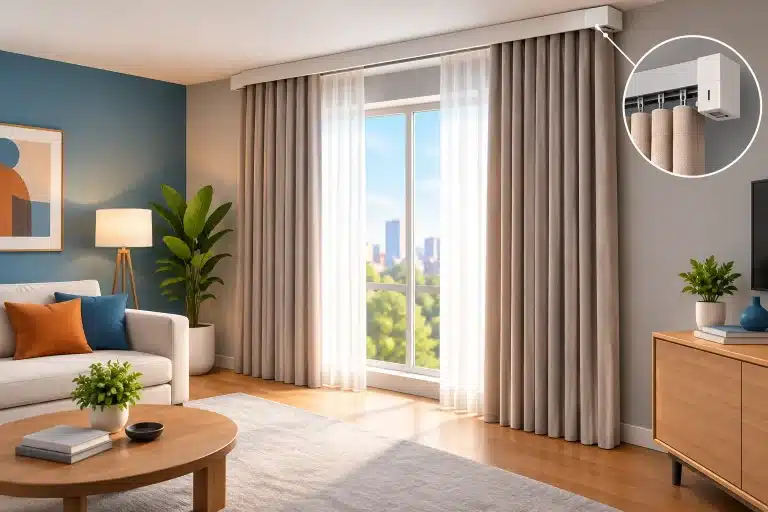
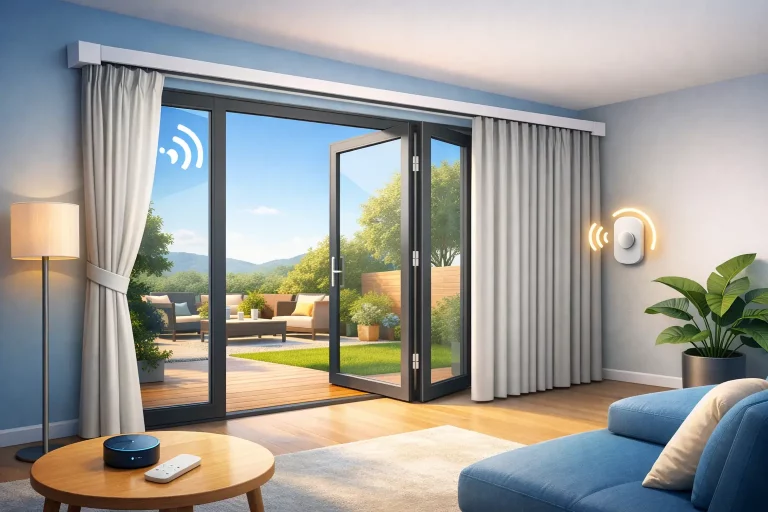
A properly specified electric curtain track runs across the full opening, normally positioned in front of the doors rather than within their frame. When opened, the curtain gathers neatly to one or both sides. This keeps the fabric away from the folding panels and allows the doors to operate as intended.
The amount of wall available beside the doors matters greatly. If there is generous space on each side, a pair of curtains can stack back symmetrically for a balanced look. Where one side meets a wall, kitchen unit or return, an offset arrangement may be the better answer. The curtains can be designed to draw to the side with usable stacking space, rather than forcing a layout that looks neat on paper but obstructs the doorway in reality.
Choosing the right opening arrangement
There is no single best configuration for every bifold door. The right choice follows the layout of the room and the way you use the opening.
Centre opening curtains
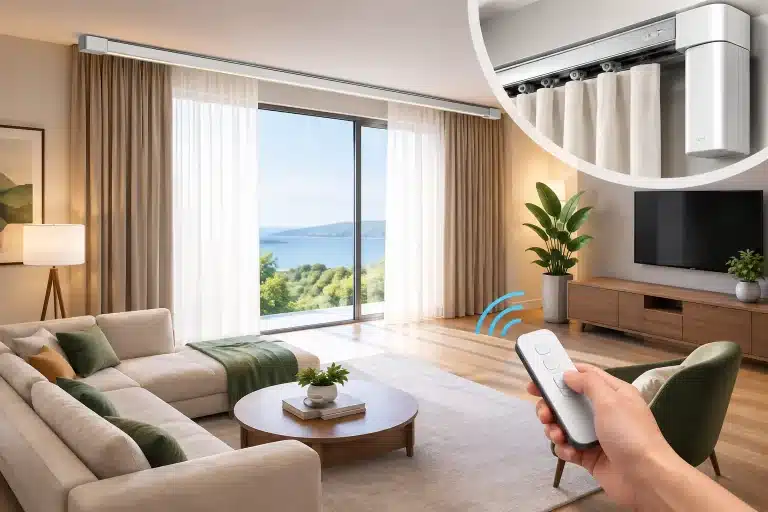
For a wide, symmetrical opening with space on both sides, centre-opening curtains are a popular choice. The curtains meet in the middle when closed and draw back to either side. This gives a classic, tailored appearance and can suit formal living rooms as well as open-plan extensions.
Bear in mind that both ends of the opening need sufficient room for the curtain stack. Thick interlined fabrics create a larger stack than lighter linen-look or dim-out fabrics, so fabric selection should be considered alongside the track layout.
One-way drawing curtains
If the most-used door panel is at one end, or only one side has available wall space, one-way drawing curtains are often more practical. The full curtain stack sits at the less-used end when open, leaving the main access route clearer.
This can be an especially useful solution in kitchen-diners, where cabinetry, a radiator or a structural column limits one side of the opening. It is also a good example of why made-to-measure advice matters: the track, motor position and curtain heading all need to work together.
Where the track should be fitted
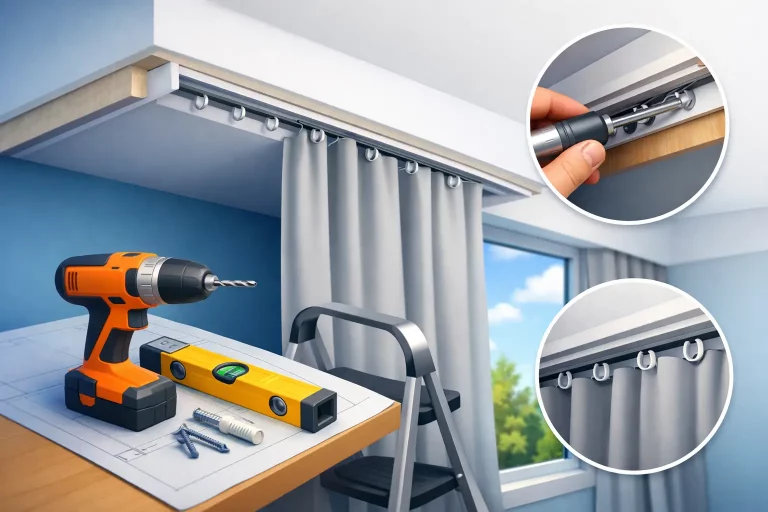
Electric curtain tracks for bifold doors are commonly fitted to the ceiling or to a prepared recess. A ceiling-fixed track is straightforward and works well where there is a solid, level fixing surface. It can create an elegant full-height effect, with the curtains dropping from ceiling level to the floor.
A recessed track gives a more architectural finish. The track is hidden within a ceiling pocket, leaving the curtains to appear to emerge from the ceiling. It is particularly effective in contemporary extensions, but it needs to be planned before plastering and decorating. The recess must be the right width and depth for the track, gliders and selected curtain heading.
Track placement should also allow the curtains to clear door handles, trickle vents and the folded door panels. Setting a track too close to the glass is a common mistake. It may save a few centimetres initially, but it can cause the fabric to catch or sit awkwardly when the doors are folded back.
Fabric, privacy and thermal comfort
Motorisation makes curtains easier to use, but fabric determines much of the day-to-day result. For a south- or west-facing room, a lined curtain can soften harsh low sunlight and reduce television glare in the evening. For bedrooms or rooms overlooked by neighbouring properties, blackout lining offers stronger privacy and darker nights.
In a living space, dim-out or lined fabrics often provide a comfortable middle ground. They retain a softer drape than some blackout options while reducing the view in and out after dark. Sheer curtains can also work beautifully across bifolds during the day, particularly if you want to filter sunlight without losing the sense of connection to the garden.
Curtains will not replace high-performance glazing, but a well-fitted, lined treatment adds a useful insulating layer across a large glazed area. In winter, scheduling them to close at dusk can make a room feel noticeably more comfortable. In summer, closing them before strong sun reaches the glass can help manage heat and glare.
Control options that suit real routines
The simplest control is a wall switch, positioned near the room entrance or beside the bifold doors. A handheld remote gives flexibility from the sofa or dining table. Both offer a clear benefit for large, heavy curtains that may otherwise be inconvenient to draw every morning and evening.
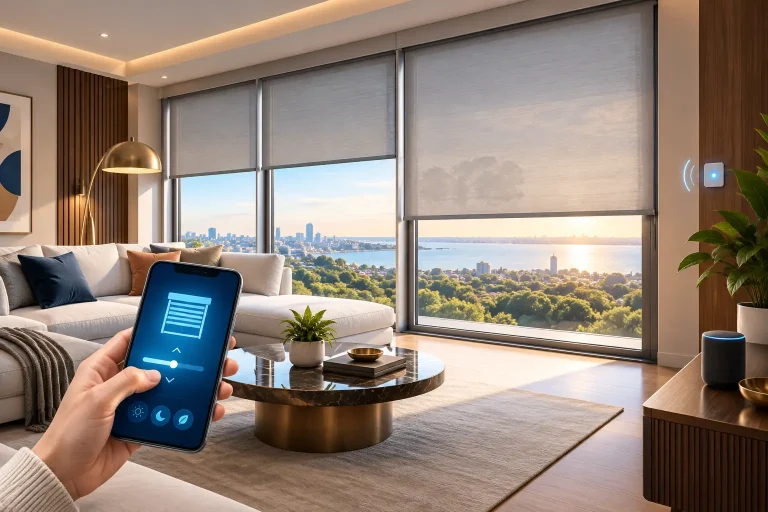
Smart control adds another level of convenience. You can set timers so curtains close after sunset, open gradually in the morning or follow a schedule while you are away. This is useful for security as well as comfort: a home that does not sit in darkness for days during a holiday feels more lived in.
For homeowners with an established smart home system, electric curtains can often be incorporated into scenes and routines. A “film night” setting, for example, might close the curtains and adjust the lighting together. Compatibility should be checked at the specification stage, particularly where an electrician or home automation integrator is involved.
Planning power before the room is finished
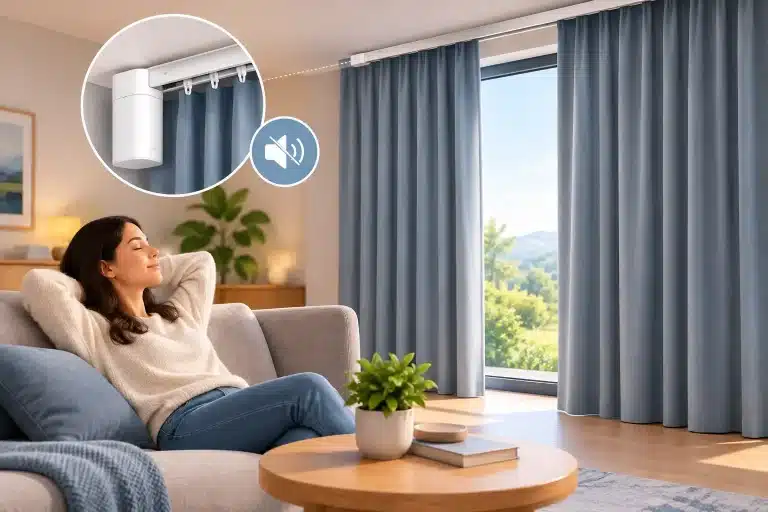
A motorised system needs a suitable power supply, and this is easiest to arrange before the final decorating stage. The motor is usually located at one end of the track, so the power point needs to be planned in the correct position and kept discreet. A qualified electrician can advise on the appropriate connection and cable route.
Battery-powered options may suit some situations, especially where running a cable would be disruptive. However, for wide, frequently used bifold doors, mains-powered tracks are often the more practical long-term choice. They avoid the need to recharge batteries and are well suited to heavier curtains and automated schedules.
If your extension is still being designed, share the curtain plan with your builder and electrician early. Details such as ceiling construction, recess dimensions, power location and access for installation are simple to accommodate at first fix, but far harder to alter once the room is complete.
Measuring wide openings accurately
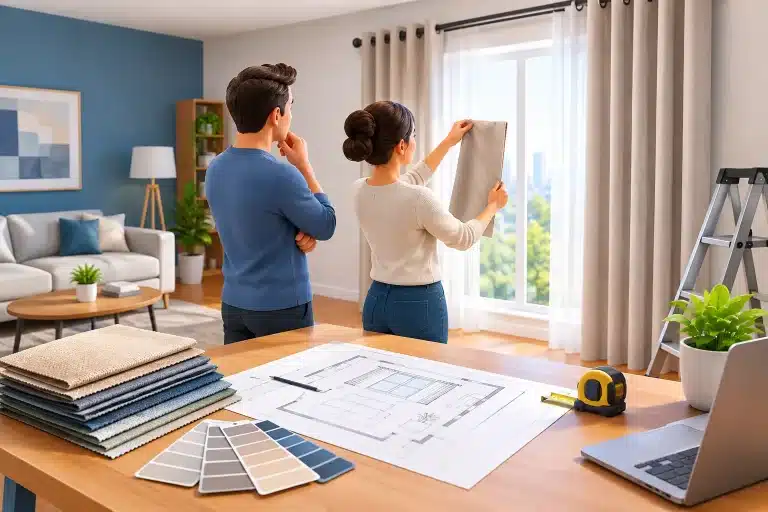
Measuring a bifold opening is not just a case of taking the glass width. The curtain track may extend beyond the door frame, and the final drop depends on whether the track is ceiling-fixed, face-fixed or recessed. Skirting boards, radiators, handles and adjacent walls can all affect the finished dimensions.
For that reason, it is sensible to work from a fitting drawing rather than an assumption. The drawing should show the track length, motor end, opening direction, fixing position and expected curtain stacking area. It gives you, your installer and other trades a shared reference before anything is ordered.
At Smart Curtains, this planning support is central to the process. Verifying dimensions and discussing the room layout before manufacture helps avoid the frustrating outcome of a beautifully made system that compromises access to the garden.
A better finish than a last-minute solution
Electric curtains are often considered late in an extension project, once the doors are already installed and the room is nearly finished. They can still be fitted at that stage, but early planning opens up more possibilities, especially for concealed tracks and coordinated smart controls.
The best result feels effortless rather than overly technical. Your curtains close when privacy is wanted, open cleanly when the garden calls and sit neatly out of the way for the rest of the day. That is the value of treating bifold door curtains as part of the room’s design, not an afterthought.