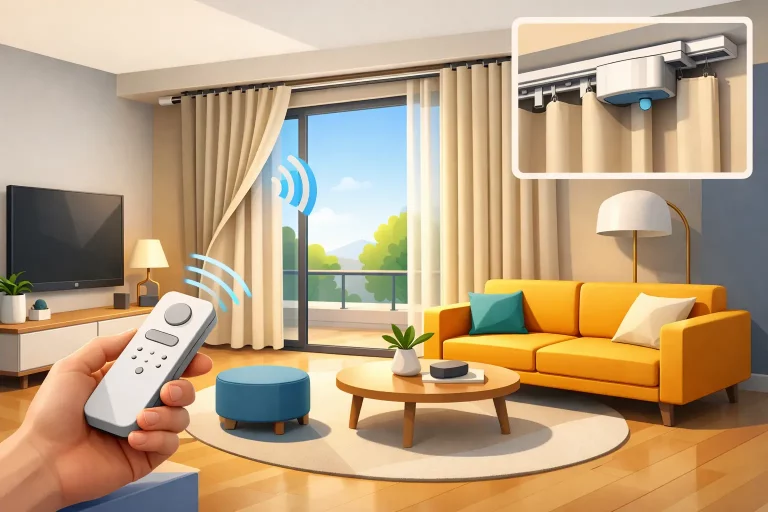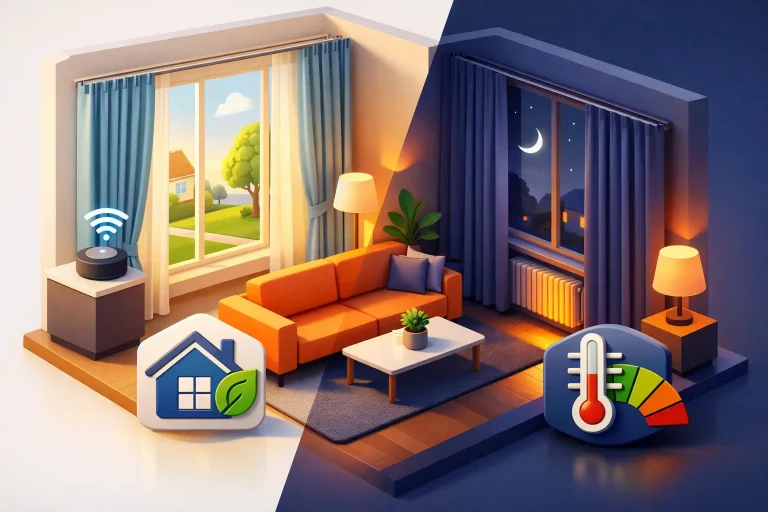
A room can feel chilly long before the thermostat says it should. Often, the weak point is not the heating system but the glass around it – particularly once darkness falls and the temperature outside drops. So, do smart curtains save energy? They can, provided they are used as part of a sensible approach to heat retention, daylight and home heating control.
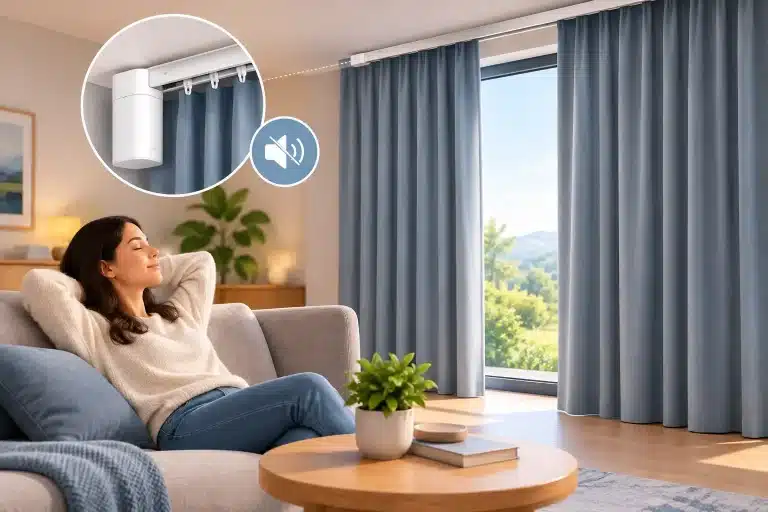
Thank you for reading this post, don't forget to subscribe!Motorised curtains do not create insulation on their own. The energy-saving benefit comes from closing well-fitted curtains at the right times, every day, rather than relying on someone remembering to do it. Automation makes that routine easy to maintain, whether you are at home, busy with family life or away for the evening.
How smart curtains can reduce heat loss
Windows typically lose more heat than insulated walls. Even modern double glazing is less thermally resistant than a well-insulated external wall, and older windows can feel noticeably cold on winter evenings. Closing curtains creates an additional layer between the room and the glass, helping to slow the movement of heat from inside to out.
The difference depends on the curtain fabric, lining, track position and how fully the curtains cover the window. Thick, lined curtains that extend beyond the window frame and sit close to the wall will usually perform better than lightweight curtains with gaps at the sides and top.
Smart control adds consistency. A timer can close curtains shortly before sunset, when they are most useful for reducing evening heat loss. It can also open them in the morning to make use of available daylight, reducing the need to switch on lights quite so early.
That does not mean every home will see a dramatic fall in energy bills. The saving will be more modest in a highly insulated property with excellent glazing, while homes with large glazed areas, older windows or exposed rooms may notice a greater improvement in comfort and heating demand. Think of automated curtains as one useful layer in a wider insulation strategy, not a replacement for draught-proofing, suitable glazing or proper loft and wall insulation.
Do smart curtains save energy in summer too?
Yes, although the aim changes. In summer, curtains can help limit solar gain – the heat that builds up indoors when direct sun passes through glass. South- and west-facing rooms are often the most affected, especially those with wide patio doors, bay windows or full-height glazing.
A smart curtain system can be scheduled to close before strong afternoon sun reaches the room. This helps keep living spaces, bedrooms and home offices more comfortable, potentially reducing the need for fans or portable air conditioning. It is particularly helpful in rooms that become uncomfortably warm by late afternoon, even when the rest of the house remains pleasant.
There is a balance to strike. Closing curtains all day may reduce unwanted heat, but it also reduces natural light and views outside. A practical programme might open curtains in the early morning, close them through the hottest part of the day, then reopen them once direct sunlight has moved away. Where a property uses smart home controls, schedules can be adjusted by season rather than left on one fixed routine all year.
The timing matters as much as the motor
The motor makes curtains effortless to operate, but the schedule is what turns that convenience into a potential energy benefit. The most effective settings reflect how each room is actually used.
For winter, a common approach is to open curtains after sunrise and close them at dusk. This captures free daylight and solar warmth during the day, then adds an insulating layer before evening temperatures fall. Bedrooms may be set to close earlier for privacy, while a living room can stay open a little longer if the household enjoys the remaining daylight.
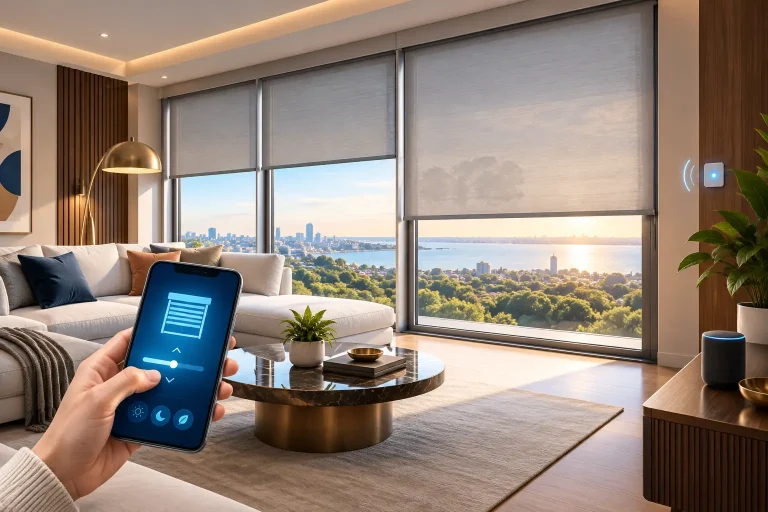
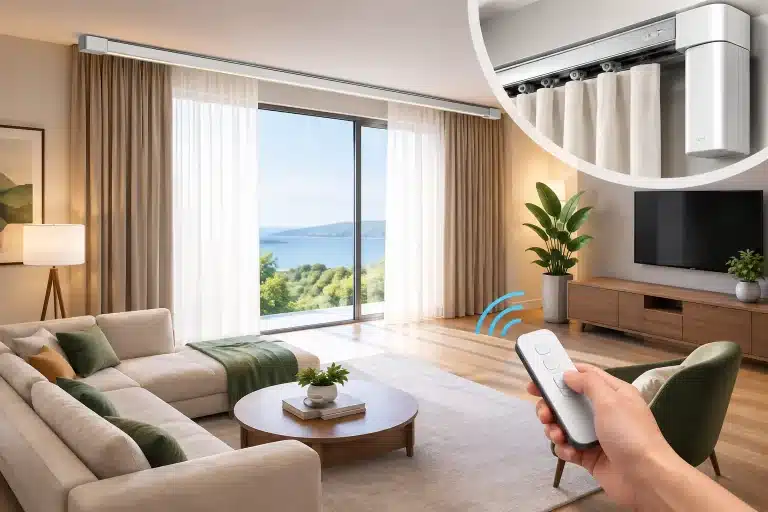
For summer, rooms with direct afternoon sun benefit from an earlier closing time. Bedrooms may also be programmed to close before the warmest part of the day, helping them feel cooler at bedtime. In either season, manual override remains valuable. If you are enjoying a bright winter afternoon or need more privacy, a wall switch, remote control or mobile phone app gives you immediate control.
Smart home integration can take this further. Some homeowners pair curtain schedules with lighting, heating or occupancy routines. For example, curtains can close as the heating moves into its evening setting, or open gradually as part of a morning routine. The best setup is usually the simplest one that suits your household, rather than an overly complicated system that no one wants to adjust.
Why made-to-measure fitting makes a difference
A curtain’s thermal performance is affected by more than its fabric. Gaps around the edges allow air to circulate against cold glass, reducing the benefit of the curtain itself. This is why track placement and curtain coverage deserve attention when planning an automated system.
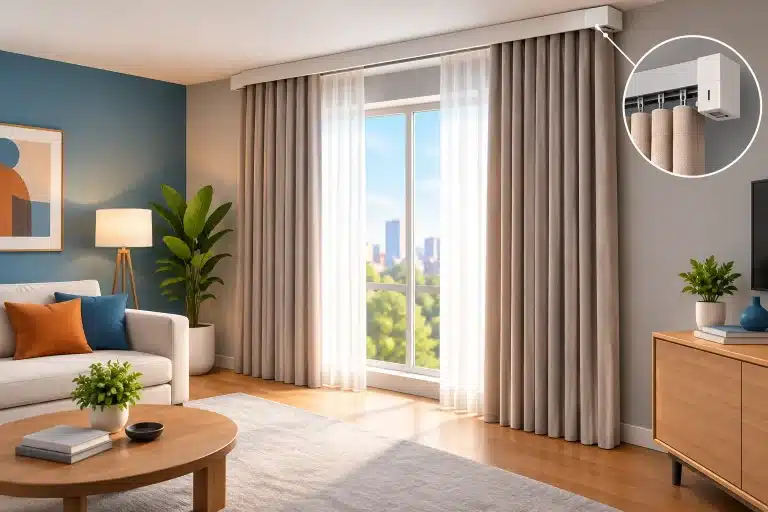
For the strongest result, the track should allow curtains to overlap the window opening where possible, with enough return at the sides to reduce gaps. In a recess, the available depth needs checking carefully. On a wall-to-wall installation, the track may be positioned to give generous coverage beyond the glazing. Bay windows, corners and offset layouts need equally considered planning, as an awkward track route can leave unwanted openings or compromise the finished appearance.
Heavier interlined or thermal-lined curtains can improve the effect further, but they also need a suitable motorised track and correctly specified carriers. This is one reason why made-to-measure guidance matters. A system should be designed around the window, curtain weight and intended operation, rather than treating a motor as an add-on to a standard rail.
What smart curtains will not do
It is worth being clear about the limits. Smart curtains cannot fix a severely draughty window, stop cold air entering through damaged seals or replace a heating system that is poorly controlled. If you can feel a persistent draught around the frame, address that first.
They also use a small amount of electricity to operate. For most households, this consumption is very low because the motor runs only for short periods while opening or closing. The practical question is whether improved timing and more reliable use of curtains outweigh that small use of power. In a room where curtains would otherwise stay open after dark or remain shut when daylight could be used, they often can.
The financial return will vary too. A motorised curtain system is a premium home improvement, and it should not be chosen solely on the expectation of rapid payback through energy savings. Its wider value includes everyday convenience, better privacy, enhanced security routines when you are away, accessibility for people with restricted mobility and a more polished finish for large or difficult-to-reach windows.
Planning a system around your home
Before choosing controls, consider the room’s orientation, window size and daily pattern. A west-facing glazed extension needs a different programme from a north-facing bedroom. A family room may prioritise daylight and privacy, while an upstairs room may need assistance with a high or awkwardly placed track.
It also helps to decide early how the system will be powered and controlled. A wired installation can be coordinated during a renovation or new build, while other control options may suit completed homes. Accurate measurements are essential, particularly for bays, recesses and wall-to-wall runs. Confirming the track layout before decorating, plastering or installing joinery can prevent avoidable compromises later.
At Smart Curtains, this is where installation planning and fitting drawings can be as valuable as the motor itself. A well-specified track helps curtains close neatly, operate reliably and provide the coverage intended for the room.
Automated curtains are at their most useful when they quietly follow the rhythm of your home: welcoming daylight when you want it, protecting privacy when you need it and closing against the evening chill without becoming another task on the list.