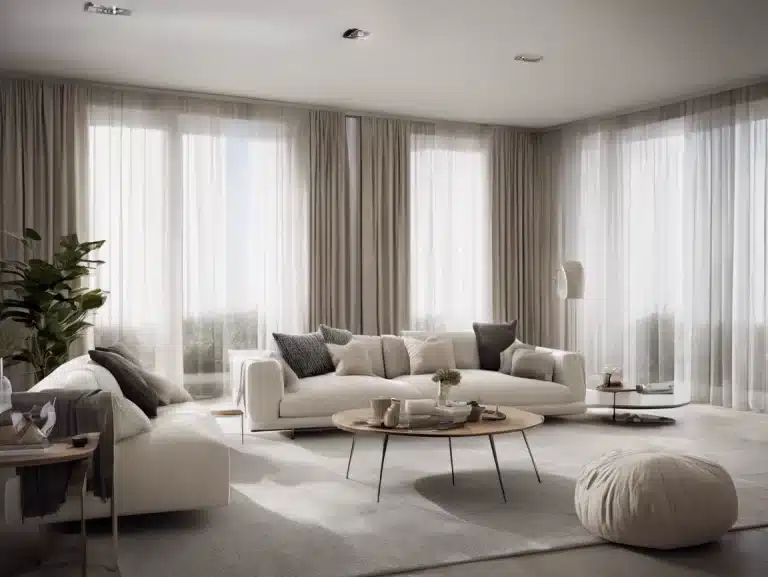
A motorised curtain system can look wonderfully simple once it is in place: press a button, set a timer or ask your smart home system to close the room for the evening. The work that creates that calm result happens much earlier. Made to measure electric curtains are planned around the room, the window shape, the chosen curtains and the way you want to live in the space.
Thank you for reading this post, don't forget to subscribe!That distinction matters. An off-the-shelf track may be tempting for a straightforward window, but it can leave awkward gaps, insufficient overlap or a track that does not allow the curtains to stack neatly. For wider glazing, bays, corners and wall-to-wall treatments, accurate specification is what turns automation from an interesting feature into a refined part of the home.
Why made to measure electric curtains change the finish
A made-to-measure system starts with the track, not simply the width of the glass. Curtains often need to extend beyond the window to improve privacy, reduce light around the edges and give the room a more balanced finish. The required track length may therefore be the full wall width, or it may be designed to reach from one return to another within a recess.
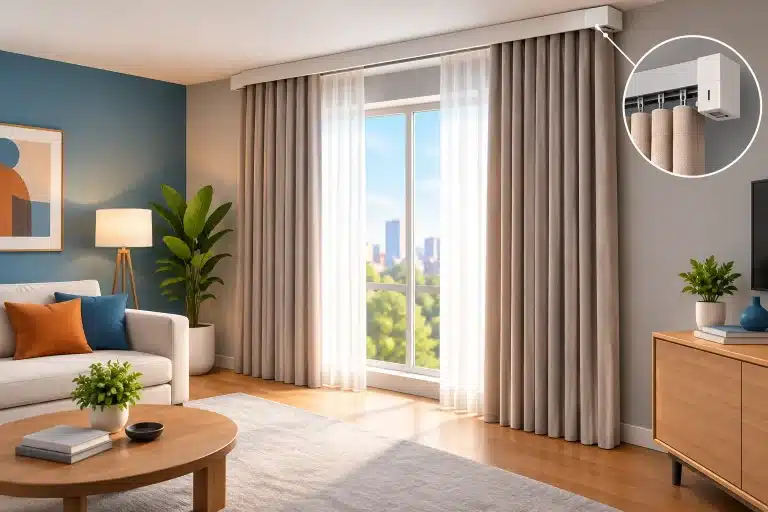
The way curtains stack when open is equally significant. Heavier lined curtains and full heading styles take up more space at each end of the track. If this is not allowed for, the open curtains can cover part of the window, reducing daylight and making a generous window feel smaller. Careful planning positions the stack where it is least intrusive, while ensuring the fabric can travel fully and smoothly.
Precision is particularly valuable where a room has features that do not quite follow standard dimensions. A bay may have different angles on each side. A track may need to turn a corner, pass an offset section of wall or meet a pelmet. In these settings, a bespoke track layout is not a luxury detail. It is the practical route to a system that operates correctly and looks intentionally designed.
Begin with how you want the room to work
Before taking measurements, consider the daily purpose of the curtains. In a bedroom, the priority might be timed opening in the morning and dependable closure at night. In a living room, a discreet wall switch can make it easy to manage privacy as daylight changes. For a large glazed extension, app control and smart home integration may be more useful, allowing several tracks to move together.
Electric curtains are also a valuable improvement for people who find manual curtain handling difficult. Reaching behind furniture, managing heavy fabric or operating curtains across wide doors can become a daily frustration. A remote, wall control or automated schedule removes that effort without changing the character of the room.
Security is another reason homeowners choose automation. When you are away on holiday, scheduled opening and closing can make a home appear occupied. Timers should reflect normal routines rather than operating at exactly the same minute every day, but they provide welcome peace of mind alongside other sensible home security measures.
Planning made to measure electric curtains
The most successful installations bring together three elements: the track layout, the fabric arrangement and the electrical or smart control requirements. They should be considered as one plan, especially during a renovation or new build when wiring and decorative details are still flexible.
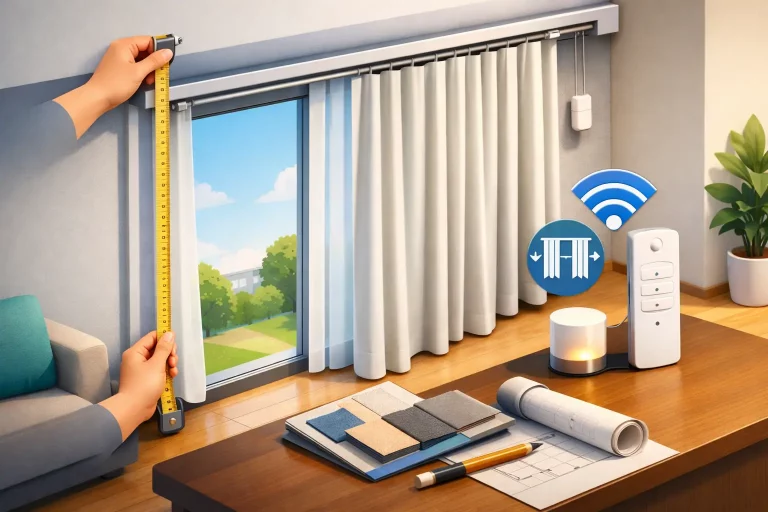
Measure the intended track position
The measurement needed is usually the finished track length, rather than the visible width of the window. This could be a simple straight run, a recess-to-recess dimension or a wall-to-wall treatment. The position of the track also needs consideration. Ceiling fixing can create a clean, contemporary look and may suit tall rooms, while face fixing beneath a pelmet or into a recess can be the better answer where ceiling access is limited.
For a bay window, each straight section and angle must be checked carefully. A rough sketch with measurements is helpful, but photographs of the space can also reveal obstructions that figures alone may miss, such as window handles, radiators, coving or uneven returns.
Allow room for the curtains to move
The motorised track must suit the curtain weight, heading style and whether the curtains draw from one side or split in the centre. A centre-opening arrangement is often attractive on symmetrical windows and doors. One-way drawing can be preferable where one side offers a better stacking position or where furniture limits the available space.
Do not overlook the drop of the curtains. Floor-length fabric should be measured with the final track position in mind, not the temporary position of a pole or existing rail. This is a common source of disappointment when a room is being redecorated. If new flooring, a window seat or a false ceiling is planned, those finished levels should inform the curtain specification.
Decide on power before the room is complete
Mains-powered tracks need a suitable power point in the right location, ideally concealed but accessible for future servicing. Battery-powered options can be useful where running a cable is impractical, although charging or battery replacement needs to be part of the ongoing routine. The best choice depends on the window, the frequency of use and how much building work is planned.
For integrated smart homes, the selected control system should be discussed early with the electrician or automation installer. It is far easier to coordinate cabling, switches and control locations before plastering and decorating than to adapt a finished room later. This does not mean every installation needs complex automation. Many households are perfectly served by a quiet motor, a remote control and a well-positioned wall switch.
The details that prevent costly compromises
Motorised curtain tracks are often installed at the end of a project, but their requirements should be resolved much earlier. A small amount of planning can prevent rushed decisions once joinery, lighting or furniture is already in place.
Check whether there is adequate fixing support where the track will sit. A heavy curtain treatment needs a secure mounting surface, and a ceiling void may require timber noggins or another suitable fixing arrangement. If a pelmet, curtain box or recessed channel is being built, its internal dimensions must accommodate both the track and the moving curtain heading.
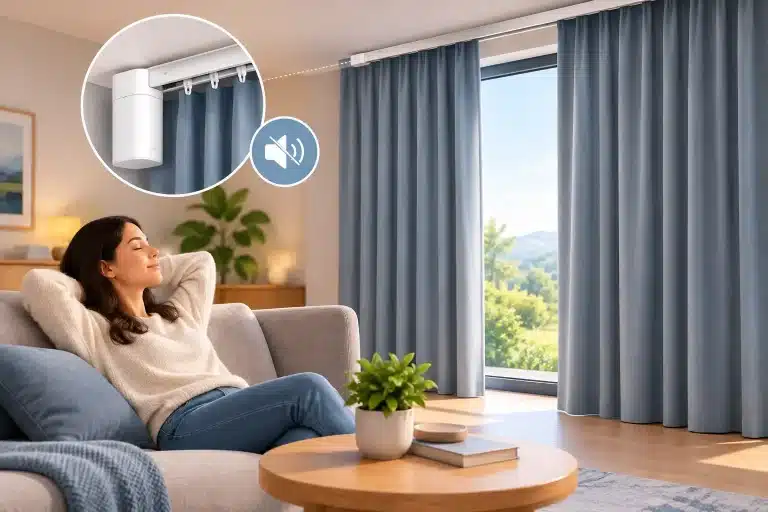
Also think about access. The motor should be positioned where it can be reached if maintenance is ever required, without making it visually dominant. This is especially relevant in curtain boxes and tight recesses. A well-planned system keeps the technology discreet while leaving sensible access for the future.
At Smart Curtains, installation planning support is used to check these practical points before a bespoke system is produced. Fitting drawings and dimension verification can be particularly reassuring when the project includes unusual angles, multiple tracks or coordination with other trades.
Choosing controls that feel natural
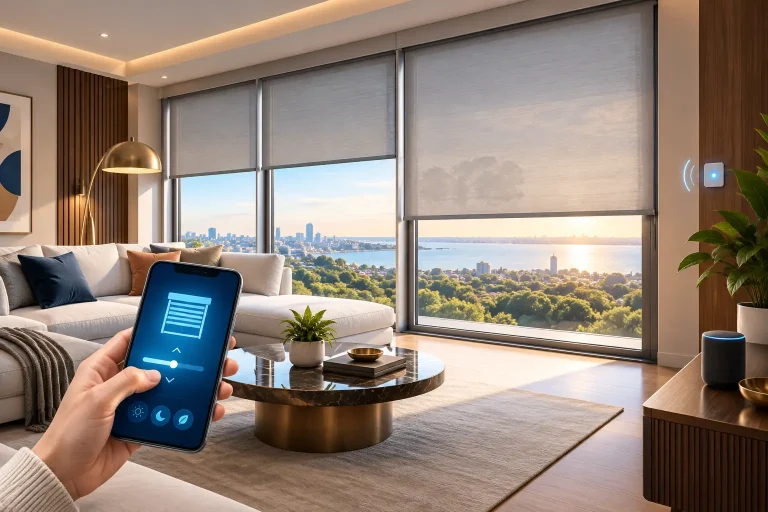
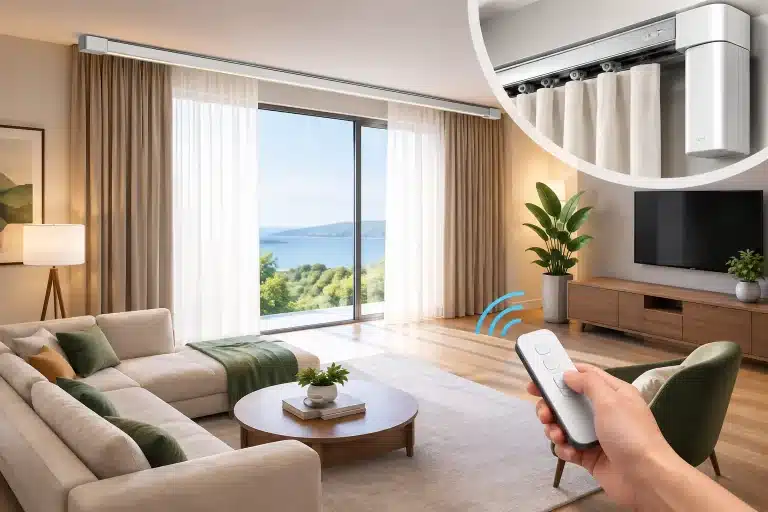
The best control method is usually the one you will use without thinking. A wall switch offers immediate, familiar operation and suits shared rooms. A remote control is convenient from the sofa or bed. Smartphone control can be useful for schedules and for checking curtains while away from home. Smart home integration can coordinate curtains with lighting, heating or voice control where that forms part of the household setup.
There is no need to choose only one method. A system can combine a wall switch for everyday use with a remote or app for flexibility. For bedrooms, an open schedule paired with a manual override gives the benefits of a gentler morning routine without making the room feel over-automated.
When bespoke support is worth having
A straight, single window with light curtains may be relatively uncomplicated. Even then, exact track placement and power access deserve attention. The value of specialist guidance increases quickly when there are bays, corners, tall ceilings, large expanses of glazing, heavy interlined fabric or a requirement to integrate with a wider smart home system.
A quote should reflect more than a motor and track length. It should account for the layout, fittings, control choice, track configuration and the details that allow the curtains to operate as expected. Asking the right questions before ordering is far more economical than adapting an unsuitable system after it arrives.
The finished result should not draw attention to the mechanics. It should simply give you privacy when you want it, daylight when you need it and a room that feels properly considered. Start with accurate measurements and a clear idea of how the space should work, and the right electric curtain system will feel like it always belonged there.