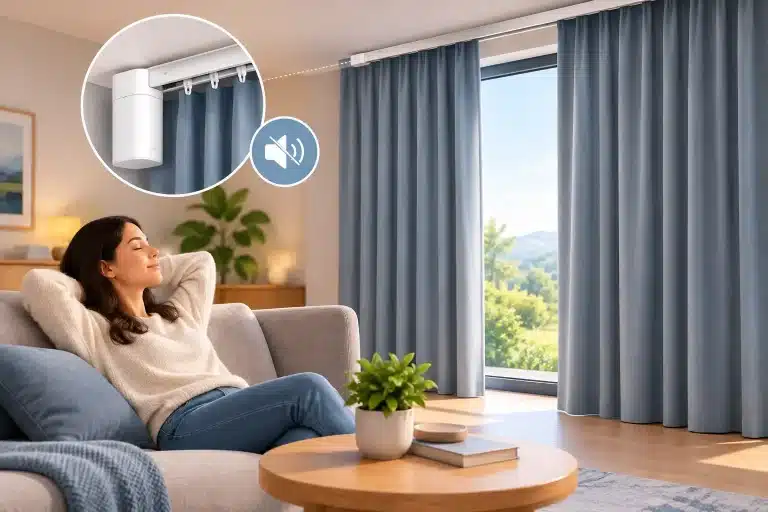
Picture the end of a winter’s day: you are settled on the sofa, the room is warm, and the last thing you want is to walk around several windows closing heavy curtains. This is where many homeowners begin asking, are motorised curtains worth it? For the right room and lifestyle, they are far more than a novelty. They turn a repetitive household task into something that happens at the touch of a button, to a timer, or as part of your wider smart home routine.
Thank you for reading this post, don't forget to subscribe!The value is not simply in adding a motor to a curtain track. A well-planned, made-to-measure system can make a room feel more refined, improve everyday comfort and give you greater control over privacy and security. Whether that justifies the cost depends on your windows, your routines and how the system is specified.
What do motorised curtains actually change?
Manual curtains are simple, but they ask something of you every day. They need opening in the morning, closing at night and adjusting when glare, privacy or the temperature changes. That is hardly difficult for one small window, but it is less appealing across a large glazed extension, a wall of curtains in a bedroom, or a tall living-room window where the heading and fabric are substantial.
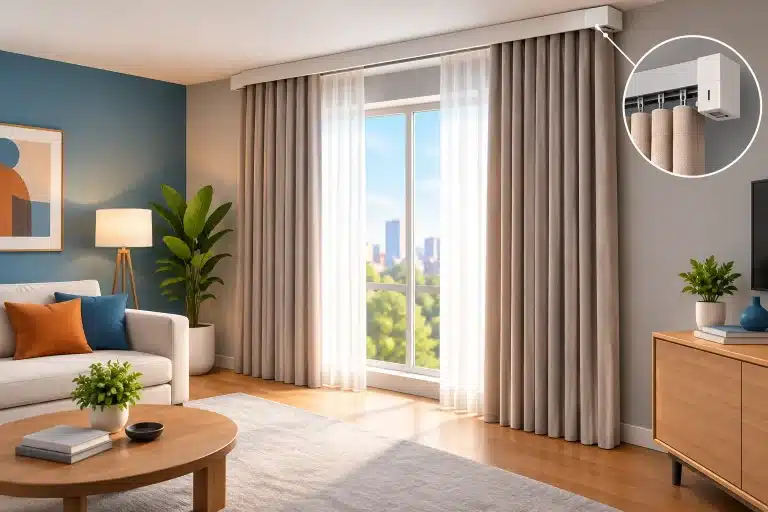
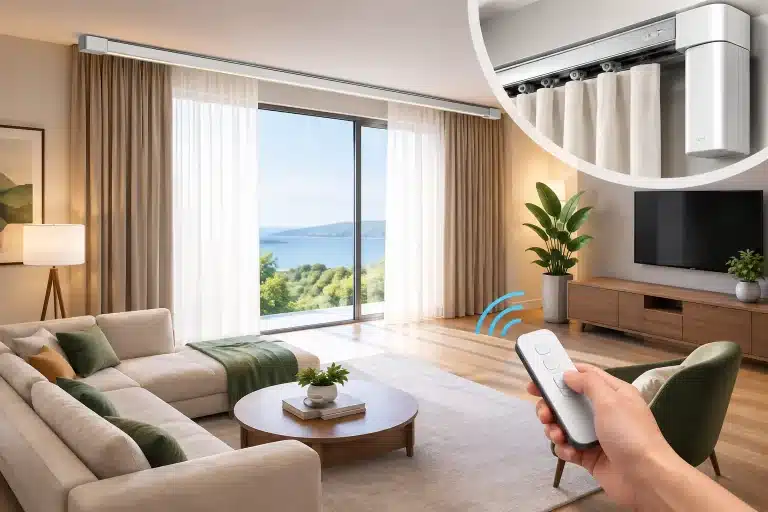
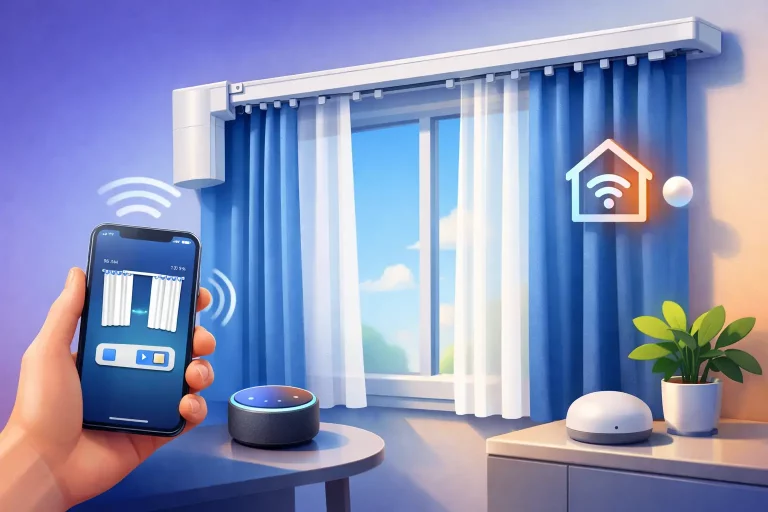
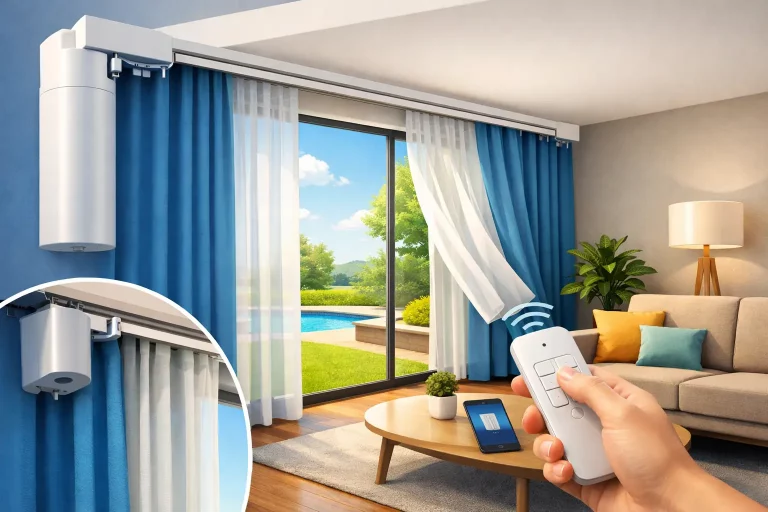
Motorised curtains remove that friction. A discreet motor moves the curtains along an electric track, controlled by a wall switch, remote, app, timer or compatible home automation system. You can wake to daylight without getting out of bed, close the curtains while preparing for the evening, or schedule them to operate when you are away.
The effect is often most noticeable in rooms used throughout the day. In a kitchen-diner, the curtains can close as the family settles down. In a bedroom, they can form part of a calmer morning and evening routine. In a media room, they can reduce glare without interrupting what you are doing.
Are motorised curtains worth it for everyday convenience?
For many households, convenience is the clearest reason to invest. It is not about avoiding every small task. It is about making the home respond better to the way you live in it.
If you have wide curtains that take two hands to draw, awkward furniture positioned in front of a window, or several sets of curtains to manage, automation quickly becomes useful rather than indulgent. The same applies to high-level windows and large curtain runs in modern open-plan spaces. A single control can operate one track, several tracks in a room, or selected zones around the house, depending on the system.
Timed control adds another layer of usefulness. Curtains can open at a set time in the morning and close as dusk approaches, helping your rooms feel occupied and cared for without a daily reminder. App control is especially practical when you are already in bed, out for the evening or away on holiday.
That said, a motorised system may be unnecessary for a rarely used small window with lightweight curtains that are easy to reach. The strongest return comes where the daily effort, scale or position of the curtains makes manual control less convenient.
Privacy and security can be part of the investment
Curtains play a quiet but important role in how secure a home feels. At night, closing them promptly helps prevent overlooking into living areas and bedrooms. With automation, that does not rely on somebody remembering to do it after a busy evening.
When you are away, scheduled curtain movement can also make a property appear lived in. It should never replace appropriate home security measures, but it can be a sensible supporting feature, particularly for homes that are vacant for extended periods.
There is also a practical privacy benefit for street-facing rooms, flats and homes close to neighbouring properties. Being able to close curtains instantly from a switch or remote is useful when daylight fades earlier than expected, or when you want privacy without leaving the comfort of your seat.
Accessibility is where automation can make the biggest difference
For people with restricted mobility, joint pain, visual impairment or reduced strength, opening and closing curtains can be more difficult than it first appears. Heavy interlined curtains, wide bays and furniture layouts can all create an unnecessary daily obstacle.
Motorised control gives the homeowner greater independence. A simple wall switch can be easier to use than handling fabric across a long track, while a remote or smartphone can allow operation from anywhere in the room. Integrating the curtains with an existing smart home system may provide further options, such as voice control or routines linked to lighting.
For families, automation can also make large curtains easier to manage without children pulling on fabric or tracks. The right system should still be specified carefully, but the day-to-day experience is generally more controlled and gentler on the curtains themselves.
The finish matters as much as the motor
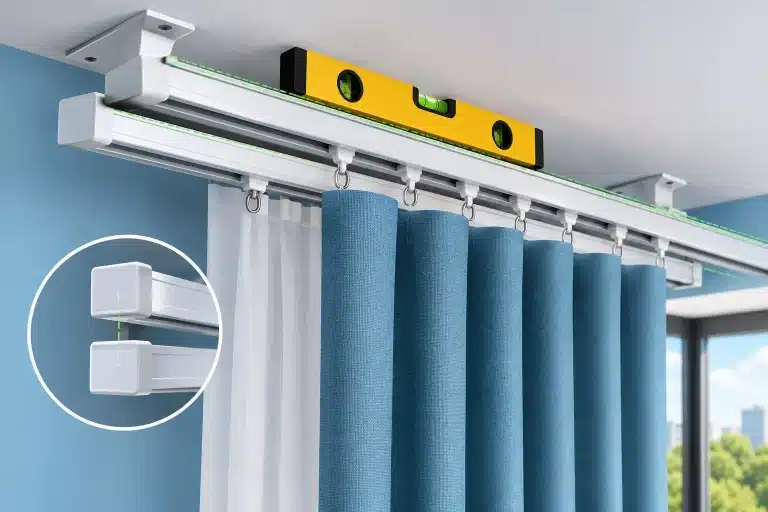
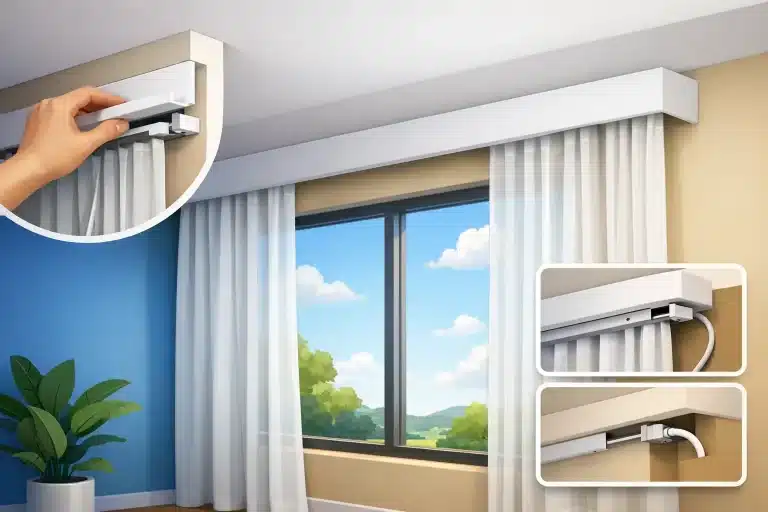
A motorised curtain system is only as good as its planning. Tracks need to suit the curtain weight, heading type and stack-back space. The motor position needs considering, particularly where appearance and access are important. In bay windows, corners, recesses and wall-to-wall installations, the track layout can be the difference between a polished result and a system that feels compromised.
This is why made-to-measure advice matters. A track that is a few centimetres short, positioned too close to a wall, or designed without allowing for curtain stacking can affect both how the curtains hang and how well they cover the window. It may also leave less room for pelmets, blinds, radiators or opening doors.
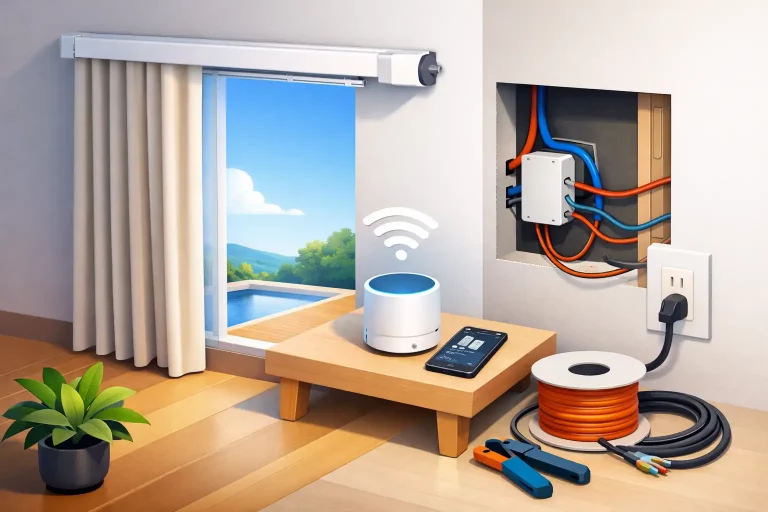
For new builds and renovations, it is helpful to consider the curtains early. If you want a wired motor, your electrician can allow for the correct power position before decorating is complete. Battery-powered options can suit situations where wiring is not practical, although they will require occasional charging. The best choice depends on the room, the curtain size and how often the system will be used.
At Smart Curtains, planning support is built around these details: confirming dimensions, producing fitting drawings and helping homeowners coordinate with builders, electricians and automation specialists where needed. That support is particularly valuable for non-standard windows, where a generic off-the-shelf track is unlikely to provide the same result.
What are the trade-offs?
Motorised curtains cost more than a manual track, both because of the motor and because a properly fitted system is usually tailored to the space. It is worth viewing this as a home improvement decision rather than a low-cost accessory. The price can be easier to justify in the rooms where you use the curtains every day, rather than trying to automate every window at once.
There are practical choices to make, too. Wired systems need power planning, while battery systems need charging. Smart home integration can be highly convenient, but it is only worthwhile if you will genuinely use it. A reliable wall switch or remote is often all some households need.
You should also consider the fabric. Very heavy curtains need a motor and track designed for their weight, while the curtain heading, lining and fullness affect how the system performs. Choosing the motor first and the curtains later can lead to avoidable limitations. It is better to plan them together.
When motorised curtains make most sense
They tend to be an especially worthwhile choice for large or heavy curtains, hard-to-reach windows, bedrooms, open-plan living areas and homes with a growing smart home setup. They are also a considered investment where accessibility, privacy or holiday security is a priority.
If you are refurbishing, building an extension or replacing window treatments anyway, adding automation at that stage is often more straightforward than retrofitting it later. It allows the track, power supply, fabric and interior detailing to be considered as one finished scheme.
The best question is not whether a motorised curtain track is technically necessary. It is whether it will make your home easier, more comfortable and more enjoyable to live in every day. If the answer is yes, careful specification will ensure it feels like a natural part of the room, not an added gadget.