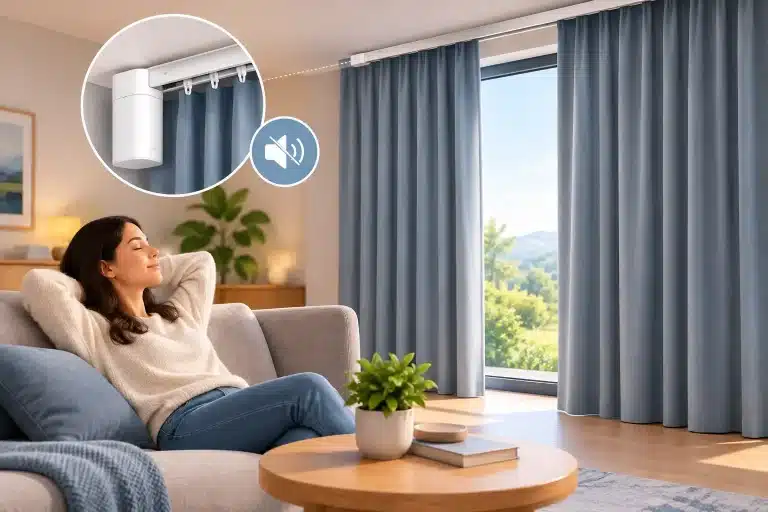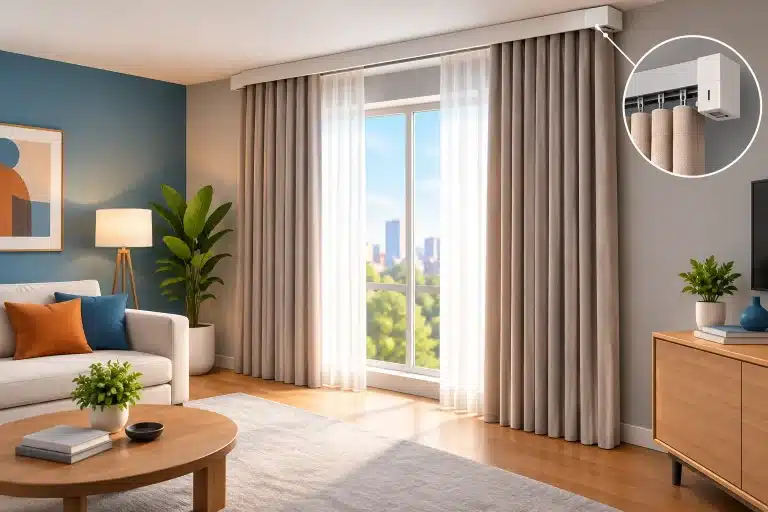
A curtain that catches on a bay window bend, leaves a gap at the centre, or needs a chair moved to reach it is not a small daily irritation – it is a sign that the system has not been designed around the room. The best electric curtain systems do more than open and close fabric at the touch of a button. They make large, high-level and awkwardly shaped windows feel effortless to live with, while giving the room a more considered finish.
Thank you for reading this post, don't forget to subscribe!For a made-to-measure installation, the right choice is rarely about selecting a motor alone. Track layout, curtain weight, heading style, power supply and control method all need to work together. That is particularly true in period properties, renovations and new-build homes where recesses, coving, corner windows and wall-to-wall curtains can affect the specification.
What makes the best electric curtain systems?
The best system is the one that suits the window, the curtains and the way you want to use the room. A quiet, reliable motor matters, but it is only part of the picture. A carefully measured track that allows the curtains to stack neatly and fully clear the glass can make just as much difference to the finished result.
For most homes, a motorised track should provide smooth operation, a tidy appearance and controls that feel natural from day one. It should also be specified with enough capacity for the curtain fabric. Heavily lined, interlined or blackout curtains can be substantial, especially across a wide patio door or a full-height bedroom window. Choosing a track by width alone can lead to slow movement, excess strain or a system that is simply not right for the treatment.
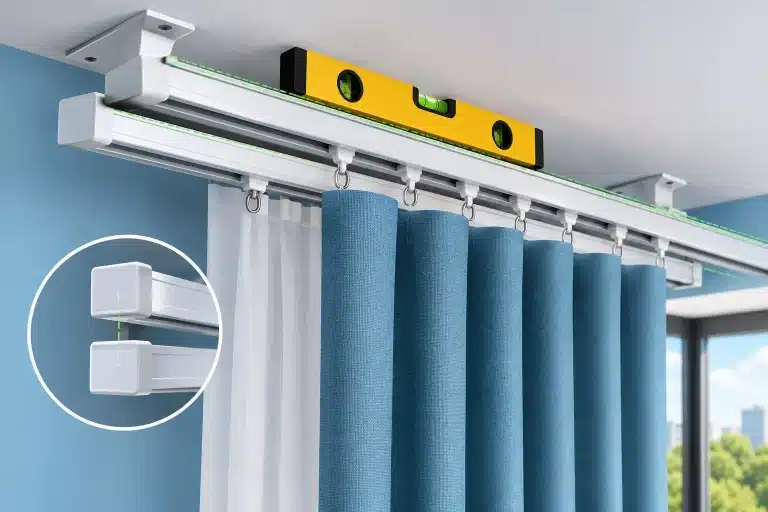
Look for a system designed for made-to-measure curtains rather than a one-size-fits-all rail. The track should be cut or formed to suit the exact space, with appropriate brackets and fixing positions. This gives greater confidence that the curtains will travel properly and the installation will look intentional rather than added as an afterthought.
A track layout that follows the room
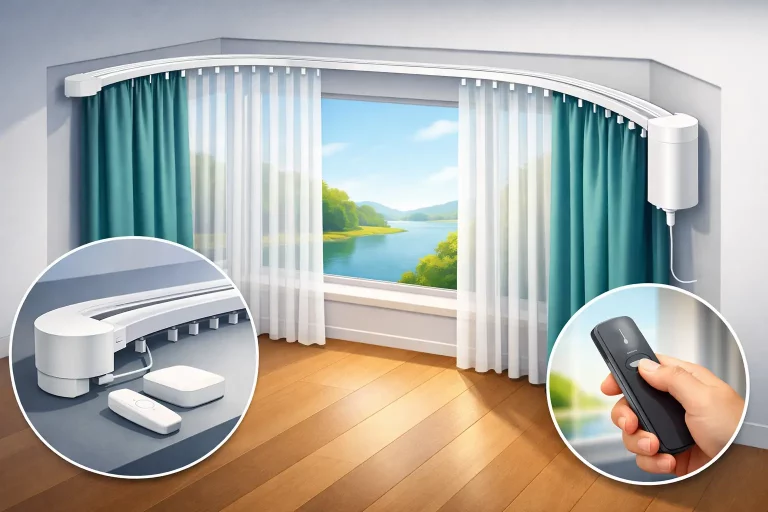
Straight windows are relatively simple, but they are not the only consideration. Bay windows may require a curved, angled or segmented track. Corner glazing can need a continuous run so the curtain moves around the return. An offset layout may be necessary where a wall, pelmet or architectural feature prevents the motor sitting in the most obvious position.
These details are where planning support is valuable. A drawing that shows the track, motor position, stack-back and electrical point before fitting begins can prevent costly compromises later. It also helps your curtain maker, builder and electrician work from the same information.
The right opening arrangement
A centre-opening arrangement creates a balanced look, with curtains drawing from each side towards the middle. It is often a strong choice for symmetrical windows, French doors and formal living spaces. A one-way draw sends all the fabric to one side, which can be more practical if one side of the window has a wall return or if you want to preserve a particular view.
Neither option is automatically better. The key question is where the curtains will sit when open. If the stack-back covers too much glass, it can reduce daylight and make a wide window feel smaller. This is worth establishing early, especially with thick curtains or limited wall space beside the window.
Choose controls around everyday life
Electric curtains should remove effort, not introduce another device to manage. The ideal control option depends on how the room is used and who uses it.
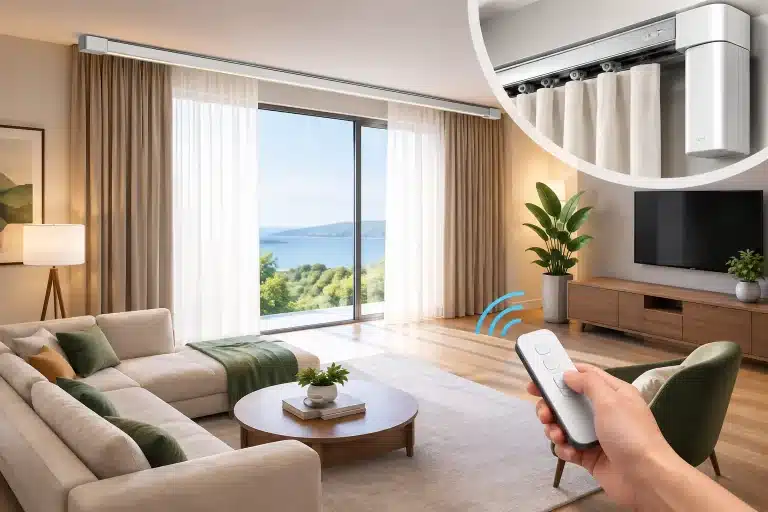
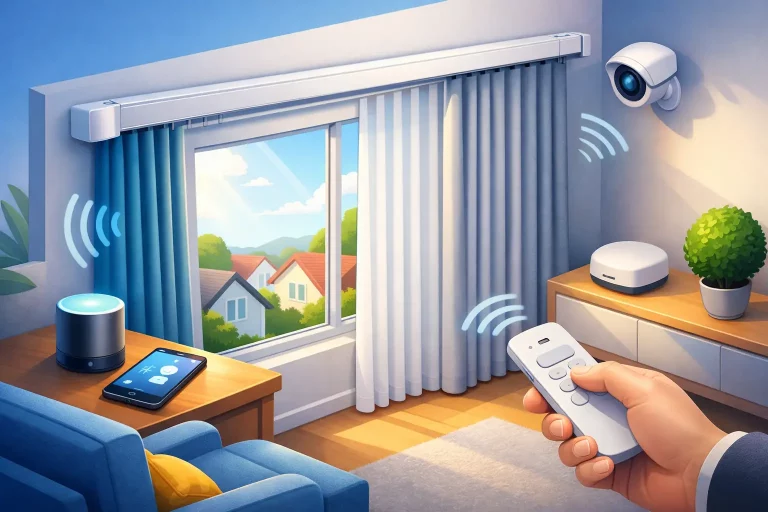
A wall switch gives a familiar, fixed control point and suits bedrooms, living rooms and projects where the electrics are being planned during renovation. A handheld remote is straightforward and flexible, particularly where chasing cables into walls is not desirable. Smartphone control adds useful scheduling, allowing curtains to open with the morning routine or close at dusk. For smart home households, integration can bring curtains into wider scenes, such as lowering blinds, switching on lights and closing curtains together for the evening.
Timers are about more than convenience. When you are away on holiday, scheduled movement can make the property appear occupied. In bedrooms, automated opening can provide a gentler start to the day than an alarm followed by manually wrestling with curtains. For people with restricted mobility, the benefit is more fundamental: privacy and daylight control remain easily accessible without stretching, pulling or moving furniture.
It is sensible to decide on control requirements before ordering, not after the track is in place. The motor and wiring approach may differ depending on whether you want a simple remote, a wall switch, app control or a fully integrated smart home system.
Power options: plan early where possible
Mains-powered tracks are a popular choice for permanent, high-use installations. They offer dependable operation and are well suited to heavier curtains and larger openings. The neatest installations usually involve a concealed electrical supply positioned for the motor, which is why coordination with an electrician during building work can be worthwhile.
Battery-powered options can be helpful where wiring is impractical, particularly in completed rooms. However, they involve periodic charging or battery changes, and suitability depends on curtain weight, frequency of use and access to the motor. For a tall stairwell window or a large, heavily dressed opening, a mains solution may be the more practical long-term option.
The motor position also deserves attention. It may be placed at either end of the track depending on access, clearances and the desired appearance. In some rooms, hiding it behind the curtain stack is straightforward; in others, a pelmet, recess or carefully considered return can produce a more refined result.
How to compare electric curtain systems fairly
Comparing systems on price alone can be misleading. A low initial figure may not include the correct track shaping, specialist brackets, control equipment, delivery configuration or advice needed to fit it successfully. The system that represents best value is the one that arrives correctly specified for your room and avoids revisions once work is underway.
When reviewing options, consider these practical questions:
- Can the track be made to your exact width and formed for bays, corners or offsets?
- Is the motor rated for the weight and style of your curtains?
- Which controls are included, and can the system support the smart home setup you want?
- Is there a clear plan for power, fixing points and motor placement?
- Will you receive dimensions and fitting guidance before installation?
These questions are especially useful for renovations. A good electric curtain system is often fitted near the end of a project, but its requirements need to be considered much earlier. Knowing where cables, sockets, joinery and pelmets will sit helps protect the clean look homeowners expect from automation.
Measurements are more than window width
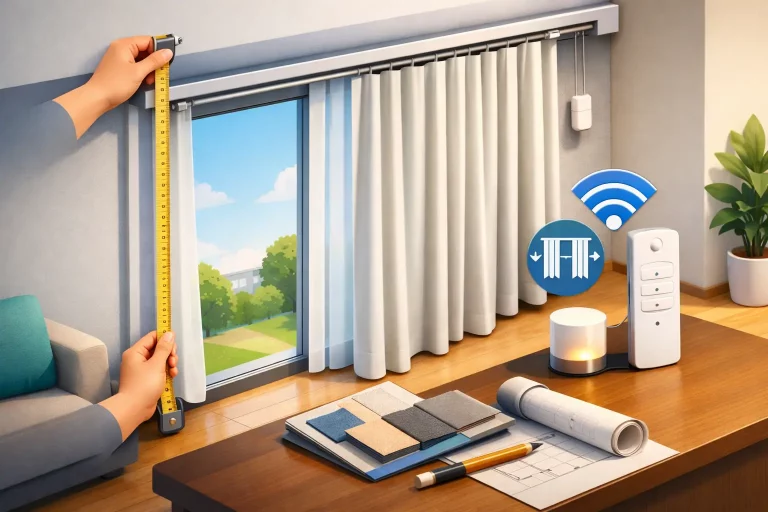
For a standard curtain pole, measuring can feel fairly simple. Motorised tracks call for a little more thought because the space must accommodate the track, brackets, motor and the gathered curtain fabric when open.
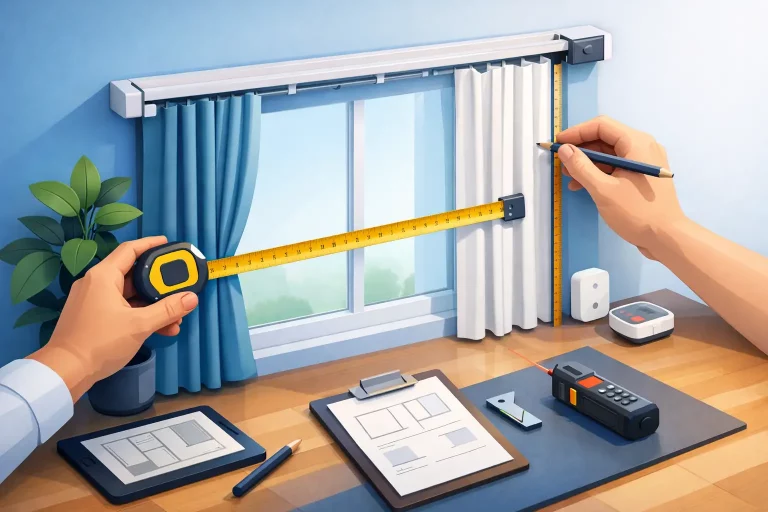
Start with the planned track position rather than the glass alone. Curtains may sit inside a recess, above it, or across an entire wall for a softer, more luxurious effect. Check ceiling projections, radiators, air vents, coving and opening doors. If curtains need to pass behind furniture, allow sufficient clearance for both the fabric and the track.
For bays and shaped layouts, photographs and a sketch with key dimensions can be just as useful as a single measurement. They reveal obstructions and angles that a width measurement cannot. With bespoke systems, verification and fitting drawings provide reassurance before manufacturing begins.
When bespoke support makes the difference
Electric curtains are straightforward when the specification is right. The challenge is that each home presents different details: a shallow recess, a ceiling-mounted track, a wide span, a curved bay or a requirement to coordinate with another automation system.
This is why a consultative approach is often preferable to buying a generic kit. Smart Curtains helps homeowners turn room measurements and design intentions into a practical specification, with planning support for track layouts, power requirements and installation. The aim is not to overcomplicate the project, but to resolve the important decisions before they become site problems.
A well-planned motorised curtain track should fade into the background once it is fitted. Your curtains move when you need them to, the controls make sense, and the room keeps its polished appearance. If you are planning a new installation, begin with the window layout and the way you want the room to feel – the right system will follow from there.