The moment you stop having to reach behind a sofa, lean over a kitchen island, or wrestle with a heavy pair of lined curtains every morning, the benefits of electric curtains become very clear. What looks like a luxury at first often turns out to be a practical upgrade – one that improves how your home feels, functions and responds to daily life.
Thank you for reading this post, don't forget to subscribe!For many homeowners, the appeal starts with convenience. For others, it is about accessibility, privacy, security or creating a more polished finish in a newly renovated room. In reality, electric curtains tend to solve several problems at once, which is why they are increasingly being specified not only in high-end projects, but in family homes, extensions and everyday living spaces across the UK.
Why the benefits of electric curtains go beyond convenience
Convenience is the obvious headline, but it is not the full story. A motorised curtain system changes the way you use a room because opening and closing curtains becomes effortless and consistent. Instead of adjusting window coverings only when you can be bothered, you are more likely to use them properly throughout the day.
That matters more than people often expect. Curtains are not just decorative. They influence privacy, light levels, comfort and atmosphere. If they stay half-drawn because they are awkward to reach, or remain shut because the window is difficult to access, the room is never working as well as it could. Electric operation removes that friction.
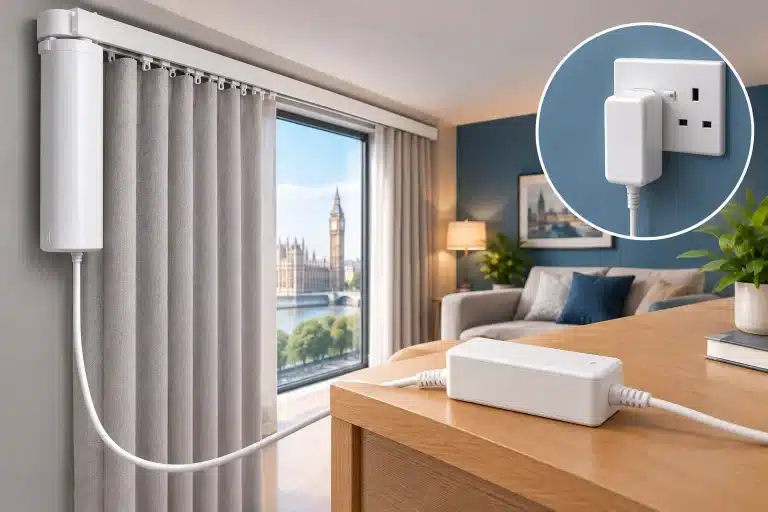
There is also a quality aspect. When curtains are drawn smoothly on a properly specified motorised track, the finish tends to feel more refined. The folds stack more neatly, the movement is controlled, and the overall impression is calmer and better considered. In rooms where details matter, that makes a visible difference.
Everyday ease in rooms you use most
The most immediate benefit is simple: electric curtains make day-to-day living easier. In a bedroom, you can open the curtains without leaving the bed. In a living room, you can close them for the evening without stepping around furniture. In a dining space with full-height glazing, large curtain runs stop feeling cumbersome.
This is especially valuable where windows are wide, tall or awkwardly positioned. Wall-to-wall curtains can be heavy. Bay windows and corner layouts can be difficult to handle manually. If furniture sits in front of part of the window, regular opening and closing becomes inconvenient very quickly. A motorised track takes away that effort.
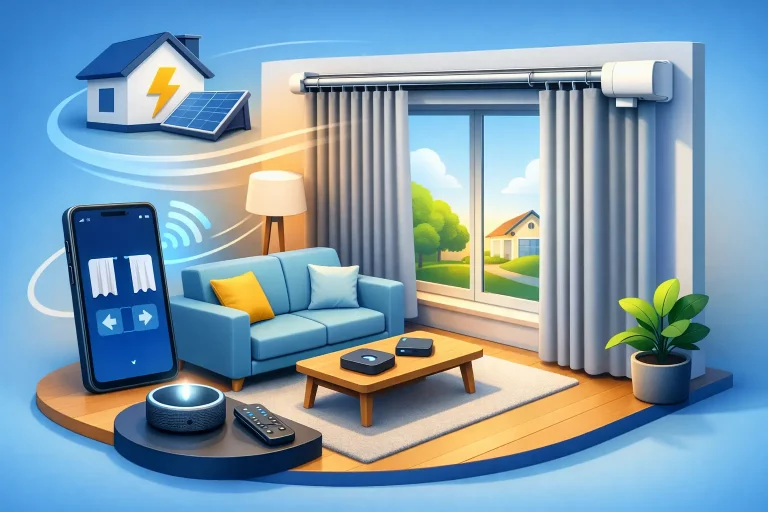
Once homeowners get used to that ease, it tends to become part of the routine. A remote control by the bedside, a wall switch near the door, or a timed schedule on a phone can all make the room feel more responsive without adding complexity.
Better privacy with less effort
Privacy is one of the strongest practical benefits of electric curtains, particularly in overlooked homes, street-facing rooms and spaces with large expanses of glazing. The easier it is to close curtains at the right moment, the more likely you are to maintain privacy without compromising the feel of the room.
This is helpful in homes where the boundary between indoors and outdoors has changed. Rear extensions, bifold doors and wide glazed openings bring in fantastic light, but they can also leave rooms exposed in the evening. Electric curtains let you respond quickly, whether that means closing everything at dusk or setting a timer so the house adjusts itself.
In bedrooms, this can be just as important. If you want blackout curtains to close fully each night, automated operation removes the temptation to leave gaps or put it off. The result is a room that feels more restful and more private with very little effort.
A simple boost to home security
When people talk about the benefits of electric curtains, security should not be overlooked. A house that looks occupied is generally a less appealing target than one that appears empty for days at a time. Automated curtains can help create that lived-in appearance when you are away.
By setting opening and closing times, you can make curtain movement part of a broader home routine. That may be enough on its own, or it may sit alongside lighting schedules and other smart home settings. Either way, the visual effect is useful – the home behaves more like it is being actively used.
Of course, electric curtains are not a substitute for locks, alarms or sensible security measures. But they can play a worthwhile supporting role, especially for homeowners who travel regularly or want extra peace of mind when the property is unoccupied.
Accessibility that makes a real difference
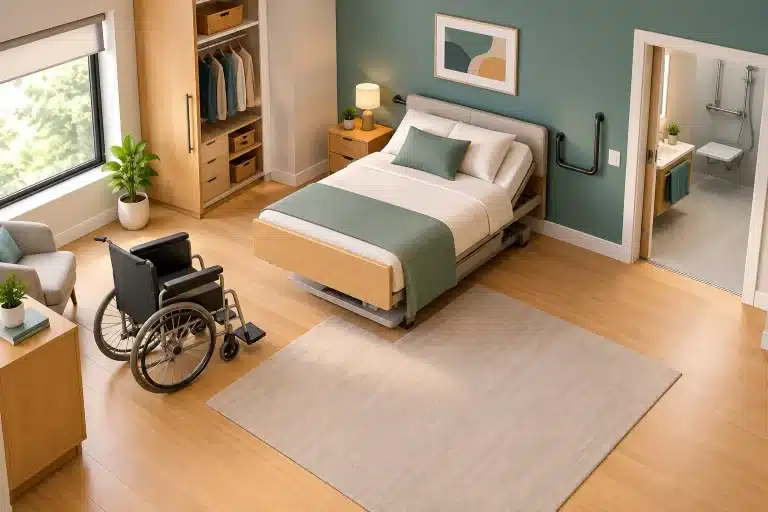
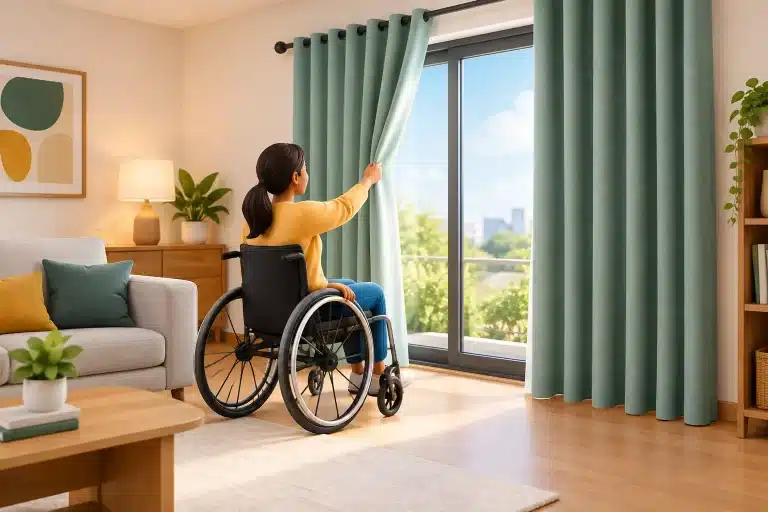
One of the most meaningful advantages of electric curtains is improved accessibility. For people with restricted mobility, limited strength, joint pain or balance concerns, manually drawing curtains can be more difficult than it sounds. What is a small task for one person can be a daily frustration for another.
Motorised operation can remove that barrier almost completely. A handheld remote, wall switch or smart control allows curtains to be used without stretching, pulling or walking across the room. In homes where independence matters, that can significantly improve comfort and confidence.
This is also valuable in multi-generational households and family homes. Children can use curtains more easily and safely when there are no cords to pull. Older homeowners can continue to enjoy full control of their space without relying on awkward manual handling. Good automation is not about adding technology for its own sake. It is about making the home easier to live in.
Smart home integration without unnecessary complication
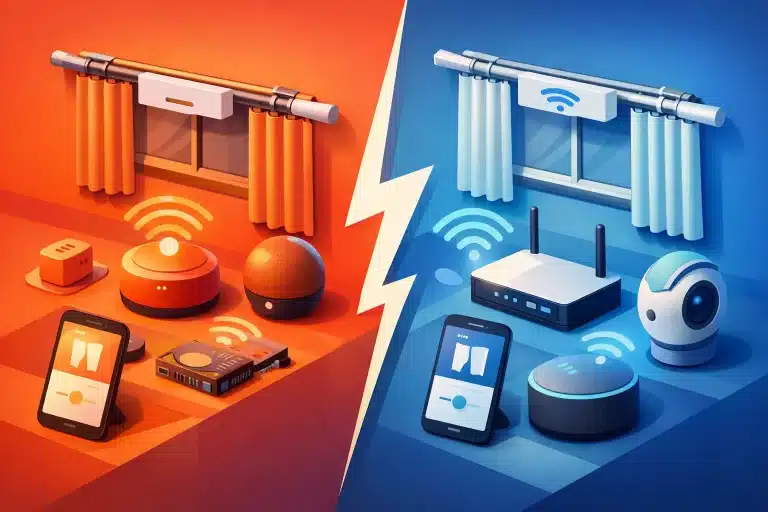
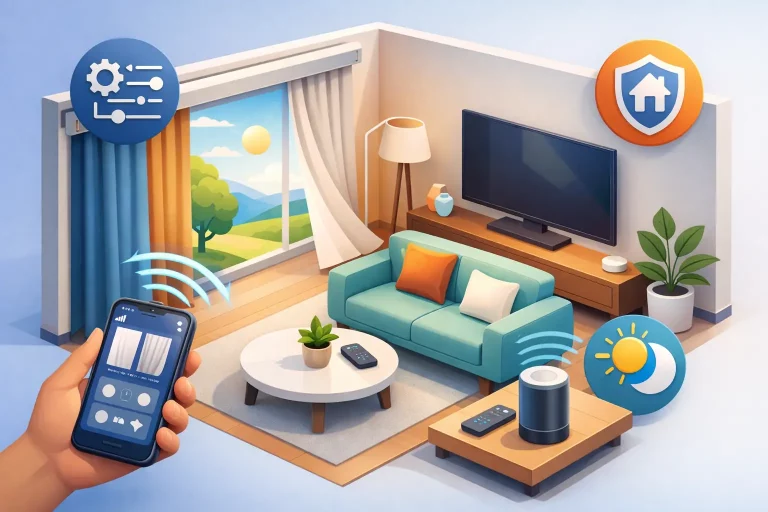
For homeowners already investing in connected lighting, heating or security, electric curtains can be a very natural next step. They work well as part of a wider smart home setup because curtain movement is tied so closely to daily routines – waking up, settling down in the evening, reducing glare or improving privacy.
The key benefit here is not novelty. It is coordination. Curtains can open in the morning, close at sunset, or work alongside lighting scenes and occupancy settings. That makes the home feel more considered and easier to manage.
That said, smart integration is not essential for everyone. Some customers prefer straightforward control through a remote or switch, and that can be the right choice. The best system is usually the one that matches how you actually live, rather than the one with the longest list of features.
A cleaner look for large or complex windows
Electric curtain systems are particularly effective where the window layout is more challenging. Bay windows, corner windows, long runs of glazing and recess installations all benefit from a solution that is designed around exact dimensions and movement requirements.
In these settings, the visual finish matters just as much as operation. A made-to-measure motorised track can help curtains hang and stack correctly, avoid awkward handling, and sit neatly within the overall design of the room. That is often where the upgrade feels most worthwhile – not because the technology is obvious, but because everything looks and works as it should.
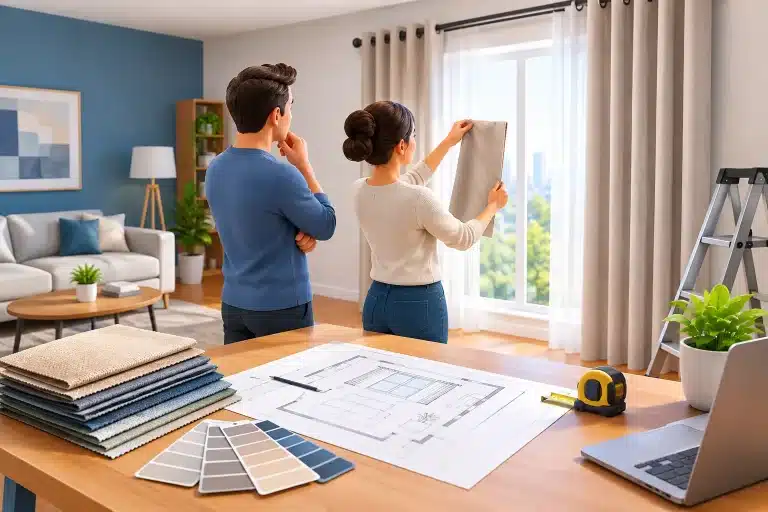
This is also why planning support matters. The motor, track layout, curtain weight, recess depth and control position all influence the outcome. A good result is rarely about choosing a generic product off the shelf. It is about getting the specification right for the room.
Protecting fabrics and improving consistency
Manual curtain use is not always gentle. Tugging fabric by hand, pulling from one side, or dragging heavy curtains along the track can gradually affect how they hang and wear. Electric operation provides a more controlled movement, which can be kinder to both the fabric and the track over time.
There is also the benefit of consistency. Curtains open and close to the same position each time, which helps the room look tidier and more deliberate. That may sound like a small detail, but in well-designed interiors small details are often what make the difference between a room that feels finished and one that feels slightly unsettled.
This can be particularly valuable with interlined or blackout curtains, where the weight of the fabric makes manual operation less precise. A properly matched motorised system is better equipped to manage that load smoothly.
Are electric curtains worth it for every home?
Not always, and it is worth being honest about that. In a small room with one lightweight curtain and easy access to the window, manual operation may be perfectly adequate. If you rarely close your curtains, or if the room is used only occasionally, the practical return may be limited.
Where electric curtains tend to justify themselves most clearly is in bedrooms, principal living spaces, homes with large glazed areas, and properties where comfort and usability are a priority. They are also a strong choice where accessibility matters or where homeowners want a smarter, more integrated environment.
Cost is another consideration. A bespoke motorised system is an investment, particularly when tracks are made to exact measurements and designed around specific room conditions. But that investment often makes sense when viewed as part of the wider finish of the home – much like lighting, joinery or other built-in elements that improve everyday living.
For that reason, many customers benefit from guidance early on. Accurate dimensions, suitable track design and the right control method make a noticeable difference to the final experience. Companies such as Smart Curtains focus on that planning stage because it is what turns a good-looking idea into a system that works properly in real life.
Electric curtains are at their best when they solve a clear need and feel effortless from day one. If your home would benefit from easier control, better privacy, improved accessibility or a more polished finish, they are not just a nice extra – they can become one of those upgrades you wonder how you managed without.