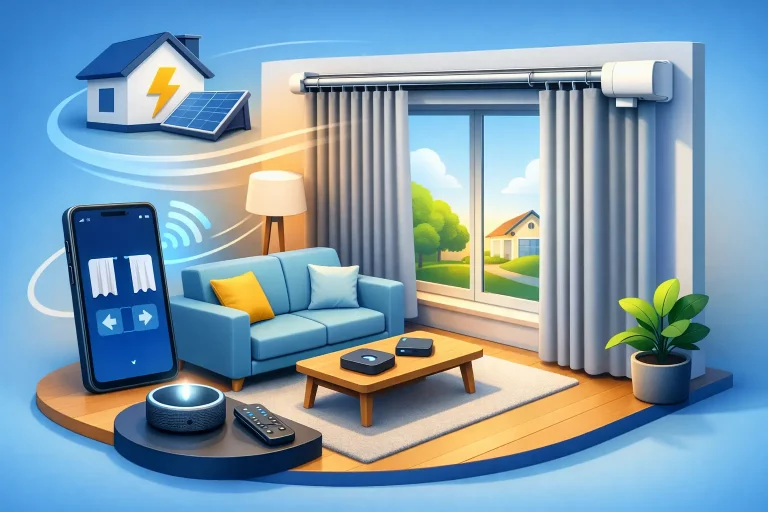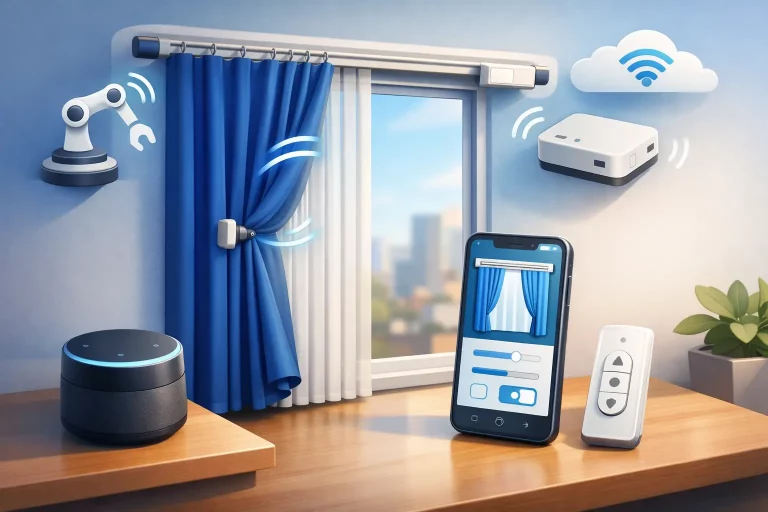
That moment when you pull heavy curtains across a wide window and the glider catches halfway is usually when homeowners start looking into how to automate existing curtains. It is rarely just about gadget appeal. More often, it is about making daily life easier, improving privacy at set times, and giving a room a cleaner, more considered finish.
Thank you for reading this post, don't forget to subscribe!The good news is that many existing curtains can be automated successfully. The part that matters is not the fabric alone, but the full setup behind it – the track, the weight, the shape of the window, the available power supply, and how you want to control the system once it is installed. When those details are planned properly, retrofitting automation can feel straightforward rather than disruptive.
Can you automate the curtains you already own?
In many cases, yes. If you already have curtains you like, there is often no need to replace them. What usually changes is the track and the operating method. Manual poles and standard tracks are not designed to move curtains with the consistency and control required for motorisation, so the usual route is to keep the curtains and replace the hardware with a made-to-measure motorised curtain track.
That approach suits a wide range of homes. It can work for bedroom curtains, large patio doors, full-height living room glazing, bay windows and even more complex layouts such as corners or offsets. The main question is whether the curtains themselves are suitable in weight and heading style for a motorised track, and whether the new track can be specified to match the opening properly.
This is where homeowners often underestimate the detail. A curtain that works well by hand may still need careful calculation once a motor is involved. Stackback, overlap, draw direction, track position and fixing points all influence the final result.
How to automate existing curtains without getting the wrong system
If you are researching how to automate existing curtains, start with the window and not the motor. The right system is built around the opening, the fabric and the room use.
First, look at what is there now. Is the curtain hanging from a pole or a track? Is it a straight run, a bay, or wall-to-wall? Are there obstructions such as radiators, deep sills or bifold doors? In some homes, the new track needs to sit in exactly the right position to allow the curtains to clear handles, trims or projecting window boards.
Then consider the curtains themselves. Heavier lined or interlined curtains can usually be automated, but they place more demand on the motor and the fixing method. The heading style also matters. Wave curtains, pencil pleat and pinch pleat can all be used, but they need compatible gliders and spacing for smooth operation.
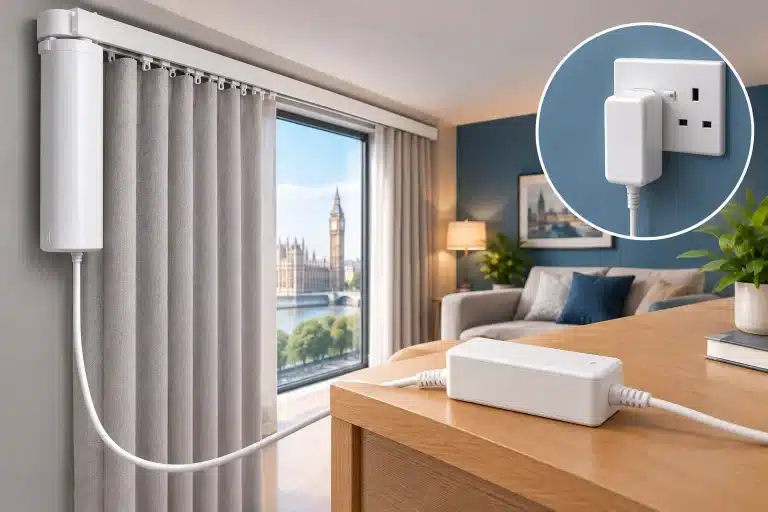
Finally, think about power and control. Some homeowners want a hardwired motor linked to a wall switch or home automation system. Others prefer a rechargeable battery option to avoid electrical work. Neither is automatically better. It depends on access, room layout and whether the property is being renovated or simply upgraded.
The two main retrofit options
Most projects fall into one of two categories. The first is a full track replacement using a motorised made-to-measure track. This is the most reliable option and the one that gives the best finish. It allows the track to be tailored to your exact width, curve, bay shape or recess, and it is better suited to everyday use.
The second is an add-on device designed to move an existing curtain track or pole. These products can appeal because they appear simple, but performance varies. If the original track is old, uneven, poorly fixed or not designed for motor use, the result can be noisy, hesitant or short-lived. They can suit some lightweight, straightforward installations, but for heavier curtains or premium interiors, they are rarely the best long-term answer.
That is the trade-off. Add-on solutions may look cheaper at first, while a bespoke motorised track tends to give better movement, cleaner integration and fewer compromises.
Choosing the right motor and controls
The best control method depends on how you live. Some homeowners want a remote so they can open and close the curtains from bed or the sofa. Others prefer a wall switch for simplicity. Smartphone control and timers are popular where daily routine matters, such as opening bedroom curtains gradually in the morning or closing front room curtains automatically at dusk.
Smart home integration can be useful, but it is not essential. If you already use a wider smart home setup, automated curtains can become part of that system. If you do not, a standalone remote or timer may be all you need. The aim is practical convenience, not adding complexity for its own sake.
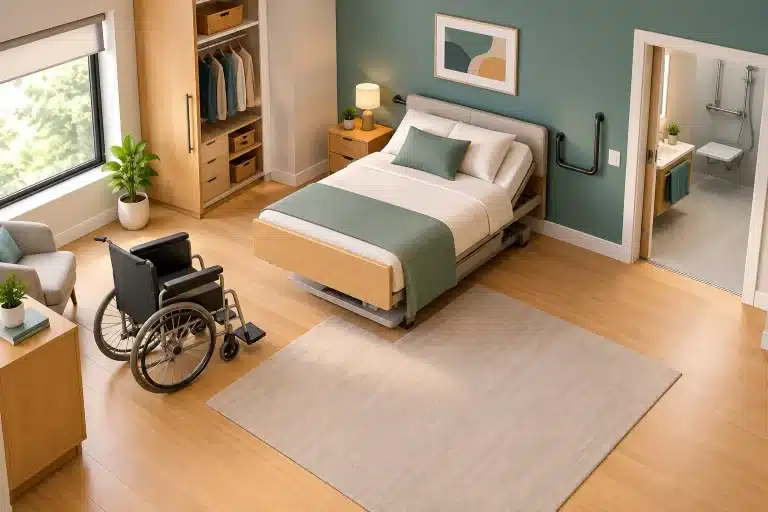
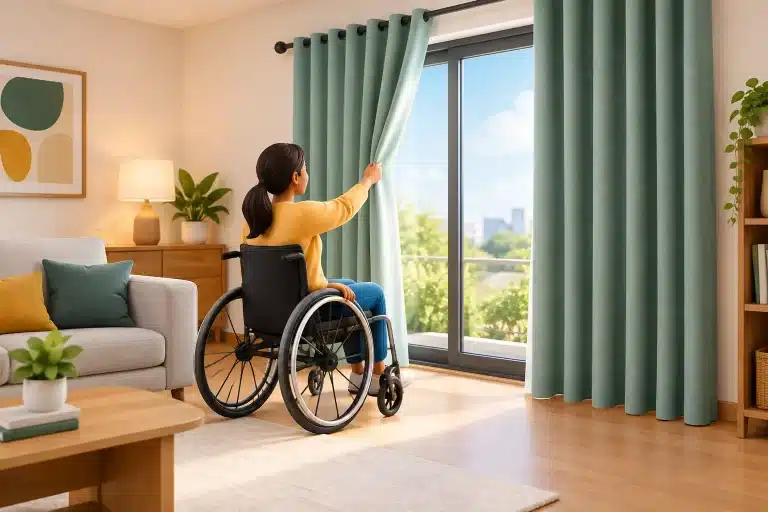
For accessibility, motorisation can make a real difference. Curtains that are difficult to reach, awkward to pull or simply heavy to handle become easy to operate. That can be valuable for households with restricted mobility, older homeowners, or families managing tall windows and large glazed doors.
What catches people out during planning
Measurements are the biggest source of mistakes. Homeowners often measure the visible window only, when the track really needs to account for returns, stackback and how the curtains should sit when open and closed. If the track is too short, the curtains can block light even when open. If it is positioned badly, they may drag against handles or fail to cover the window neatly.
Bay windows are another area where planning matters. The angles, brackets and passing behaviour through bends need to be considered carefully. The same applies to corner windows and recessed installations. A motorised track can be made for these situations, but it must be specified correctly.
Fixing strength is also important. Motors and curtains together create more load than a simple hand-drawn arrangement. Plasterboard alone may not be enough without proper support, especially for wider spans or heavier fabrics. This is often easier to address before installation than after it.
Installation: simple in some rooms, more involved in others
A straightforward bedroom window with a straight track and nearby power can be relatively simple to automate. A large living space with multiple windows, shaped tracks or concealed recesses is a different job entirely. That does not mean it is difficult, but it does mean the planning should be more detailed.
If you are renovating, this is the ideal time to think about hardwiring and recess details. If the room is already finished, battery-powered systems or carefully planned surface wiring may be more practical. Good advice at this stage can save a great deal of guesswork.
For many homeowners, support with fitting drawings and layout decisions is just as valuable as the product itself. A tailored system works best when someone has checked the dimensions, understood the opening arrangement and considered how the track will be mounted.
Is automating existing curtains worth it?
For most people, the value shows up in daily use. Curtains open on time in the morning, close automatically in the evening, and move evenly without tugging or strain. Rooms feel more polished. Privacy is easier to manage. The house looks lived-in even when you are away.
It can also help protect curtain fabric over time. Manual pulling from the same point every day causes wear. A motorised system moves the curtains consistently and reduces handling. That is a small detail, but one that matters when you have invested in good fabrics and a well-finished interior.
The cost question is fair, and the answer depends on the room and the level of specification. A bespoke motorised track is a home improvement product, not a novelty purchase. If the curtains are used every day, cover a large opening, or solve an access issue, the upgrade usually feels worthwhile quickly.
A better way to approach the project
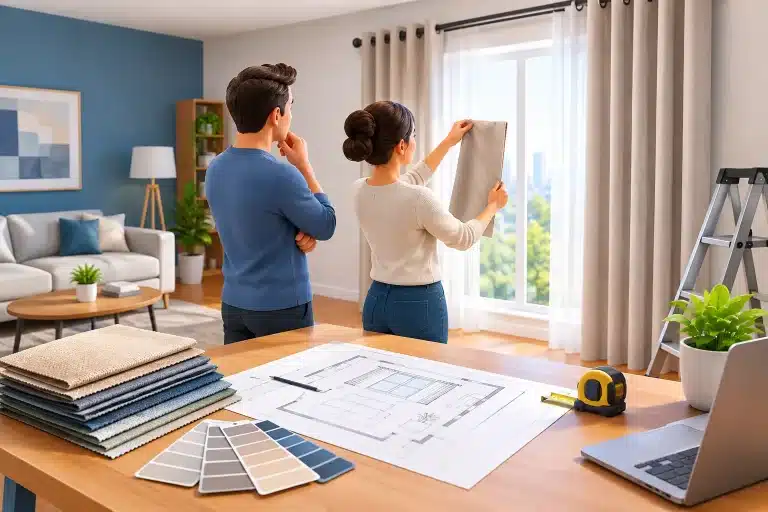
If you want to know how to automate existing curtains properly, treat it as a specification exercise rather than a quick add-on purchase. The curtain fabric, the window layout, the power source and the control preference all need to line up.
That is why a consultative approach tends to produce the best outcome. At Smart Curtains, projects are planned around exact measurements and real room conditions, so the finished system suits the home rather than forcing the home to suit an off-the-shelf product.
If your current curtains already work beautifully with the room, there is every chance you can keep them and upgrade the experience behind them. The smartest result usually starts with asking not just what motor you need, but how you want the room to feel once the curtains move exactly as they should.