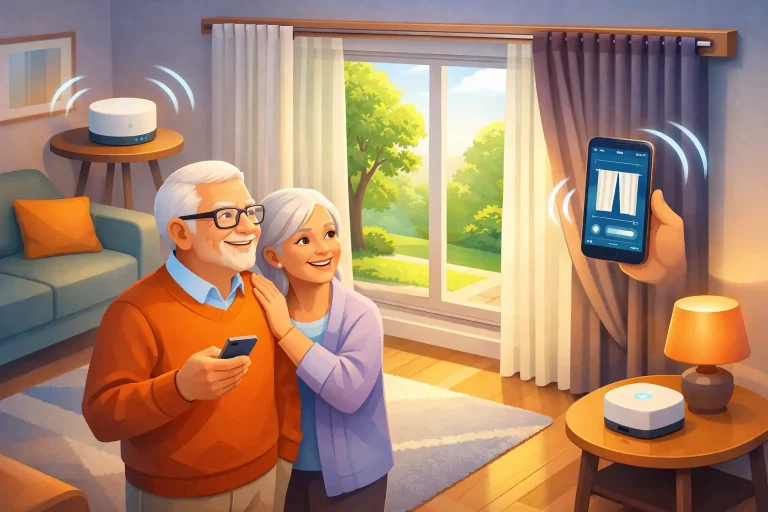
Reaching across a wide bay window, wrestling with heavy curtain fabric, or remembering to close the curtains before bed can become an unwanted daily strain. Smart curtains for elderly homeowners offer a practical alternative: curtains that open and close at the touch of a button, to a timer, or through a familiar wall switch. The right system is not about adding technology for its own sake. It is about making a home easier, safer and more comfortable to live in.
Thank you for reading this post, don't forget to subscribe!For many households, automated curtains are a small change with a meaningful effect. They can remove repetitive reaching and pulling, help maintain privacy without effort, and create reassuring routines at home and when away.
Why smart curtains suit elderly homeowners
Traditional curtains can be surprisingly demanding. A long track, a heavy lined pair of curtains, or furniture positioned near a window can make manual operation awkward. For someone living with arthritis, reduced grip strength, shoulder pain, balance concerns or limited mobility, this can turn a straightforward task into a nuisance – or a reason to leave the curtains as they are.
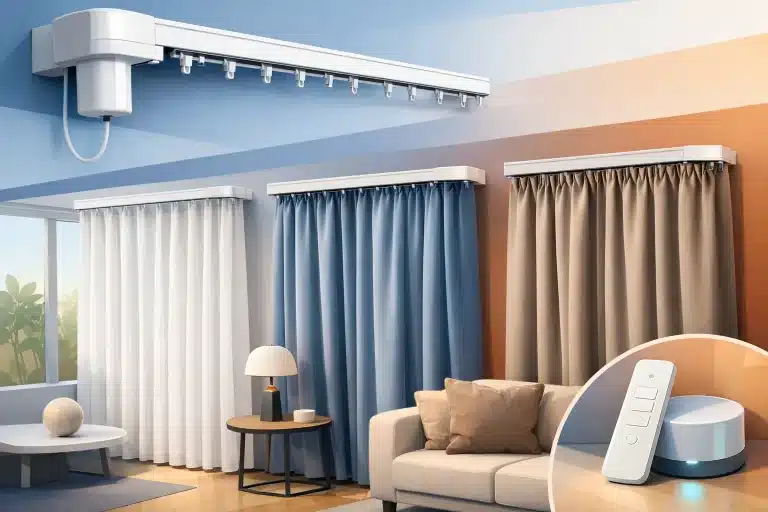
A motorised curtain track does the physical work. Once installed, the curtains can be controlled without standing beside the window or handling the fabric. This is particularly useful in bedrooms, living rooms and large glazed spaces, where curtains are often heaviest and used most frequently.
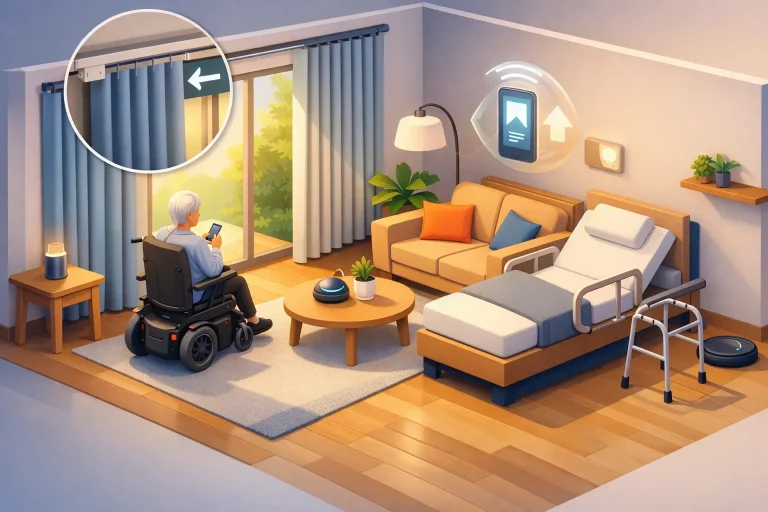
There is also a dignity and independence benefit. Being able to manage light, privacy and comfort from a chair or bed can help a person continue using their home in the way that suits them. For family members, it can be one less everyday task to worry about when supporting an older relative.
Choose controls that feel natural
The most suitable control method depends on the homeowner, the room and how the system will be used. The aim should be simple, predictable operation rather than a home full of features nobody wants to use.
A wall switch for a familiar routine
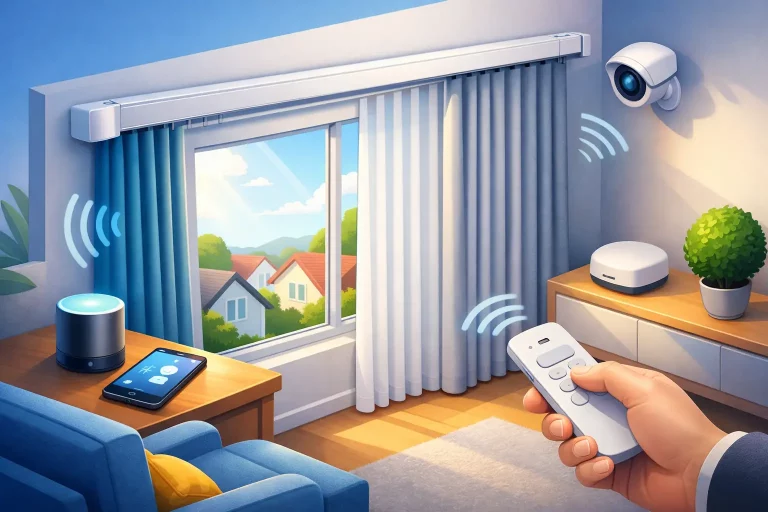
A wall-mounted switch is often the most intuitive option. It gives a fixed, easy-to-find point of control and can be positioned at a sensible height for the homeowner. A simple open, close and stop function is usually all that is needed. It also avoids reliance on finding a remote or using a phone.
Switch placement needs thought early in a renovation or new build, as it may affect electrical planning. In an existing property, a specialist can advise on the most practical route for power and controls.
A remote control for comfort from a chair or bed
A remote offers flexibility without requiring a smartphone. It can be kept on a bedside table or beside a favourite chair, allowing curtains to be operated from where the homeowner already spends time. For a person who has difficulty walking across a room, that convenience can be significant.
It is worth considering how the remote will be stored. A dedicated place reduces the common frustration of it being misplaced amongst newspapers, blankets or cushions.
Timers for dependable morning and evening routines
Timed opening and closing can be especially helpful for people who value a regular routine. Curtains can open in the morning to bring in daylight and close at dusk for privacy, without anyone needing to remember. This can be useful during winter, when evenings draw in early.
Timers should be set around the household’s real habits rather than treated as a rigid schedule. Someone may prefer a later bedroom opening time, while a living room may need to close earlier to reduce glare and make the room feel more settled.
Smartphone and smart home control
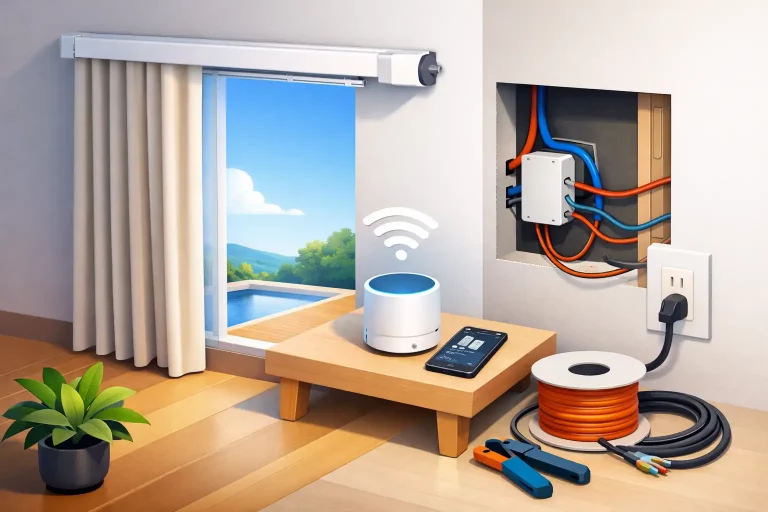
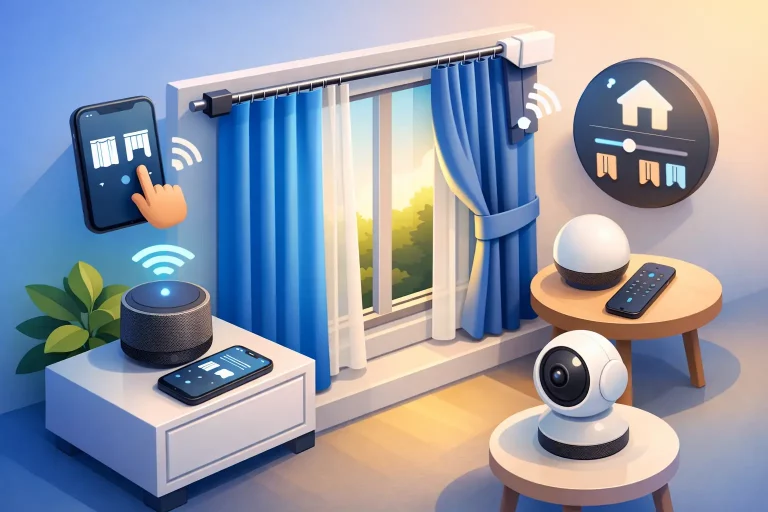
App-based control and smart home integration can suit confident technology users and households where adult children or carers help manage the home. It can provide extra flexibility, such as changing schedules remotely or grouping several window treatments together.
However, it should not be the only way to operate the curtains for an elderly homeowner. Wi-Fi, apps and voice assistants are useful additions, but a straightforward local control – such as a switch or remote – remains valuable if the internet drops out or a phone is not to hand.
Privacy, security and a more comfortable home
Automated curtains can help preserve privacy at the times it matters most. Closing curtains from bed at night, or in a living room once the lights are on, becomes effortless. For ground-floor rooms and homes facing a road or neighbouring property, this can offer genuine peace of mind.
When the house is empty, programmed curtain movement can also make the property appear lived in. This is not a replacement for sensible home security, but it is a useful part of a wider approach when homeowners are away visiting family or on holiday.
Light management is another everyday advantage. Bright morning light may be welcome in a kitchen but uncomfortable in a bedroom. Afternoon sun can create glare on a television or increase warmth in a south-facing room. With smart curtains, adjusting the room does not require getting up, walking to the window and handling the curtains repeatedly.
Made-to-measure planning matters more than the motor
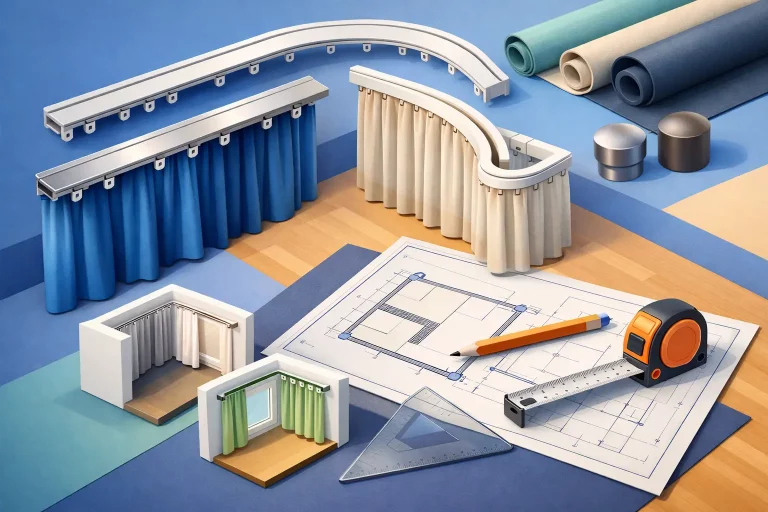
The motor is only one part of a good result. For smart curtains for elderly homeowners, a system must be easy to use, but it must also fit the room properly and move the chosen curtains reliably. This is why made-to-measure planning matters.
A track needs to match the window or wall width, the curtain heading, the weight of the fabric and the shape of the room. Bay windows, corners, recesses and offset layouts all need careful consideration. A poorly specified track may leave gaps at the edge, interfere with a radiator or furniture, or make the curtains stack in an inconvenient position.
Power also needs to be planned. Some projects allow for a discreet mains connection near the track, while others may need a different approach. The best choice depends on the room, the building work involved and whether the homeowner wants simple controls or wider smart home integration.
At Smart Curtains, this planning support includes checking dimensions and preparing fitting guidance, so homeowners, family members and trades can be confident that the system is suited to the space before installation begins.
Practical questions to discuss before ordering
Before choosing a system, consider who will use it most often and how they currently manage the curtains. If the main challenge is reaching a bedroom window, a remote and simple timer may be enough. If several curtains need to work together in a larger home, grouped controls may make more sense.
It is also sensible to discuss the following with the homeowner and anyone supporting them:
- whether a wall switch, remote or both would be easiest to use
- where the curtains should open and stack when not in use
- whether the existing curtains are suitable in weight and style
- whether a timer would support daily routines or cause confusion
- whether there is a clear plan for power, fitting and future support
The most sophisticated option is not always the best one. A reliable system with two or three clear ways to operate it is often more useful than a complicated setup with too many commands.
A thoughtful upgrade for independent living
Smart curtains are not a medical aid, and they will not solve every accessibility issue in a home. They can, however, remove one repetitive physical task and make essential daily routines easier to manage. That combination of comfort, privacy and control is what makes them a worthwhile consideration for many older homeowners.
The best starting point is to look at the windows that cause the most difficulty now. A carefully planned motorised track in the right room can make everyday living feel noticeably less demanding, while still keeping the home beautifully finished and personal.