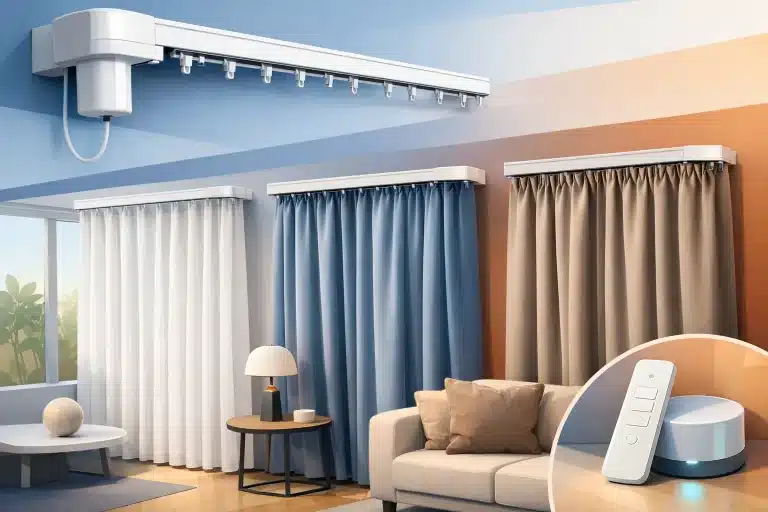
A motorised curtain track can look beautifully simple once it is fitted: curtains open at a tap, close on a timer and sit neatly across the window. The work that makes that result possible happens earlier. This curtain track planning guide covers the decisions worth making before you order, decorate or ask an electrician to complete first fix.
Thank you for reading this post, don't forget to subscribe!For standard straight windows, planning is usually straightforward. For wall-to-wall curtains, bays, corners, double tracks or ceiling pockets, a few millimetres and the position of one socket can make a real difference. Getting the layout right early helps the finished room feel considered rather than compromised.
Start with the room, not the track
First consider what the curtains need to do. A bedroom may need blackout lining and a reliable morning schedule. In a living room, the priority might be creating a soft, full drape while preserving access to patio doors. In a large glazed space, automated operation can make daily privacy far easier to manage.
The answer affects the track position, fabric allowance and control method. It also determines whether you need one curtain track or two. A double-track arrangement allows a sheer curtain to soften daylight during the day, with a heavier curtain closing at night. It takes more ceiling depth than a single track, so it is best decided before a pelmet, bulkhead or recessed curtain pocket is built.
Think about the curtain stack too. When curtains are fully open, the fabric gathers at one or both ends of the track. If you want to expose as much glass as possible, the track should extend beyond the window opening where the wall space permits. On a wall-to-wall installation, the stack will sit against the room edges instead. Neither option is automatically better – it depends on the architecture and the view you want when the curtains are open.
Measure the track run accurately
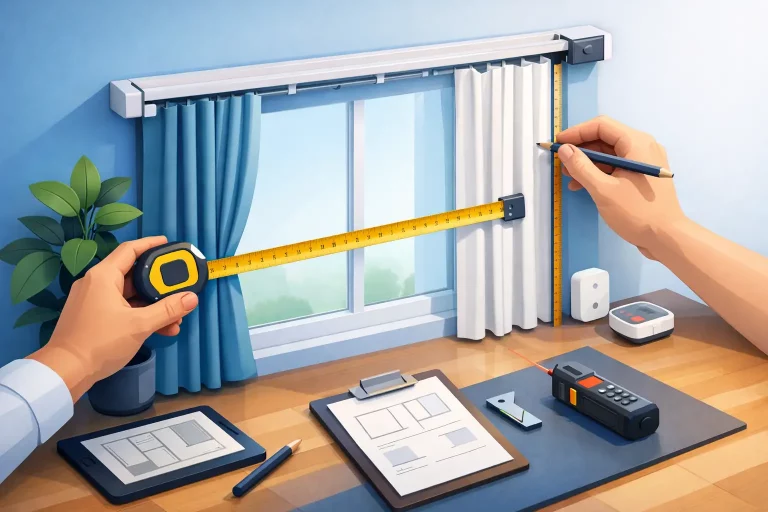
Track dimensions are not the same as the width of the glass. Measure the intended route of the track, from its true start point to its true finish point. This may be wall to wall, beyond the window reveal, or within a ceiling recess. Use a steel tape measure and record dimensions in millimetres where possible.
For a straight run, measure at the proposed track height rather than along the skirting or floor. Older properties can be slightly out of square, and a ceiling-to-floor difference of a few millimetres is common. If the track will sit in a pocket, measure the inside width of the completed opening, not the dimension shown on an early building drawing.
Also record the drop separately: from the underside of the track to the finished floor, sill or radiator level. Curtain makers use this measurement to determine the finished curtain length. If flooring has not yet been laid, allow for the final floor build-up. This is one of the most common points at which renovation measurements go wrong.
Allow for radiators, handles and doors
Curtains need to move without catching. Projecting window handles, deep radiators, inward-opening doors and furniture close to the window can all affect the ideal track position. A track that sits too close to the wall may look tidy but leave insufficient clearance for the fabric.
As a general principle, position the track far enough forward for the curtain to fall freely. The exact clearance depends on the curtain heading, lining, fabric thickness and any obstacles below. A specialist fitting drawing is especially useful here because it turns a visual idea into dimensions a builder or installer can work from.
Plan bays, corners and offsets before building work
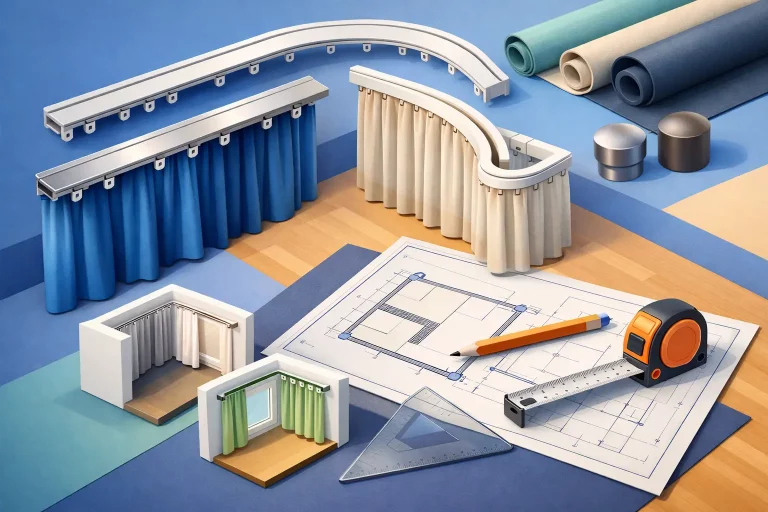
A made-to-measure motorised track can follow a bay window, turn a corner or incorporate an offset, but these layouts need clear information. The key question is whether the curtains must travel smoothly around the change in direction. If they do, the bend radius, bracket positions and curtain heading all need to work together.
For a bay, measure each straight section and identify the angle between them. Photographs taken square-on and from each end of the bay can help clarify the shape, particularly where walls are not perfectly symmetrical. Do not assume every bay is 45 or 90 degrees.
Corners bring another decision: should curtains draw around the corner, or should separate tracks meet there? A continuous route can give a refined, architectural finish, while separate tracks may better suit rooms where each side needs independent control. With offsets, such as a boxed pipe or structural column, check that the track’s route leaves adequate space for curtain movement rather than simply clearing the obstruction.
Decide where power and controls will live
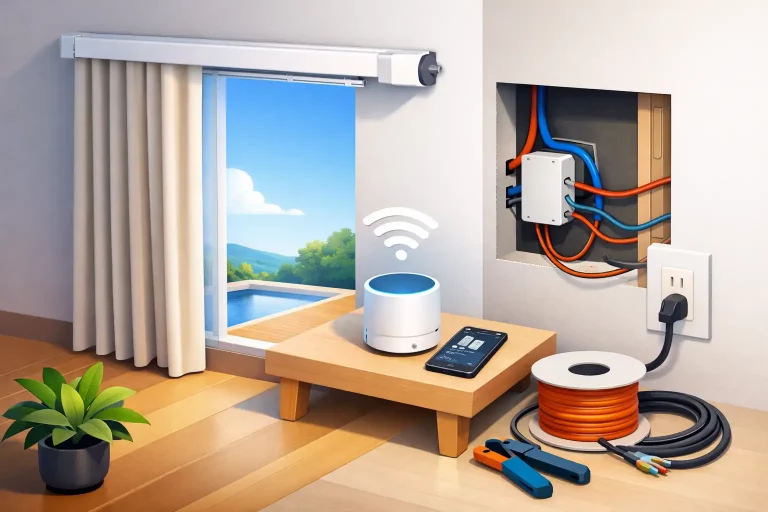
Most electric curtain tracks need a nearby mains power supply. The motor is commonly positioned at one end of the track, so identifying that end early prevents an extension lead becoming part of the finished scheme. In new-build and renovation projects, arrange a discreet switched fused spur or suitable socket location before plastering and decorating.
The preferred motor side may be influenced by the nearest power source, access for servicing and where the curtain stack will sit. It can also be affected by a bay layout or a wall return. If power is already fixed on the less convenient side, that does not necessarily rule out the system, but it should be discussed during planning rather than discovered on fitting day.
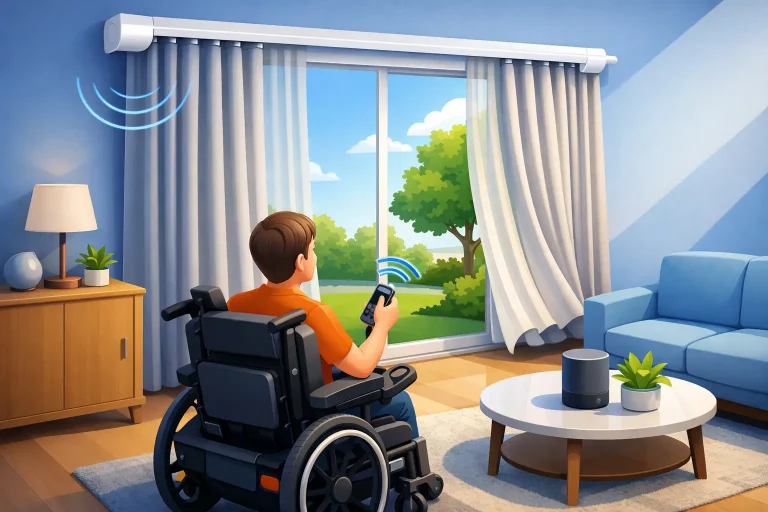
Control should fit the way you live. A wall switch gives familiar, immediate operation by the door. A remote works well where adding wiring is impractical. App control and timers suit households that want curtains to open gradually in the morning or close at dusk, while smart home integration can coordinate curtains with lighting, heating or occupancy routines.
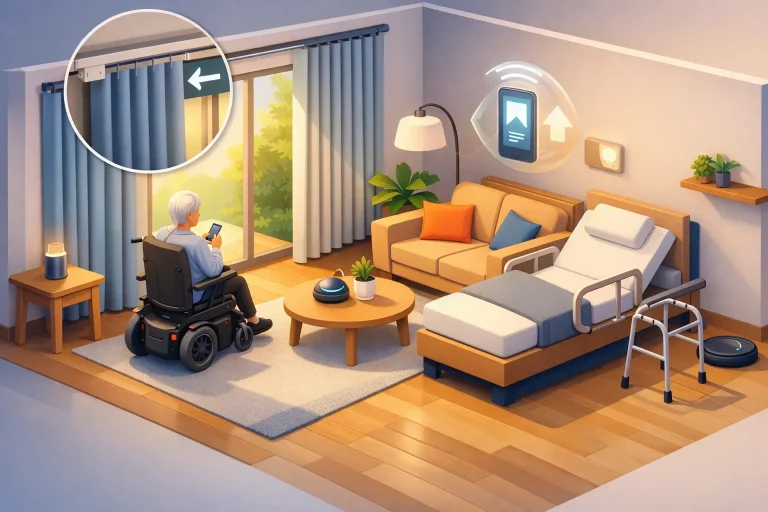
For accessibility, keep controls reachable and simple. Motorised curtains can remove a repetitive daily task for people with limited mobility, but only when the chosen control method is genuinely comfortable to use.
Create the right ceiling recess or pelmet
A recessed track is a popular way to make curtains appear to emerge from the ceiling. It can look particularly effective in bedrooms, extensions and contemporary living spaces. Yet the recess must be wide and deep enough for the track, brackets, motor and the selected curtain fullness.
A narrow slot may conceal the hardware but pinch the fabric. A shallow pocket can leave the motor visible or make future access difficult. Double tracks need more width than single tracks, and heavier blackout curtains generally need more room than lightweight sheers. Build the recess to a confirmed specification, not a generic detail copied from another project.
If you are using a pelmet instead, consider how it will be fixed and whether it allows access to the motor. A polished finish should not come at the cost of making maintenance unnecessarily difficult.
Coordinate the people involved
The most successful installations are planned between the homeowner, curtain supplier, electrician, builder and, where relevant, interior designer or smart home integrator. Each person needs slightly different information: the electrician needs the motor location and power requirement; the builder needs recess or pelmet dimensions; the curtain maker needs track width, drop and stack arrangement.
At Smart Curtains, planning support is designed to bring those details together before the track is made. A confirmed measurement, layout sketch and fitting drawing reduce guesswork and give your trades a practical reference point.
It is sensible to finalise the track route before ceilings are closed, coving is installed or decorative joinery is completed. However, do not rush into a measurement if window reveals, flooring levels or boxed-in services are still changing. In that situation, waiting for a stable finished dimension is often the safer choice.
A final check before you place the order
Before approving a bespoke track, review the complete journey of the curtain: where it starts, where it finishes, what it passes, how it is powered and how it will be controlled. Check whether the curtains will clear handles and radiators, whether the chosen motor side is accessible, and whether the ceiling detail has enough space for the system and fabric.
The aim is not simply to automate a pair of curtains. It is to create a window treatment that works quietly in the background, supports your daily routine and looks right from every angle. A careful plan now leaves you free to enjoy that effortless result for years to come.