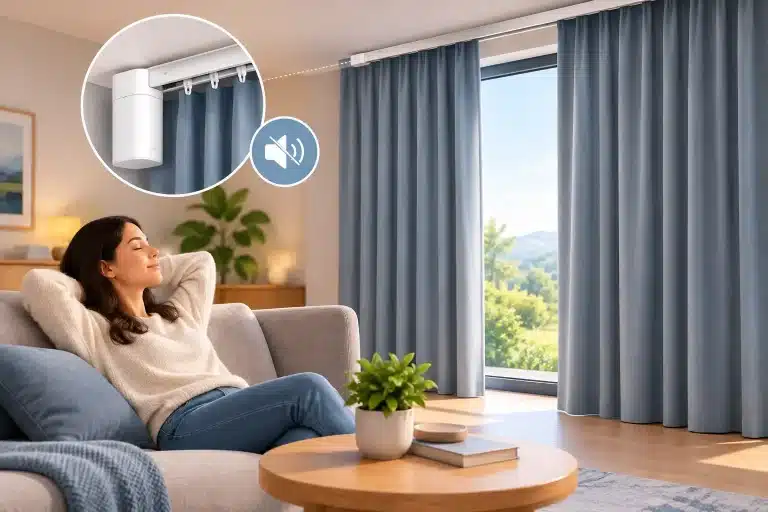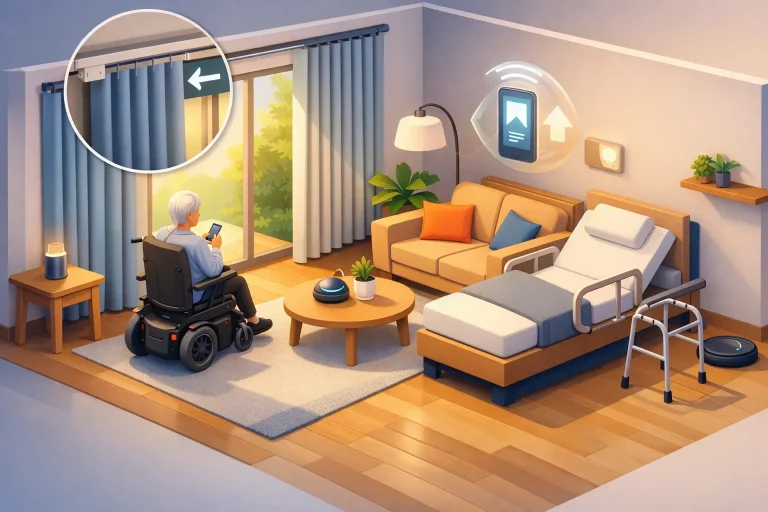
The morning light arrives before you are ready to get up. The curtains are closed, the room feels dark, and reaching the window means managing a wheelchair, a walking aid, pain or limited balance. Smart curtains for mobility support replace that awkward daily task with a simple command from a remote, wall switch or mobile phone.
Thank you for reading this post, don't forget to subscribe!For many households, automated curtains are not about adding another gadget. They remove a small but repeated obstacle from the day: opening the bedroom at the right time, closing the lounge before dusk, or adjusting privacy without asking someone else for help. When specified well, they can make a home feel more independent, comfortable and considered.
Why curtain control can become a real barrier
Manual curtains ask more of the body than they seem to. A person may need to stand, lean over furniture, stretch above shoulder height or move close to a window where there is limited turning space. Heavy, lined curtains can also take a firm pull, particularly on a long track or across a wide patio door.
Reduced grip strength, joint pain, fatigue, visual impairment and difficulty standing can all change how practical that task feels. The challenge is often greater in homes where furniture has been positioned for comfort, where a bed sits near the window, or where the curtain track is set inside a deep recess.
There is also the matter of timing. If opening or closing curtains requires help from another person, a homeowner may wait longer than they would like for daylight, shade or privacy. Motorised control gives the user a more direct choice over their surroundings.
What smart curtains for mobility support can do
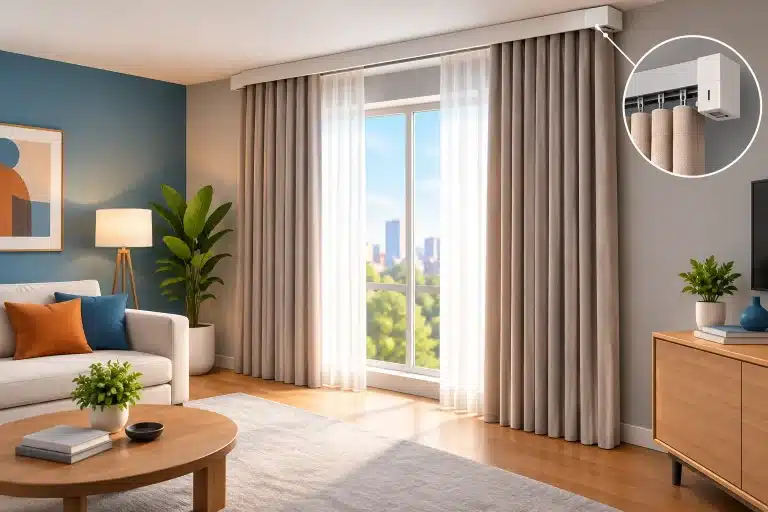
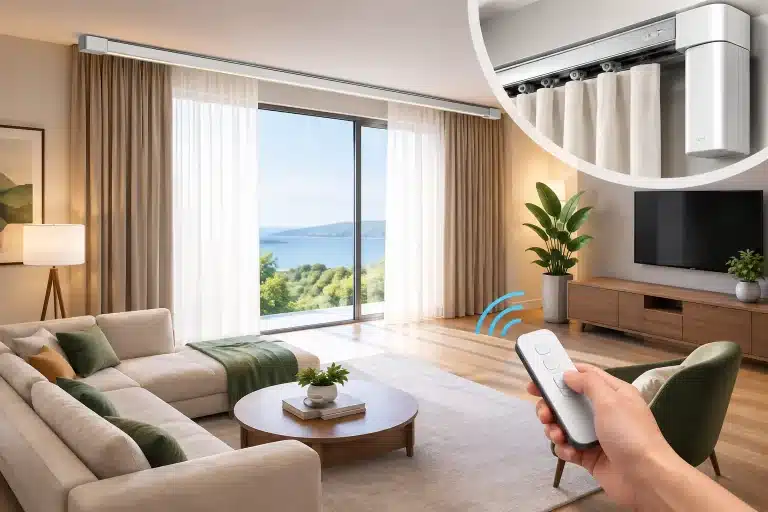
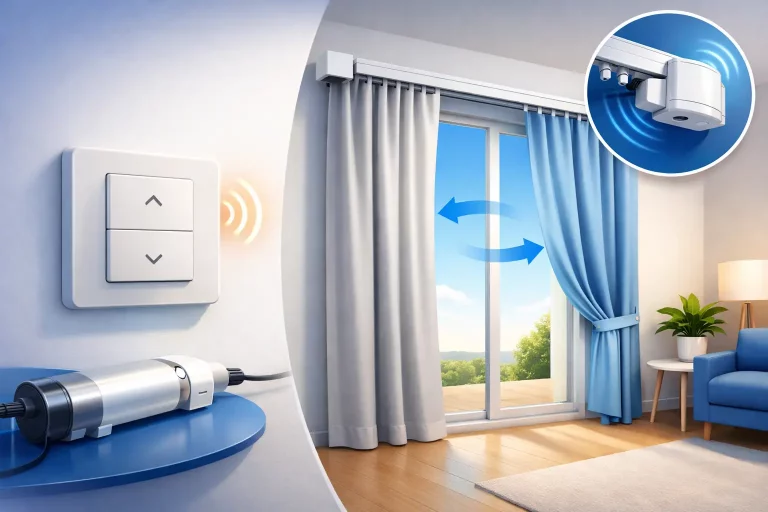
At their simplest, motorised curtain tracks move curtains along a made-to-measure rail at the press of a button. The useful part is choosing a control method that suits the person and the room, rather than assuming one option works for everyone.
A handheld remote is often a straightforward answer for someone who spends time in bed or in a favourite chair. It can be kept within easy reach and used without navigating a mobile phone screen. A wall switch can suit a person who prefers a familiar, fixed control point, while app control may be helpful when a family member or carer needs to operate curtains from elsewhere in the house.
Timers add another layer of support. Curtains can open at a chosen time in the morning and close later in the evening, reducing the number of instructions needed each day. This can be particularly reassuring when fatigue varies or when a regular routine makes the home easier to manage.
Integration with a compatible smart home system can allow voice control or routines alongside lighting and heating. That can be valuable, but it is not automatically the best option. Voice assistants depend on clear commands, internet connectivity and personal preference. For some people, a dedicated remote remains the quicker and more dependable choice.
Start with the person, then plan the room
The most successful installation begins with practical questions. Where is the person usually positioned when they need to control the curtains? Is there room for a wheelchair to approach a switch? Would a remote be easier to hold than a phone? Is a caregiver also likely to need access?
Think about the purpose of each window. In a bedroom, a scheduled opening can make waking gentler and reduce the need to reach for a cord or heading. In a lounge, quick closure may matter most for privacy after dark. In a kitchen or south-facing room, the priority may be reducing glare at certain times of day.
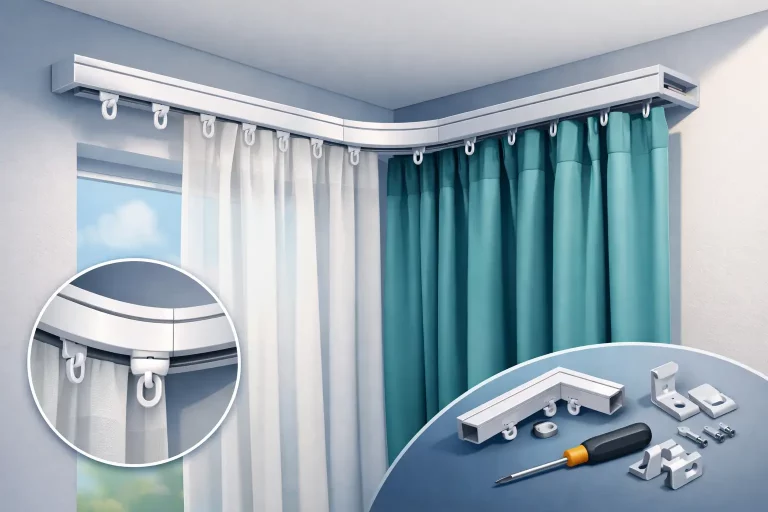
This is also where made-to-measure planning matters. The track has to match the window treatment, not simply the width of the glass. Curtains may need to stack clear of the window for maximum daylight, overlap in the centre for privacy, or travel around a corner, bay or return wall. A poorly planned system can still be motorised, but it may not deliver the access or finish the household expected.
Choose controls that feel natural
There is no single accessible control method. The right choice depends on dexterity, sight, confidence with technology and how the room is used.
For example, a remote with clear buttons may be preferable where fine finger movement is limited. A wall switch can provide certainty for visitors and carers, while a mobile phone can give flexible access when away from home. In some properties, combining two controls is sensible: a wall switch for everyday use and a remote by the bed.
Avoid placing a switch solely where it is easiest for the electrician. It should be reachable from the user’s normal route through the room and fitted at an appropriate height. Discuss this early, especially during a renovation, as it is far easier to coordinate cabling before decorating is complete.
Consider power and track position early
Motorised curtains need a suitable power plan. Depending on the system and property, that may mean a nearby socket or a concealed electrical provision arranged with a qualified electrician. The aim is a polished result without a trailing lead or an inaccessible connection behind furniture.
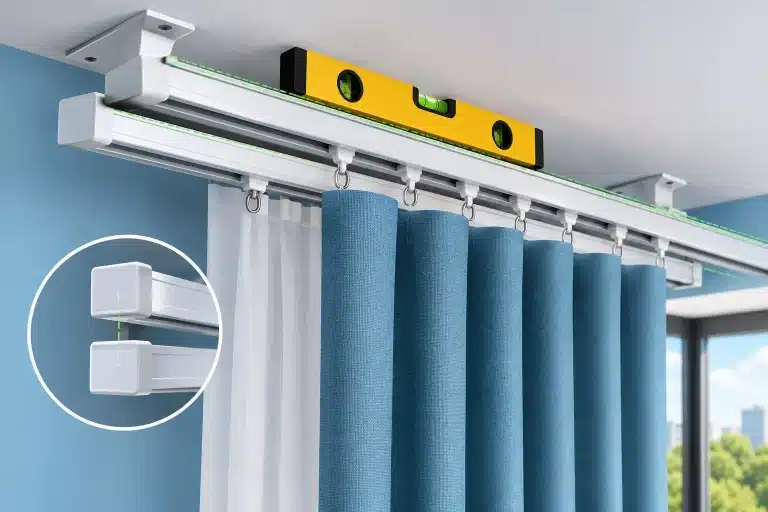
Track position also affects both function and appearance. Ceiling-fixed tracks can create a clean, full-height look and may allow curtains to move more freely around radiators or furniture. Recess-mounted installations need careful measurements so that the motor, curtain heading and fabric have enough clearance. Bay windows, corner layouts and wall-to-wall tracks deserve particular attention because small errors in dimensions can affect how smoothly curtains travel.
The benefits go beyond independence
The immediate benefit is less physical effort. Yet smart curtains can support a calmer home in several other ways. A regular closing time improves privacy without relying on someone to remember each evening. Scheduled opening can bring daylight into a room at a consistent time, which may help establish a preferred daily rhythm.
They can also reduce dependence on reaching around furniture. This is useful not only for people with long-term mobility needs, but for anyone recovering from surgery, managing pregnancy-related discomfort, living with arthritis or simply finding certain windows difficult to access.
For families, automated control can remove a recurring request from the day. That does not replace personal care, but it can give the homeowner more control over a routine that is private and personal. When the system is quiet, measured to the space and paired with curtains chosen for the room, it feels like part of the home rather than an adaptation added as an afterthought.
Where expectations need to be realistic
Motorisation does not solve every window challenge on its own. Very heavy fabrics, awkward tracks and poorly made curtains can affect operation, so the curtain weight and heading must be considered alongside the motor and rail. A system should be specified for the fabric it will actually move, not just for the window size.
Automation also needs a simple fallback plan. If a household relies heavily on app or voice control, keeping a physical remote available is often wise. It is equally worth agreeing who can assist with settings, timers and occasional battery replacement where applicable.
Cost will vary with track length, fabric weight, bends, controls and integration requirements. A straight bedroom track with remote control is a different project from several curved bays linked to a wider smart home installation. Focusing on the rooms that create the greatest daily difficulty can be a practical way to prioritise investment.
A better route to a tailored installation
Before ordering, measure the intended track run carefully and take account of recesses, pelmets, radiators, window handles and curtain stack-back. Photographs and a simple room plan can reveal issues that measurements alone may miss. If the project includes building work, involve the curtain system planner alongside the electrician and interior designer, rather than leaving control positions until the end.
At Smart Curtains, installation planning support can help homeowners turn those details into a system that fits the space and the way it is lived in. Fitting drawings, advice on track layouts and a clear discussion of control options can prevent compromises that are difficult to correct once a room is finished.
The best accessible home improvements are often the ones that quietly remove friction. When curtains open, close and respond in the way that suits the person using the room, the benefit is felt not as technology, but as a little more freedom in the everyday.