Curtains that open at 7am every weekday and close automatically at dusk sound like a luxury – until you live with them. Then they start to feel less like a gadget and more like part of how the house should always have worked. A timed curtain opening system is one of those upgrades that quickly becomes routine, especially when mornings are busy, windows are hard to reach, or you simply want the home to look occupied when you are away.
Thank you for reading this post, don't forget to subscribe!For many homeowners, the appeal starts with convenience. For others, it is about privacy, accessibility or getting more value from a smart home setup they already use. The real question is not whether timed curtains are clever. It is whether they are the right fit for your room, your routine and your expectations.
What a timed curtain opening system actually does
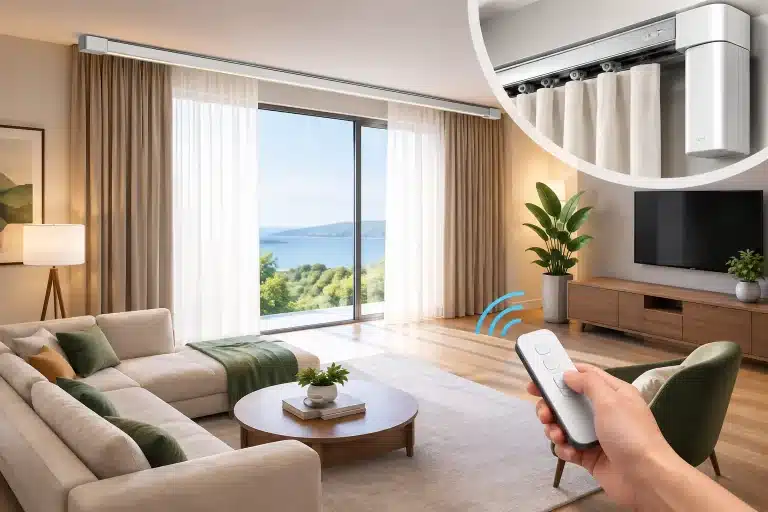
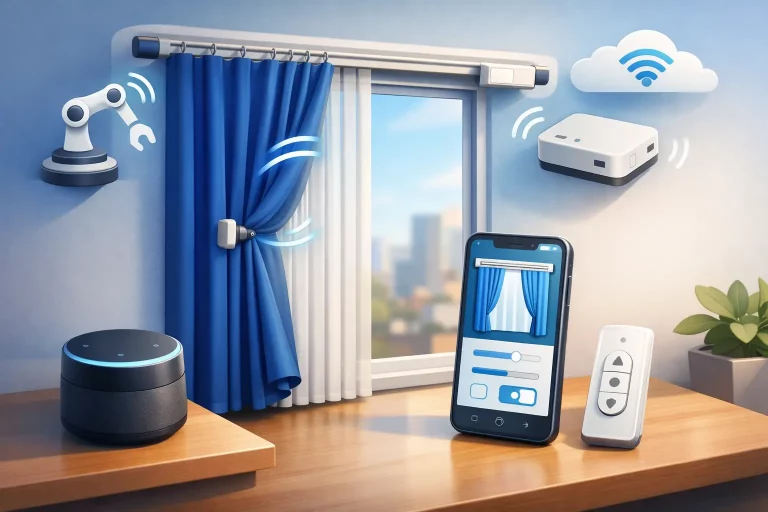
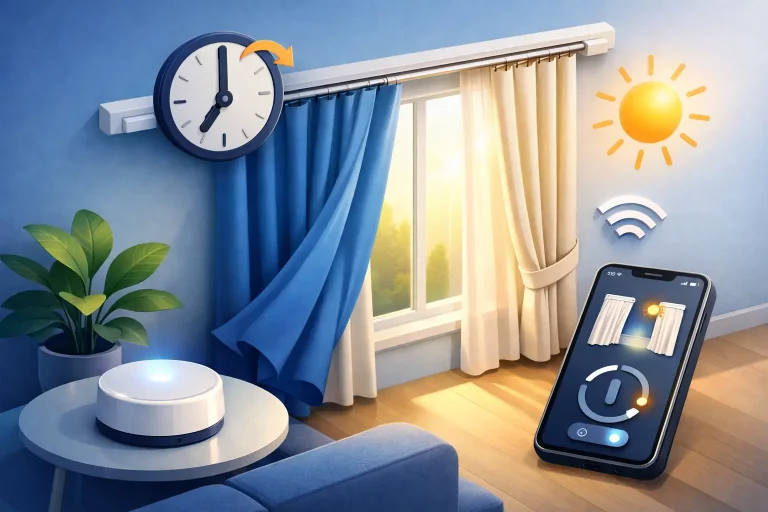
A timed curtain opening system uses a motorised curtain track and a control method that allows opening and closing at set times. That timing might be managed through a handset, a wall switch, a dedicated app or wider home automation. Some systems run on simple schedules such as 6.30am open and 9pm close. Others can be adjusted by day of the week, sunrise and sunset patterns, or occupancy routines.
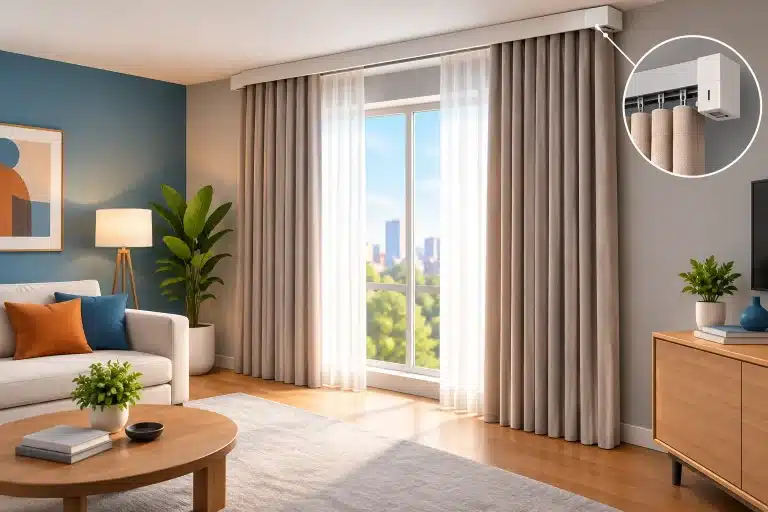
The practical effect is straightforward. Instead of drawing curtains by hand, the track moves them for you according to the schedule you choose. That can be useful in a bedroom where natural light helps you wake up, in a living room where evening privacy matters, or in a large glazed space where manual curtain operation becomes a chore.
What matters most is that the timing element is only part of the system. The quality of the track, the weight of the curtains, the power arrangement and the precision of the layout all affect how well the result performs.
Why homeowners choose timed curtain opening systems
The biggest benefit is consistency. You do not need to remember to close the curtains at night or open them in the morning. The room responds the same way every day, which creates a calmer routine and a more polished feel.
Security is another common reason. When curtains open and close on schedule, the property appears lived in even when no one is at home. That matters during winter evenings, weekend breaks and longer holidays, when an empty house can look very obvious from the street.
There is also a strong accessibility case. For anyone with restricted mobility, shoulder pain, balance issues or simply heavy full-length curtains, automation removes daily strain. That improvement is often more meaningful than any smart home novelty. It gives people easier control over their own environment without relying on awkward reaches or physical effort.
In larger homes or renovation projects, timed curtains can also help tie a room together. A tall bay window, a wall-to-wall installation or a set of curtains tucked behind furniture may look excellent once installed, but can be less pleasant to use manually. Motorised operation solves that neatly.
Where timing works best – and where it depends
Bedrooms are usually the easiest place to appreciate the value. Gentle morning opening can be far nicer than an alarm followed by blackout curtains that still need pulling back by hand. If the room warms up quickly in direct sun, timed opening can also help manage comfort early in the day.
Living rooms and family spaces are another strong fit, particularly where privacy changes with the light outside. In many UK homes, dusk arrives early for part of the year. Automatic closing means no one has to notice the room is suddenly on show.
It depends more in formal rooms or occasional-use spaces. If a room is only used once or twice a week, strict timing may be less useful than simple remote or app control. The same goes for homes where daily schedules vary significantly. Some people prefer automation that responds to presence, light levels or voice control rather than a fixed timetable.
That is why planning matters. A system can be technically capable, but still feel irritating if the schedule does not reflect how you actually live.
Timed curtain opening system options to think about
Not all systems are built around the same kind of control. Some are best suited to straightforward timer-based operation, while others are designed to sit inside a broader smart home arrangement. Neither is automatically better.
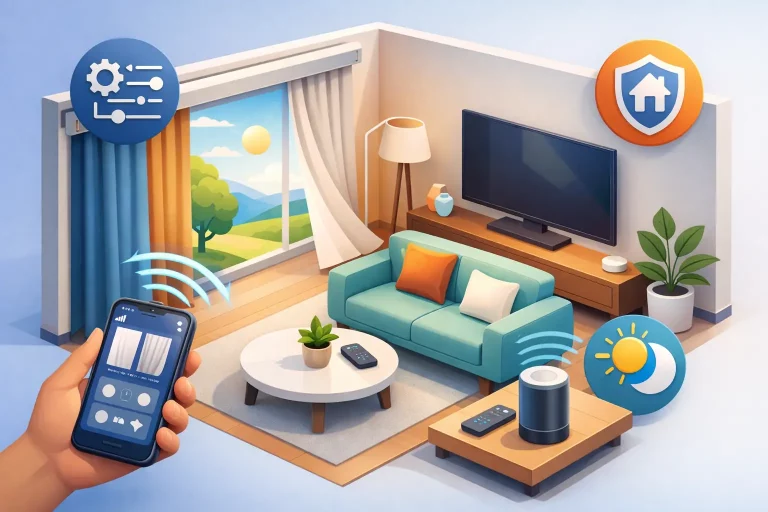
If you want reliability and simplicity, a dedicated timed setup can be ideal. It does the job without requiring much interaction. If you already use smart lighting, heating or voice assistants, integration may make more sense because curtains become part of a joined-up home routine.
Power supply is another decision point. Mains-powered systems are often preferred in renovation or new-build settings where wiring can be planned in advance. Battery-powered options can suit existing rooms where running cables would be disruptive. The trade-off is maintenance. Batteries avoid wiring work, but they do need charging or replacement depending on usage.
Curtain type matters too. Heavier interlined curtains, long drops and wide spans require the right motor strength and track specification. This is where off-the-shelf assumptions often fall short. A timed system only feels premium when the movement is smooth, quiet and properly matched to the curtain weight.
Why made-to-measure planning matters more than most people expect
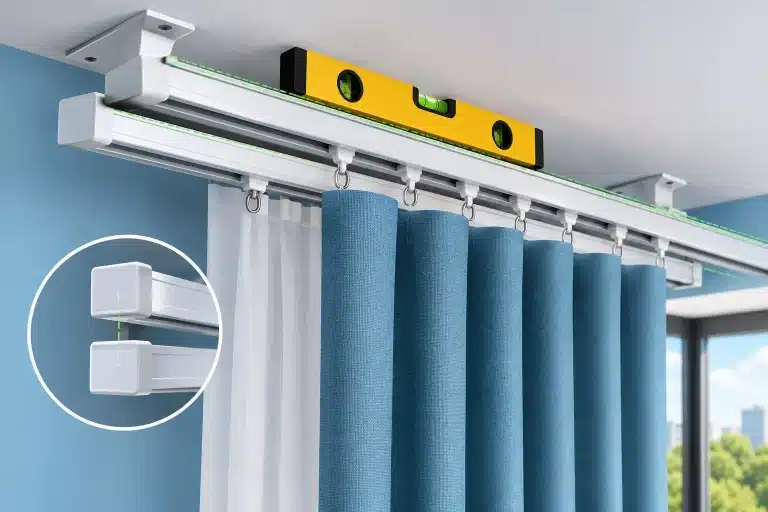
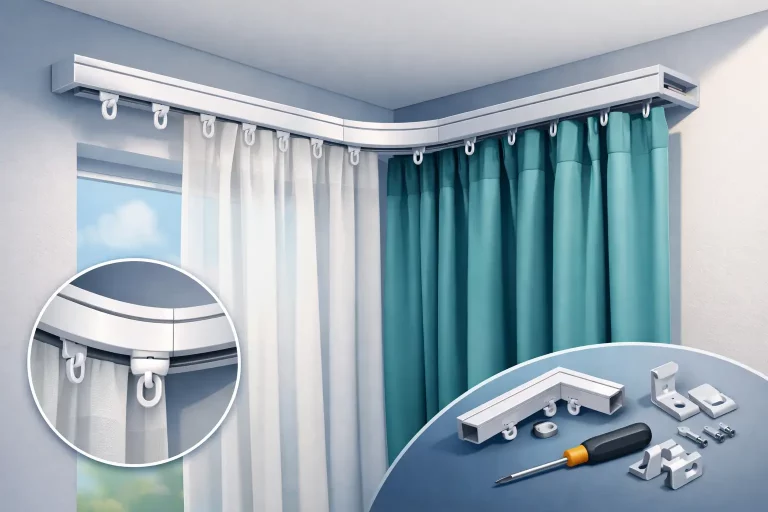
This is the part many buyers underestimate. A motor can open and close curtains on a timer, but if the track layout is wrong, the benefit quickly wears thin. Poor sizing, awkward stack-back, missed recess details or an unsuitable bend through a bay can turn a good idea into a compromised installation.
That is why a consultative approach tends to produce better outcomes. Window width, curtain fullness, bracket positions, power access and how the curtains need to stack when open all affect the end result. In bay windows, corners and offset layouts, timing is only as useful as the movement path itself.
For homeowners renovating or building, it is also helpful to coordinate early with electricians and installers. That avoids last-minute decisions about sockets, fused spurs or access points once decoration is already complete.
Smart Curtains supports customers through this planning stage because the specification work is often what makes the difference between a system that merely functions and one that feels properly integrated into the room.
Common concerns before buying
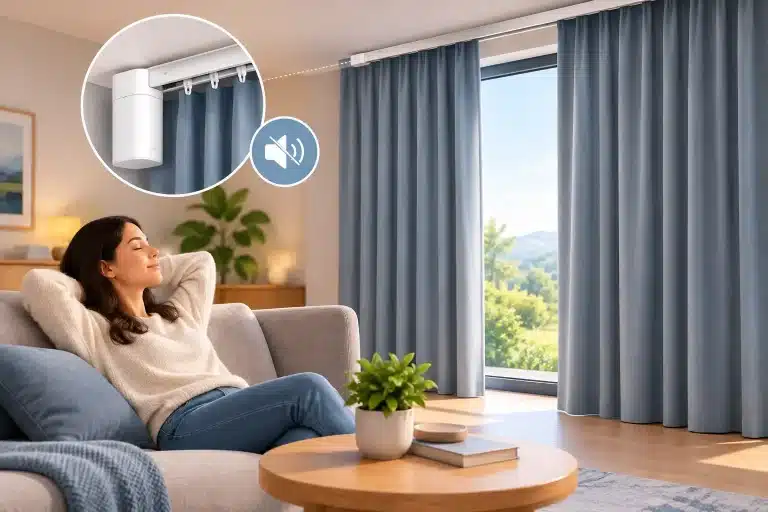
Noise is a frequent question. A quality motorised track should operate quietly, but no moving system is completely silent. In most homes, the sound is modest and brief. In bedrooms, that usually means noticeable but not intrusive.
Cost is another understandable consideration. A timed curtain opening system is not the cheapest way to cover a window, and it should not be presented as one. The value comes from everyday ease, better control and a more refined finish. Whether that feels worthwhile depends on the room, the frequency of use and how much you value automation in the first place.
There is also the question of what happens if technology fails. Good systems still allow practical manual or alternative control options, and a well-specified installation is generally very dependable. The more important issue is choosing equipment suited to the curtains and environment, rather than selecting solely on headline features.
Is it worth it for your home?
If you want a single answer, it comes down to use. For a main bedroom, a frequently used living space, a difficult-to-reach window or a home where convenience and privacy matter day after day, yes, a timed curtain opening system often earns its place quickly.
If the room is rarely used or your schedule changes constantly, you may get more benefit from motorised curtains with flexible control rather than strict timing alone. The best solution is not always the one with the most features. It is the one that suits the room and works reliably without becoming something else to manage.
The smartest curtain automation rarely feels flashy. It just makes the house behave a little better every day – opening the room when morning starts, closing it when evening arrives, and taking one more small task off your hands.