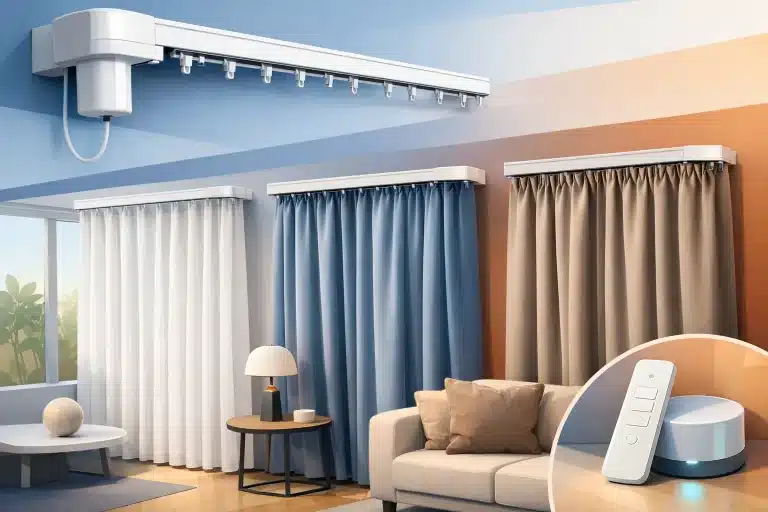
A wide glazed door, a tall bay window or a wall of bedroom curtains can make manual opening feel like a small task repeated far too often. When comparing electric blinds vs curtains, the best choice is rarely about technology alone. It is about how the window is used, the look you want to achieve and how much practical control you need every day.
Thank you for reading this post, don't forget to subscribe!Both options can bring timed opening and closing, remote control and smart home integration. Yet they handle light, privacy, warmth and difficult window shapes in noticeably different ways. For many homes, the right answer comes down to the fabric and finish you want around the glass, as much as the motor behind it.
Electric blinds vs curtains: the key difference
Electric blinds are fitted close to the window and move vertically or horizontally depending on the design. Roller, Roman, Venetian and cellular blinds all have different strengths, but they generally create a neat, compact treatment with a more minimal visual effect.
Motorised curtains run along a track above the window, opening from one or both sides or stacking to one side. They use the same familiar fabrics and headings as conventional curtains, but the track does the work. This makes them particularly appealing where curtains are already part of the interior scheme, or where a softer, more finished look is wanted.
The practical distinction matters. A blind is usually chosen to control the glass itself. Curtains frame the window and can cover a much wider area, including a full wall, patio doors and unusually shaped openings. That extra coverage can make a significant difference to the feeling of a room after dark and during colder months.
Light control and privacy
If precise daytime light filtering is the priority, electric blinds can be an excellent option. A roller blind can be lowered to reduce glare on a television or home-office screen without changing the rest of the room. Some blind types can also be positioned partway, allowing daylight while limiting direct sun.
Curtains are less granular in their adjustment, but they offer a different quality of light. Sheer curtains soften a bright south-facing room while keeping it open and elegant. Paired with a lined or blackout curtain, they create a highly flexible layered arrangement: sheers for daytime privacy, heavier curtains for darkness and insulation.
For bedrooms, nurseries and media rooms, blackout curtains often have the advantage. A correctly planned track can extend beyond the window and sit close to the wall or ceiling, helping reduce the light gaps found around many blinds. The result depends on the fabric, heading and fitting details, so it is worth considering the whole arrangement rather than assuming that any blackout product will perform the same way.
Privacy is also about scale. At night, blinds cover the pane, but curtains can conceal the entire window recess and soften the hard outlines of the glazing. In a ground-floor living room or a street-facing bedroom, that can feel more reassuring.
Style: minimal window covering or a softer interior?
Electric blinds suit schemes where clean lines are central. They work especially well in kitchens, bathrooms and compact rooms where a curtain stack might feel bulky. A discreet roller blind can sit neatly inside a recess, while a Venetian blind offers a more architectural look and adjustable slats.
Curtains bring texture, colour and acoustic softness. In larger rooms, they can make wide glazing feel intentional rather than cold, particularly when the track is ceiling-fixed and the fabric falls from high level. A wall-to-wall curtain arrangement can also disguise uneven window positions, radiators beneath the sill or multiple doors within one elevation.
This is one area where there is no universal winner. A contemporary home can look superb with motorised curtains, particularly in linen-look, wave-heading or sheer fabrics. Equally, a traditional property may benefit from neat electric blinds in selected spaces. The better question is whether you want the window treatment to disappear into the architecture or become part of the room’s furnishing.
Insulation, draughts and acoustics
Windows are often the coolest surfaces in a home. Neither an electric blind nor a curtain replaces good glazing, but both can improve comfort when chosen and fitted well.
Curtains usually have the edge for insulation because they create a broader layer of fabric across the opening. A well-lined, fuller curtain fitted close to the wall can help reduce the feeling of cold air near large windows and doors. This is particularly useful in older homes, bay windows and rooms with expansive glazing.
Some blinds, especially cellular designs, are designed with thermal performance in mind. They can be a sensible choice where space is limited or where the blind can sit closely within the window recess. However, a recess-mounted blind may leave gaps at the sides, above and below. On a cold evening, that difference can be noticeable.
Curtains can also help a room feel quieter. Fabric absorbs some reflected sound, which is useful in open-plan spaces with hard floors, glass and minimal furnishings. They will not soundproof a room, but they can make it feel less echoing and more settled.
Convenience and smart home control
This is where both products change the everyday experience. A motor removes the need to reach behind furniture, stretch over a bath or walk around a large room to close every window covering. A wall switch gives immediate control, while a remote, app or voice assistant can make the routine even easier.
Timed operation is valuable for more than convenience. Curtains or blinds can open gradually in the morning, close at dusk to protect privacy, or follow a schedule while you are away on holiday. Used thoughtfully, automation can make an occupied home appear more lived-in and remove one more task from the evening routine.
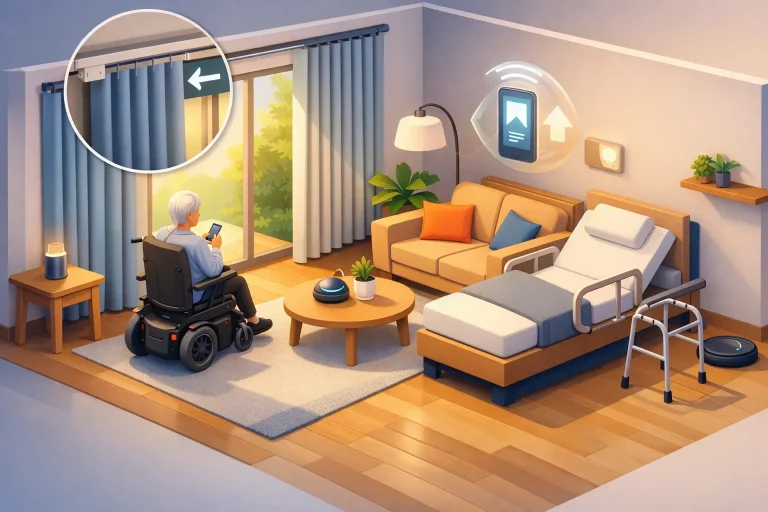
For restricted mobility, motorisation can be transformative. Heavy curtains, high windows and awkwardly placed furniture become far less of an obstacle when opening and closing is available at the touch of a button.
The control method should be decided early. A simple remote-controlled system may be all that is needed in a guest room. In a renovation or new build, wired wall switches and integration with a wider smart home system may be worth planning before decorating is complete. The product is only one part of the decision; power supply, cable routes and access for fitting deserve equal attention.
Cost and planning: where the comparison changes
It is tempting to compare an off-the-shelf electric blind with a motorised curtain track and assume one is automatically more expensive. In reality, the final cost depends on window size, motor type, fabric, control method and the complexity of the installation.
A straightforward blind on a standard window can be a cost-effective automated option. However, multiple blinds across a wide run of glazing may require separate motors and controls. Motorised curtains can be particularly efficient visually and practically when one continuous track serves a large patio door, a full bay or a wall-to-wall window arrangement.
Complex windows often favour curtains. Bay windows, corners, offset layouts and long tracks can be planned around the room rather than restricted to individual panes. The track needs to be measured precisely, with thought given to where the curtains will stack when open, whether they will clear doors and handles, and how the fabric will sit at each end.
For that reason, bespoke support is valuable. Smart Curtains helps homeowners verify measurements, consider track layouts and coordinate the specification with builders, electricians or automation installers before an order is placed. This avoids a common frustration: choosing a beautiful solution that later conflicts with a pelmet, ceiling detail, recess or power point.
When electric blinds are the better choice
Electric blinds are often the stronger option in kitchens and bathrooms, where moisture-resistant and easy-clean materials are useful. They also suit narrow recesses, small rooms and windows where you want light control without adding visual weight.
Choose them when you prefer a tailored, understated finish; need adjustable glare control during the day; or want each window to operate independently. They can be particularly practical in a home office, where changing sun levels can affect comfort and screen visibility.
When motorised curtains make more sense
Motorised curtains are a natural fit for wide doors, large windows, bedrooms and living spaces where comfort and atmosphere matter as much as daylight control. They are also often easier to live with where glazing is awkward to reach or spans a whole wall.
Choose curtains if you want a softer interior finish, a stronger blackout effect, added insulation or the ability to layer sheers and heavier fabrics. For a period property, a new-build with expansive glass, or a carefully designed principal bedroom, they can provide a more complete result than a blind alone.
There is also a middle ground. Many homeowners use a discreet blind for practical daytime screening and motorised curtains for warmth, privacy and evening comfort. This layered approach is especially effective in bedrooms and south-facing rooms, provided there is enough depth and space to plan both treatments properly.
The right choice should make the room easier to use, not add another system to think about. Start with the way you live around the window: when you need privacy, where the sun falls, how the room feels in winter and what you want to see when the curtains or blinds are open. From there, a well-measured, properly planned motorised solution can feel less like a gadget and more like the finishing detail the room was missing.