A bay window can make a room feel larger, brighter and more characterful – right up until it is time to choose curtains. Standard advice often falls apart at this point, because a bay is not one straight run. Angles, returns, radiators, furniture and how the curtains stack back all affect the final result. That is exactly why a proper bay window curtain guide matters.
Thank you for reading this post, don't forget to subscribe!Get it right and the room feels finished, privacy improves and daily use becomes effortless. Get it wrong and even expensive curtains can look awkward, drag badly or block light when open. For homeowners planning a smarter, more polished result, the detail is where the difference lies.
What makes a bay window harder to dress?
The challenge with a bay is not just the shape. It is the combination of shape, movement and visibility. On a straight window, a track or pole has one job. On a bay, the system has to follow the line of the wall, support the curtain weight properly and still let the fabric move smoothly around bends or corners.
This is where many people run into trouble. A curtain style that looks perfect in a showroom may not stack neatly within the space available at the sides. A pole may suit the look of the room but be less practical if you want easy movement across a multi-angled bay. If the curtains need to close every evening, and especially if they will be opened and closed daily by hand or by motor, function matters just as much as appearance.
The bay itself also changes the planning. Some are gentle, with shallow angles. Others are square bays or more complex arrangements with offset walls. Each one needs a slightly different approach to measurement and track design.
Bay window curtain guide: start with the layout
Before choosing fabric or heading style, decide how the curtains should work. That sounds obvious, but it is often skipped.
Some homeowners want one continuous run across the full bay so the curtains draw smoothly around the whole shape. Others prefer separate curtains on each section. A single run usually gives a cleaner, more integrated look, and it tends to work particularly well with motorised curtain tracks. Separate sections can make sense if the bay shape is awkward, if access is limited, or if you want to control individual parts independently.
You also need to think about stack back. This is the space the curtain takes up when open. In a bay, stack back can eat into glass area more than expected. If you want to preserve as much daylight as possible, the track length, curtain fullness and chosen fabric all need to be considered together.
A further detail is whether the curtains should sit within the line of the bay or extend wider, wall to wall. In some rooms, carrying the treatment beyond the bay creates a more luxurious look and can make the window appear broader. In others, especially where there are alcoves, furniture or doorways close by, a tighter fit is more practical.
Tracks usually make more sense than poles
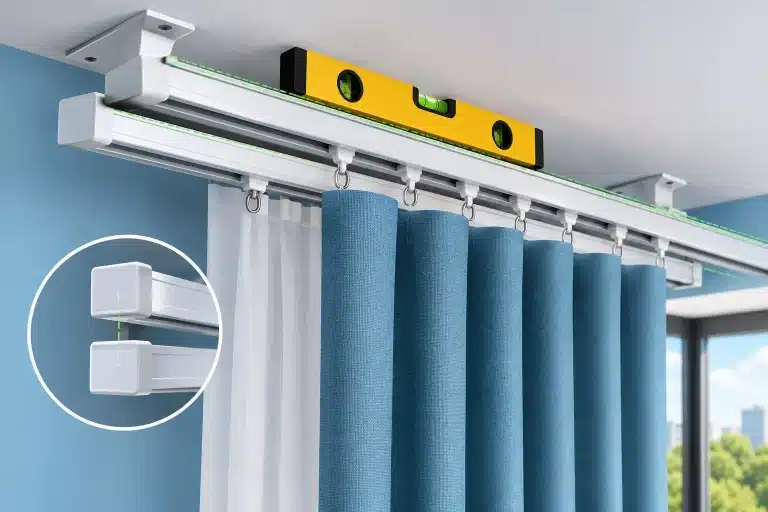
For many bay windows, a track is the most practical option. That is not because poles cannot work, but because tracks handle bends and angles more effectively and give a neater line across complex shapes.
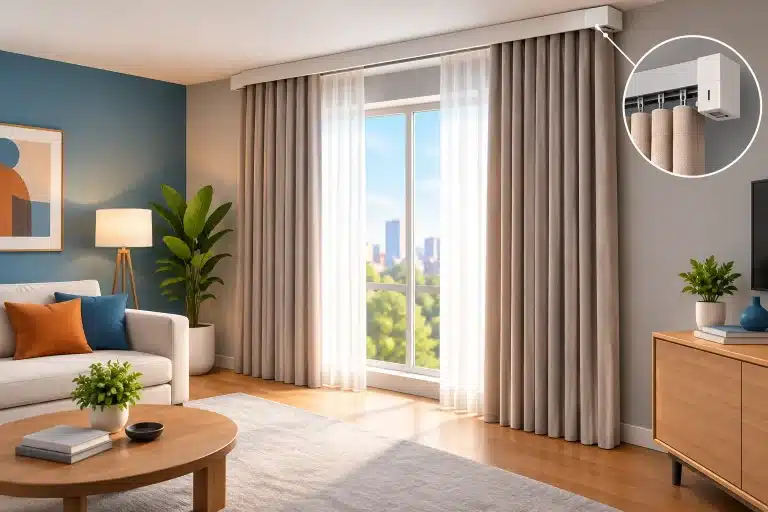
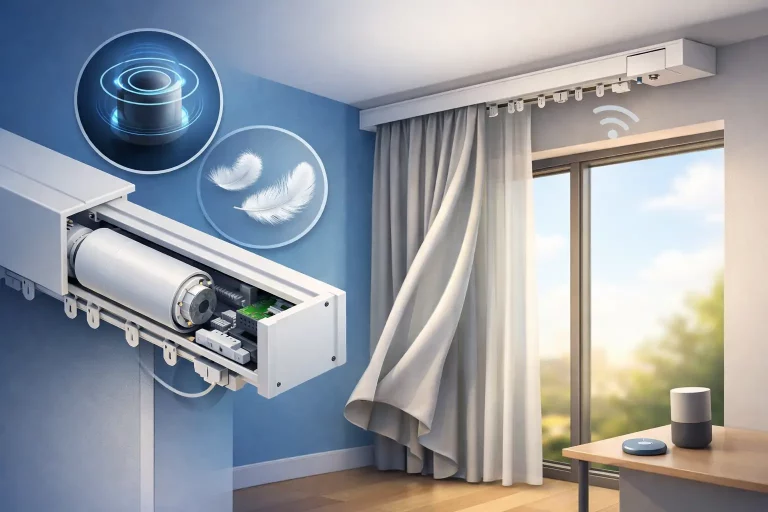
A well-planned track can follow the bay accurately, support made-to-measure curtains and allow smoother movement from end to end. This becomes even more valuable if you are considering automation. Motorised curtain systems are generally designed around tracks rather than decorative poles, and that gives greater control over how the curtains travel, park and overlap.
Poles can still suit certain bays, especially where style is the first priority and the layout is relatively straightforward. The trade-off is that movement around corners may be less refined, and the overall specification can become trickier if the curtains are heavy or used frequently.
For households focused on convenience, accessibility or smart home integration, a bespoke track is usually the stronger long-term choice.
Measuring a bay window properly
This is the stage where confidence matters. Bay windows are one of the most common places where measurement errors happen, and small mistakes can create expensive knock-on problems.
It is not enough to measure the width of each window section in isolation. You need the full geometry of the bay, including the straight lengths, the angles or corner positions, and how far the track or pole should project from the wall. Projection matters because curtains need space to clear handles, window boards and radiators. If the track sits too close, the fabric may catch or hang poorly.
Ceiling fixing versus wall fixing also changes the plan. A ceiling-fixed track can look more architectural and often suits modern interiors, particularly if you want a clean, unobtrusive finish. Wall fixing may be better where ceiling conditions are unsuitable or where you want the curtains to sit at a specific height relative to the bay.
If you are planning motorisation, measurement needs even more care. The motor position, power access and cable route all need to be allowed for early, not after the decorating is complete. This is one reason consultative support matters so much on bay projects. A made-to-measure system only performs well if the initial planning is right.
The right curtain fabric for a bay
Fabric choice is not just about style. It affects how the curtain hangs, how it moves around bends and how bulky it becomes when stacked open.
Heavier fabrics can look rich and elegant, particularly in period homes or formal living spaces. They also support privacy and can improve the sense of insulation. The downside is that they need more robust support and take up more space when open. In a shallow bay, that can reduce daylight more than expected.
Lighter fabrics create a softer, airier result and usually stack back more neatly. They can be ideal where you want a relaxed appearance or where preserving light is a priority. The trade-off is that they may provide less blackout performance and a less dramatic drape.
The heading style matters too. Wave curtains are a popular option for bay windows because they create a clean, consistent fold and work especially well with modern tracks and motorised systems. Pleated headings can suit more traditional interiors, but fullness and spacing need to be planned carefully so the curtains still move well.
Why motorised curtains suit bay windows so well
A bay window is one of the clearest cases for automation. The wider and more complex the curtain run, the more noticeable the benefit becomes.
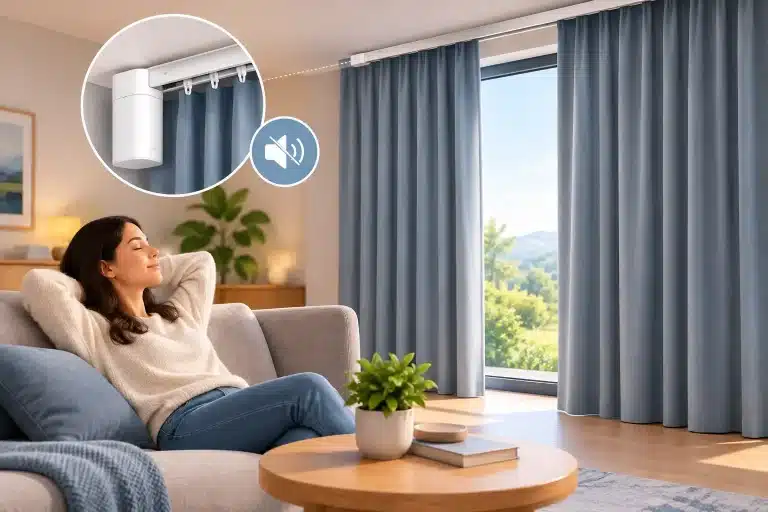
Opening and closing a bay by hand can mean reaching over furniture, handling large amounts of fabric and putting repeated strain on the curtain heading. Over time that can affect how the curtains hang, especially with heavier fabrics. A motorised track removes that daily friction. Curtains open and close smoothly, on command or on a timer, without tugging or uneven movement.
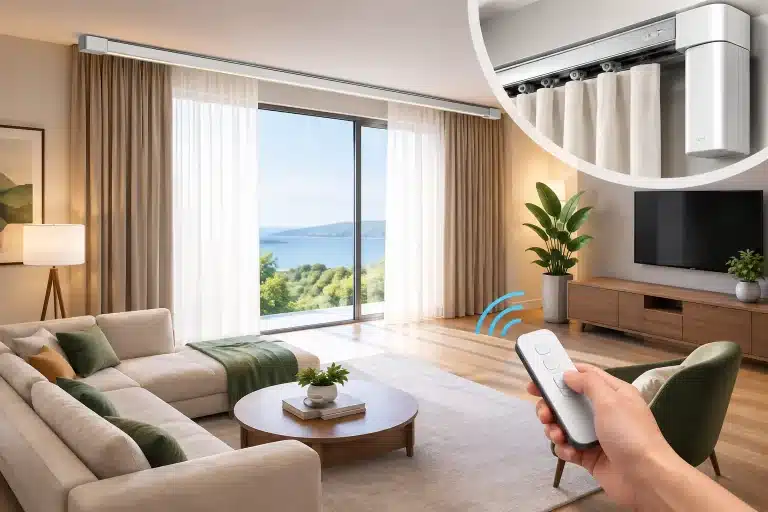
There is also a lifestyle benefit. In a main living room, a bay is often the focal point of the space. Automated curtains add a refined finish and make the room feel easier to use. For bedrooms, they can support routine by opening in the morning and closing at dusk. For households concerned with privacy or security, timed operation gives the home a lived-in look when you are away.
For people with restricted mobility, automation can be more than a luxury. It can make a prominent part of the home genuinely easier to manage.
Planning details people often miss
In any bay window curtain guide, the hidden details deserve attention because they tend to decide whether the finished installation feels effortless or compromised.
Radiators are a common one. If they sit beneath the bay, the curtain drop and projection need to be planned so the fabric hangs properly without bunching. Window handles are another. Deep handles can interfere with the curtain line unless the track is projected correctly.
Then there is furniture placement. A sofa, sideboard or dining table near the bay can affect where curtains can stack and whether they are easy to access. If the room is being renovated, it is worth thinking about power supply at the same time as the curtain layout, rather than treating it as an afterthought.
This is also where bespoke support adds value. Companies such as Smart Curtains help customers work through dimensions, fitting drawings and awkward layouts before ordering, which is often what turns a difficult bay into a straightforward project.
Choosing the best approach for your home
The best curtain solution for a bay depends on how you live, not just how the room looks in a photo. If your priority is visual simplicity and easy daily operation, a made-to-measure track with wave curtains is often a very strong answer. If your interior is more traditional, a different heading style may suit better. If the bay is especially wide or hard to reach, motorisation can move from nice-to-have to the obvious choice.
The key is to avoid treating a bay like a standard window. It is a feature that needs its own plan. When the layout, measurements, track design and fabric are considered together, the result feels calm, intentional and easy to live with.
A well-dressed bay window should not call attention to the engineering behind it. It should simply look right, work smoothly and make the room feel more complete every single day.