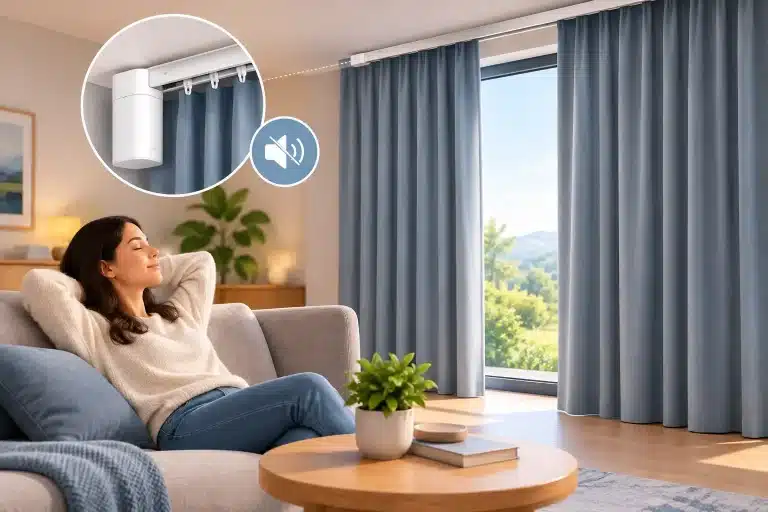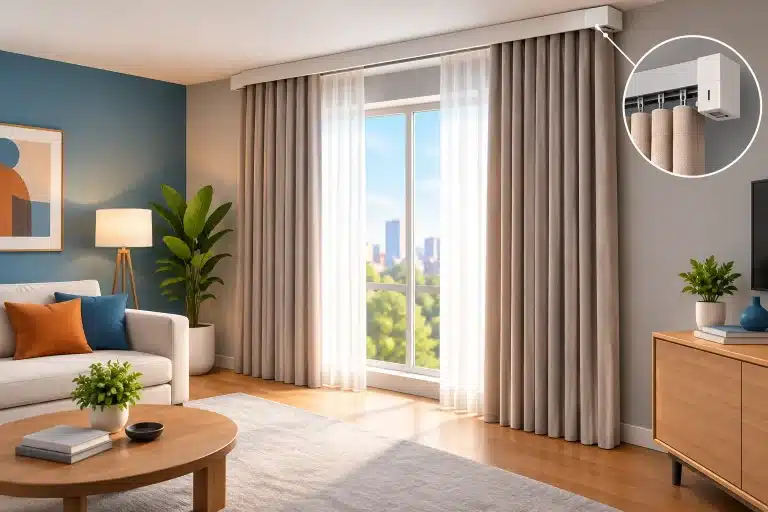
If you have ever stood in a cold bedroom reaching behind furniture to close heavy curtains, or wanted the house to look occupied while you are away, smart curtains with Alexa start to make immediate sense. They are not just a gadget-led upgrade. When specified properly, they make everyday living easier, improve privacy, support accessibility, and add a more considered finish to the room.
Thank you for reading this post, don't forget to subscribe!For many homeowners, the appeal begins with voice control. Saying a simple command to open or close the curtains feels convenient, but the real value goes further. Once your curtains are motorised and connected, you can build routines around morning light, evening privacy, heat management and home security without needing to think about it every day.
How smart curtains with Alexa work
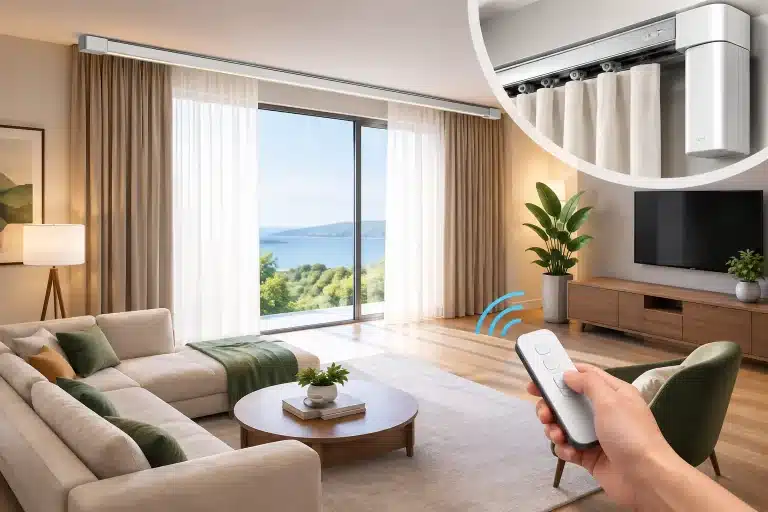
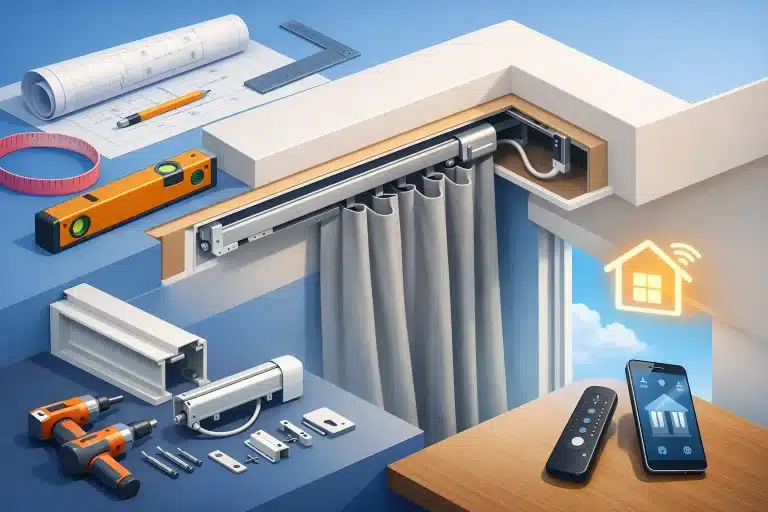
At the centre of the system is a motorised curtain track. This replaces the manual track or pole and moves the curtains for you using an electric motor. The motor can usually be controlled in several ways, including a wall switch, handheld remote, app, timer and smart home integration.
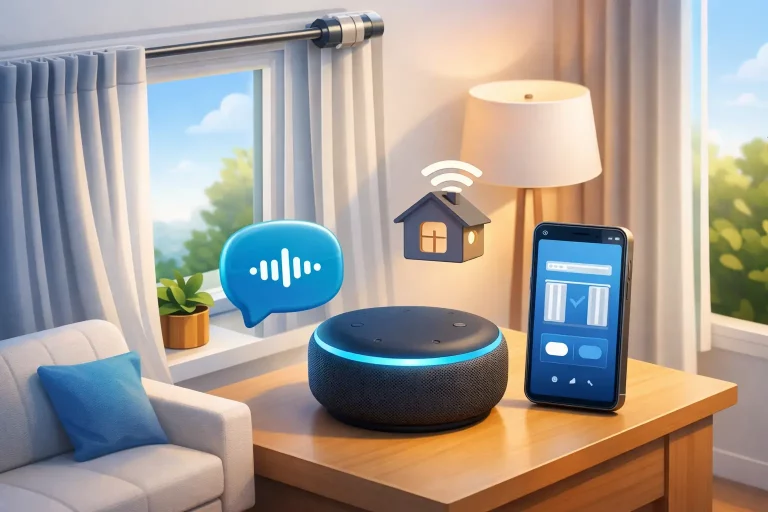
To use Alexa, the curtain motor or control hub needs to be compatible with Amazon Alexa. In practical terms, that means the system can receive a voice command through your Alexa device and translate it into an action such as opening, closing or stopping the curtains. Some systems also allow percentage control, so you can ask for the curtains to open halfway rather than fully.
That sounds simple, and it can be. The part people often underestimate is that curtain automation is still a made-to-measure home improvement product. The quality of the experience depends not just on the app or voice assistant, but on whether the track has been designed correctly for the window, the weight of the curtains, the power supply and the room layout.
Why homeowners choose Alexa curtain control
Voice control is often the feature that gets attention first, but it is rarely the only reason people go ahead. In bedrooms, it can be useful for opening curtains in the morning without leaving bed. In living rooms with large glazed areas or full-height curtains, it removes the effort of handling heavy fabrics every day. In family homes, it helps keep routines consistent, especially when mornings are busy.
There is also a strong security benefit. Curtains that open and close on schedule can make a property feel occupied when you are out for the evening or away on holiday. That is particularly useful in homes where large front-facing windows make it obvious when rooms are left exposed.
Accessibility matters too. For anyone with restricted mobility, shoulder pain, or difficulty reaching awkward windows, motorised curtains can change the day-to-day experience of the home. Instead of struggling with cords, poles or heavy curtain stacks, control becomes immediate and predictable.
Then there is the visual side. A well-fitted electric track gives the room a cleaner, more refined feel than many people expect. The movement is controlled, the heading sits neatly, and the curtains are more likely to be used properly because there is no friction in opening and closing them.
What you need before you buy
The most common mistake is to think of smart curtains as a single off-the-shelf product. In reality, the right solution depends on your window size, curtain weight, fixing position and how you want to control the system.
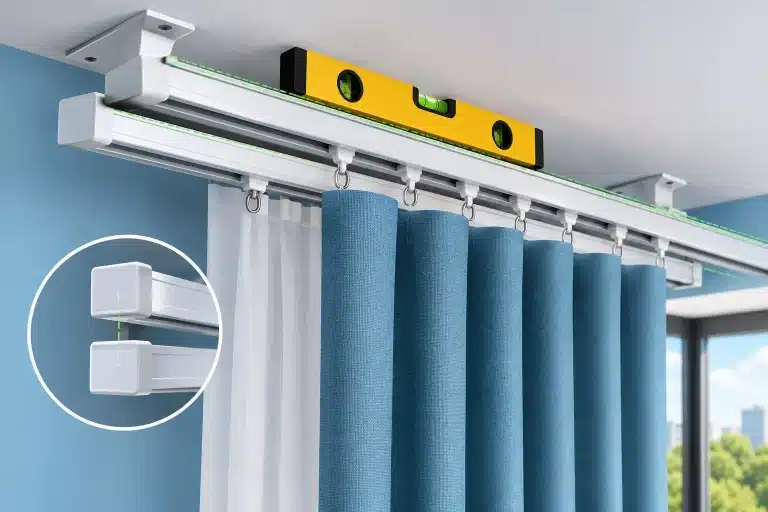
The first consideration is the track itself. A wide opening, a wall-to-wall installation, a bay window or a corner layout may all need different track designs. If the track shape is wrong, or if there is not enough space for the curtains to stack back neatly, the finished result can feel compromised even if the motor works perfectly.
Power is the next question. Some systems are hardwired, while others are battery powered or rechargeable. Hardwired options are often preferred in renovations or new builds because they offer a clean, permanent setup. Battery-powered systems can be useful where wiring is difficult, but suitability depends on the size of the window, frequency of use and access for charging.
You also need to consider compatibility. Not every motorised curtain system works with Alexa in the same way. Some require a dedicated bridge or hub. Some offer basic open and close commands only, while others provide more flexible scene and percentage controls. If you already have other smart home products, it is worth checking how the curtain system will fit into that wider setup.
Made-to-measure matters more than the app
A lot of the satisfaction with smart curtains comes down to the planning stage. This is especially true in UK homes, where alcoves, recessed windows, ceiling details and uneven walls are common.
For example, a recessed installation may need careful thought around bracket positions and clearance so the curtains can move freely. A bay window may need a shaped track that follows the opening closely without affecting operation. A pair of decorative curtains may need enough stack-back space to avoid blocking light when open. These are not minor details. They directly affect how useful the system feels once installed.
This is why specialist planning support matters. A bespoke curtain track should be based on verified dimensions and a proper understanding of the room, rather than guesswork. When that is handled well, the Alexa integration becomes the finishing touch rather than the main event.
Is Alexa the right control method for every room?
Not always, and that is worth saying plainly. Alexa is excellent for convenience, routines and hands-free use, but many homeowners prefer a mix of controls.
In a principal bedroom, voice control may be ideal. In a guest room, a simple remote might be more practical for visitors. In a formal sitting room, a discreet wall switch can be useful when you want immediate control without speaking. In some homes, the best setup is one that combines Alexa with scheduled automation and manual backup options.
That flexibility is usually what makes the system feel effortless. If one control method does not suit the moment, another one does.
Planning around installation
Installation is often straightforward when considered early enough. It becomes more complex when left until after plastering, decorating or furniture placement. If you are renovating, it helps to decide on motor position, power supply and fixing method before final finishes are complete.
Ceiling fixing can create a neat, architectural look, especially with a recessed curtain pocket. Wall fixing may be the better option in other spaces, depending on lintels, ceiling type or existing details. Neither is automatically better. It depends on the room and the result you want.
This is also where coordination with builders, electricians or smart home installers can save time. A well-planned system should sit comfortably within the broader project rather than feeling like an add-on.
What to expect from daily use
When the right system is installed, daily use is refreshingly uncomplicated. You might ask Alexa to close the curtains at dusk, set a weekday routine to open them in the morning, or create an evening scene that lowers lighting and closes the curtains together.
The benefit is not that you will spend your day talking to your windows. It is that the house starts to respond more naturally to how you live. Privacy happens when you need it. Sunlight is managed more predictably. Heavier curtains stop being a nuisance.
There are, of course, a few practical limits. Wi-Fi reliability matters if your chosen setup depends on it. Voice assistants occasionally mishear commands. Battery-powered systems need charging. None of those points are deal-breakers, but they are worth understanding from the start.
Choosing a system that will still feel right in five years
The best buying decisions are usually the least impulsive ones. Rather than focusing only on the novelty of voice control, it is better to ask how the curtains need to function in the room over time.
Will the curtains be opened and closed every day? Are they especially heavy or wide? Do you want them to operate on a schedule when you are away? Is the property being renovated now, making hardwiring easier? Do you need a system that will be easy for all members of the household to use, not just the most tech-confident one?
Those questions usually lead to a better specification than choosing based on app screenshots or generic smart home claims. A properly planned, made-to-measure system gives you the practical benefits first, with Alexa integration adding convenience on top.
For homeowners who want a smarter home without compromising on finish, smart curtains with Alexa can be a very worthwhile upgrade. The key is to treat them as part of the home’s design and day-to-day function, not just as a novelty feature. When the measurements are right, the controls are thought through and the installation is properly planned, the result feels less like technology for its own sake and more like the house is simply working better for you.