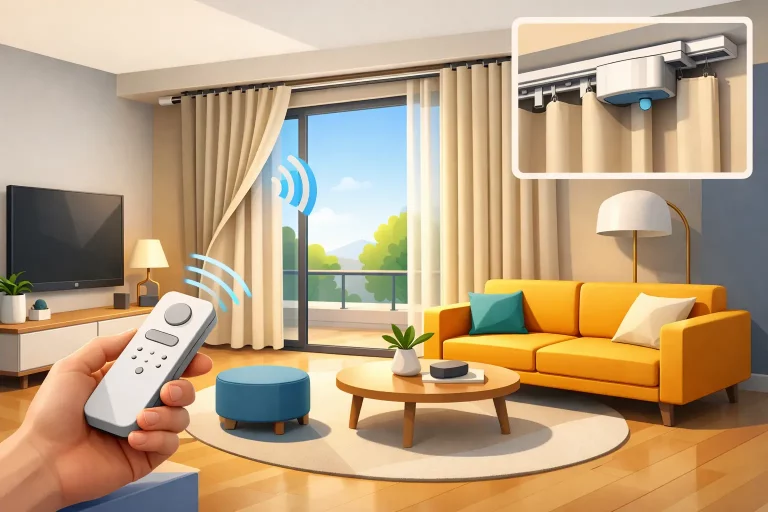
The moment you start using remote control curtains for living room spaces, manual tracks can feel like an unnecessary daily chore. Opening a full-width curtain by hand each morning is not difficult, but it is repetitive, and on larger windows it can also tug the fabric, mark the heading and leave the room looking slightly untidy. A motorised system changes that routine in a very practical way – one press, and the room is open, private or shaded exactly when you want it.
Thank you for reading this post, don't forget to subscribe!For many homeowners, the appeal starts with convenience and quickly extends further. In a living room, curtains affect comfort, privacy, light control and the overall finish of the space. When the track is designed properly and the control method suits how you live, automated curtains feel less like a gadget and more like a well-planned part of the home.
Why remote control curtains suit the living room
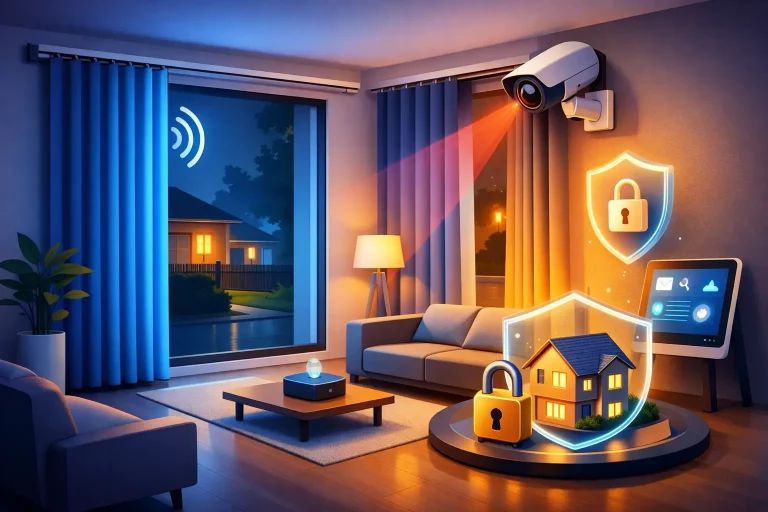
The living room is one of the most used spaces in the house, which makes it the ideal place to notice the benefits of automation. It is often where windows are widest, curtain fabrics are heaviest, and the need for quick control changes throughout the day is greatest. Morning daylight, afternoon glare, evening privacy and overnight security all matter here.
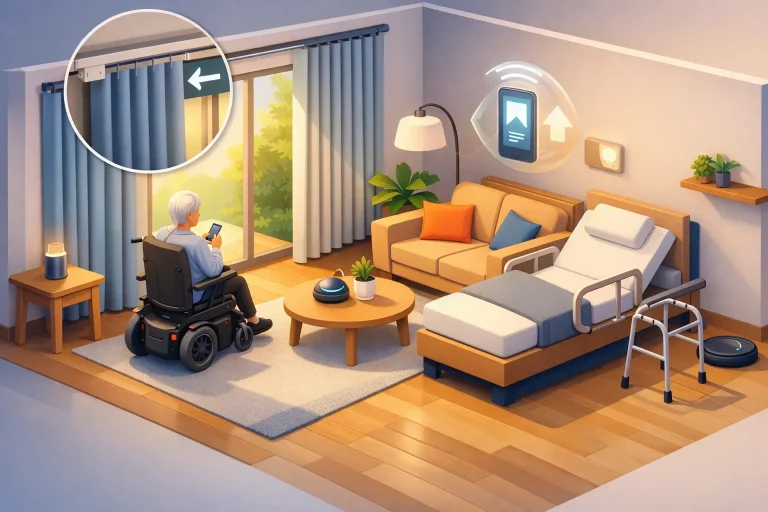
Remote control gives you immediate access without having to cross the room or reach behind furniture. That can be especially useful in open-plan layouts, around bay windows, or where a sofa, sideboard or dining table sits close to the curtains. If anyone in the household has restricted mobility, the improvement is even more meaningful. The curtains become easier to use every day, not just more impressive to show off.
There is also a visual benefit. Curtains tend to hang better when they are moved smoothly along a correctly specified motorised track instead of being pulled by hand. Over time, that can help protect both the track and the fabric heading. In a room where appearance matters, that consistency is part of the value.
What to expect from remote control curtains for living room use
A good system should do more than open and close on command. It should feel quiet, reliable and proportionate to the room. In most living rooms, homeowners want operation that is smooth enough not to interrupt conversation or television, and strong enough to move lined or interlined curtains without strain.
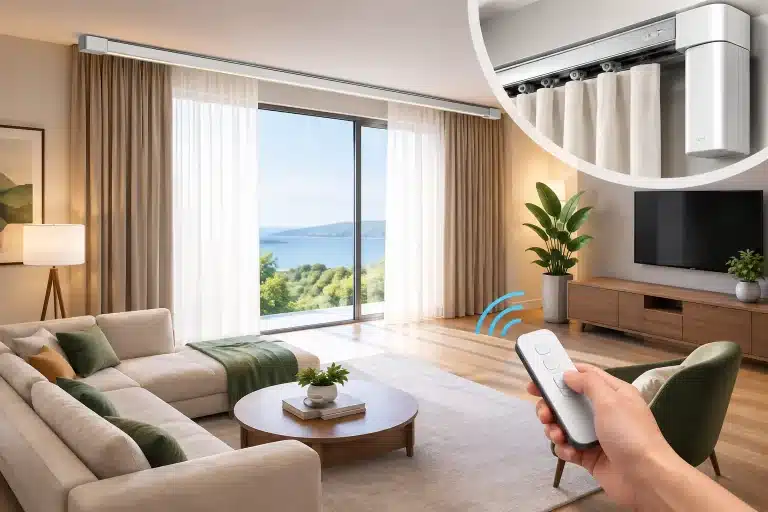
Control options vary. A handheld remote is the simplest starting point and suits many households perfectly well. Others prefer a wall switch near the doorway, app control for timers, or integration with a wider smart home setup. The right choice depends on how you actually use the room. If you want one-touch convenience, remote control may be enough. If you want curtains to close automatically at dusk when you are out, scheduled control may be the better fit.
This is where bespoke advice matters. The same living room feature that looks straightforward in a photograph can be more involved in reality. A wall-to-wall run, a corner section, an offset return, a bay shape or a recess detail can all affect track design, motor position and cable planning.
Choosing the right system for your room
The starting point is not the motor. It is the window arrangement, curtain weight and how finished you want the installation to look. A lightweight decorative curtain over a modest straight run needs something different from a heavy lined pair spanning a wide bifold or a full-width glazed wall.
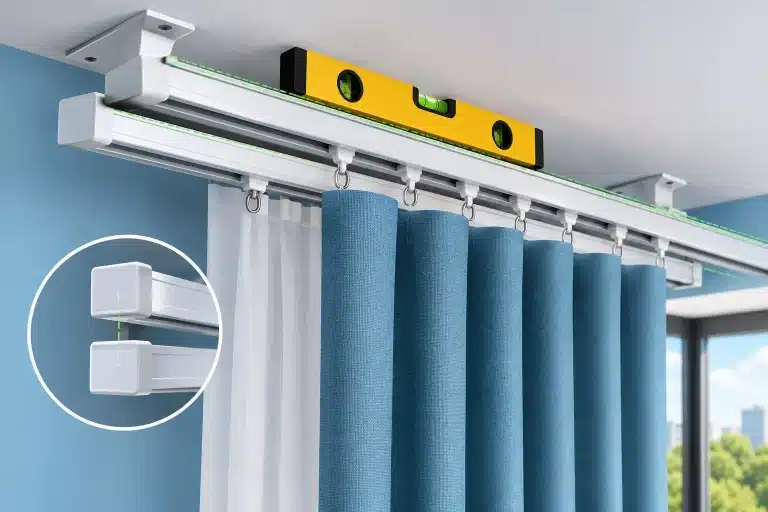
Track shape is often the first technical decision. Straight windows are the simplest, but living rooms frequently include bays or layouts that need a bent track, overlap arrangement or careful stacking plan. If the curtains need to draw neatly away from the glass without blocking too much light, the stack-back needs proper thought early on.
Power supply is another consideration. Some homeowners are renovating and can plan a mains-powered motor with cables concealed from the outset. Others want an upgrade in an already finished room and may prefer a solution that keeps disruption lower. Neither option is automatically better. It depends on timing, access and the level of finish you are aiming for.
Remote style matters too. Some people want a dedicated handset that anyone can use immediately. Others prefer to reduce clutter and control everything through a phone or home automation platform. In practice, a combination often works best. A remote is quick and intuitive, while app or voice control adds flexibility.
Measuring and planning – where many projects go right or wrong
Made-to-measure automated curtains are not an off-the-shelf purchase in the usual sense. Accurate dimensions are essential, but so is understanding what those dimensions relate to. Measuring the visible window alone is rarely enough. You may need to account for return distances, centre overlap, bracket positions, recess depth, pelmets or ceiling details.
In living rooms, seemingly small planning points can affect the finished result a great deal. A radiator below the sill, a projecting window board, nearby shelving or a decorative cornice can all influence how the curtain hangs and how smoothly it travels. If the curtains are designed to sit behind a ceiling pocket or recess, that detail needs coordinating before installation, not after delivery.
This is one reason a consultative approach is valuable. Smart Curtains supports customers with dimension checks, fitting drawings and layout advice so that the chosen system suits the real space rather than a rough estimate of it. That can make a significant difference where builders, electricians or smart home installers are involved.
Smart home integration – useful, but not always essential
Some buyers assume motorised curtains only make sense as part of a fully connected smart home. That is not the case. Remote control on its own already solves a genuine everyday problem. It gives easy access, protects the fabric from manual handling and helps manage privacy quickly.
That said, integration can add another layer of practicality. Timed opening in the morning can bring natural light into the room without anyone touching a switch. Timed closing in the evening can improve privacy and create the impression that someone is home when the property is empty. If your living room is part of a wider lighting and shading setup, synchronised scenes can make the room feel much more considered.
The trade-off is complexity. More integration can mean more decisions about compatibility, wiring and control preference. For some households, that extra capability is worthwhile. For others, a dependable remote and a clean installation are exactly enough.
Style, finish and daily living
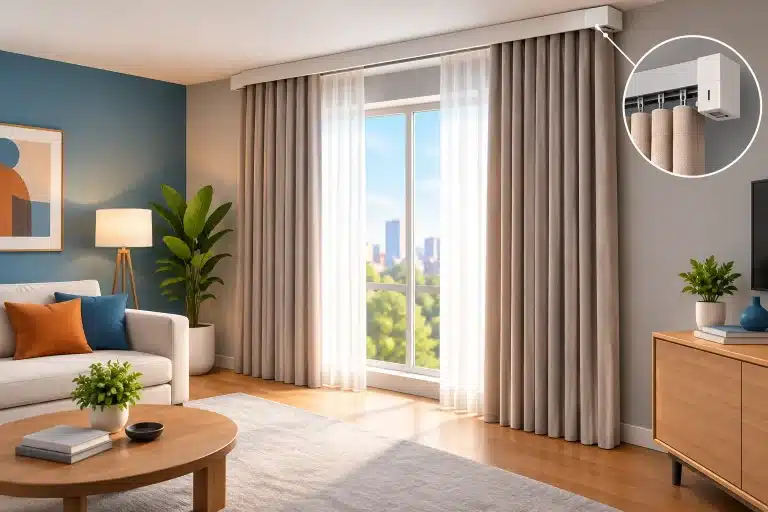
The best remote control curtains for living room areas should not look overly technical. In most homes, the aim is a polished interior where the automation sits quietly in the background. That means thinking about how the track is concealed, where the motor sits, and how the curtains stack when open.
Heavy fabrics, full headings and larger spans often benefit most from automation, but they also demand a properly specified system. A motor that is underpowered or a track that has not been matched to the curtain weight can affect performance over time. This is where bespoke specification matters more than headline features.
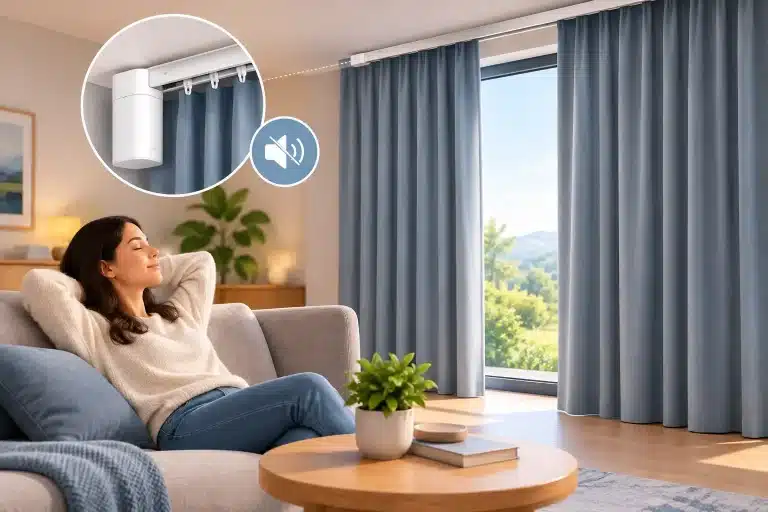
Noise is another point worth asking about. No motorised curtain is completely silent, but quality systems should be discreet in operation. In a living room used for relaxing, watching television or entertaining, that quietness adds to the sense of quality.
Is it worth it?
For a room you use every day, many homeowners find the answer is yes. The value is not only in the motor itself but in the overall improvement to how the space works. Easier control, better privacy, less handling of the fabric and a neater finish all add up.
The strongest results usually come when the system is planned around the room rather than chosen on price alone. A made-to-measure track with the right controls, proper measurements and installation guidance tends to feel like a long-term upgrade. A generic solution can look cheaper at first, but may fall short on fit, movement or finish.
If you are considering remote control curtains for your living room, the most useful first step is to think about the room as a whole. How wide is the opening, where will the curtains stack, how do you want to control them, and are there any building or wiring details that should be coordinated now? Answer those questions early, and the final result is far more likely to feel effortless every single day.
A well-planned curtain system should make the room calmer, smarter and easier to live with – and once that happens, you will wonder why you ever reached across the sofa to pull the curtains by hand.