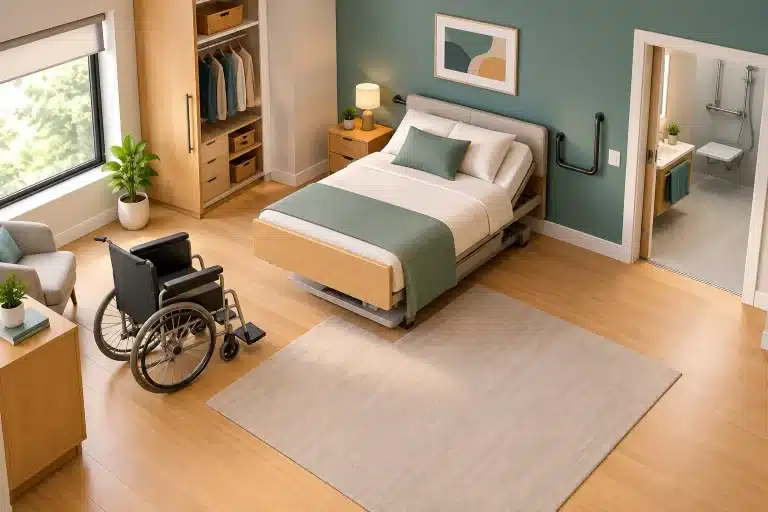
A bedroom should be the easiest room in the house to control. Yet heavy curtains, awkwardly placed poles and hard-to-reach windows can turn a simple morning or bedtime routine into an unnecessary effort. An accessible bedroom project puts those daily moments first, creating a calmer, more independent space without compromising on privacy, warmth or the finished look of the room.
Thank you for reading this post, don't forget to subscribe!For many homeowners, motorised curtains are a practical part of that plan. They remove the need to stretch across furniture, pull on fabric or manage cords, while still giving the room the soft, tailored finish that makes a bedroom feel complete.
Start with the person, not the product
Accessibility is not one fixed specification. A person recovering from surgery may need temporary help with everyday tasks. Someone living with reduced mobility, arthritis, visual impairment or fatigue may need a solution that remains easy to use for years. In a family home, an accessible bedroom may simply mean that curtains can be opened safely without climbing around a bed or reaching behind bedside furniture.
The best starting point is to consider the real routine. Who opens and closes the curtains? From where? Is getting out of bed difficult at certain times of day? Are there carers involved? Is the bedroom used by someone who benefits from predictable light levels or a simple, familiar control?
Answers to these questions shape the specification far better than choosing a motor or controller in isolation. A well-planned system should feel natural after the first day, not introduce another piece of technology to manage.
Make curtain control easy to reach
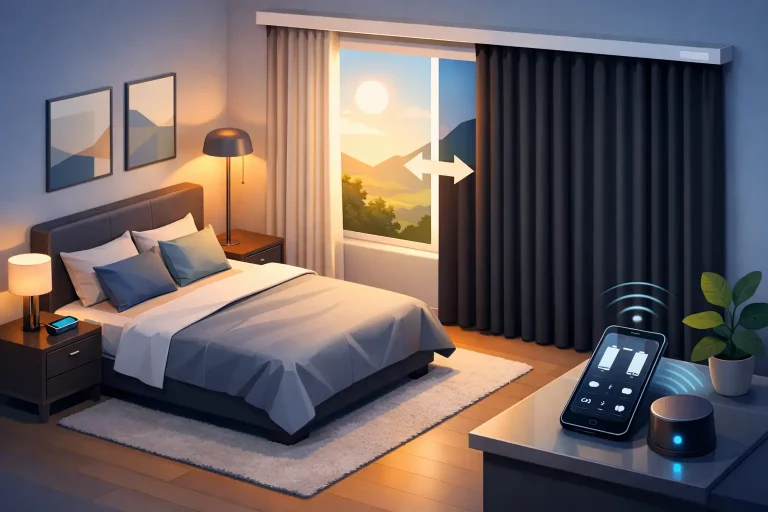
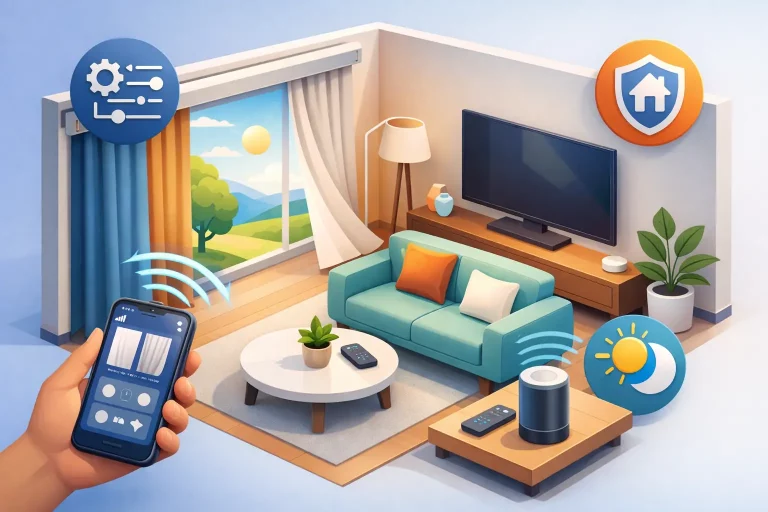
Motorised curtain tracks allow curtains to move at the press of a button, on a timer or through a compatible smart home setup. In an accessible bedroom, the most useful control method is usually the one that requires the fewest steps.
A wall switch can be positioned at a sensible height beside the bed, near the bedroom entrance, or in both locations. This gives a clear, reliable control point that does not depend on finding a remote. It can be particularly reassuring for people who prefer physical buttons over a phone app.
A handheld remote is flexible and simple, especially where wiring to a switch is not practical. It can remain on a bedside table or be mounted in a known position. Smartphone control may suit homeowners who already use their phone for lighting, heating or security, while voice control can offer valuable hands-free operation for some users.
There is no single best answer. Voice control is convenient, but it relies on a compatible system, internet connection and clear speech recognition. Smartphone apps offer flexibility, but not everyone wants to use a screen first thing in the morning. For many bedrooms, a wall switch supported by a remote is the most straightforward combination.
Timers can support a steadier routine
Scheduled opening and closing is about more than convenience. Curtains that open gradually at a chosen time can bring natural daylight into the room without requiring immediate movement from the bed. Closing them automatically in the evening can help establish privacy and reduce the worry of having left windows exposed after dark.
Timing should still leave room for choice. A routine that works on weekdays may not suit weekends, illness or changing care needs. Manual override and easy-to-understand controls remain essential, even in a highly automated room.
Plan the accessible bedroom project around the layout
The bed, not the window, is often the key obstacle in bedroom curtain planning. A bed positioned beneath a window or close to a bay may make manual curtains inconvenient. Wardrobes, radiators, bedside tables and sloping ceilings can also affect where the track sits and how the curtains stack when open.
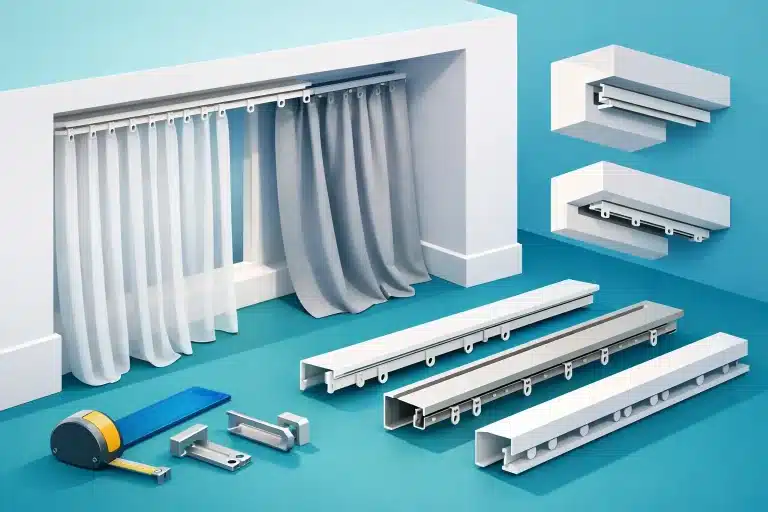
A made-to-measure motorised track can be designed for straight walls, recesses, bays, corners and offset arrangements. This matters because a standard, off-the-shelf track may leave curtains stopping short, bunching in the wrong place or blocking part of the window. In an accessible room, those small frustrations quickly become daily ones.
Think about the finished curtain position as carefully as the closed position. If the curtain stack sits beside the window, will it interfere with a bedside cabinet? If it parks in front of glazing, is that acceptable? In a compact room, a track that allows curtains to draw neatly away from the main window area can make the space feel brighter and easier to use.
Track placement also affects appearance. Ceiling-mounted tracks can create a clean, hotel-style finish and are useful where there is limited wall space above the window. Face-fixed tracks may be more suitable where the ceiling construction, coving or existing window treatment makes ceiling fixing impractical. The right option depends on the building and the desired look, not just the motor.
Choose fabrics for light, privacy and comfort
Accessible design is often associated solely with movement and controls, but fabric choice plays an equally important role in comfort. A bedroom may need blackout lining for sleep, thermal lining to reduce heat loss, or a lighter fabric that softens daylight without making the room feel closed in.
Blackout curtains are particularly useful for bedrooms used during the day, for shift workers, children and anyone sensitive to early morning light. However, a very heavy curtain heading and fabric can require a motor with appropriate capacity. This is not a reason to avoid a fuller, more luxurious look. It simply means the track and motor should be specified for the weight, width and heading style of the curtains.
Thermal curtains can improve the feel of a colder bedroom, especially around older windows. They are not a substitute for addressing draughts or poor insulation, but they can contribute to a warmer, more comfortable room when closed. If the project includes both curtains and blinds, consider which layer should be automated and which is best used for filtering light or maintaining daytime privacy.
Coordinate power before decorating begins
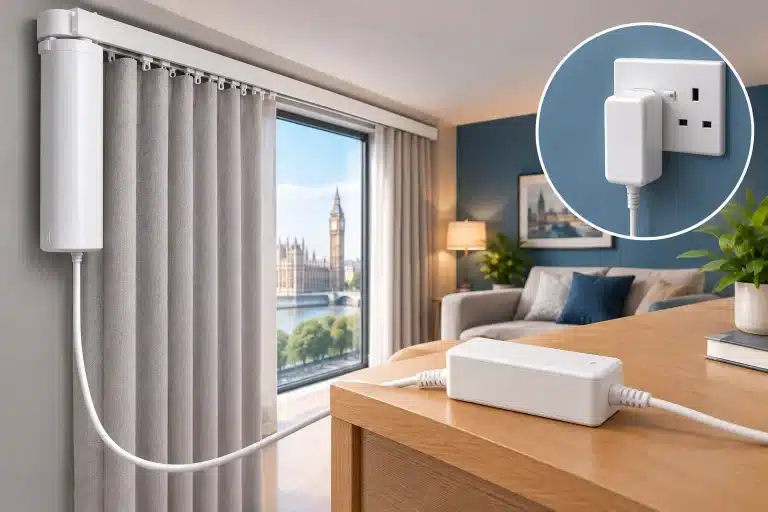
A motorised curtain system needs a suitable power plan. In a renovation or extension, this is easiest to arrange before plastering, decorating and fitting joinery. An electrician can provide a discreet power point at the appropriate end of the track, helping the installation look considered rather than added as an afterthought.
That said, existing bedrooms can also be upgraded. The practical choices depend on the room, available sockets, cable routes and whether a battery-powered option is suitable for the curtain size and intended use. Battery systems can reduce installation disruption, but they require charging and may not be the preferred choice for very large or frequently operated curtains.
It is worth involving the curtain specialist, electrician and, where relevant, smart home installer early. Clear fitting drawings and confirmed measurements help avoid common issues such as power points being placed on the wrong side, insufficient recess depth, or a track clashing with coving, pelmets or furniture.
Measure for the complete installation
Window width alone is rarely enough. Accurate planning needs the wall-to-wall measurement where applicable, the drop, the location of obstructions, the curtain heading and the intended fixing method. Bay windows and corners need particular care, as every angle and return affects the track design.
This is where guided planning earns its place. Smart Curtains can help verify measurements, develop fitting drawings and coordinate the details needed for a made-to-measure motorised track. That support is especially valuable when accessibility, interior finish and electrical planning all need to work together.
Build in reliability and simple back-up options
An accessible feature is only helpful if it remains dependable. Choose controls that household members can understand, ensure remotes have a permanent home, and avoid placing essential functions behind a complex sequence of apps or voice commands.
Discuss what happens in a power cut or if the internet drops out. Depending on the system, manual movement, local switch control or battery back-up may be relevant. The right level of contingency depends on the user and the room. A main bedroom with alternative window coverings has different needs from a ground-floor bedroom where privacy and security are more immediate concerns.
It is also sensible to plan for changing needs. A switch position that works now may become more useful later if it is reachable from a seated position. Automation schedules can be adjusted as routines change. The track itself can remain a long-term part of the room while fabrics are refreshed to suit a new décor.
A bedroom that gives more choice
The value of an accessible bedroom is not that every action happens automatically. It is that the person using the room has a simple choice: open the curtains, close them, let daylight in or create privacy, without needing to struggle or ask for help.
When the track layout, fabric weight, power supply and controls are considered together, motorised curtains become a quiet part of the room rather than a conspicuous gadget. That is the aim of a thoughtful accessible bedroom project: a bedroom that looks beautifully finished and feels easier to live in, every single day.