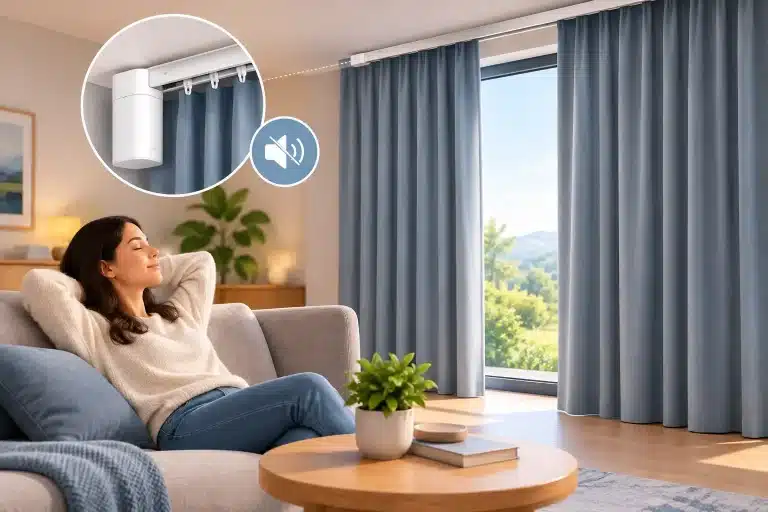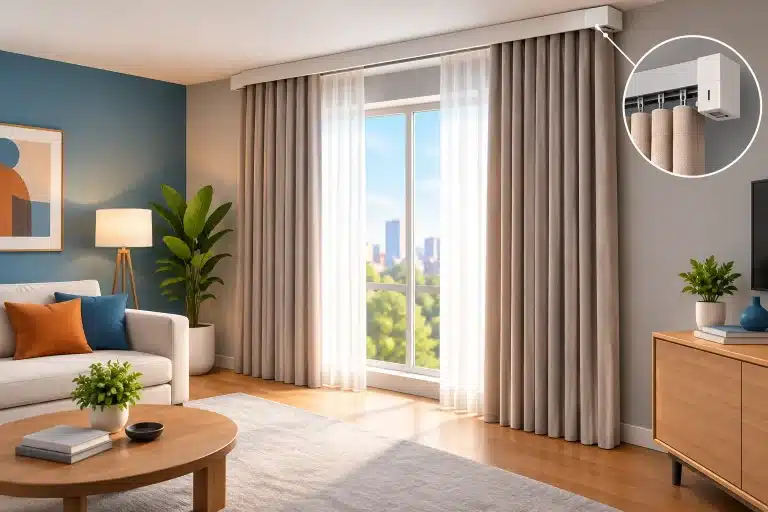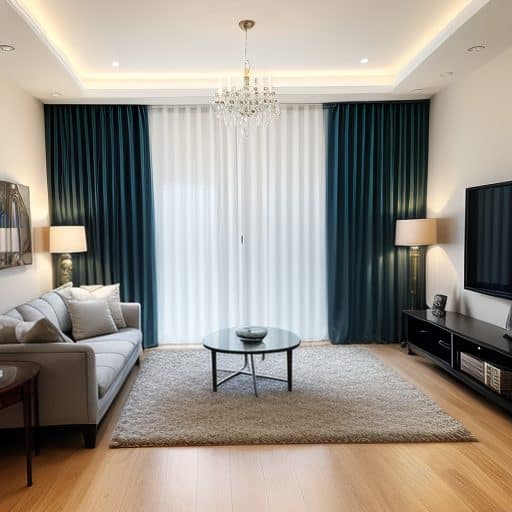
A curtain that catches on a radiator, leaves a gap at the edge of a bay window or needs a firm pull twice a day can make an otherwise beautiful room feel unfinished. Motorised tracks replace that daily compromise with controlled, made-to-measure movement. At the press of a button, on a timer or through your chosen smart home system, curtains open and close exactly as intended.
Thank you for reading this post, don't forget to subscribe!For many homeowners, the appeal starts with convenience. The lasting value, however, lies in getting the track layout, measurements and control method right before anything is made. A well-planned system should feel like part of the room, not a piece of technology added afterwards.
What are motorised tracks?
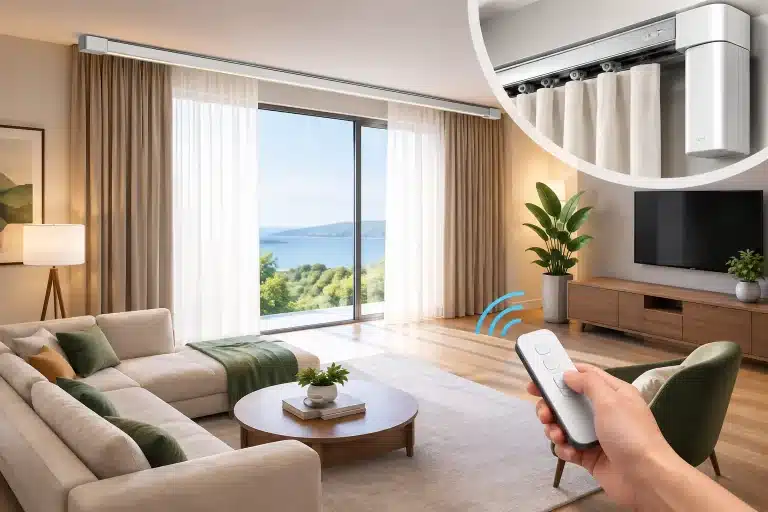
Motorised tracks are electrically operated curtain tracks that move curtains using a concealed motor and drive system. They can be fitted to walls or ceilings and made to suit straight windows, full-width glazing, recesses, bays, corners and offset layouts. Depending on the specification, the motor may sit at one end of the track or be positioned discreetly within the arrangement.
The curtains themselves are made and headed in the usual way for the chosen track, but they no longer need to be drawn by hand. The motor pulls them open, closes them, or stops them at a programmed position. This matters for heavier curtains and wider spans, where manually handling the fabric can be awkward and can gradually affect how neatly the curtains hang.
A motorised system is not one fixed product. It is a tailored arrangement of track shape, fixing position, curtain stack-back, motor location and controls. That is why early planning makes such a difference, particularly in renovations and new-build homes where wiring and ceiling details can still be adjusted.
Where automated curtain control makes the biggest difference
The most obvious benefit is the morning and evening routine. Curtains can open as you wake up and close when privacy is needed, without walking around each room. In an open-plan space with several sets of doors, this saves more effort than many people expect.
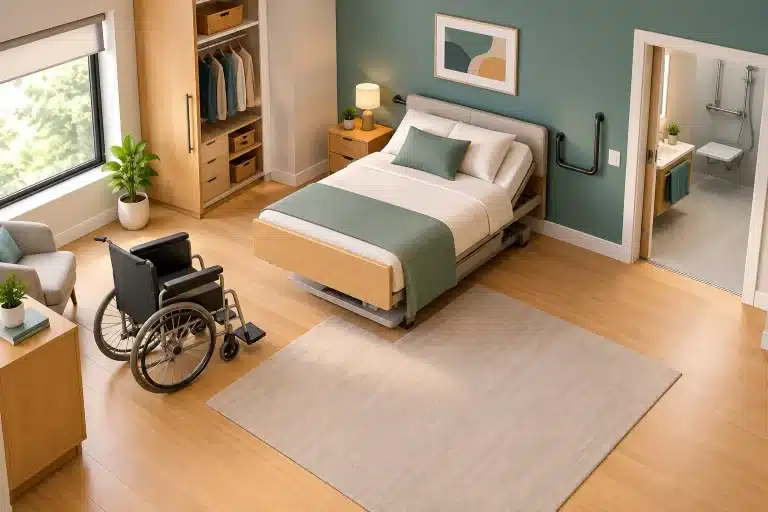
There is also a strong practical case for rooms with difficult-to-reach windows. Tall glazing above stairwells, curtains behind furniture, large patio doors and wide bedroom windows can all be controlled without stretching, climbing or moving furniture. For people with restricted mobility, this can make an important difference to how independently they use their home.
Security is another useful consideration. Timed opening and closing creates a more lived-in appearance when you are away, whether for a weekend or a longer holiday. It is not a substitute for proper home security, but it is a sensible extra layer that is easy to use once the system is set up.
Motorised curtains can also help protect interiors. Closing curtains during the brightest part of the day can reduce direct sun on flooring, artwork and upholstery. The effect depends on the fabric, window orientation and glazing, so it should be viewed as a supporting measure rather than guaranteed protection.
Choosing controls that suit your household
There is no single best way to operate electric curtains. The right choice depends on who uses the room and how connected you want the house to be.
A wall switch gives a familiar, permanent control point. It is often a good choice for bedrooms, living rooms and properties where different family members or guests need an easy way to operate the curtains. A remote control offers flexibility without requiring a phone, and can operate one track or several tracks as required.
Smartphone control is particularly useful for schedules and away-from-home operation. You might set bedroom curtains to open on weekday mornings, or close downstairs curtains at dusk. Smart home integration can take this further, allowing curtains to work alongside lighting, heating or voice control.
More integration is not always better. A simple wall switch may be the most reliable and comfortable answer for one household, while a fully integrated system may suit a larger renovation with an automation installer already involved. The key is to choose control that will remain easy to use every day, rather than specifying features that add complexity without solving a real need.
The details that determine whether a track looks right
Most problems with automated curtains are preventable at the planning stage. A track can be technically capable of moving the curtains yet still look wrong if there is insufficient room for the fabric to stack when open, or if the fixing position causes the curtains to brush a window handle or radiator.
Ceiling fixing, wall fixing and recesses
Ceiling fixing often creates the cleanest, most architectural look, especially when curtains run from ceiling to floor. It can make a room feel taller and allows the fabric to sit neatly in front of glazing. Wall fixing is sometimes the practical choice where there is a suitable structural surface or where a ceiling detail prevents a direct fixing.
Recesses need careful thought. The track must sit far enough forward for the curtains to clear handles, blinds and the window frame. If there is a pelmet, bulkhead or curtain pocket, its internal dimensions must allow for the track, the motor and the movement of the heading. Small allowances can have a large visual effect once the curtains are installed.
Bays, corners and wall-to-wall curtains
Bay windows are one of the strongest reasons to choose a bespoke track. Each angle and return needs to be considered so the curtains travel smoothly and sit correctly when open. Some bay shapes can use a continuous bent track; others need a layout that manages separate runs or a motor position away from the most visible area.
Wall-to-wall curtains need equally precise measuring. The finished track length may be wider than the glass so the curtains can draw clear of the window and maximise daylight. This is often where stack-back becomes decisive: thick lined or interlined curtains need more room at each end than lighter fabrics.
Corners and offset tracks can be planned too, but they should never be treated as an afterthought. The direction of travel, where curtains meet and the location of power all need to work together. A fitting drawing is invaluable here, giving your builder, electrician and curtain maker a shared reference before work begins.
Power and installation: plan earlier than you think
Most motorised curtain systems need a nearby electrical supply. In a new build or major refurbishment, the neatest approach is usually to plan a concealed power point before plastering and decorating. In an existing room, there may be practical alternatives, but the route and visibility of any cable should be assessed honestly.
It is worth involving an electrician at the same time as the track is specified. They need to know the motor position, proposed control type and whether the system will connect to wider home automation. If a track is being recessed into a ceiling pocket, discuss the dimensions before the joinery or plasterboard is finalised.
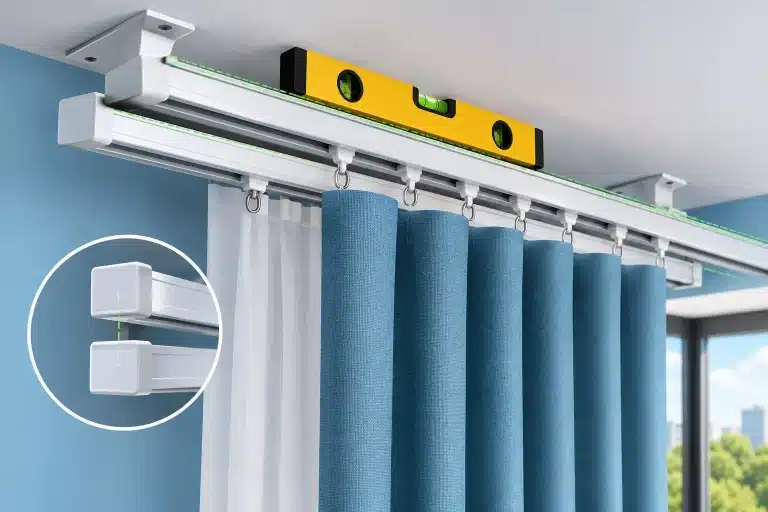
Installation also depends on the surface receiving the track. A heavy curtain system needs secure fixings into suitable structure, not just a convenient decorative finish. This is particularly relevant with suspended ceilings, insulated plasterboard and older properties where walls or ceilings may not be uniform.
How to specify made-to-measure motorised tracks with confidence
Start with the room rather than the product. Consider how far the curtains need to travel, what sits beneath the window, where fabric can stack, and how you want the room to feel when the curtains are open. Then decide whether you want curtains to meet in the centre, draw to one side or operate as separate pairs.
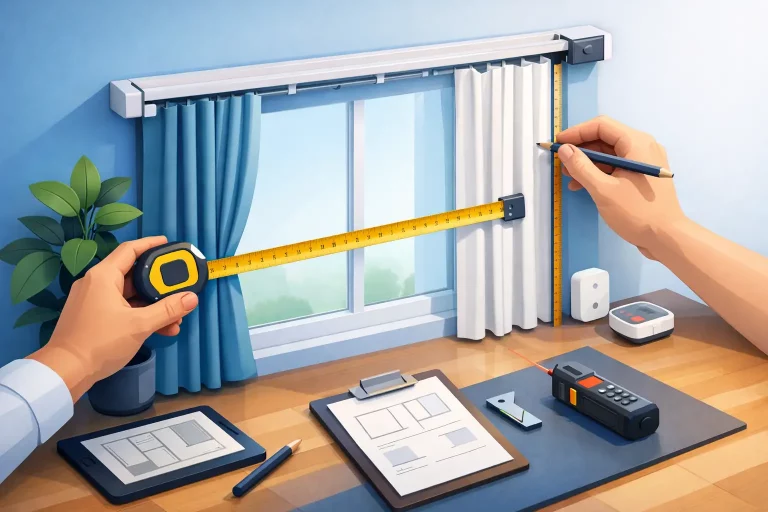
Accurate dimensions are essential, but measurements alone are not the full brief. Photos of the window, ceiling and nearby obstructions often reveal details that a number cannot. Include the intended curtain fabric and heading where possible, because fabric weight and fullness affect the motor requirement and stack-back allowance.
For complex layouts, professional planning support is more than reassurance. It can prevent an incorrectly shaped track, an inaccessible motor or a power point positioned on the wrong side of the window. Smart Curtains works from measurements and room details to help customers coordinate the specification with their installer, electrician and interior plans before the system is produced.
A considered upgrade, not just a gadget
Motorised curtains earn their place when they remove friction from daily life while improving the finish of a room. The best result is rarely the one with the most controls. It is the one where the curtains clear the glazing, gather neatly, respond reliably and suit the way your household actually lives.
If you are planning new curtains, a renovation or a smart home update, resolve the track layout and power requirements before final decorating begins. That one early decision gives you far more freedom to create a home that feels calm, private and effortless to use.