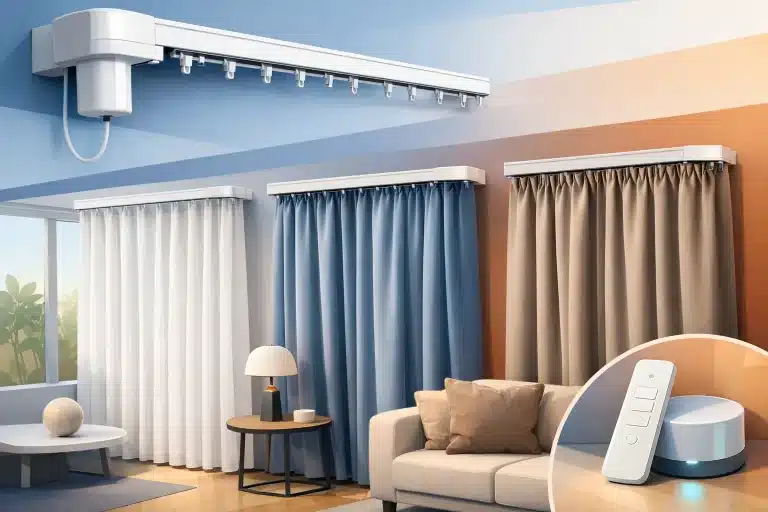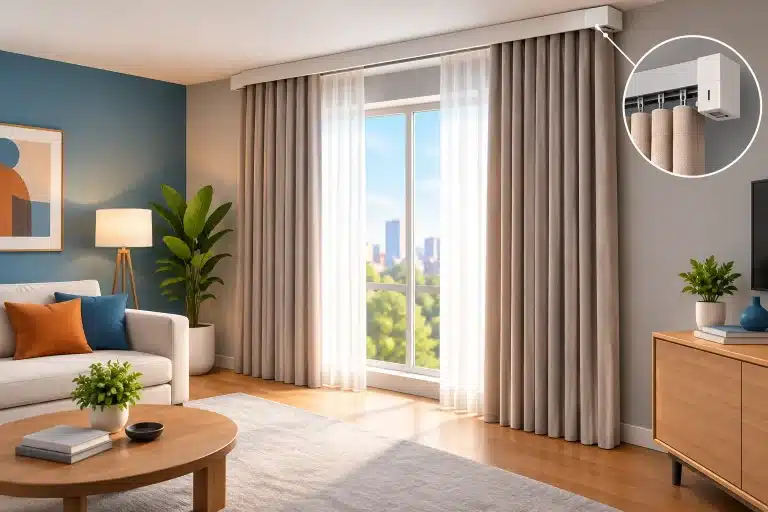
A motorised curtain track can transform the feel of a room, but the control method is a decision best made before decorating is complete. Knowing when to choose hardwired curtains helps you plan for a system that feels considered rather than added later – with power where it needs to be, controls that suit daily life, and no visible cables competing with the finished interior.
Thank you for reading this post, don't forget to subscribe!Strictly speaking, it is the curtain motor that is hardwired, rather than the curtains themselves. The motor receives a permanent electrical supply, usually hidden within the wall, ceiling void or a purpose-made recess. For many homeowners, this is the preferred route for a new build, extension or substantial renovation. It can also be the right choice for an existing home where access for electrical work is practical.
When to choose hardwired curtains
Choose a hardwired motorised curtain system when you want a permanent, low-maintenance installation and can involve an electrician at the planning stage. It is particularly well suited to large or heavy curtains, difficult-to-reach windows, multiple rooms, and homes where curtain automation will form part of a wider smart home setup.
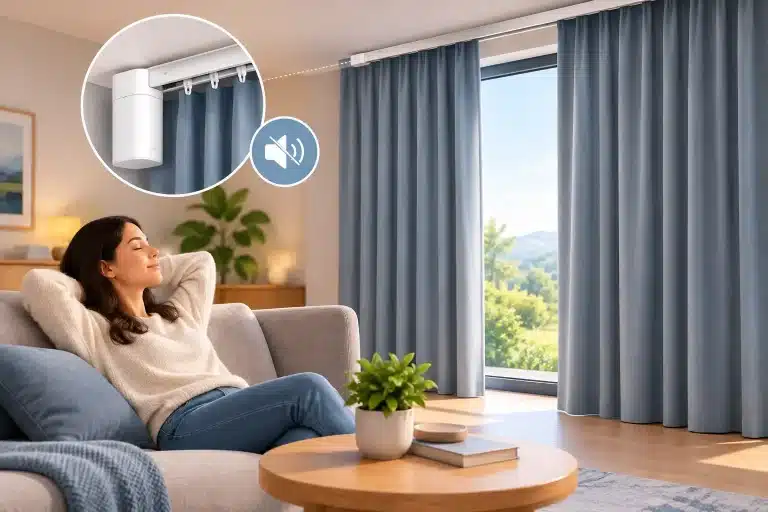
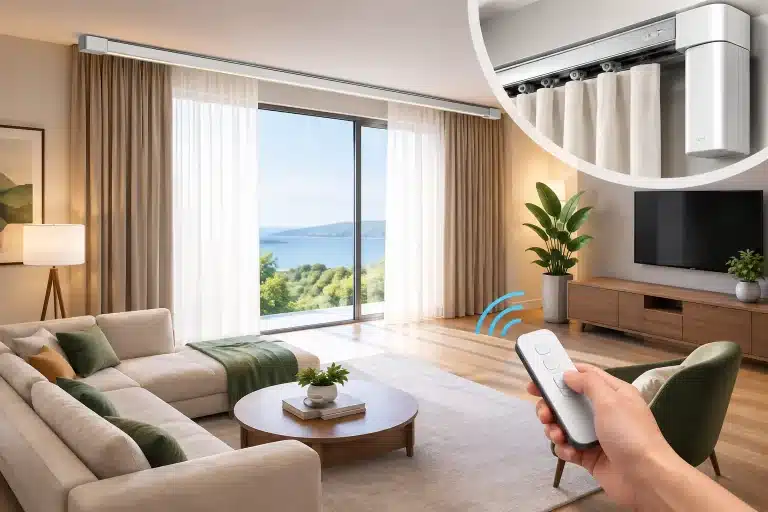
A hardwired system removes the need to recharge batteries or position a mains plug close to the window. That may sound like a small detail, but it matters in everyday use. Curtains continue to operate on schedules, through a wall switch, remote control or app without the thought of charging a motor. The result is a quieter, cleaner-looking arrangement that suits a polished interior scheme.
Hardwiring is not automatically the best answer for every room. If the room is already finished and electrical work would mean lifting floors, chasing plaster or disturbing expensive decoration, a plug-in or rechargeable option may be more sensible. The right choice depends on the property, the curtain weight, the control you want and how much work is planned around the window.
Projects where hardwiring makes most sense
New builds, extensions and full refurbishments
This is the ideal time to specify hardwired curtain tracks. Electricians can run a suitable cable before plastering, joinery and decorating begin, so the supply remains completely concealed. You also have the freedom to decide where wall controls should sit and whether the track will be recessed into the ceiling.
For an extension with wide bifold doors or a run of glazing, a hardwired track creates a more architectural finish. The curtain track can extend wall to wall, cover the full opening properly and operate substantial curtains without a plug lead appearing at one end. It is a detail that is easier and more cost-effective to get right before the room is finished.
Large, tall or awkward windows
Hardwired motors are a strong choice where manual curtain operation is inconvenient. Think of a double-height living space, curtains behind furniture, a tall stairwell window or a bay where reaching each curtain edge is awkward. With reliable power at the track, opening and closing becomes a simple press of a switch or scheduled routine.
They are also well suited to heavier fabrics and wide spans. A made-to-measure motorised track should be specified for the curtain size, heading and weight, rather than chosen as an off-the-shelf accessory. Planning the power supply at the same time ensures the system can perform as intended from day one.
Smart home control and routines
If you want curtains to work alongside lighting, heating, blinds or security settings, hardwiring is usually the more future-ready route. It provides a consistent power source for regular automated operation, whether you use timed opening, voice control or integration through a home automation system.
Morning and evening routines are where this becomes genuinely useful. Curtains can open gradually while the household gets ready, then close at dusk for privacy. When travelling, scheduled movement can make the home appear occupied without relying on somebody to visit and adjust the curtains manually.
Integration does need early discussion. Your electrician and, where relevant, your smart home installer need to know the motor location, cable route and intended control method. This prevents a common frustration: a beautiful installation with no practical route for the power or control wiring.
Accessibility and everyday ease
For people with restricted mobility, a hardwired curtain system can remove a repetitive and sometimes difficult task. There is no need to pull heavy fabric across a long track, stretch around furniture or manage several windows individually. A wall switch can be placed at a convenient height, while a remote or smartphone gives further flexibility.
This approach also works well in busy family homes. One control can operate a pair of curtains across a large window, and routines mean the house does not depend on someone remembering to close every room at night. Convenience is valuable, but so is the reassurance of dependable privacy.
The installation details to settle early
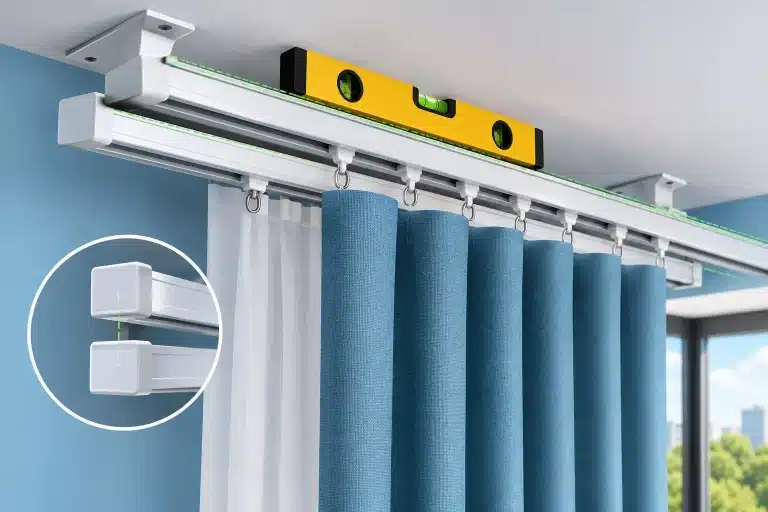
Hardwired curtains need more than a socket nearby. The motor requires an appropriately planned electrical feed in the correct position, usually at one end of the track. The exact location depends on the track design, whether the curtains draw left, right or from the centre, and how the room will be furnished.
Ceiling recesses deserve equal attention. A recessed track can make the curtains appear to fall directly from the ceiling, but the recess must be deep and wide enough for the chosen heading, fabric fullness and motor. A recess that is too narrow can cause the fabric to catch or sit awkwardly, while one positioned too close to a window may affect how the curtains stack when open.
Bay windows, corners and offset layouts require careful measuring as well. The track may need to curve, change direction or accommodate a return, and the motor position must remain serviceable. It is wise to agree the track drawing before first-fix electrics are finalised, rather than asking an installer to work around a cable placed to an assumption.
At Smart Curtains, this planning is treated as part of the specification process. Confirming measurements, curtain stack-back, track shape and motor position before ordering helps avoid compromises that only become visible after fitting.
Hardwired, plug-in or rechargeable?
Hardwired systems offer the cleanest finish and the least ongoing attention, but they involve electrical planning and installation work. A plug-in motor may be an excellent alternative where a socket is already close to the track and can be discreetly concealed by curtains or joinery. It keeps the project simpler while still offering motorised convenience.
Rechargeable systems can be particularly useful in completed rooms, rental properties or locations where wiring is impractical. Their main trade-off is maintenance: the motor will need charging periodically, depending on curtain weight and frequency of use. Some homeowners are perfectly happy with that arrangement, especially for a single bedroom or occasional-use space.
There is no need to make every room the same. A whole-house refurbishment may justify hardwired tracks in principal living areas and bedrooms, while a less accessible room may suit a rechargeable solution. What matters is selecting each system around the room rather than forcing one approach throughout the property.
Questions to ask before choosing a hardwired track
Before committing, consider whether electrical work is already planned, where the motor can sit, and whether the curtains will be operated frequently enough to benefit from permanent power. It is also worth deciding how you expect to control them: a local wall switch is straightforward and familiar, while timers and smart home integration add flexibility.
Ask how the curtains will stack when open. On a wide window, the fabric can occupy more wall space than expected, affecting furniture, radiators and the view. For centre-opening curtains, both sides need adequate stack-back space. These are practical design points, but resolving them early has a significant effect on the finished room.
Finally, consider who will coordinate the work. Your curtain supplier, electrician, builder and interior designer may all be involved. A clear fitting drawing and agreed power position give everyone a shared plan, reducing delays and last-minute decisions on site.
A hardwired curtain system is at its best when it is planned as part of the room, not treated as a final accessory. If your project allows for that early coordination, it can deliver the effortless control, discreet appearance and lasting convenience that make motorised curtains feel truly at home.