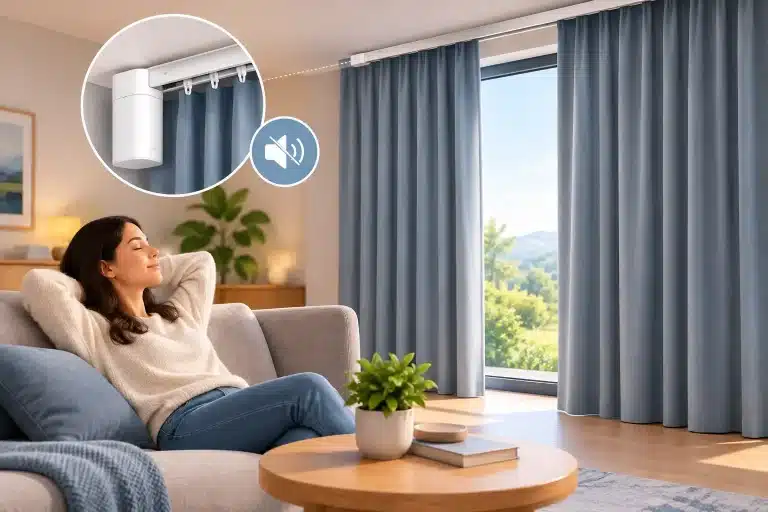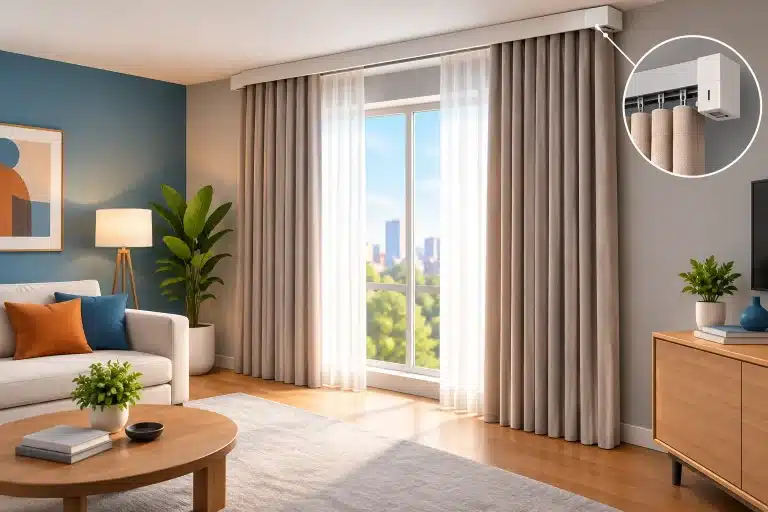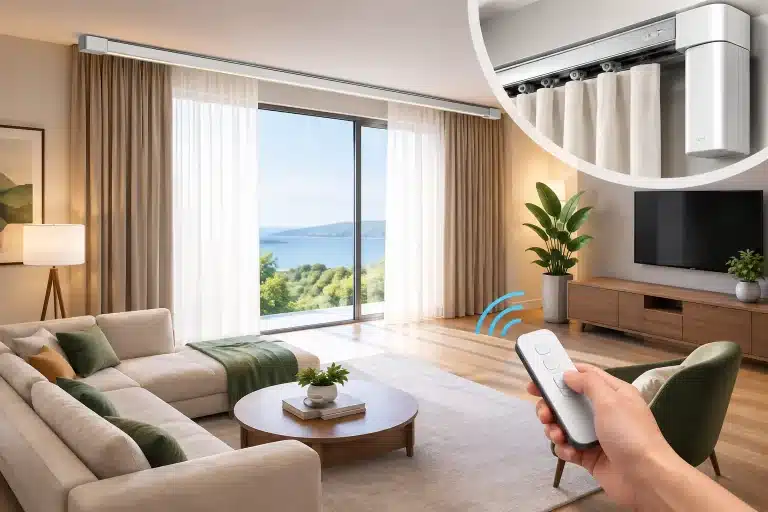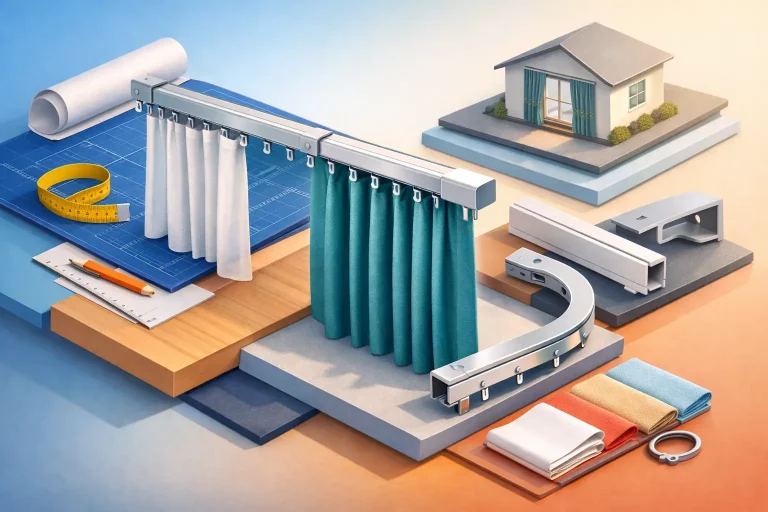
A sheer curtain that stops short of the blackout layer, or a pair of headings that sit at different heights, can make an otherwise beautiful room feel unfinished. When you align dual curtain tracks correctly, both layers open, close and stack with the quiet precision expected from a made-to-measure installation. The difference is especially noticeable with motorised curtains, where every movement draws attention to the quality of the planning.
Thank you for reading this post, don't forget to subscribe!Dual tracks are usually chosen to combine privacy and light control: a voile or sheer curtain for daytime softness, with a lined or blackout curtain behind it for the evening. They can also give larger windows a more considered, hotel-style finish. Achieving that effect depends less on the curtains themselves than on getting the two tracks, their fixing positions and their control arrangements right from the start.
What it means to align dual curtain tracks
Alignment is not simply a case of mounting two tracks parallel to each other. The tracks must be positioned so the curtain headings appear intentional, the fabrics clear one another, and both sets of curtains have enough space to travel without catching.
In most installations, the front track carries the lighter sheer curtain and the rear track carries the main curtain. This arrangement keeps the fuller, heavier fabric closest to the window, where it gives better coverage and helps reduce light gaps. The precise order can vary where a room has a particular design requirement, but it should be agreed before the tracks are manufactured or fitted.
The key points are the track centres, the finished drop, the starting and stopping positions, and the stack-back space at each side. A dual-track system can look perfectly level when empty yet still appear misaligned once the curtains are hung, particularly if different heading styles or hook positions are used.
Start with the finished curtain position
Before marking a ceiling or recess, decide where each curtain needs to sit when closed. This is the reference point for every measurement that follows.
For a wall-to-wall installation, both tracks commonly run across the full width so that the curtains meet cleanly in the centre or overlap slightly. For a window-width treatment, allow the tracks to extend beyond the frame where possible. This creates better coverage when closed and gives the fabric somewhere to stack when open, preserving more of the glass and daylight.
The rear curtain should sit close enough to the window to control light effectively, without touching handles, radiators or projecting sills. The front sheer then needs a separate running line with sufficient clearance from the rear fabric. Trying to place the tracks too close together is a frequent cause of rubbing, snagging and uneven folds.
As a practical guide, the spacing between track centres needs to reflect the curtain heading and fabric bulk, rather than a fixed rule used in every room. Slim wave curtains need less room than deep pencil pleat blackout curtains. A specialist plan will account for this, as well as pelmets, coves and any decorative ceiling details.
Check the drop from the same reference line
Both tracks should be measured from the same finished ceiling level, not from an uneven plaster line or the underside of different trims. This matters most in period properties, conversions and rooms with ceilings that are not perfectly level.
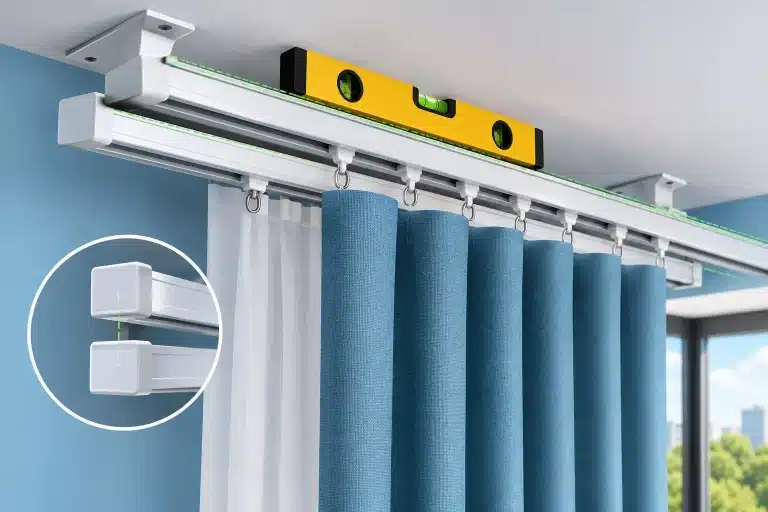
The tracks may be set at different distances from the wall, but their height should normally be consistent. If one track is even a few millimetres lower, wave headings and eyelet-style effects can make the difference obvious across a wide window. Use a laser level where possible and take the final measurements only after the ceiling finish, coving and plasterwork are confirmed.
Allow enough depth for two layers of fabric
A dual curtain arrangement needs more ceiling depth than a single track. The available recess depth often determines whether the system can sit inside the window reveal, beneath a pelmet or within a purpose-built curtain pocket.
Measure from the wall or window line outwards, including any handles, blinds, shutters and radiator shelves. Then consider the fabric when it is moving, not only when it is hanging still. Curtains naturally sway slightly as they travel, while fuller blackout linings occupy more space than their flat fabric width suggests.
For motorised systems, the motor position must also be included in the plan. Depending on the system and layout, it may sit at one end of the track and need clear access for installation and future servicing. Hiding it behind a pelmet can produce a clean result, but only if the pelmet depth and access detail have been planned properly.
Match the track layout to the opening style
Straight windows are the simplest case, but dual tracks require more thought around bays, corners and offsets. Each layer must follow the same overall route while retaining enough separation at every change of direction.
In a bay window, the two tracks may have different bend radii because the inner and outer routes are not identical. This is normal. What matters is that the finished curtains look balanced from the room and run freely around each curve. Tight bends, particularly with heavier curtains, may limit how far the fabric can stack back.
For an L-shaped room or a corner window, decide whether each curtain should turn the corner continuously or stop at the corner as separate treatments. Continuous tracks give a more cohesive appearance, while separate runs can simplify fabric handling and motor placement. There is no universal best option – the answer depends on the sightlines, the intended curtain operation and how much wall space is available for stacking.
Plan the stack-back before finalising the width
Stack-back is the space occupied by the curtain when it is fully open. With two layers, the front and rear stacks should not compete for the same area or obscure the window more than expected.
A sheer curtain often stacks more neatly than a lined drape, but heading type changes the result. Wave curtains create regular folds and a predictable stack, while gathered headings can be fuller and less compact. If retaining the maximum view is a priority, establish the likely stack-back early and extend the track accordingly where the room allows.
This is also where automated operation offers a practical advantage. A properly specified motor stops the curtains in the intended open position every time, avoiding the gradual inconsistency that can occur when different people pull curtains by hand.
Keep the operating systems independent
Dual curtain tracks work best when each layer can be controlled separately. You may want the sheer curtains closed during the day for privacy while leaving the main curtains open, then close both layers at dusk. Independent operation makes this simple.
With motorised tracks, each curtain layer normally has its own motor and control channel. They can still be grouped into a single scene, such as a bedtime setting that closes both layers together, or a morning setting that opens the blackout curtain first and the sheer later. Timers can also support privacy and security when you are away from home.
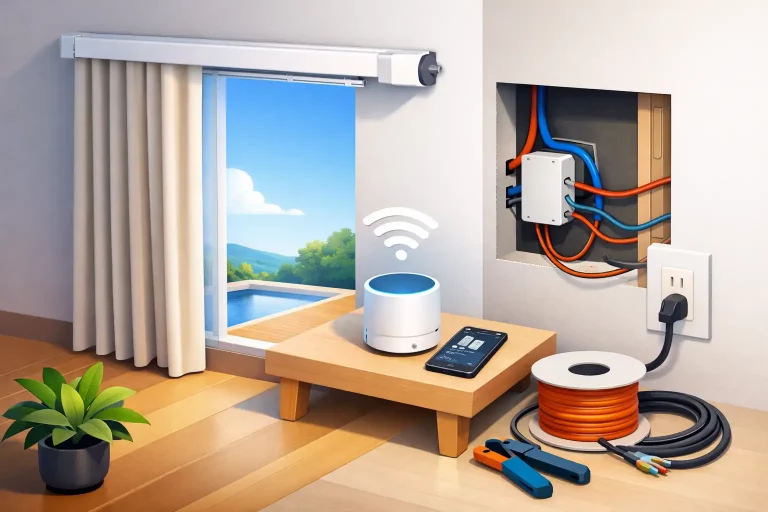
If integrating with a wider smart home system, discuss this before ordering. The control method affects wiring, power locations and how the tracks are commissioned. Battery-powered options can suit some situations, but mains-powered systems are often preferable for larger or heavier curtains and for installations that are intended to run daily over many years.
Avoid the fitting mistakes that spoil the finish
The most common mistake is relying on approximate room measurements before the building work is complete. A new ceiling, pelmet or window board can alter the available space enough to affect the final track position. Confirm dimensions after the relevant finishes are in place.
Another issue is treating the two tracks as identical when the fabrics are very different. A lightweight voile and a thick interlined curtain may need different allowances for hook position, fullness and stack-back. The tracks can be level and parallel, yet the headings may still look uneven if these details are overlooked.
Finally, do not bury the practical elements entirely for the sake of a minimal look. Motors, electrical connections and track fixings should remain accessible enough for safe installation and sensible maintenance. A polished installation is one that works reliably as well as looking discreet.
When professional planning makes the difference
A simple straight dual-track layout can be straightforward, but bays, ceiling pockets, restricted recesses and smart home integration benefit from a fitting drawing before anything is ordered. This allows the track positions, bends, motor locations and curtain directions to be checked against the room itself.
At Smart Curtains, this planning approach helps homeowners, builders and electricians work from the same specification. It is particularly useful where a ceiling is being altered or first-fix electrics are still possible, as small decisions made early can avoid visible compromises later.
Take clear dimensions, photographs and details of the proposed curtain fabric to the planning stage. With the right spacing and a properly considered layout, your dual tracks will disappear into the room while the curtains do exactly what they should: soften the daylight, protect privacy and move effortlessly when needed.