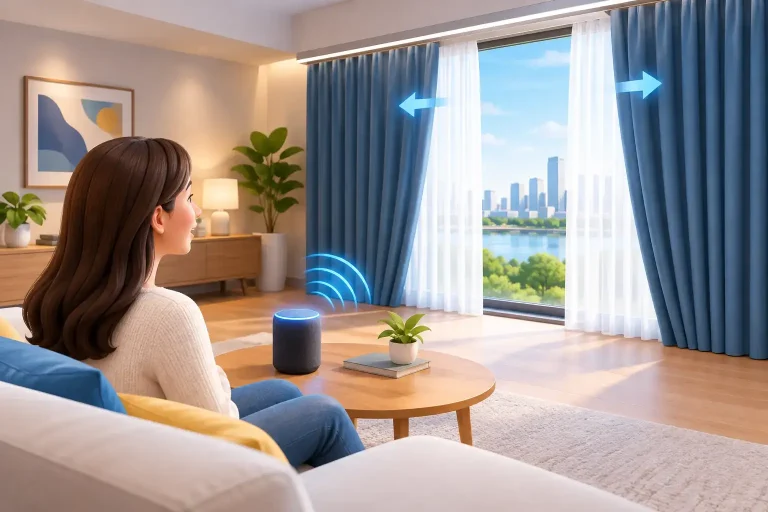
A curtain track should not become another small task waiting for you at the end of the day. When your hands are full, you are settling children for bed, or you simply want privacy without leaving the sofa, voice activated curtains let you close, open or schedule your curtains with a simple spoken request.
Thank you for reading this post, don't forget to subscribe!For many homeowners, the appeal starts with convenience. The real value is how that convenience supports a more comfortable, considered home: daylight when you want it, privacy when you need it, and less reliance on manual cords, handles or hard-to-reach windows.
What are voice activated curtains?
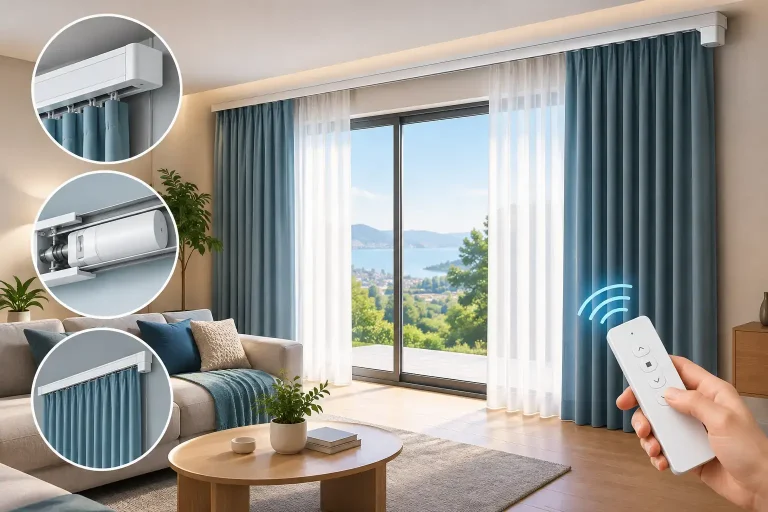
Voice activated curtains are motorised curtains connected to a compatible smart home system. Rather than pulling the fabric by hand, an electric motor moves the curtain along a made-to-measure track. Once the system has been set up, you can ask your chosen voice assistant to open, close or stop the curtains.
The wording can be as simple as, “Close the living room curtains,” or “Open the bedroom curtains.” You may also create routines, so one command manages several actions together. A bedtime routine, for example, could close the curtains, switch off selected lights and adjust the heating through your wider smart home setup.
Voice control is one option, not the only way to use the system. A well-planned installation can also include a wall switch, remote control, smartphone app and timed operation. That choice matters. Voice commands are wonderfully useful when you are in the room, but a physical switch or app can be preferable for guests, children or anyone who does not wish to use a voice assistant.
Why homeowners choose voice activated curtains
The first benefit is effortless everyday control. Large, heavy curtains can take real effort to draw, especially on wide patio doors or wall-to-wall window treatments. A motor takes on that work consistently, helping curtains sit properly closed rather than being left partly open because it is inconvenient to reach them.
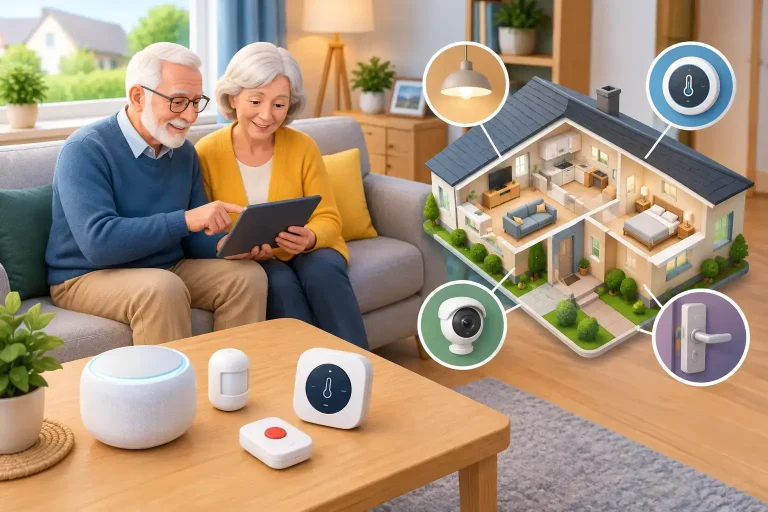
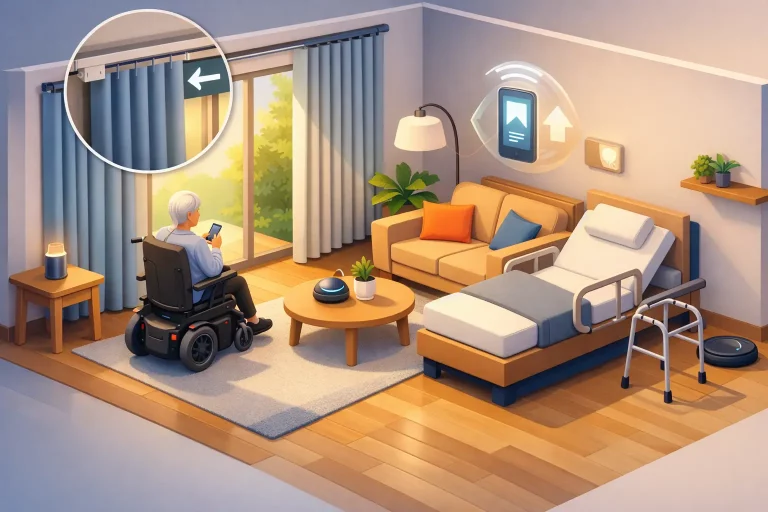
There is also a strong accessibility case. For people with restricted mobility, painful joints or reduced strength, automated control can make a meaningful difference to day-to-day independence. Curtains positioned behind furniture, above a bath, around a bed, or across a tall window can become straightforward to operate without stretching or pulling.
Privacy is another practical advantage. In a front-facing lounge or bedroom, one voice command can close the room as dusk falls. In a home office, it can reduce glare and create a more focused setting before a video call. The result feels refined, but it solves a very ordinary problem quickly.
When you are away, scheduled opening and closing can also make a home appear occupied. This should sit alongside sensible home security measures, rather than replace them, but varied routines can be reassuring when you are on holiday or away overnight.
A better approach to natural light
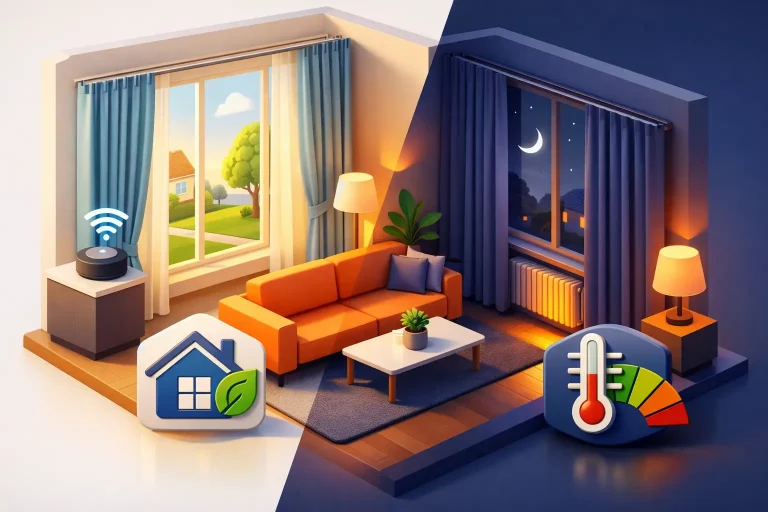
Automation does not have to mean shutting out daylight. It gives you more control over it. You might set bedroom curtains to open gradually in the morning, schedule west-facing curtains to close before strong afternoon sun reaches the room, or open the living room at a regular time in winter.
The best schedule depends on how you use the space, the direction the windows face and the fabric you choose. Blackout-lined curtains in a bedroom need a different routine from sheer curtains in a garden room. Voice control gives you flexibility when the usual timetable does not suit the day.
What needs planning before installation
The finished experience depends as much on track planning as it does on the motor or voice assistant. A standard straight window is usually more straightforward, but many homes need a more considered design. Bay windows, corners, offsets, recessed windows and curtains that continue wall to wall all affect the track layout and how the fabric stacks when open.
Accurate measurements are essential. The track must suit the width of the opening, the position of the heading, the depth available above the curtains and the location of nearby furniture or radiators. You should also think about where the curtains will stack. If you want to preserve as much glass as possible when they are open, the stack-back area needs to be allowed for from the start.
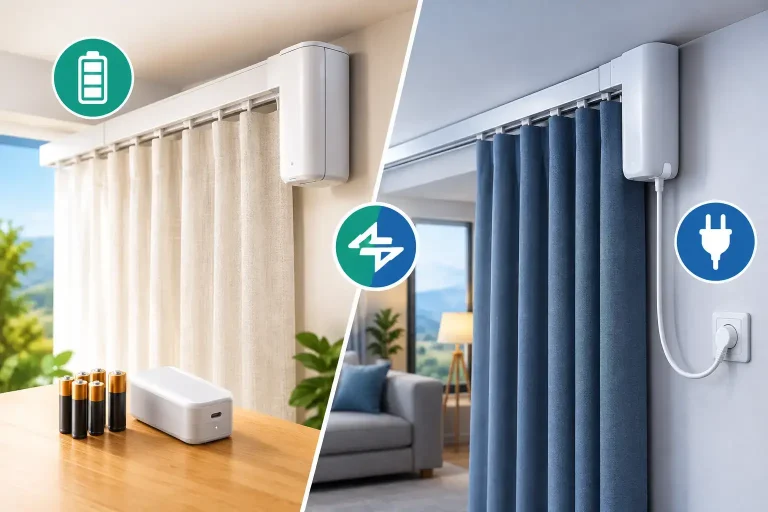
Power is the next decision. Mains-powered systems are a popular long-term option, particularly during a renovation or new build when an electrician can prepare a discreet supply point. Battery-powered solutions may suit certain situations, but they involve recharging and may not be the right answer for every large or frequently used treatment. The appropriate choice depends on the window, access to power and your expectations for daily use.
For a polished result, involve the right people early. Your curtain supplier, electrician, builder and smart home integrator may each need the same information about dimensions, fixing positions and control requirements. Planning this before plastering, decorating or fitting joinery is usually easier and less disruptive than trying to adapt the room later.
Choosing the right controls for your home
Voice activation works best as part of a control setup that reflects how your household lives. If you already use a voice assistant for lights, heating or music, adding curtains can make routines feel more joined up. You might use a morning command in the kitchen, a cinema routine in the lounge or a goodnight routine upstairs.
However, compatibility should be checked before you commit to a system. Not every motor, hub or voice platform communicates in the same way. Some installations need a bridge or smart home controller, while others connect through an app and compatible integration. It is worth deciding which ecosystem you use first, rather than assuming that any motorised track will work with it.
Consider reliability, too. A voice assistant depends on power, connectivity and a correctly configured smart home system. That is why alternative controls are sensible. A remote is useful when Wi-Fi is unavailable; a wall switch is familiar for every member of the household; an app is convenient when you are away. The aim is not to rely on one method, but to make curtain control easy in every situation.
Are voice controlled curtains right for every room?
They can work beautifully in living rooms, bedrooms, media rooms, home offices and wide glazed extensions. They are particularly effective where curtains are used daily, where tracks are difficult to reach, or where a large expanse of fabric would otherwise be cumbersome to move.
A smaller guest bedroom with lightweight curtains may not need voice control. In that case, a simple remote or timer could provide all the convenience you want. Equally, a dramatic corner bay or a full-width bifold door arrangement may benefit greatly from a professionally specified motorised track, even if voice control is only used occasionally.
Fabric and heading style still matter. The motor moves the curtains, but the fabric determines the look, drape and light control. Heavier interlined curtains require a system designed for their weight, while wave headings, pinch pleats and other styles have different space and stack-back requirements. Automation should support the window treatment, not dictate an unsuitable design.
Getting a made-to-measure result
Off-the-shelf automation can appear tempting, yet windows are rarely as simple as they look on a product page. A track that is a few centimetres short, wrongly positioned in a recess, or unable to negotiate a corner can compromise the whole finish. The cost of correcting it after decorating is often greater than allowing time for proper specification.
This is where specialist guidance has real value. At Smart Curtains, installation planning can include checking dimensions, producing fitting drawings and advising on track configurations before an order is finalised. That support is particularly helpful when several trades are involved or when the curtains are part of a larger smart home project.
Before requesting a quote, gather a few practical details: the window or wall width, photographs of the space, ceiling height, any recess measurements, your preferred curtain style and the controls you already use. These details help turn an initial idea into a system that fits the room and works as expected.
Voice activated curtains are at their best when they disappear into your routine. Plan the track carefully, choose controls that suit the household, and you can enjoy a home that responds quietly and reliably whenever you ask.