Reaching across a wide window, pulling a heavy curtain around a bay, or remembering to close the living room before dark can become an unnecessary daily frustration. The best controls for elderly homeowners make curtain operation feel effortless, while retaining the reassurance of a familiar, straightforward routine.
Thank you for reading this post, don't forget to subscribe!For many households, motorised curtains are not about filling a home with technology. They are a practical improvement that supports independence, privacy and comfort. The right control method matters just as much as the curtain track itself, particularly where reduced mobility, arthritis, sight changes or a preference for simple equipment shape the decision.
Start with the person, not the technology
There is no single control option that suits every older homeowner. Someone who is confident with a smartphone may value timed opening and closing, while another person may want a single wall switch that works exactly like a light switch. A good system should reduce effort without adding uncertainty.
It helps to think about the everyday moments when curtains need to move. This may be first thing in the morning, at dusk, when leaving the house, or from a favourite chair in the lounge. If the curtains are especially large, lined, or fitted across a long wall, the physical benefit of motorisation can be substantial regardless of which control is selected.
For most homes, the strongest approach is not to rely on one method alone. Combining a simple main control with a backup option gives the homeowner confidence that the curtains will always be easy to operate.
Best controls for elderly homeowners: the practical choices
A wall switch for familiar, reliable control
A dedicated wall switch is often the easiest starting point. It is fixed in one known location, does not need charging and avoids the risk of a handset being misplaced. Pressing a button to open, close or stop curtains is intuitive for people who do not want to use an app or voice assistant.
Placement is critical. A switch beside the bedroom door may suit someone who likes to open the curtains as they leave the room. In a sitting room, it may be more useful beside a favourite armchair or close to the entrance. Where mobility is limited, positioning the switch at a comfortable, accessible height deserves proper consideration during planning.
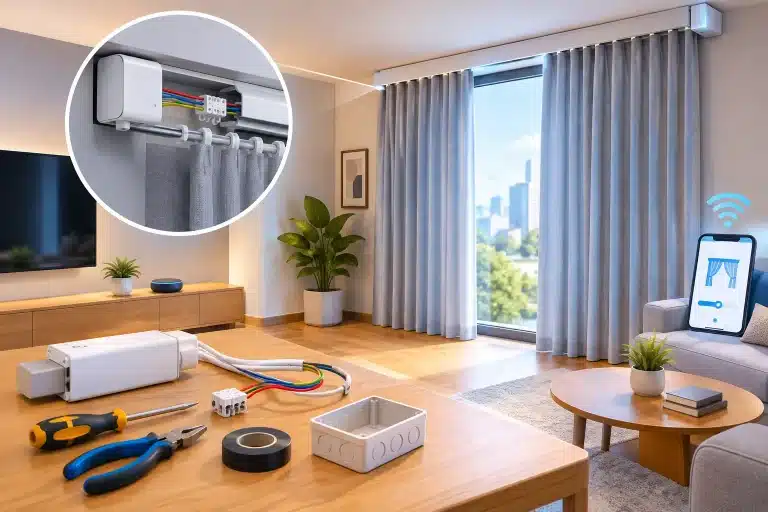
Wall switches do require electrical coordination, especially in a renovation or new build. This is worth arranging early, as it gives the finished room a clean, uncluttered appearance without trailing cables or additional devices on furniture.
A handheld remote for control from the chair or bed
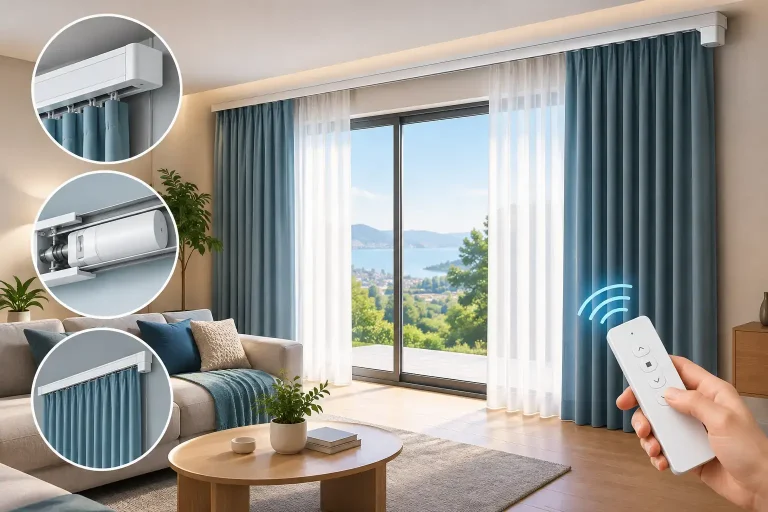
A remote control is a very popular option because it gives freedom to operate curtains without getting up. For an elderly homeowner with aching joints, balance concerns or limited walking distance, that convenience can make a meaningful difference every day.
The best remote is not necessarily the one with the most functions. Large, clearly marked buttons and a comfortable shape are generally more useful than a complicated handset with numerous scenes and settings. A simple open, close and stop arrangement is easy to learn and easy to explain to visiting family or carers.
The trade-off is that a remote can be misplaced. Keeping it in a dedicated holder by the bed or chair helps, and pairing it with a wall switch provides a sensible fallback. Some households also choose one remote for the main living space and another for the bedroom.
Smartphone control for flexible routines
A smartphone app can be an excellent choice for an older person who already uses a mobile phone for messages, banking or video calls. It allows curtains to be operated from anywhere in the house and, depending on the system, when away from home too.
The greater benefit is usually scheduling. Curtains can be set to open in the morning and close as daylight fades, removing the need to remember a daily task. This can support a steadier routine through winter, when shorter days make it easy to lose track of the time.
However, smartphone control should be a convenience rather than the only way to operate the curtains. Phones need charging, apps may occasionally need updating, and not everyone finds touchscreens comfortable. A physical control remains the more reassuring option for many households.
Timers for effortless privacy and security
Timers are one of the most useful features in a motorised curtain system. Once set, they can open and close curtains automatically at chosen times. This is particularly helpful for homeowners who find repetitive tasks tiring, or who have difficulty moving around the home at certain times of day.
Automatic closing also supports privacy. Street-facing rooms can be covered before evening draws in, without a rush to get across the room. For people living alone, that small piece of routine can bring added peace of mind.
When the homeowner is away visiting family or on holiday, timed curtain movement can also make a property appear occupied. The schedule should be realistic rather than rigidly identical every day. If the system allows it, varying the timings slightly creates a more natural pattern.
Voice control where it genuinely helps
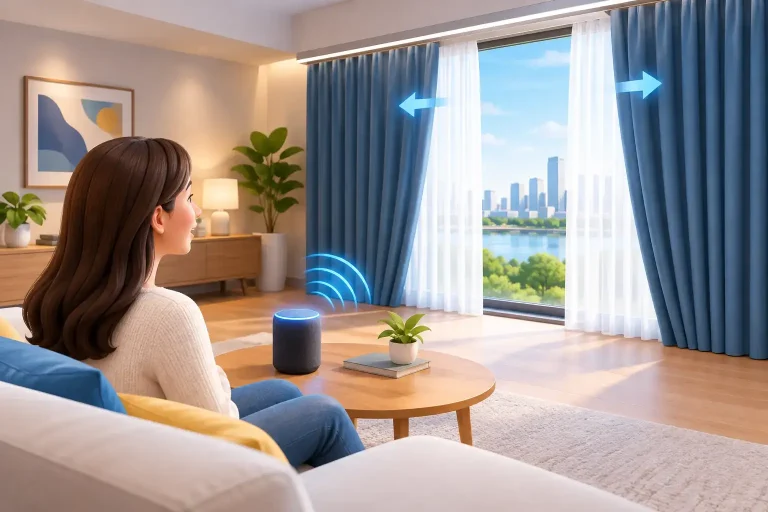
Voice control can be valuable for people with limited dexterity or mobility. A simple instruction such as asking the bedroom curtains to close can be easier than handling a remote, particularly during periods of illness or recovery.
It does depend on the individual. Some homeowners appreciate the hands-free help immediately; others find speaking commands unnatural or worry that the system may misunderstand them. Voice control also relies on a compatible smart home setup and internet connection, so it should not be the sole method of operation.
Used alongside a wall switch or remote, it can be a very practical additional layer of accessibility rather than an unnecessary complication.
Choose controls that reduce decisions
The most successful installations tend to make daily use almost automatic. If every curtain has a different app, remote or button sequence, the system can quickly become frustrating. Keeping controls consistent from room to room is usually the better route.
For example, a bedroom might use a wall switch and timer, while a lounge has the same switch style plus a remote near the seating area. The homeowner learns one simple pattern, but gains control where it is needed most. Multi-room automation may be useful, but individual room control should still be available when one person wants light in the kitchen while another wants privacy in the lounge.
Avoid specifying functions simply because they are available. Complex scenes, multiple voice assistants and advanced app menus can be useful in a fully connected home, but they are not automatically better. The best specification is the one a homeowner will use confidently every day.
The curtain track and installation matter too
Controls can only feel easy when the motorised curtain system has been properly planned. A made-to-measure track should account for the weight and style of the curtains, whether the track is ceiling-fixed or wall-fixed, and the shape of the window. Bay windows, corners, recesses and wall-to-wall arrangements all need careful measuring and suitable fittings.
For elderly homeowners, quiet operation is another worthwhile consideration. A smooth, low-noise motor is less intrusive in bedrooms and sitting rooms, especially where curtains may be scheduled to move early in the morning or later in the evening.
It is also wise to discuss power and control locations before decorating or plastering work begins. This is particularly relevant if a wall switch is preferred. A thoughtful installation avoids awkward switch positions and makes the finished scheme look considered rather than added on afterwards.
Smart Curtains can help homeowners, families and project professionals work through these details, from track layout and accurate measurements to fitting drawings and the most suitable control options. That planning support is useful when the goal is a system that feels simple from the first day, not merely impressive on paper.
A sensible starting point for most households
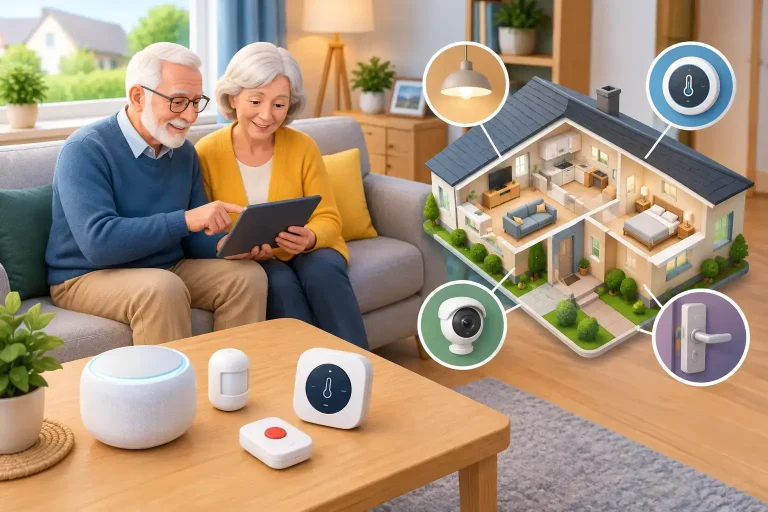
For many elderly homeowners, the most balanced choice is a wall switch for dependable everyday use, a straightforward remote for comfort, and a timer for regular opening and closing. This combination keeps the routine familiar while removing the strain of manual curtains.
Smartphone and voice control can then be added where they suit the homeowner’s habits, rather than being treated as essential. The right control system should fade into the background: curtains open when wanted, close when needed, and never turn a simple household task into a technical challenge.