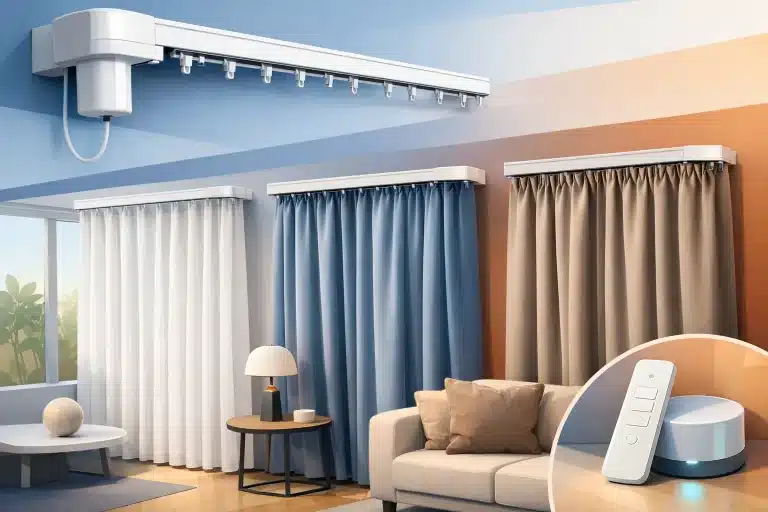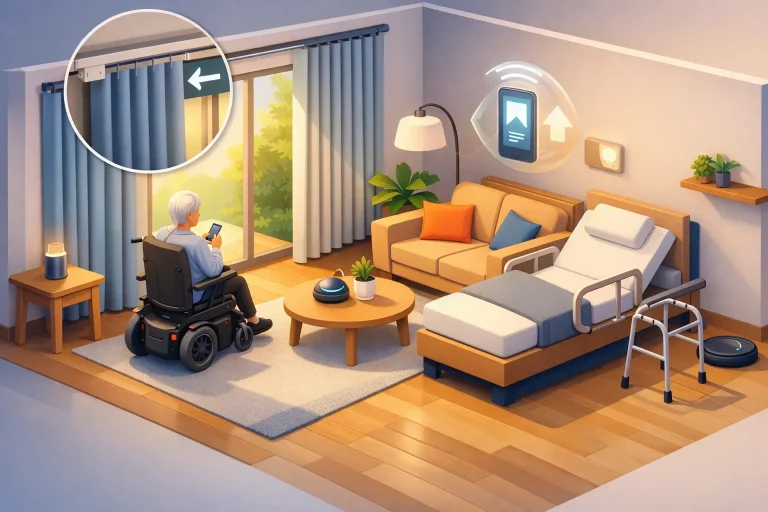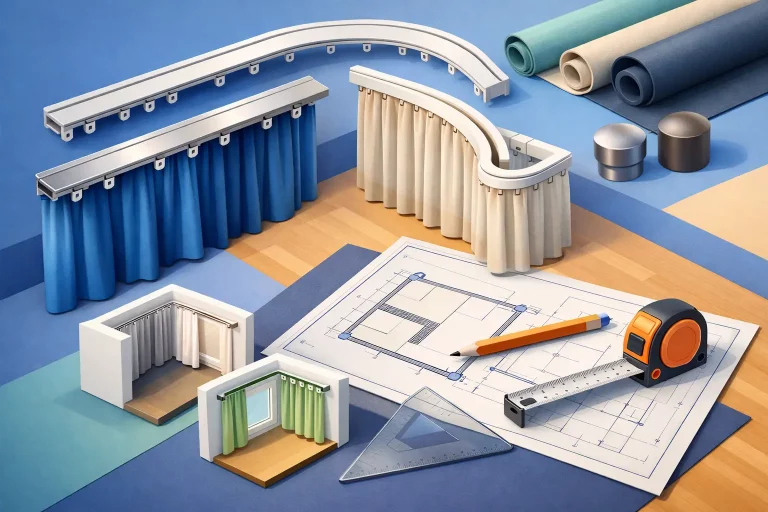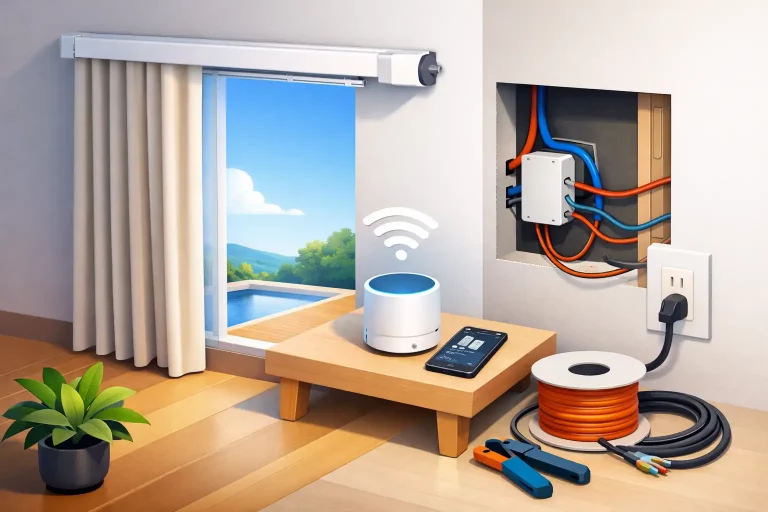
The best time to think about motorised curtains is usually before the plaster goes on, not when the room is finished and someone is asking where the cable can possibly go. If you are working out how to plan curtain wiring, a little early coordination saves a lot of compromise later. It can mean hidden cabling, neater track positions, better switch access and a result that feels properly built into the home rather than added on afterwards.
Thank you for reading this post, don't forget to subscribe!For homeowners, renovators and anyone managing a build, curtain wiring sits in that awkward space between electrical first fix, window treatment design and day-to-day usability. That is exactly why it helps to plan it as part of the room, not as a late accessory. The right approach depends on your window layout, your chosen control method and how finished you want the installation to look.
Why curtain wiring needs planning early
A motorised curtain track is simple to live with once installed, but the hidden part matters. The motor needs a power supply, and that supply needs to reach the correct end of the track without creating visible trunking, last-minute chasing or poorly placed outlets.
In a new build or major refurbishment, wiring can often be concealed within walls, ceilings or a pelmet. In an existing home, that may still be possible, but the route needs more thought. This is where timing matters. If the electrician knows where the track will sit, where the motor will be located and whether there is a recess or boxed section above the window, the wiring can be allowed for neatly. If those decisions are left too late, you may end up with the right curtain system but a less refined finish.
It is also worth remembering that made-to-measure tracks are designed around real dimensions, not assumptions. A few centimetres either way can affect where the motor lands, which in turn affects where the cable should emerge.
How to plan curtain wiring around the track design
The first question is not really about wiring. It is about the curtain track itself.
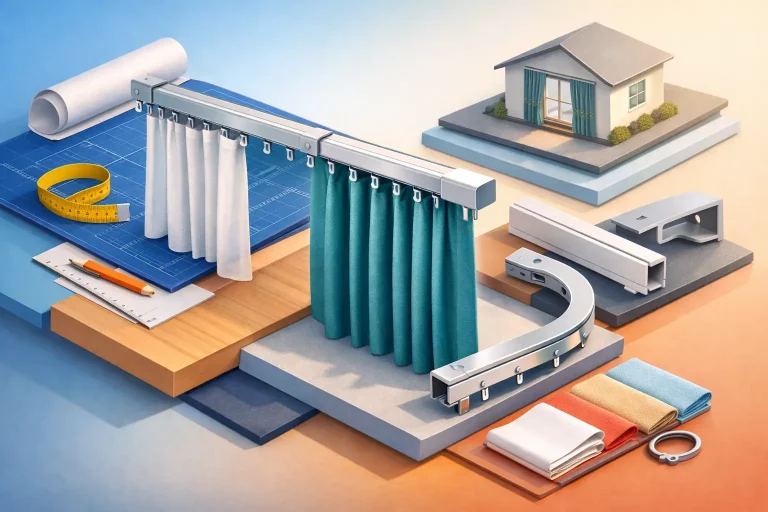
Before any cable route is agreed, you need to know the approximate track shape, length and motor position. A straight window is the simplest case, but even then the track may run wall to wall, stop at the window edges or extend beyond them for a fuller stack-back. In bays, corners or offset layouts, the motor position becomes more important because the most convenient cable route may not be the most practical one.
This is why planning drawings are so useful. They allow everyone involved to see where the track starts and finishes, how it sits relative to the ceiling or recess, and which side needs power. Once that is clear, the electrician can bring the supply to the right point rather than somewhere generally near the window.
If you are still deciding between a recess fit and a face fit, make that decision before first fix where possible. A recessed installation often gives the cleanest result, but it can change clearances and cable exit points. Face fixing can be more flexible in some retrofit situations, though it may require more thought about how the cable is concealed.
Power supply, switches and control options
When people ask how to plan curtain wiring, they often mean where the power should go. That is a key part of it, but not the whole picture.
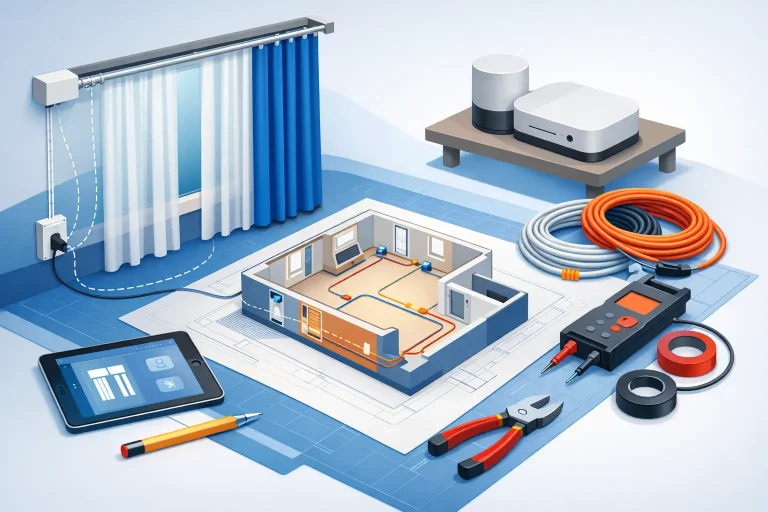
Most motorised curtain systems need a permanent power supply at the motor end. Depending on the system, control may be via a wall switch, remote handset, app, timer or a wider smart home setup. Not every installation needs a dedicated wall switch, but many homeowners still like one for convenience, especially in bedrooms or main living spaces.
The best switch position is usually the one that feels natural when entering the room, without clashing with furniture, wardrobes or bedside arrangements. In some homes, app and voice control reduce the need for multiple wall controls. In others, a physical switch remains the most reliable and accessible option, particularly for family use or for anyone who prefers straightforward operation.
If integration with a smart home platform is planned, mention that early. It may influence the wiring specification, the control type and the way the installer coordinates with your electrician or automation provider. None of this needs to be overcomplicated, but it does need to be discussed before cables disappear behind plasterboard.
Practical points your electrician needs to know
Curtain wiring goes more smoothly when the electrician is not working from guesswork. They need clear information about the track location, the motor side and the intended cable exit point.
In practical terms, that means confirming the finished fixing position rather than just the window opening. A cable placed in the centre of the window may be useless if the motor ends up hard left. Likewise, a cable dropped too high or too low can become awkward once the curtain recess, ceiling detail or pelmet is built.
It also helps to think about future access. Hidden does not have to mean unreachable. A beautiful installation should still allow sensible access to the motor connection if servicing is ever needed. That is one of those details that often gets overlooked in the rush of a build, yet it makes a real difference later.
Where there are multiple windows in one room, each track should be planned individually. They may look symmetrical from the floor, but the available cable routes above can differ because of steels, bulkheads, lighting runs or nearby joinery.
It depends on the stage of your project
In a full renovation or extension, wiring for motorised curtains is usually straightforward because walls and ceilings are open. This is the ideal moment to create a clean, integrated result.
In a finished room, the answer depends on how much disruption you are willing to accept. Some homeowners want completely hidden wiring and are happy to redecorate around the work. Others prefer a more contained approach that avoids opening up finished surfaces. Neither choice is wrong. It is a trade-off between finish, cost and disruption.
The same applies if you are planning curtains in one phase and automation in another. You do not always need to install everything at once, but it helps to future-proof where possible. Running the supply at renovation stage can make a later upgrade far easier.
How to plan curtain wiring for bay windows and tricky layouts
This is where off-the-shelf thinking usually falls apart. Bay windows, corner tracks and offset returns need more than a rough idea of where power might go.
In these layouts, the motor position must be coordinated with bends, returns and stack-back space. You may have more than one logical place for the motor, but only one that works well for both operation and wiring. Ceiling details also matter more. In a bay, the track often follows the architecture closely, leaving less room to improvise once the room is complete.
If the curtains need to park away from a door, avoid a radiator, or clear a deep sill, that can also influence the track layout and therefore the cable point. This is why bespoke support is valuable. A precise drawing removes uncertainty for the builder and helps prevent expensive correction work later.
Common mistakes to avoid
The most common mistake is assuming the electrician can simply add a cable near the window and sort the rest later. Motorised curtain systems are measured and made to suit the opening, so wiring needs to suit the actual design.
Another frequent issue is leaving the decision too late. By the time the room is plastered, painted and furnished, choices become narrower. You can still achieve a good outcome, but you may lose the chance for the cleanest hidden installation.
There is also the question of usability. A technically correct installation is not always a convenient one. If the switch ends up behind a curtain stack, or the chosen control method does not suit the household, the system will never feel as effortless as it should.
Finally, do not treat all windows as identical. A bedroom recess, a large living room span and a bay in a front room can each need a different planning response, even within the same property.
Getting the cleanest result
The cleanest installations usually come from three things happening together: the curtain track is specified properly, the wiring point is planned to match, and the room details such as recesses, pelmets or ceiling lines are coordinated before first fix ends.
That does not mean every project needs to become technical. It simply means the right people need the right information at the right time. For many homeowners, that support is the difference between feeling confident and feeling stuck between trades.
At Smart Curtains, this is often where the process becomes much easier. Once dimensions, layout and motor position are verified, wiring guidance can be aligned with the actual made-to-measure system rather than a generic assumption.
If you are planning motorised curtains, treat wiring as part of the design from the start. A few early decisions can give you a quieter install, a neater finish and a home that works exactly the way you hoped it would.