The difference between a curtain that looks good and one that genuinely improves daily life is often felt at 7am. Instead of walking around the room to pull heavy fabric open, your curtains can open to a timer, a wall switch or a simple voice command. Smart home curtains make that small moment easier, but their real value comes from how well the system is planned around your room, routine and windows.
Thank you for reading this post, don't forget to subscribe!For a new build, renovation or a carefully finished existing home, motorised curtains can provide a cleaner look, more reliable privacy and control that works for every member of the household. The best results are never one-size-fits-all. Track shape, fabric weight, power position and the way the curtains should operate all need to be considered before anything is made.
What smart home curtains can do for your home
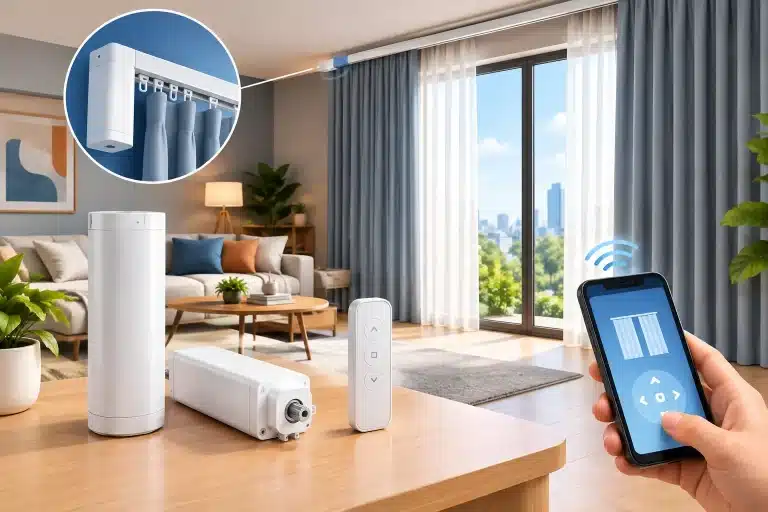
Motorised curtain tracks replace manual pulling with an electric motor that moves the curtains along the track. Depending on the system specified, you may control them from a remote, a wired wall switch, a smartphone app, timed schedules or a wider home automation system.
Convenience is the obvious benefit. In bedrooms, curtains can open gradually in the morning and close at the time you normally settle down for the evening. In a living room with wide glazing, one control can move curtains that would otherwise need several manual pulls. This is particularly useful where furniture sits in front of the window or the curtains are difficult to reach.
Privacy is equally valuable. A schedule can close curtains before dusk, rather than relying on someone remembering when the house starts to feel exposed. When you are away on holiday, timed operation can also make a property look occupied. It is a sensible layer of reassurance, although it should support rather than replace good home security measures.
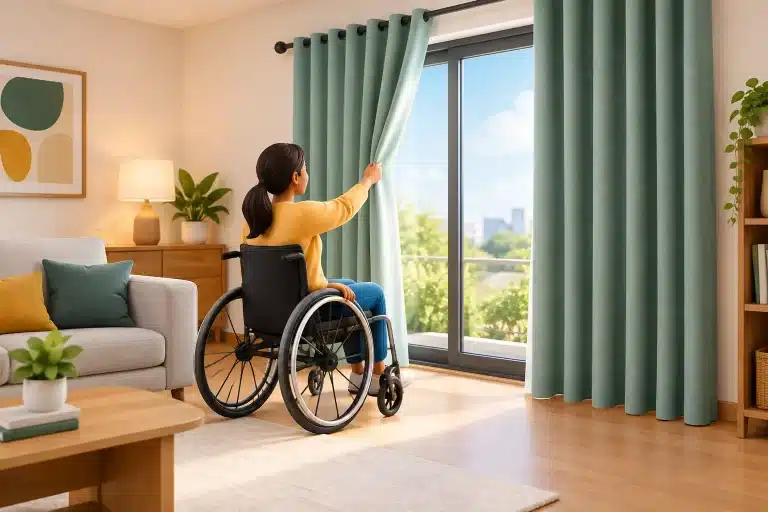
For people with restricted mobility, automated control can remove a daily frustration. For families, it means a child’s room, a tall stairwell window or a hard-to-reach bay can be managed without stretching, climbing or pulling fabric repeatedly. The result is not merely a technical upgrade. It is a home that asks less of you.
Start with the window, not the technology
It is tempting to choose controls first, particularly if you already use a smart speaker or an automation platform. In practice, the physical design of the curtain track should lead the specification. A motor can only perform well if the track has been designed correctly for the opening and the curtains it will carry.
A straight wall-to-wall track may appear simple, yet it still requires accurate decisions about its finished position, the space needed for curtain stacking and where the motor will sit. Bay windows, corners and offset layouts demand even more care. Each bend and joining point affects how smoothly the curtain travels, while an incorrectly positioned motor can be awkward to access later.
The curtain heading matters too. Wave headings, pencil pleats and pinch pleats all create different stack-back sizes and have different visual effects. Heavier lined or interlined curtains need a system rated to carry their weight. If blackout performance is a priority in a bedroom, the track position and overlaps need to be planned alongside the fabric, rather than treated as an afterthought.
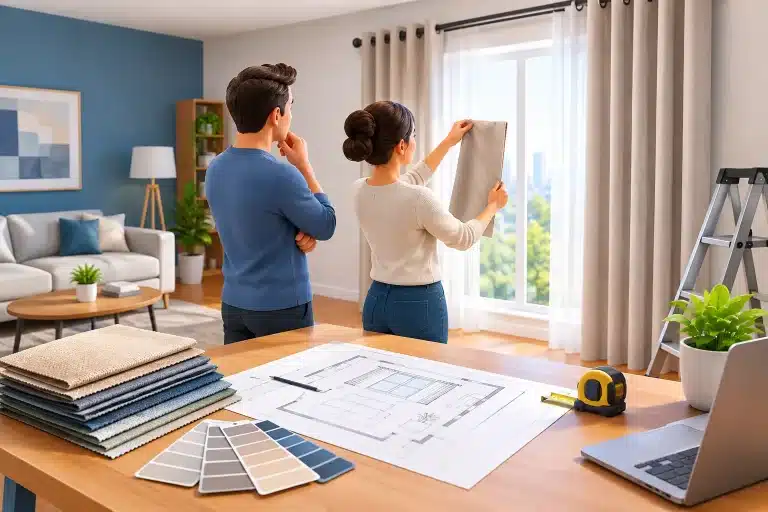
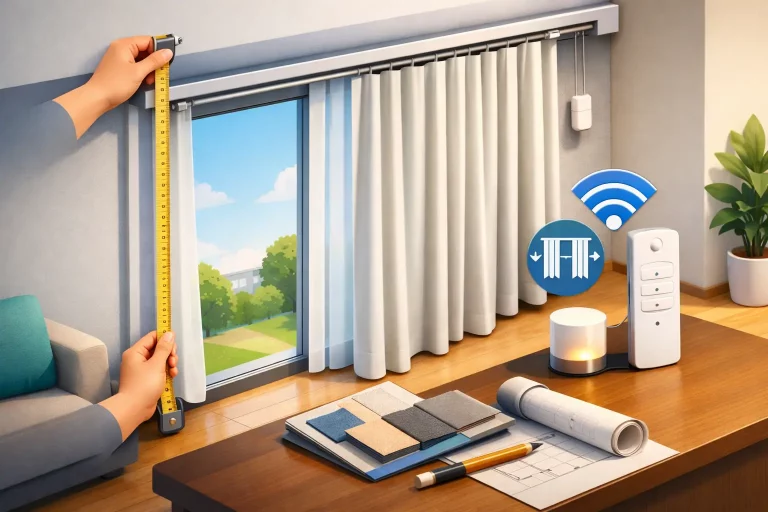
This is why precise measurements are essential. Measuring only the glass or the width of the curtain pole being replaced is rarely enough. A made-to-measure motorised track should be specified to the actual installation conditions, including recess depth, ceiling details, obstructions, access for fitting and the intended curtain treatment.
Recesses, pelmets and ceiling details
A recessed track can give smart home curtains a particularly refined appearance, with the curtain seeming to emerge directly from the ceiling. It works beautifully in contemporary interiors, but the recess must be sized for the chosen heading, fabric fullness and the motor itself. Too narrow, and the curtains may rub or fail to stack neatly. Too shallow, and the motor or track may sit visibly proud.
Pelmets and curtain pockets also benefit from early coordination. Builders and electricians need clear information before plastering and decorating are complete. Planning the track at the same time as lighting, joinery and ceiling work avoids compromises that can be costly or disruptive to correct later.
Choose controls that suit real routines
There is no single best way to control automated curtains. The right choice depends on who uses the room and how much automation you genuinely want.
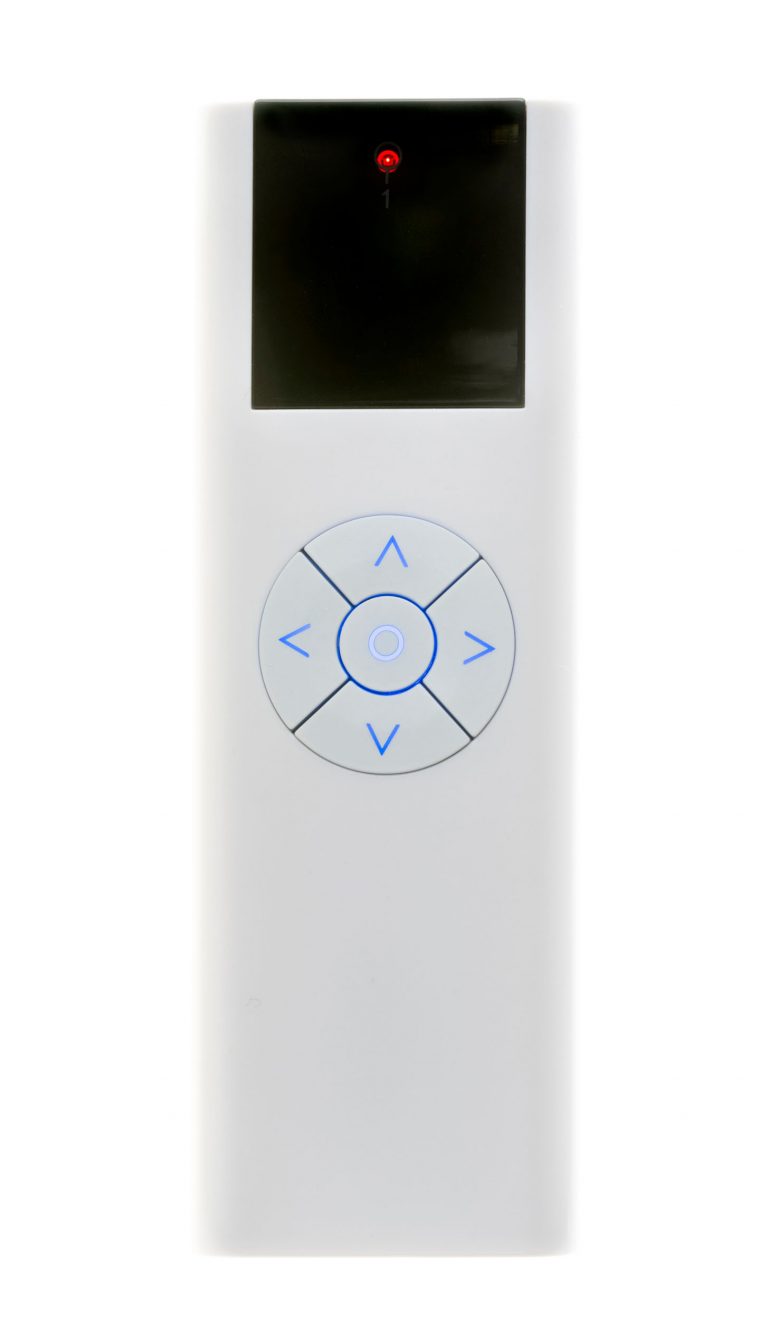
A remote control is straightforward and familiar, making it a good option for bedrooms, guest rooms or homes where simplicity is the priority. A wall switch gives a fixed, intuitive point of control and can be positioned alongside lighting controls for a coordinated finish. Smartphone control is useful for schedules and operation while away from home, while integration with a smart home system can connect curtains to scenes, sensors and other devices.
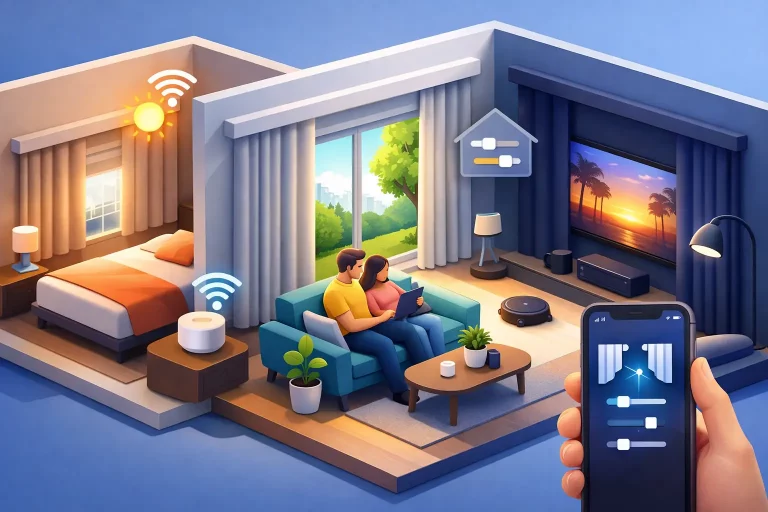
For example, a “goodnight” scene could close bedroom curtains and dim lights together. In a media room, curtains may close as part of a film setting. These are worthwhile features when they support an established routine, not simply because the technology is available.
It also helps to keep a manual fallback in mind. Remote batteries run out, phones are not always nearby and guests may not understand an app. A well-considered system gives you simple everyday control as well as advanced options. If several people will use the curtains, a wall switch or remote can be more practical than relying entirely on voice control.
Plan power early and avoid visible compromises
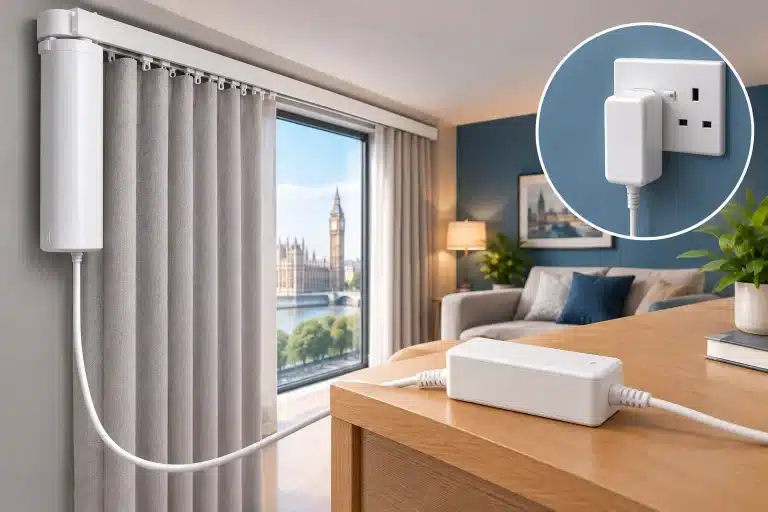
Most electric curtain systems need a suitable power supply close to the motor location. This detail is easy to overlook until the room is almost finished, when the alternative may be a visible cable, an inconvenient socket or additional work to chase wiring into a wall.
For renovation and new-build projects, agree motor positions and power requirements with your electrician early. The motor is usually placed at one end of the track, but the best end is not always obvious. Consider nearby sockets, furniture, access for servicing and whether the curtain stack will conceal or reveal the motor.
Battery-powered options can be useful where wiring is impractical, but they involve recharging and may not be the preferred choice for a large, heavy curtain or a system that operates frequently. Mains-powered tracks typically offer a more permanent solution for principal rooms, particularly when the project allows wiring to be planned properly.
The finish depends on installation planning
Smart curtains are often chosen for a polished interior, so details that seem minor on paper can have a major impact once the room is complete. The track must be fixed to a suitable structure, particularly with heavy curtains. Ceiling plasterboard alone may need reinforcement, and a recessed installation needs enough allowance for brackets and movement.
Access should also be considered. Motors are reliable, but every electrical product needs the possibility of future adjustment or replacement. A concealed system should look discreet without making it impossible to reach the key components.
The same principle applies to the curtains themselves. The fabric should be made to the correct finished drop and width, with sufficient return and overlap for the desired level of coverage. A motorised track cannot compensate for curtains that are too short, too narrow or poorly suited to the space.
For complex windows, a fitting drawing can remove uncertainty before ordering. This is especially helpful for bays, corners, double tracks or rooms where curtains need to work around radiators, built-in furniture or sloping ceilings. Good planning turns a potentially technical purchase into a clear sequence of decisions.
When are smart home curtains worth it?
They are particularly worthwhile in rooms with large glazing, tall ceilings, wide spans or curtains that are opened and closed every day. They can also be an excellent choice for bedrooms where blackout, privacy and timed routines matter, and for homes where accessibility is a central consideration.
In a rarely used spare room with a small, easily reached window, automation may offer less practical return. That does not make it the wrong choice if a consistent finish throughout the home is important, but it is worth being honest about priorities. A bespoke system should earn its place through useful control, better comfort or a more considered interior finish.
The investment also depends on the level of integration required. A standalone remote-controlled track is different from a fully connected system designed around scenes and smart home control. Both can be effective. The key is to specify only the functionality you will use, while keeping future options in mind where practical.
A better route to a made-to-measure result
The most successful projects begin with a conversation before the room is finished. Share photos, dimensions, plans and details of the intended curtains, then work through track layout, control options, power and installation requirements. This gives you the chance to solve practical issues while there is still time to do so neatly.
At Smart Curtains, this planning-led approach helps homeowners, builders and installers work from the same information. Accurate measurements and fitting drawings are not extras around the product. They are what allow a motorised curtain system to look intentional, operate quietly and suit the way your home is actually used.
If you are considering smart home curtains, start by looking at the room’s daily rhythm and the physical realities of the window. With the right track, power plan and controls, the finished effect feels less like a gadget and more like a home that has been thoughtfully designed around you.