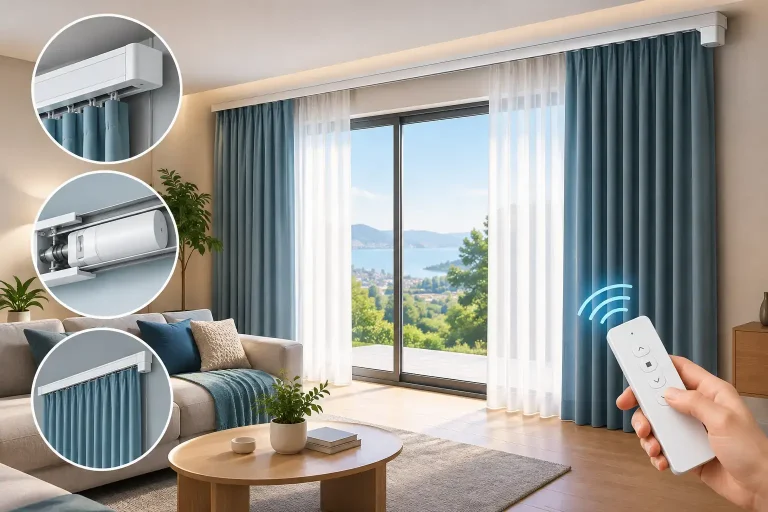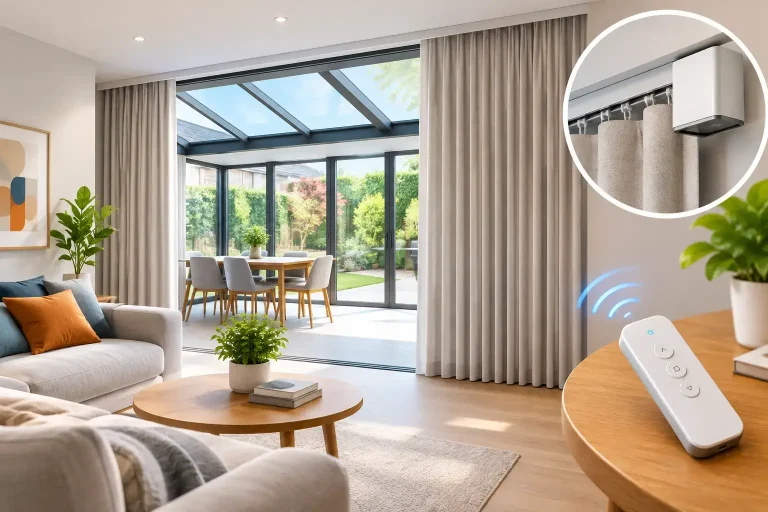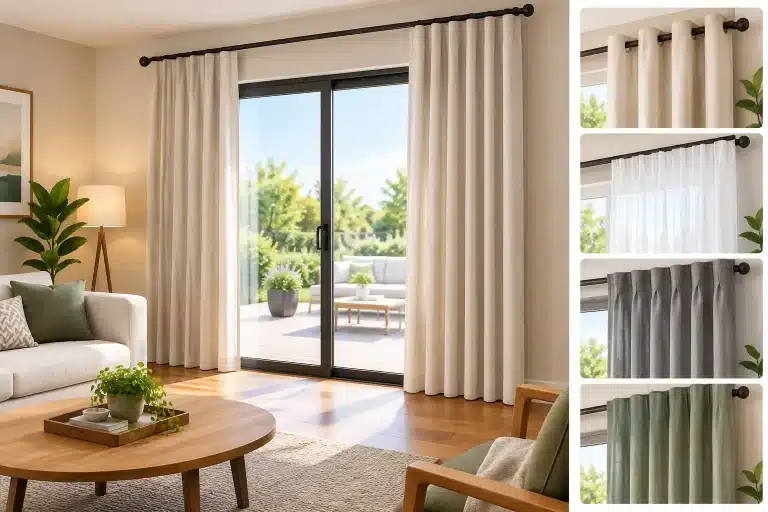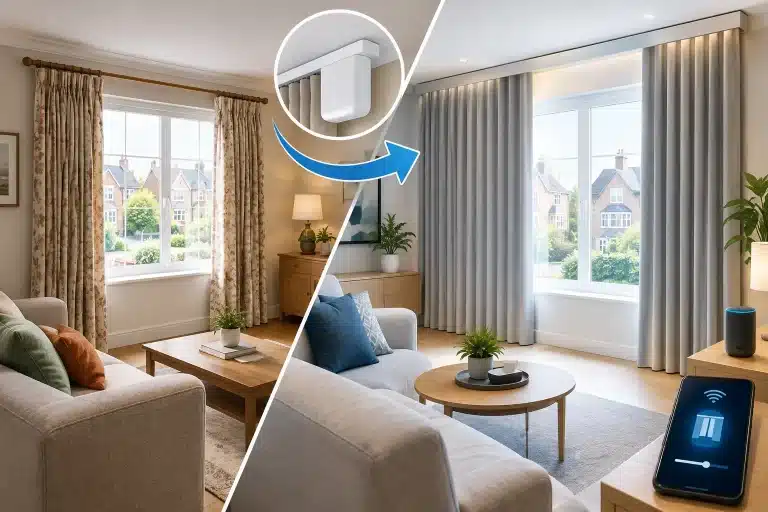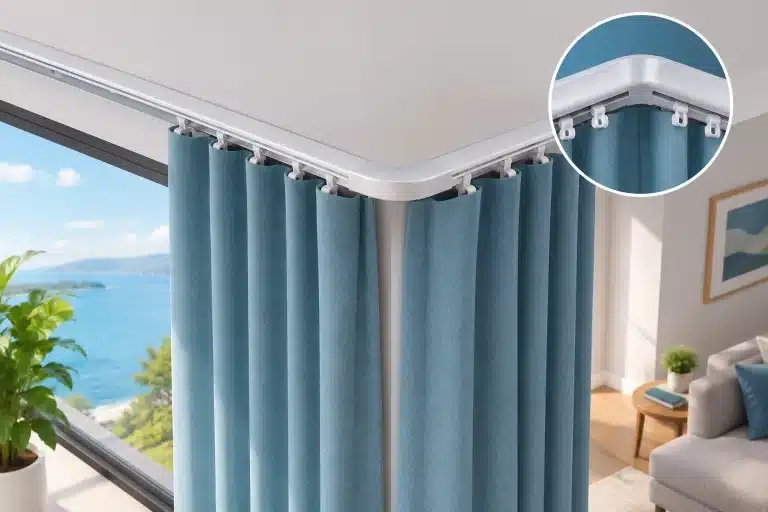
A square corner can turn a straightforward curtain installation into a design detail that needs proper thought. So, can curtain tracks cross corners? Yes. A made-to-measure track can be shaped to carry curtains around many internal corners, bays and returns, including with motorised operation. The result can be beautifully clean, but it depends on the corner shape, the curtain heading, the available space and where the curtains need to stack when open.
Thank you for reading this post, don't forget to subscribe!Can curtain tracks cross corners in one continuous run?
In most cases, yes. A specialist curtain track can be bent or configured with a suitable corner section so the gliders continue from one wall to the next. This is often the best option for an L-shaped window arrangement, a return wall beside patio doors, a room divider or curtains that need to wrap around a corner for complete privacy and light control.
The key distinction is between a track that simply changes direction and one that allows the curtain to travel through that change. A continuous, purpose-made track is designed so the carriers can negotiate the bend. Two separate tracks meeting at a corner may look similar from below, but they do not allow a curtain to cross from one track to the other.
For a motorised system, the track, belt and carriers must all be specified as one coordinated layout. This is why an off-the-shelf straight track, cut and joined on site, is rarely the right answer for a corner application. It can leave an awkward joint, affect movement and make the finished result less refined.
Which corner layouts work best?
Internal 90-degree corners are common in modern extensions, open-plan rooms and full-height glazing. They can usually be accommodated, provided the bend radius and curtain fabric are considered from the outset. Softer curves and larger-radius bends tend to offer the smoothest movement, particularly with fuller or heavier curtains.
Bay windows are another familiar example. A track can follow angled bay sections, curved bays or a combination of straight lengths and bends. The curtains then draw across the entire bay rather than stopping at each individual window, giving a calmer, more considered finish.
Return corners are particularly useful where a curtain needs to continue beyond the edge of glazing. For instance, a track can return onto an adjacent wall to reduce side light or conceal the curtain stack. In bedrooms, media rooms and rooms with strong morning sunlight, this extra coverage can make a noticeable difference.
Offset layouts can also work, although they require more planning. If one section of wall projects further than another, the track may need a shaped route that avoids obstructions while still allowing the curtain to park neatly. The more direction changes a track includes, the more valuable it is to review a drawing before manufacture.
The corner is only one part of the decision
A track may be able to cross a corner, but that does not automatically mean every curtain style will behave in exactly the same way. The amount of fabric gathered into the heading affects how easily it travels through a bend and how much room it occupies when stacked back.
Wave-style curtains create a consistently elegant look, but their structured folds need sufficient space and a carefully chosen track shape. Pencil pleat and pinch pleat curtains have different stacking characteristics and may be more forgiving in some layouts. Heavier lined or interlined curtains can also travel around corners, although their weight and bulk need to be allowed for when selecting the motor and track.
There is a practical balance to strike. A tighter bend saves wall space, while a gentler bend generally helps the curtain run more freely. A good specification considers the fabric first, rather than treating it as an afterthought once the track has been selected.
Where will the curtains stack?
This is the question that often determines whether a corner layout feels polished. When open, curtains need somewhere to sit. If the stack sits in front of glazing, it can reduce the clear view and daylight. If it sits too close to a perpendicular wall, it may bunch against the corner and prevent the curtain from fully opening.
The ideal arrangement is often to park the curtain beyond the glass, on a return or on a section of wall designed to receive it. This keeps windows and doors clear while making the room feel more generous. In other situations, a centre-opening arrangement is preferable, with two curtains drawing away from a central point towards each side.
For motorised curtains, the position of the motor also matters. It needs a suitable home at one end of the track, with access to power and enough clearance for installation. This is usually easy to achieve when considered alongside ceiling details, coving, pelmets and joinery, but harder to solve after decorating is complete.
Motorised corner tracks: what changes?
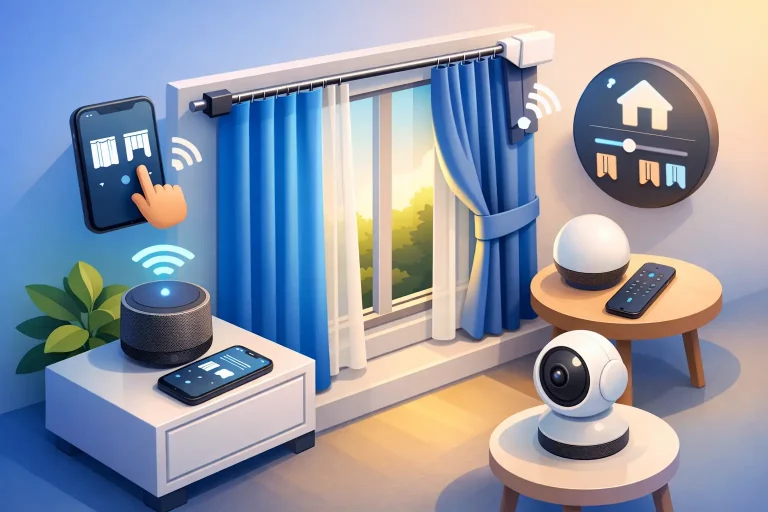
A quality motorised track can follow a planned corner layout without losing the everyday convenience that makes automated curtains so appealing. You can still operate the curtains from a wall switch, remote control, smartphone timer or compatible smart home system. Timed opening can welcome daylight in the morning, while scheduled closing offers privacy and reassurance when you are away.
However, a cornered track needs a motor and carrier system suited to the fabric weight, overall track length and number of bends. More fabric creates more resistance, and every bend adds a little more demand to the system. That does not make the design problematic – it simply means the motor should be chosen on performance rather than appearance alone.
Quiet operation is another consideration. In a bedroom or living area, the track should move steadily without tugging the fabric through a bend. Correct fixing positions, an accurately manufactured track and suitable carriers all contribute to this. A well-planned system should feel effortless in daily use, not like a mechanism that needs supervising.
Measurements that avoid costly compromises
Corner tracks should be measured from the proposed track line, not just from the width of the glass. That track line may sit in front of the recess, below a ceiling, within a pelmet or behind a fascia. Each option changes the finished dimensions and the available room for the curtains.
It also helps to identify anything that could obstruct the track or fabric. Common examples include opening doors, projecting window handles, radiators, air vents, ceiling beams and built-in cabinetry. A curtain can only travel where there is clear space for both the track and the gathered fabric.
Before ordering, confirm the following details with your installer, electrician or supplier:
- the exact route of the track, including every corner, return and change of angle;
- the height of the track line and whether the fixing surface is ceiling, wall or a recessed channel;
- the curtain heading, fabric weight and whether the curtains will be lined or interlined;
- where each curtain will stack when fully open;
- the motor position, power supply and preferred control method.
A simple plan view and elevation drawing are often more useful than a collection of individual measurements. They show how the track relates to the room as a whole and make it easier to spot clearance issues before anything is made.
When separate tracks are the better choice
There are occasions when asking curtains to cross a corner is not the most practical solution. If the corner is very tight, the fabric unusually heavy, or the curtains only need to cover separate windows, individual tracks may provide cleaner operation. This can also be sensible where each section needs independent control, such as a glazed corner with one side facing a neighbouring property and the other opening onto a garden.
Separate tracks give flexibility, but they may create a small light gap at the corner and add another motor or control zone. A continuous track gives a more unified visual line and can improve coverage. Neither approach is automatically better. The right answer comes from how the room is used, not from forcing one layout onto every window.
For homes with complex bays, corner glazing or wall-to-wall curtains, detailed planning is what turns a potentially awkward layout into a feature. Smart Curtains can review measurements and room details, produce fitting guidance and help establish the track route before manufacture. That support is especially valuable when builders, electricians and interior finishes all need to align.
A corner should not limit what your curtains can do. With the right track shape, realistic allowance for the fabric and a properly planned stacking position, automated curtains can follow the room rather than fighting against it.