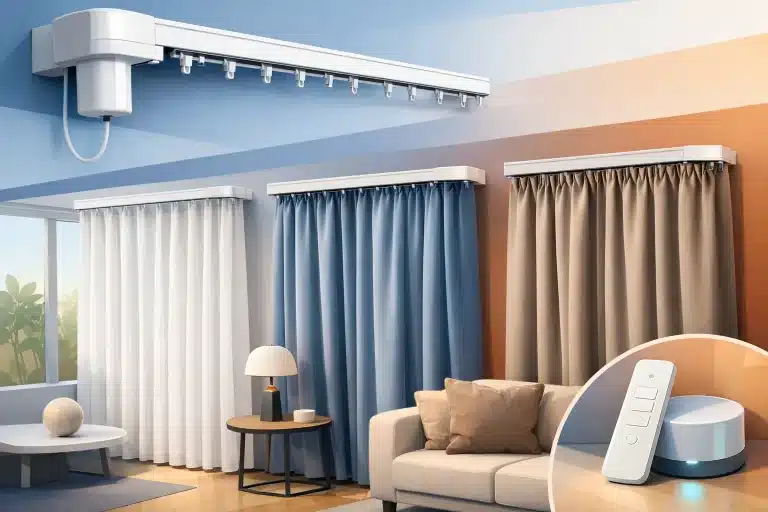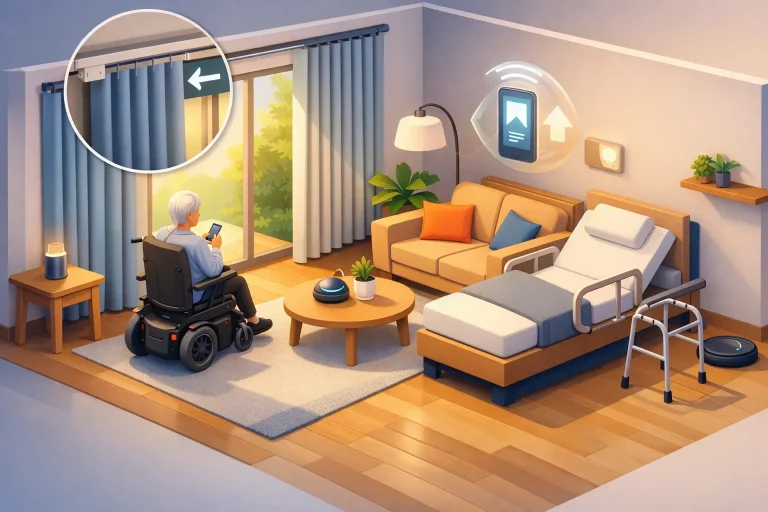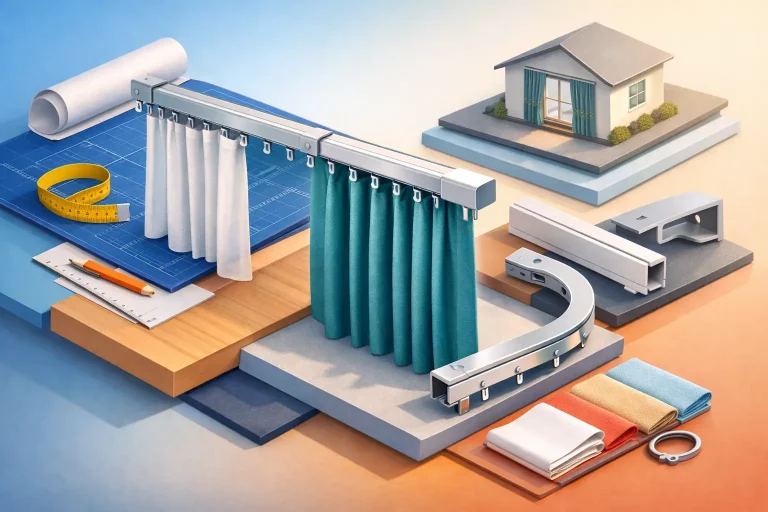
A good electric curtain system should feel effortless once it is in place. The challenge is that buying one is rarely as simple as choosing a motor and pressing order. Window shape, curtain weight, power access, control preferences and installation details all affect whether the finished result feels polished or frustrating. That is why an electric curtain buying guide matters most before you buy, not after.
Thank you for reading this post, don't forget to subscribe!For many homeowners, the appeal starts with convenience. Curtains open as you wake, close at dusk, and can be controlled without crossing the room. But the better reason to invest is often the one that becomes obvious later – a neater finish, easier daily living, more privacy, improved accessibility and a home that feels better considered.
What to decide before choosing an electric curtain system
The first question is not which motor to buy. It is how you want the curtains to behave in everyday life. A bedroom curtain that opens each morning on a timer may need something different from a wide set of patio doors used frequently throughout the day. If the curtains are mainly for convenience, a straightforward remote-controlled system may suit you perfectly. If they are part of a wider smart home setup, integration becomes more important.
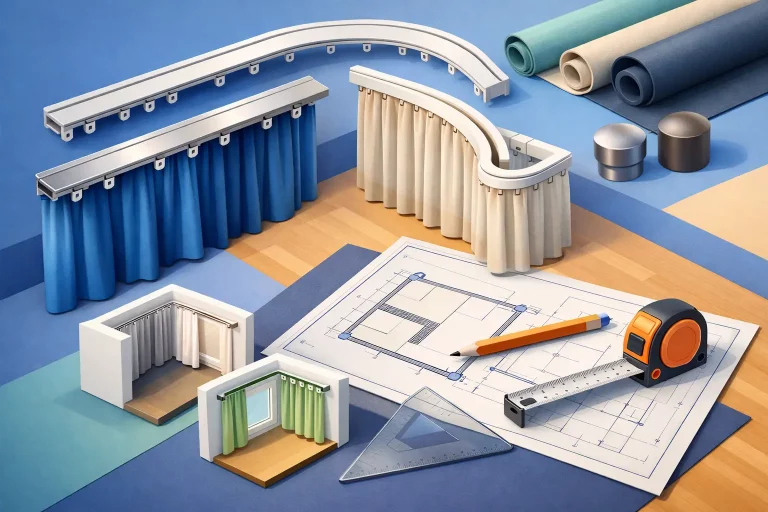
You also need to think about the window itself. A straight run across a standard opening is usually simple. A bay window, corner layout, recess fixing or wall-to-wall span needs more planning. This is where many buyers underestimate the value of getting the specification right early on. A made-to-measure track can solve awkward layouts beautifully, but only if dimensions and fixing details are checked properly.
Electric curtain buying guide: track shape, size and layout
The track is just as important as the motor. In practice, it often matters more. A strong motor cannot compensate for the wrong layout, poor fixing position or an unsuitable track design.
For a standard window, the decision may simply be whether the track is face-fixed to the wall or top-fixed to the ceiling. Ceiling fixing can give a cleaner, more architectural look, especially in contemporary interiors or where you want curtains to fall from the highest possible point. Wall fixing may be more practical where ceiling conditions are difficult or where there is existing trim to work around.
For bays, corners or offset windows, the conversation changes. You may need a bent track, a jointed arrangement or a custom route that allows the curtains to stack neatly without clashing with the room. This is one of those areas where it depends on the room, the heading style and the amount of space available for the curtain stack. There is no single best answer, only the right answer for that opening.
This is also why exact measurement matters. Made-to-measure systems are designed around the real dimensions of the space, not a rough estimate. A few millimetres can affect how the curtain parks, whether it clears an obstacle, or whether the finished line looks centred and intentional.
Choosing the right motor and power option
Most homeowners focus first on control, but the more practical starting point is power. Electric curtains are typically powered either by mains supply or by battery.
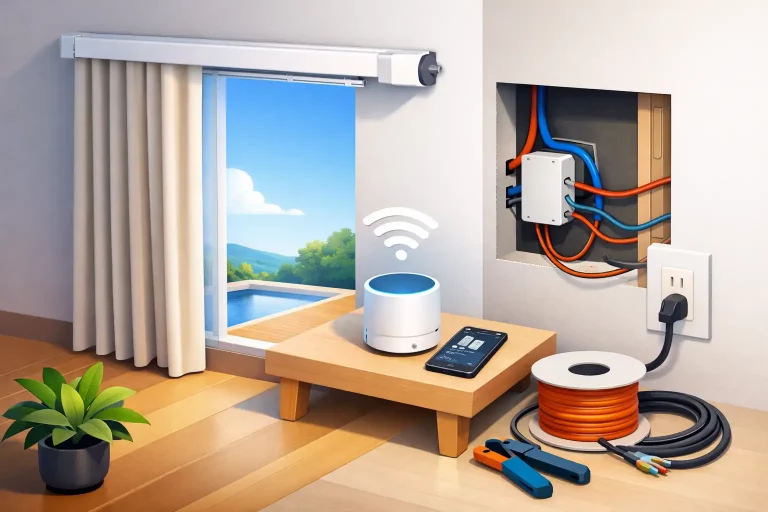
A mains-powered system is often the right choice for larger or heavier curtains, frequent daily use and projects where wiring can be planned during renovation or first fix. It offers dependable performance and removes the need to recharge. If you are already working with an electrician or smart home installer, this route can be very straightforward when planned in advance.
Battery-powered options can be attractive where wiring is difficult or where you want less disruption. They can work well in the right setting, especially for lighter curtains and simpler retrofit projects. The trade-off is maintenance. You will need to recharge or replace batteries periodically, and that may be less appealing if the curtains are very high, very wide or used often.
Motor strength should always match curtain weight and track length. Heavier interlined curtains place greater demand on the system than a lightweight sheer. If you underspecify the motor, the movement may be less smooth and the product may be under strain over time. If you overspecify without considering the rest of the setup, you may pay for capability you do not need. The right balance comes from looking at the full curtain design, not the motor in isolation.
Control options that suit real life
The best control method is the one you will actually use. For some households, that is a simple wall switch by the bed or near the door. For others, it is a handheld remote, a smartphone app, or scheduled opening and closing at set times.
Timers are especially useful if your routine is consistent or if you want the house to feel occupied when you are away. That can improve privacy and add a sense of security without needing any daily effort. App control is helpful if you want flexibility, especially for larger homes or rooms where curtains are difficult to reach.
Smart home integration has clear appeal, but it is worth being honest about how much automation you really want. Some buyers love voice control and scenes that coordinate lighting, blinds and curtains together. Others prefer the reliability of a dedicated remote and no more complexity than necessary. Neither approach is more correct. It comes down to how your home works and what level of control feels intuitive rather than fiddly.
Why curtain style affects the system you need
Not all curtains move in the same way. The fabric weight, heading style and stack-back all influence how the electric track should be specified.
Wave curtains are a popular choice for motorised systems because they create a clean, even finish and stack neatly. They suit modern interiors particularly well. Pleated headings can also work beautifully, especially in more classic schemes, but they may behave differently when drawn and require careful planning for fullness and stack space.
It is easy to focus on appearance and overlook practicality. Thick blackout curtains in a bedroom may be exactly the right choice for comfort and privacy, but they are heavier and bulkier than decorative sheers in a living space. That affects motor selection, bracket planning and where the curtains will sit when open.
If the room has radiators, deep window boards, bifold doors or furniture close to the opening, these details should be considered before the track is made. A well-planned system feels quiet, smooth and unobtrusive. A rushed one can end up obstructed, awkward to fit or disappointing in daily use.
Installation planning is where good results are won
A strong specification can save time, cost and compromise later. This is especially true in renovation projects, extensions and new builds, where decisions about power points, recess depths and fixing grounds need to be made before decoration is complete.
Many problems start with assumptions. A builder may leave insufficient space in a ceiling recess. An electrician may place the power feed in the wrong position. A homeowner may measure the opening but not account for how far the curtains need to return or stack. None of these are unusual mistakes, but they are easier to prevent than to correct.
This is why consultative support matters. When dimensions are reviewed, fitting drawings are produced and awkward layouts are checked before manufacture, the process becomes much more predictable. For a bespoke product, that level of planning is not an extra. It is part of getting the job right.
Electric curtain buying guide: common mistakes to avoid
The most common mistake is treating electric curtains like a standard off-the-shelf purchase. They are not. They sit somewhere between interior furnishing and technical installation, which means both appearance and specification matter equally.
Another mistake is choosing based on price alone. A cheaper system may seem appealing at first, but if it does not suit the curtain weight, the fixing conditions or the control method you want, the end result can feel compromised. Value comes from fit, performance and support, not simply the lowest figure.
It is also worth avoiding overcomplication. Smart features can be excellent, but only when they add genuine benefit. If your priority is easy everyday operation for a bedroom or sitting room, a dependable remote and timer may be more useful than a deeply customised automation setup.
Finally, do not leave measurement and planning until the last minute. Bespoke systems work best when there is time to coordinate with the people involved, whether that is your curtain maker, builder, electrician or automation specialist.
What a confident buying process should feel like
Buying electric curtains should not leave you guessing whether the motor is strong enough, whether the track will fit, or whether the builder has allowed the right space. A well-managed process should give you clarity from the start: what will be supplied, how it will be fitted, how it will be controlled and what information is needed before manufacture.
For UK homeowners investing in a made-to-measure solution, that confidence is often what separates a good result from an expensive near miss. At Smart Curtains, that is why planning support sits alongside product supply rather than behind it.
If you are comparing options now, the best next step is to think less about the gadget and more about the room. How the curtains need to look, move and fit will tell you far more than any product label ever could.