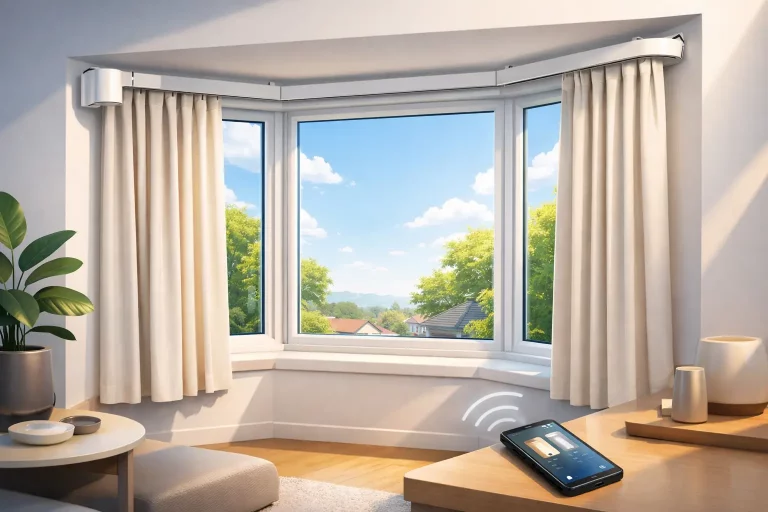
A bay window should feel like an architectural feature, not the one place where automation becomes awkward. So, can electric curtains fit bay windows? Yes. With the right made-to-measure track design, electric curtains can follow curved, angled, square or multi-section bays neatly, while giving you effortless control over a traditionally difficult window arrangement.
Thank you for reading this post, don't forget to subscribe!The key is not choosing a standard straight track and hoping for the best. Bay windows need planning around their exact shape, the curtain heading, the available fixing points and where the motor will sit. When those details are considered early, the result can look calm, considered and properly integrated into the room.
Can electric curtains fit bay windows of every shape?
Most bay windows can accommodate electric curtains, but the track must be designed specifically for the layout. A curved Victorian bay, a three-sided angled bay, and a modern square bay all need a different approach. The track is measured to follow the line of the wall or ceiling, including each return, corner or curve.
For a curved bay, a purpose-made curved track is formed to the required radius. For an angled bay, the track uses carefully specified bends between straight sections. This allows the curtain to travel around the window rather than stopping at the first corner.
There are practical limits. Very tight curves, shallow recesses and unusual architectural details can affect the options available. A large pelmet, deep radiator, projecting window handles or decorative coving may also influence the final specification. These are not necessarily obstacles, but they are reasons to plan the system before ordering.
Why a bay window needs a bespoke electric track
A standard off-the-shelf curtain pole can be forgiving because curtains are pulled by hand and can sometimes be coaxed around a bend. A motorised system needs a more precise route. The motor must pull the fabric smoothly across the full track, without unnecessary strain, snagging or an untidy stack of fabric at the sides.
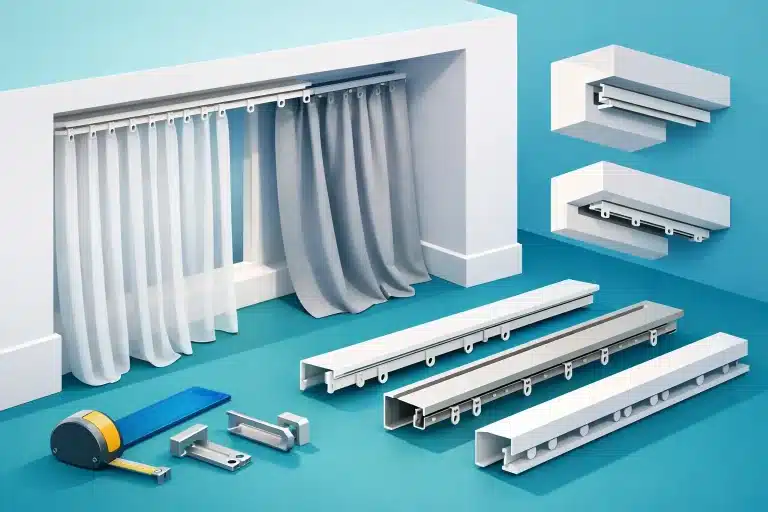
That is why accurate measurements matter. The track length alone is not enough. A proper plan considers the position of every angle, whether the curtains will draw from the centre or one side, and where they will stack when open. It also considers whether the track is being fitted within a recess, to the face of the wall or directly to the ceiling.
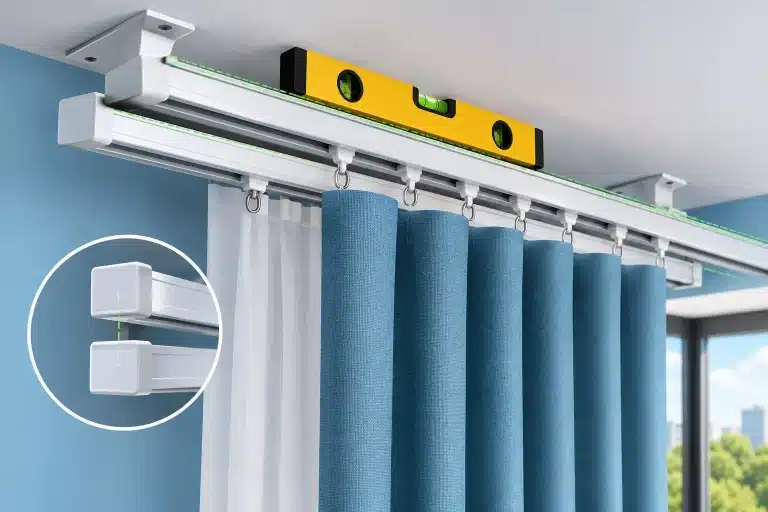
Ceiling fixing is often a particularly elegant solution for bay windows. It gives the curtains a clean, full-height appearance and can make the room feel taller. Wall fixing can work equally well where ceiling access is limited or where there is a suitable lintel or fixing surface above the window.
Choosing the right opening arrangement
The way your curtains open has a noticeable effect on convenience and appearance. In many bay windows, a centre-opening arrangement is the natural choice. Two curtain panels meet in the middle and draw back towards either side, framing the bay when open.
A one-way draw can be useful where one side of the bay has more wall space for stacking, or where furniture makes one end harder to reach. It may also suit an asymmetrical layout. The best choice depends on where you want the fabric to sit during the day, not only on the shape of the window.
Curtain weight matters here too. Lined and interlined curtains create a luxurious finish and improve insulation, but they are heavier than lightweight sheers. A correctly specified motor and track can handle the fabric with confidence, provided the curtain weight and heading have been allowed for from the outset.
The details that make the finished look work
Bay windows are often prominent, so small design decisions are more visible than they would be on a flat wall. A few details make a meaningful difference.
Measure the track line, not just the glass
The track usually follows the wall or ceiling line around the bay, rather than the outline of the window glass. This gives the curtains enough clearance to hang correctly and helps them cover the window effectively when closed.
If the bay has a deep sill, handles that project, or shutters and blinds already in place, the track may need to be positioned further forward. That projection needs to be sufficient for the curtains to clear obstacles without sitting so far into the room that they look disconnected from the window.
Allow enough space for curtain stacking
When open, curtains need somewhere to go. In a compact bay, the stack-back can partly cover the side glazing or sit within the return. That is often perfectly acceptable, but it should be a deliberate decision.
The amount of stack-back depends on fabric fullness, thickness, heading style and drop. Wave curtains tend to create a consistently soft, contemporary line, while pinch pleats offer a more traditional, tailored look. Both can work with electric tracks, but their space requirements differ.
Plan the motor position early
The motor can be placed at either end of the track, depending on the system and the room layout. In a bay, it is usually best positioned where it is least visible and easiest to power. This could be tucked into a return, behind the curtain stack or at a less prominent end of the track.
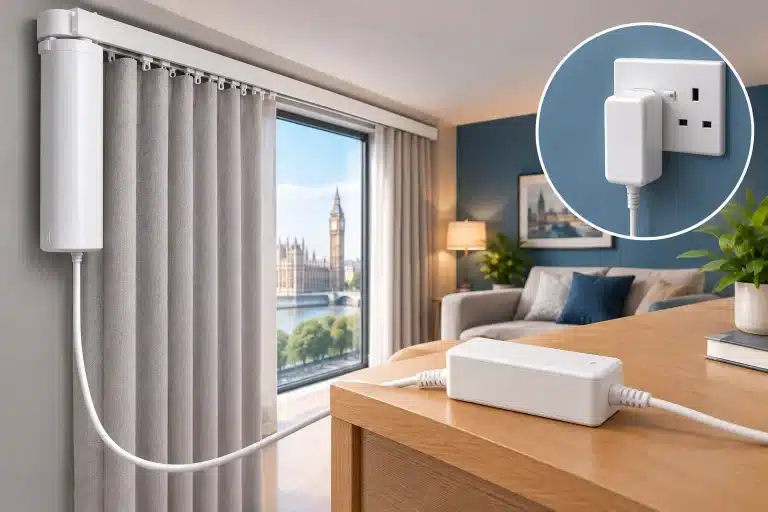
If you are renovating, involve your electrician before plastering or decorating. A nearby power point, concealed wiring route or planned socket can make the installation far cleaner. Battery-powered options can be useful where wiring is impractical, though mains-powered systems are often preferable for frequent use, heavier curtains and long-term convenience.
Controls that make bay windows easier to live with
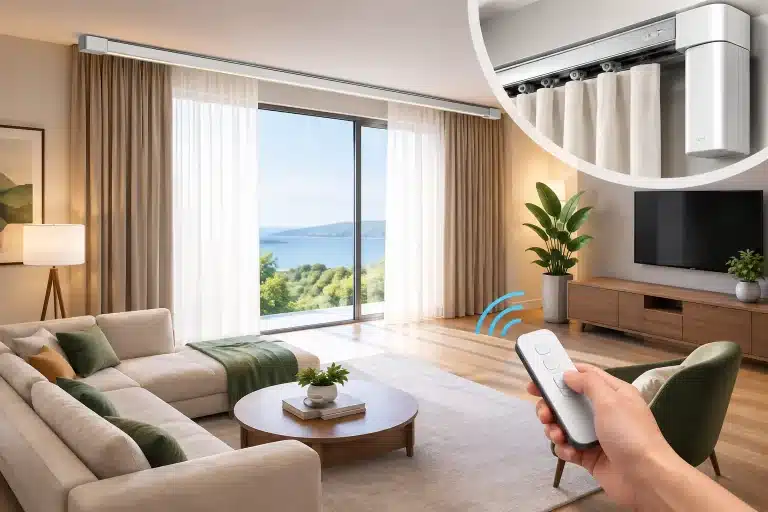
The benefit of motorisation is especially clear with a wide or awkward bay. Rather than reaching around furniture or handling several metres of fabric, you can close the curtains with a wall switch, handheld remote or smartphone.
Timed operation is useful for everyday routines. Curtains can close as evening arrives, open gradually in the morning or follow a schedule while you are away on holiday. For homeowners using a wider smart home system, electric curtains can also be coordinated with lighting, heating or voice control.
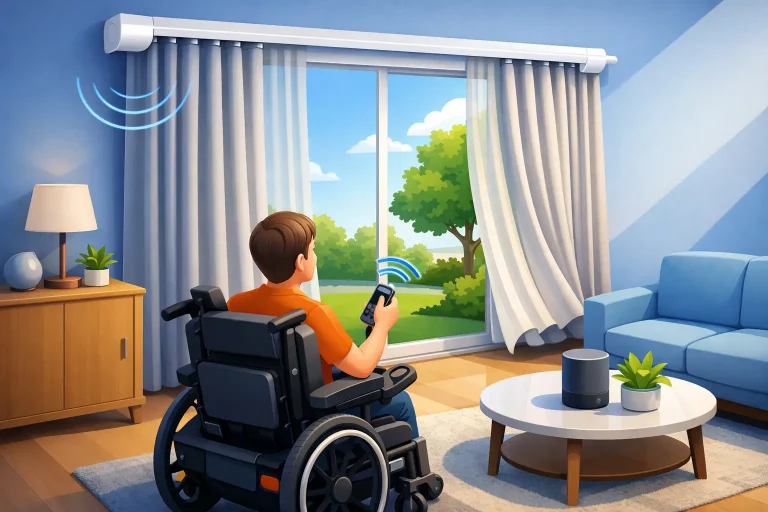
For people with restricted mobility, the practical value is more immediate. Curtains that are difficult to reach or heavy to pull become simple to operate without physical effort. In a family home, it also removes the tugging and uneven pulling that can distort manually operated curtains over time.
Common concerns about electric curtains in bays
One concern is whether curtains will actually travel around corners. They can, provided the bends are designed for the track system and the fabric is appropriate. Sharper angles and heavier headings require more careful specification than a gentle curve with lighter fabric.
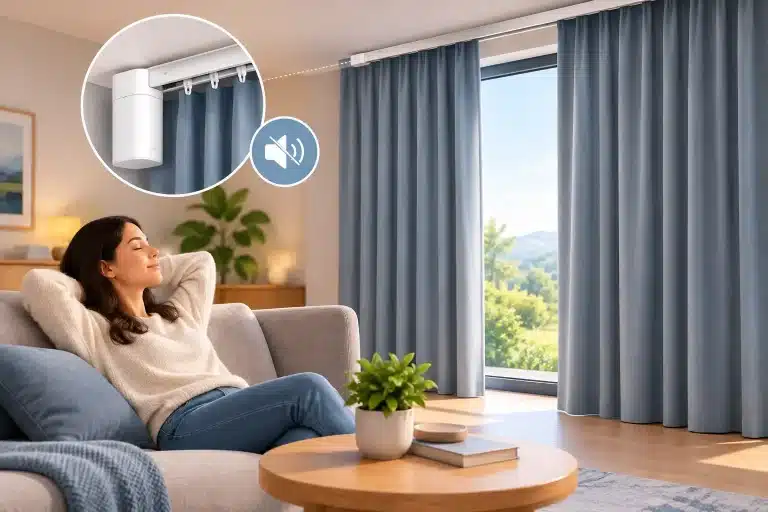
Another concern is noise. Quality motorised curtain systems are designed for quiet, controlled movement, although no moving track is completely silent. In a bedroom or sitting room, the sound should feel discreet rather than intrusive.
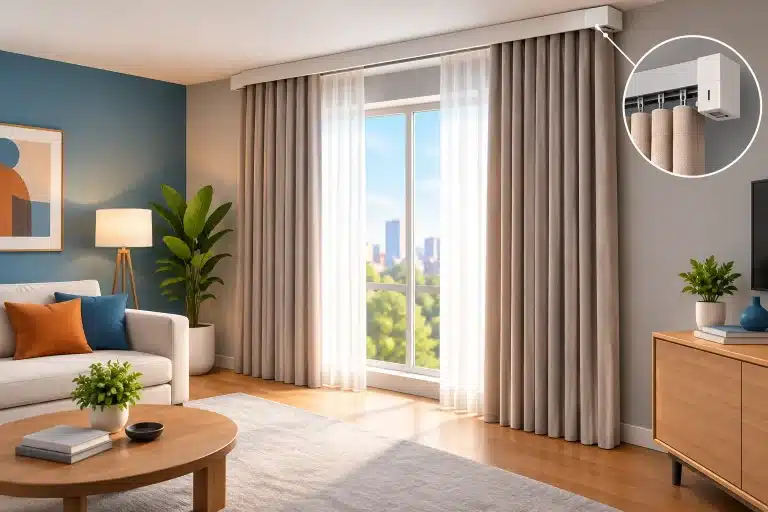
Some homeowners worry that automation will make a period bay look too modern. In practice, the motor and track can be hidden behind a pelmet, within a recess or above the curtain heading. The visible element remains the fabric, so you can retain a classic, layered interior scheme while gaining modern control.
Cost also varies more with bay windows than with straight installations. The shape of the track, number of bends, curtain weight, power arrangement and control method all affect the specification. A quote based on proper measurements is more useful than a rough estimate based on window width alone.
A better way to plan your bay window curtains
Start with photographs of the bay from several angles, along with clear measurements and notes on any obstacles such as radiators, shutters, coving or nearby furniture. If building work is planned, decide whether you want a recessed track, ceiling fixing or a decorative pelmet before the final finishes go in.
It is also worth deciding how you want the room to work. Do you want the curtains to provide blackout for a bedroom, privacy in a street-facing sitting room, or a softer decorative layer over blinds? Your answer affects fabric, lining, track position and the best control method.
At Smart Curtains, this planning is treated as part of getting the finished result right. Measurements can be checked, fitting drawings prepared and practical details discussed before the track is made to order. That support is particularly valuable with a bay, where a few millimetres and one overlooked corner can change the installation.
A well-planned electric curtain system does more than make a bay window easier to cover. It lets one of the best features of your home look composed by day, feel private at night, and respond when you need it to.