A motorised curtain track can make a room feel considered and effortless – until a visible cable draws the eye away from the window itself. Knowing how to conceal curtain cabling before decorating begins helps create the clean, built-in finish many homeowners want, without compromising access for maintenance or everyday use.
Thank you for reading this post, don't forget to subscribe!The right approach depends on whether you are renovating, working with a newly plastered wall, fitting curtains in an existing room, or choosing a plug-in system. The aim is not simply to hide a wire at any cost. It is to plan a safe, discreet power route that works with your curtains, your control method and the structure of your home.
Start with the motor position and track layout
Curtain cabling is easiest to conceal when the motor position is decided at the same time as the track layout. On many motorised curtain systems, the motor sits at one end of the track, although the exact location can vary with the system, the direction the curtains stack and the space available around the window.
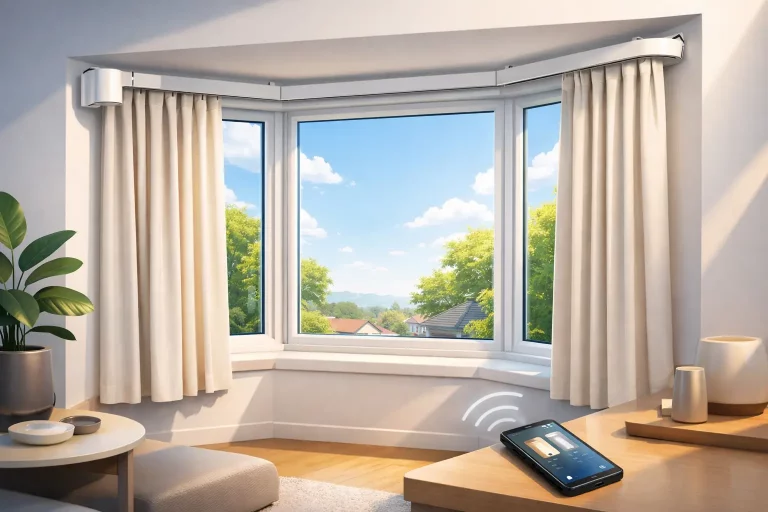
This matters particularly with bay windows, wall-to-wall tracks, corners and offset layouts. A cable that is simple to hide on a straight window may need more thought where a return wall, wardrobe, bulkhead or adjacent door limits the available space.
Before an electrician installs a power point, confirm the finished track length, the motor end and the depth of the curtain recess or pelmet. It is also worth confirming where the curtains will stack when open. You do not want a socket, switched spur or cable route sitting where fabric needs to gather.
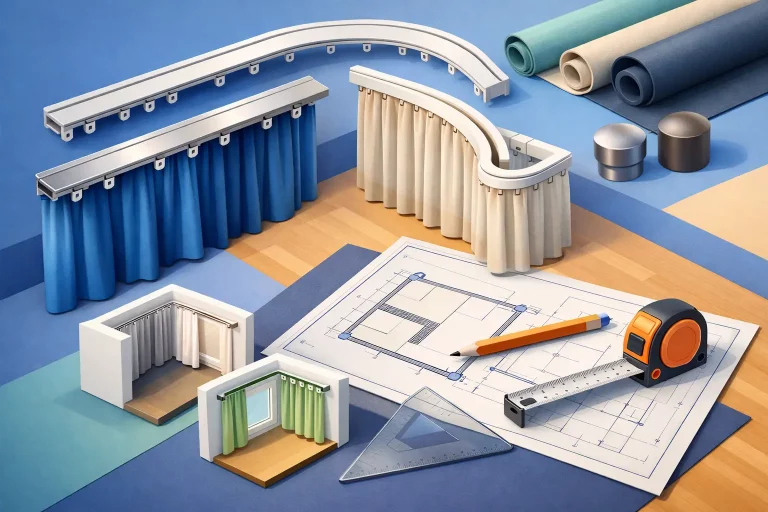
For made-to-measure installations, fitting drawings are valuable at this stage. They give your electrician and builder a clear reference, rather than leaving important decisions to be made after plastering or painting is complete.
Conceal curtain cabling during renovation or first fix
If walls or ceilings are open, a concealed supply is usually the most polished option. An electrician can route the cable within the wall or ceiling void and provide power close to the motor, leaving only the necessary connection visible behind the track, within a recess or above a pelmet.
Use a dedicated, accessible connection point
A common solution is a switched fused connection unit positioned above the curtain line. This can be concealed by a pelmet, fascia or recessed ceiling detail, while remaining accessible if the motor ever needs to be isolated or serviced.
Accessibility is the key trade-off. Completely burying a connection behind plaster may look tidy initially, but it can create unnecessary disruption if work is needed later. A discreet access panel, removable pelmet face or carefully positioned spur gives you the best of both: a refined appearance and a practical installation.
Your electrician should advise on the correct wiring method and comply with current electrical requirements. Avoid extending, cutting or permanently concealing a manufacturer-supplied lead without first checking that it is suitable for the system. Electrical safety should always take priority over an invisible finish.
Plan the recess before the ceiling is finished
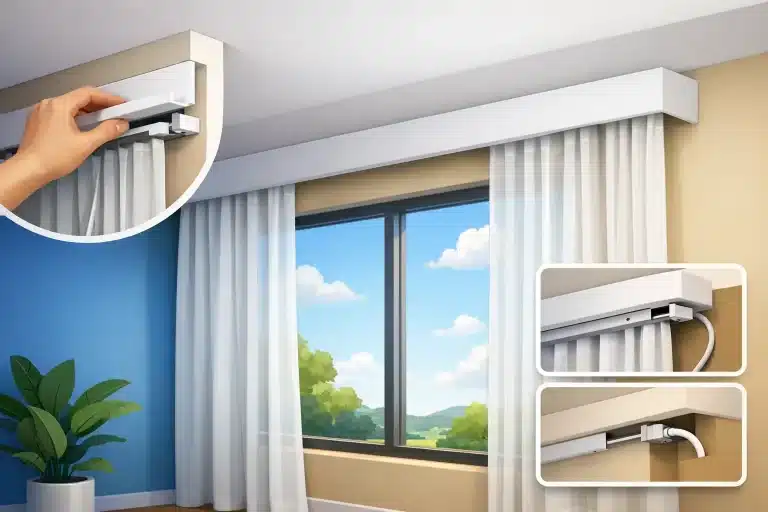
A ceiling recess is one of the most effective ways to conceal both the track and its cabling. The curtain appears to emerge directly from the ceiling, while the motor and cable sit out of sight inside the recess. It is a popular choice for contemporary interiors and can make lower ceilings feel taller by keeping the window treatment visually light.
The recess must be wide and deep enough for the chosen track, motor, curtain heading and fabric stack. A narrow slot may hide the rail but leave no room to fit or remove the motor. Similarly, a recess designed around a light voile may not accommodate lined blackout curtains later.
Coordinate the detail with your curtain supplier before the joinery or plasterboard framework is built. This is where early planning avoids costly alterations.
How to conceal curtain cabling in an existing room
You can still achieve a neat result when the decorating is finished and chasing cables into walls is not practical. The best option will depend on the room, the location of nearby sockets and how permanent you want the installation to be.
Hide the cable behind a pelmet or curtain board
A pelmet or curtain board is often the most straightforward solution. Fixed above the track, it can conceal the motor, cable and track hardware while adding a tailored architectural detail to the room. It may be painted to match the wall or ceiling, finished in timber veneer, or upholstered to complement the curtain fabric.
This approach is particularly useful when the power source is above or beside the window. The cable can be run neatly along the wall behind the pelmet before reaching the motor. Keep sufficient clearance so the curtains can travel freely and so the pelmet face can be removed if access is required.
Use a surface cable trunking route discreetly
When there is no suitable hidden route, slim cable trunking can offer a tidy alternative to a loose cable. Choose a profile that can sit close to the wall or ceiling line, then paint it in the same colour as the surface. Running it vertically in a corner, behind a curtain stack or alongside existing architectural lines usually makes it far less noticeable.
This is not the same as an entirely concealed first-fix installation, but it can be a sensible choice in a finished home, rental property or room where making good plasterwork would be disproportionate. Good installation is what makes the difference: straight runs, minimal joins and a route that does not cross open wall space unnecessarily.
Make use of furniture and existing features
In some rooms, the cable can pass behind built-in joinery, a tall bookcase or a full-height cabinet before reaching the window. Existing coving, picture rails and ceiling beams can also help visually break up a cable route, provided the cable is properly secured and not pinched.
Be cautious about routing cabling behind radiators or through areas prone to heat, moisture or repeated movement. A route that looks hidden but is difficult to inspect, exposed to damage or likely to interfere with curtain movement is not a good long-term solution.
Plug-in systems need a considered route too
A plug-in motorised curtain track can be an excellent choice where a nearby socket is already available. It avoids electrical alteration and can reduce installation time, but the lead still needs to be managed thoughtfully.
Where possible, position the socket behind the curtain stack, within adjacent joinery or close to the floor directly below the motor end. The cable can then be clipped neatly, enclosed in paintable trunking, or routed behind furniture. Do not allow excess lead to hang behind the curtains where it may be visible when they open or become caught in the fabric.
Avoid relying on extension leads as a permanent answer, especially where they run across floors or through doorways. They are visually untidy and can create a trip hazard. If the only socket is on the opposite side of the room, it is usually worth discussing a more appropriate electrical route instead.
Do not forget controls and smart home wiring
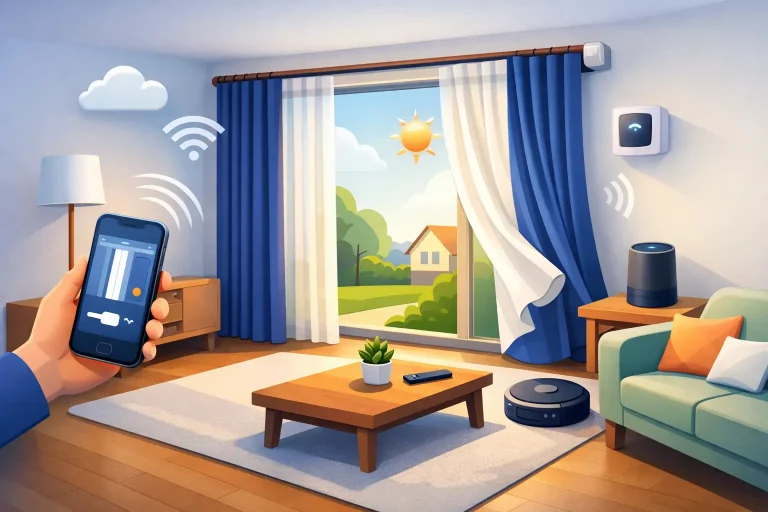
The motor supply is only one part of the plan. If you want a wall switch, smart home integration or a wired control system, those requirements should be agreed early too. Some systems use wireless controls and need only a power supply at the motor; others may require additional low-voltage cabling or specific locations for control equipment.
For homeowners using app schedules or voice control, a clean installation can be achieved with no visible control wiring at all. However, reliable operation may still depend on Wi-Fi coverage, hub placement or the wider smart home setup. Discussing this before installation helps prevent a beautiful curtain recess becoming an awkward place for essential equipment.
Common mistakes that spoil the finished look
The most frustrating issues are usually avoidable. Placing the power point on the wrong side of the window can leave the cable crossing behind the track. Making a pelmet too shallow can expose the motor. Fitting a fixed panel with no access can turn a simple service visit into joinery work.
Another common mistake is treating cabling as the electrician’s decision alone. The electrician will ensure the supply is safe, but they need accurate information about motor location, track shape, finished ceiling level and curtain stack. Bringing these details together early is what produces a genuinely integrated result.
At Smart Curtains, installation planning is approached as part of the specification, not as an afterthought. Clear dimensions and fitting guidance allow homeowners, builders and electricians to work from the same plan.
A concealed cable is a small detail, but it has a large effect on how the room feels. Give it the same attention as the fabric, track position and curtain heading, and your automated curtains will look as calm and carefully finished as they are convenient to use.