A curtain that catches on a radiator, stops short of the wall or needs a daily tug across a wide patio door can make an otherwise beautiful room feel unfinished. Luxury smart window treatments solve that small but persistent frustration by pairing made-to-measure design with quiet, dependable automation. The result is not simply a clever feature: it is a home that feels more considered every morning, evening and time you leave it empty.
Thank you for reading this post, don't forget to subscribe!For homeowners planning a renovation, building an extension or refining a finished interior, the best systems begin with the room itself. The size and position of the windows, the curtain fabric, the way people move through the space and the desired level of control all shape the right specification.
What makes a window treatment feel genuinely luxurious?
Luxury is often mistaken for adding more technology. In practice, it is about removing visible compromise. A motorised curtain track should sit neatly within the intended recess, ceiling detail or pelmet. Curtains should stack where they are meant to, travel smoothly and close fully for privacy. Controls should suit the household rather than requiring everyone to learn a new routine.
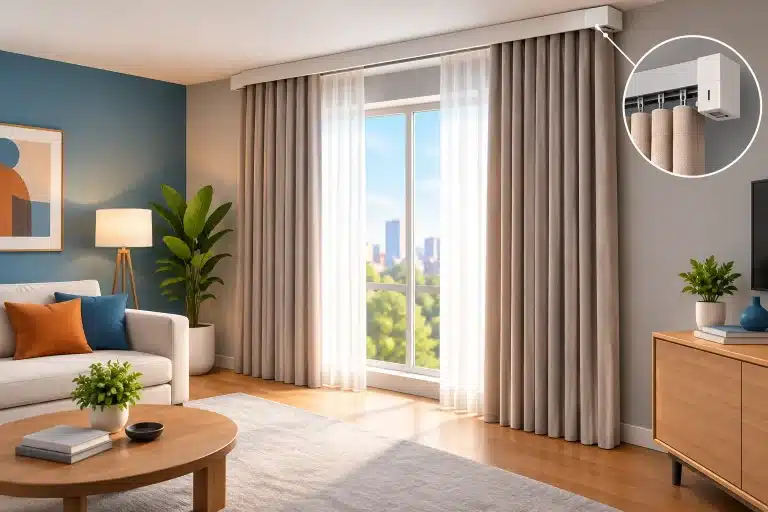
A bespoke electric track offers this level of finish because it is made around the window, not chosen from a limited range of standard sizes. This matters particularly for wall-to-wall curtains, extra-wide glazed doors and rooms where the track needs to run around a corner. It also matters where the curtains form part of the architecture, such as a ceiling-recessed track in a contemporary extension or a discreet arrangement behind a decorative pelmet.
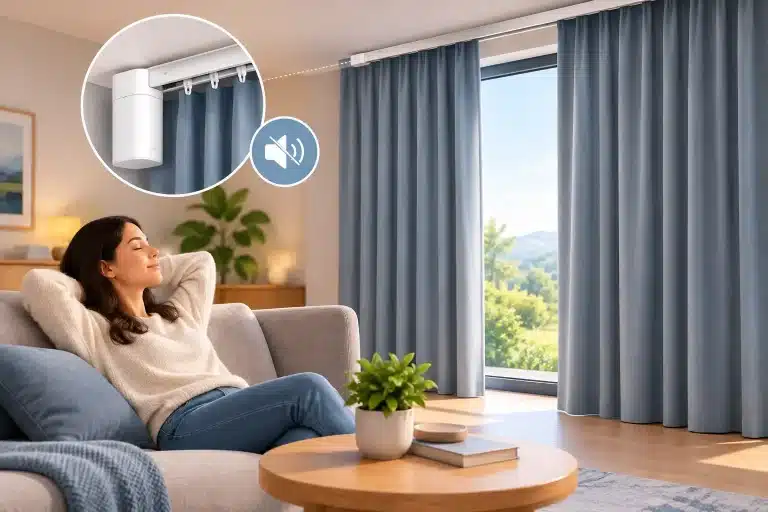
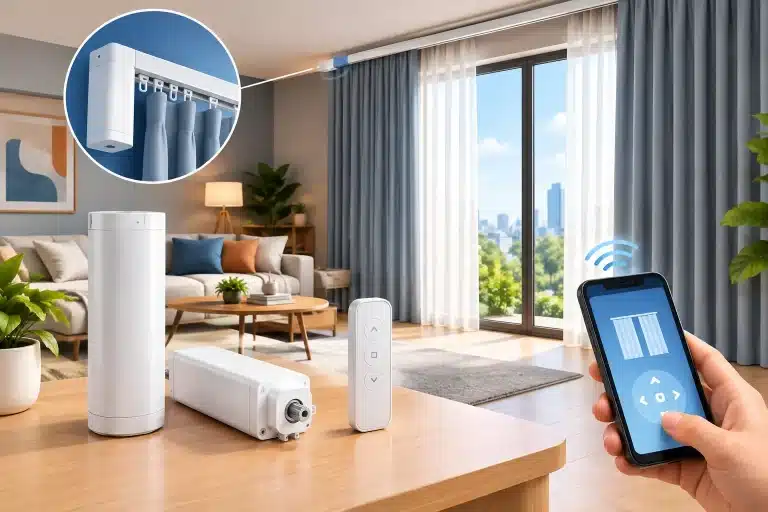
The motor itself should be considered alongside the track. A quiet system is especially valuable in bedrooms, nurseries and living spaces used for relaxing. Reliable movement, gentle starts and stops, and the ability to operate the curtains manually when needed all contribute to an experience that feels polished rather than overly technical.
Luxury smart window treatments should fit your routine
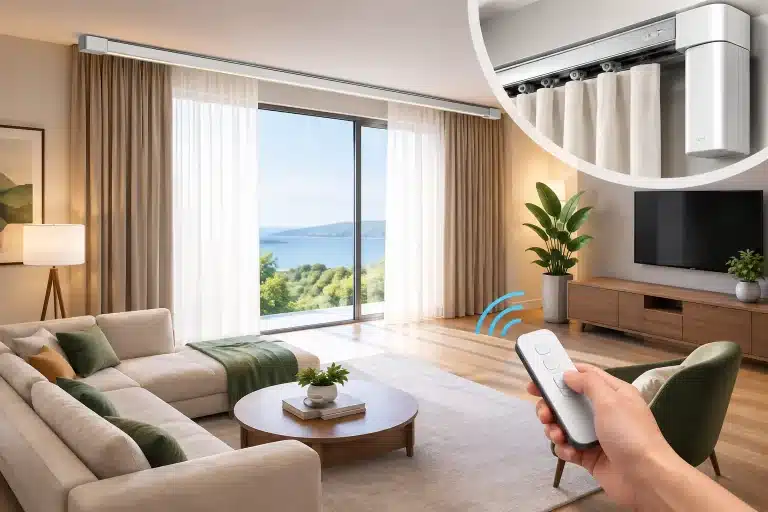
The appeal of automation is most obvious when it becomes part of the day without demanding attention. A bedside remote can close bedroom curtains without getting up. A wall switch by the door can close several sets of curtains as you leave. Timed operation can bring privacy to a street-facing room before dusk, even if the house is busy with cooking, homework or guests.
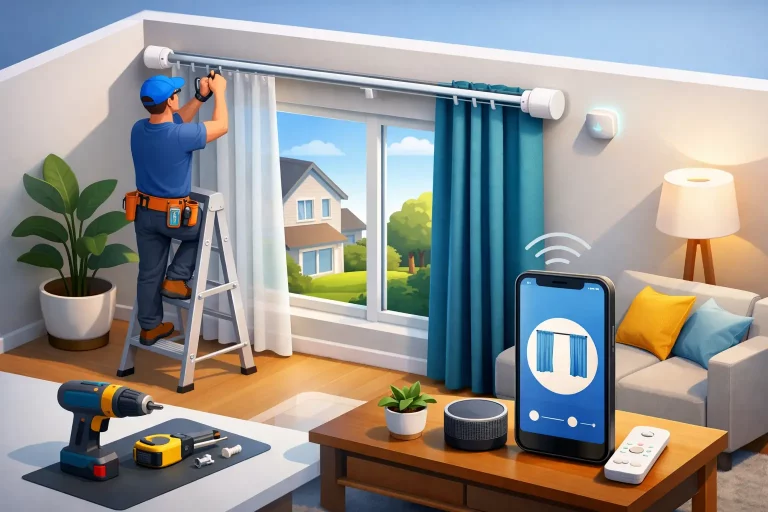
Smartphone control adds another useful layer. If you are delayed on the way home, travelling, or simply upstairs when the sun begins to shine directly into a room, curtains can be operated without walking from window to window. For some households, that convenience is the main reason to choose motorisation. For others, it is the reassurance of making a home appear occupied while they are away.
Smart home integration can take this further, but it is not essential for every project. Connecting curtains with an existing home automation system may be worthwhile in a larger renovation or a property with lighting, heating and security scenes already planned. In a smaller project, a well-positioned wall switch and a timer may deliver exactly the right level of simplicity. The luxury lies in choosing control that feels natural, not in selecting every available option.
Privacy, light and security in one considered system
Window treatments have to perform several jobs at once. During the day, they can soften glare and protect interiors from strong sunlight. In the evening, they create privacy and a sense of enclosure. When the property is unoccupied, programmed opening and closing can support a more lived-in appearance.
That does not mean curtains replace other security measures, and timers should be set thoughtfully rather than to a rigid pattern every day. However, paired with normal home security habits, automated curtains are a practical addition for homeowners who are away for work, weekends or longer holidays.
They can also make daily life easier for people with restricted mobility. Reaching high tracks, handling heavy lined curtains or crossing a room several times a day may be inconvenient or difficult. Simple, accessible controls give more independence without changing the warmth and character that fabric curtains bring to a room.
The planning details that make the difference
Motorised curtains are straightforward to use, but their planning deserves care. The most successful installations are decided before the final decorative details are fixed in place. A few millimetres can affect where a track sits, how the curtain hangs and whether it clears handles, radiators or window reveals.
Start by deciding where the curtains need to cover. For a standard window, this might mean extending the track beyond each side so the fabric clears the glass when open and lets in as much daylight as possible. For a full-height sliding door, the question is often which side should hold the curtain stack when the doors are in use. For a bay, the track may need to follow each angle precisely rather than relying on separate straight sections.
Ceiling recesses and pelmets need equal attention. A recess must be wide and deep enough for the selected track and the curtain heading, while still allowing the curtains to move freely. If a recessed track is planned in a newly plastered ceiling, power provision and access for installation should be agreed early with the builder and electrician.
Choosing the right track layout
Straight runs are only one part of the picture. Bespoke tracks can be designed for bays, corners, offset layouts and multiple windows within the same room. These arrangements often create the greatest visual impact, but they should be measured and drawn carefully before production.
A corner track, for example, needs to account for how the curtain carriers pass through the bend and where the fabric will stack. In a bay window, each return and angle affects the overall track length. For wall-to-wall installations, exact dimensions matter because there is less room to disguise an error at either end.
This is why planning support is valuable. A fitting drawing gives homeowners, installers and trades a shared reference point. It helps identify the motor position, cable route, track fixing points and clearances before the work reaches an expensive stage to alter.
Fabric and curtain weight still matter
Automation does not remove the need to choose suitable curtains. The fabric, lining, heading style and fullness affect how the curtains look and how much weight the motor must move. Heavily lined or interlined curtains can be wonderfully insulating and luxurious, but they require a track and motor specified for their final weight.
Consider where the room faces and how it is used. A bedroom may benefit from blackout lining, while a south-facing sitting room may call for a lighter fabric that filters glare without making the room feel closed in. In an open-plan space, curtains can soften acoustics as well as frame the glazing.
It is sensible to involve the curtain maker and the motorised track supplier early. They can confirm the finished curtain weight, heading requirements and the space needed for a neat stack. This avoids the common problem of selecting beautiful fabric first, only to find that the planned recess or track position no longer provides enough clearance.
A better route from idea to installation
A bespoke system should not feel like a technical puzzle handed to the homeowner. The process works best when the window layout, intended curtain design and preferred controls are discussed together. Measurements can then be checked, a suitable track arrangement prepared and fitting details shared with the people carrying out the work.
For renovation projects, this coordination is especially helpful. Your electrician needs to know where power is required. Your builder may need the recess dimensions before boarding a ceiling. If a home automation integrator is involved, they need the correct control method and motor location. Bringing those details together early protects both the finish and the budget.
Smart Curtains supports this planning process with made-to-measure advice and fitting drawings, helping customers specify a system with confidence rather than relying on assumptions from a product photograph.
The best luxury smart window treatments are rarely the loudest feature in a room. They simply make the space more comfortable to live in, easier to manage and more beautifully finished. Begin with the way you want the room to work, then let the track, curtains and controls be designed around that everyday life.