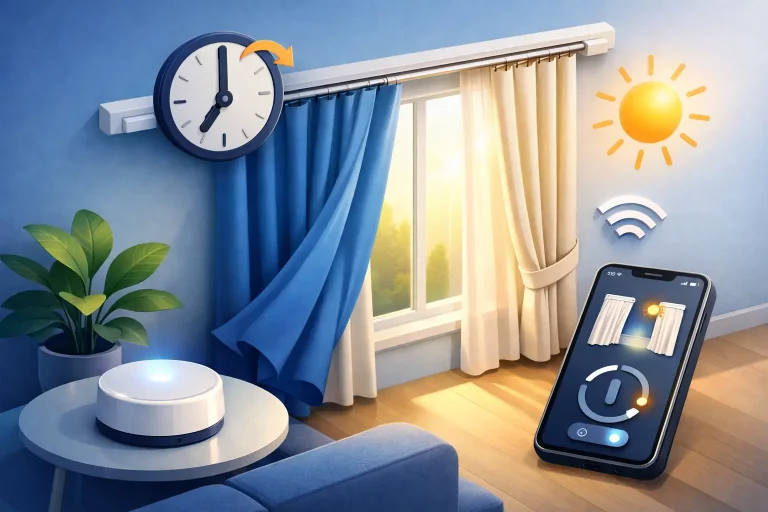
A curtain track is easy to overlook until the plastering is finished, the furniture arrives and there is nowhere sensible to hide it. A well-planned renovation curtain project avoids that last-minute compromise. It gives you the opportunity to position a made-to-measure motorised track correctly, coordinate power before decorating, and create a window treatment that feels built into the room rather than added afterwards.
Thank you for reading this post, don't forget to subscribe!For homeowners refurbishing a single room or managing a whole-house renovation, the difference is often in the early decisions. The track layout, curtain stack-back, recess depth and control method all affect the finished look and how easy the curtains are to live with every day.
Start with how the room needs to work
Motorised curtains are not only about adding technology. They can make a bedroom darker at bedtime, give a large living room a more refined finish, and make day-to-day privacy far simpler in a street-facing property. Before choosing a track or fabric, consider what you want the curtains to do.
In a main bedroom, timed opening can bring natural light into the room without an early-morning struggle with heavy curtains. In a lounge, a wall switch or remote can close wide curtains while you are settling down for the evening. In a home where mobility is restricted, automated control removes the need to reach across furniture or pull on difficult cords.
Security is another practical consideration. Curtains that open and close to a schedule can make an occupied home appear more lived-in while you are away for the weekend or on holiday. If your property already uses smart lighting, heating or voice control, it may make sense to plan curtain automation as part of the same system.
The right answer depends on the room. A simple remote-controlled track may be ideal for a guest bedroom, while a principal living space with several windows may benefit from coordinated wall switches, timers or smart home integration.
Plan your renovation curtain project before first fix
The best time to specify a motorised curtain track is before the electrician has completed first fix and before any ceiling details are finalised. This is particularly valuable where you want a wired system, a concealed track or a bespoke layout around corners, bays or an offset window.
A mains-powered motor needs a suitable power point in the correct location. It is usually hidden behind the curtains, but it must remain safe and accessible for the installer. Deciding this after decorating can mean exposed cable, an awkward socket position or unnecessary alteration to a finished wall.
If you are using a builder, electrician, interior designer or smart home integrator, share the track plan early. A fitting drawing gives everyone a clear reference for the final width, motor position, power requirement and any ceiling recess. This prevents the common problem of each trade assuming somebody else has allowed the necessary space.
Battery-operated options can be useful where chasing walls or adding a socket is impractical. They can suit a completed room or a lighter-touch refurbishment. The trade-off is that batteries need charging, and the installation may offer fewer options than a carefully planned wired system. For a major renovation, a wired motor is often the neater long-term choice.
Allow for the stack-back
When curtains are open, the fabric gathers to either side of the window. This gathered section is known as the stack-back, and it is one of the most frequently missed measurements in curtain planning.
If the track finishes exactly at the edge of the glazing, open curtains may cover part of the glass and reduce daylight. Extending the track beyond the window lets the curtains clear the opening more effectively. It can also make the window appear wider and give the room a more generous, tailored feel.
The amount required depends on fabric weight, heading style and whether the curtains draw to one side or split from the centre. Heavier, fuller curtains need more parking space than lightweight sheers. This is why a window width alone is not enough to specify a track accurately.
Decide whether to conceal the track
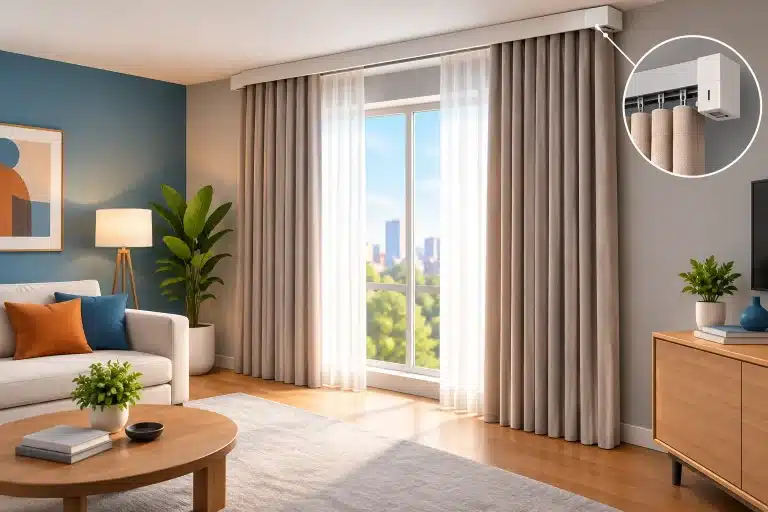
A ceiling recess can produce one of the cleanest finishes in a renovated home. The curtains appear to emerge from the ceiling, hiding the track, fittings and motor from view. It works especially well with full-height curtains, contemporary interiors and large glazed doors.
However, a recess needs proper planning. It must be wide enough for the track and curtain heading to move freely, deep enough to conceal the system, and positioned so that the fabric does not catch on a window handle, radiator cover or projecting sill. Where blackout curtains and a sheer layer are planned, a double-track arrangement will need more space.
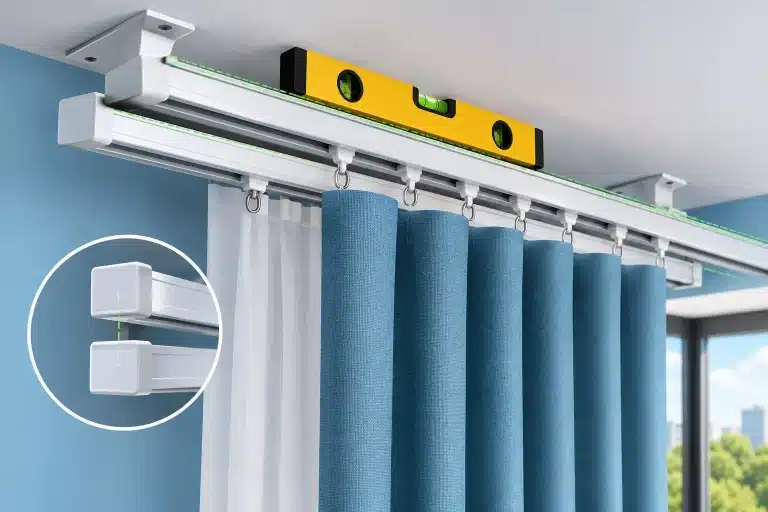
A surface-mounted track can be equally effective when designed well. It is often the sensible choice where ceiling construction limits recess work or where a classic pelmet, curtain board or existing cornice forms part of the room’s character.
Measure the whole treatment, not just the window
A made-to-measure motorised track is built to the final installation dimensions, so careful measuring is essential. Measure the wall or ceiling location where the track will sit, rather than relying only on the size of the window recess. Note obstructions such as coving, beams, air vents, built-in joinery, radiators and opening doors.
Bay windows deserve particular attention. A bay may look symmetrical but contain slight variations in angle, while a wall can be out of square in an older property. The same applies to corner windows and returns around patio or bifold doors. A bespoke curved or angled track can follow these shapes neatly, but it needs reliable measurements from the start.
Photographs of the space are useful alongside dimensions, especially during renovation work. They help identify practical details that a number on a sketch may not reveal, such as a deep window board or a ceiling bulkhead. At Smart Curtains, installation planning can include checking measurements and producing fitting drawings, giving homeowners and their trades a clearer route from idea to installation.
Choose controls that suit everyday life
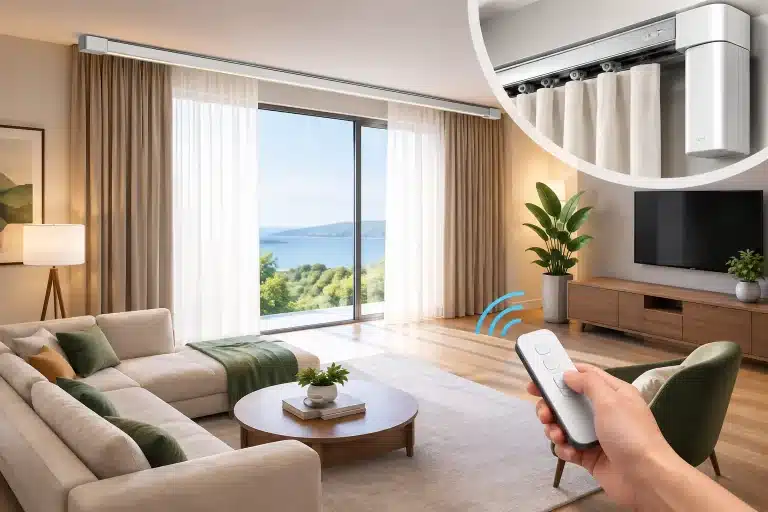
The control method should feel natural, not like another system to manage. A wall switch is familiar for all members of the household and is particularly convenient by an entrance or beside the bed. A handheld remote offers flexibility without altering the electrical layout. Smartphone control and timers suit homeowners who want routines around waking, privacy or evenings at home.
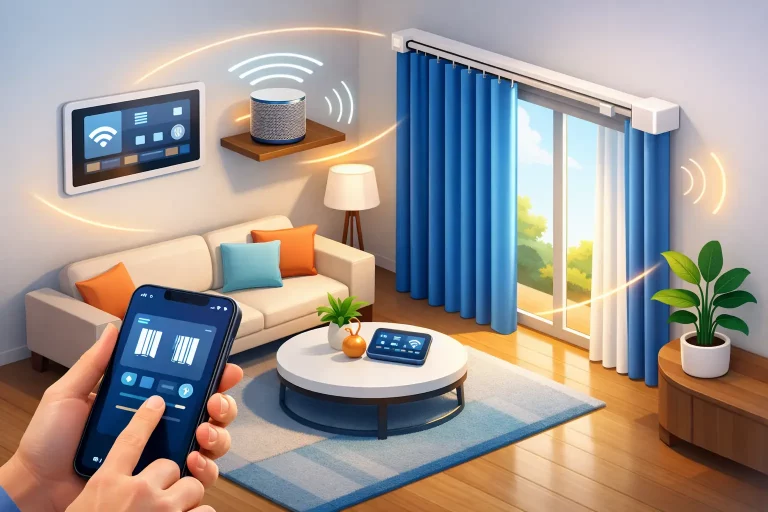
Smart home integration can add another layer of convenience. Curtains can be included in scenes with lighting, controlled by voice, or set to respond to a broader daily routine. Yet integration is not always necessary. If the goal is simply to close heavy curtains comfortably, a straightforward switch or remote may be the better value and easier choice.
Think about who will use the room. A child’s bedroom may need simple, reliable operation. An accessible ground-floor room may benefit from a fixed wall control in an easy-to-reach position. For a property with multiple automated tracks, grouped control can prevent a collection of remotes from taking over the coffee table.
Coordinate curtains, track and interior details
The track is only one part of the final result. Curtain fabric, heading style, lining and length all influence how smoothly the system performs and how polished it looks. Heavier fabrics may need a suitably specified motor, while wave-style headings require the correct carrier spacing to maintain their even appearance.
For full-height curtains, confirm the finished floor level before finalising lengths. New flooring, underlay or rugs can change the drop enough to leave curtains dragging or sitting noticeably short. If the room is being replastered or the ceiling is being lowered, wait until those dimensions are confirmed before placing an order.
Also consider the relationship with blinds. A blind can provide daytime privacy and reduce glare, while curtains deliver softness, insulation and blackout at night. In a wide opening, this layered approach often gives more control than relying on one treatment alone. It does require enough recess depth and careful positioning so neither product interferes with the other.
Give your trades a clear brief
A renovation runs more smoothly when the electrician, builder and curtain supplier are working from the same information. Confirm where power will be located, whether the track is recessed or surface mounted, which side the motor will sit on and when the installation can happen. The track should normally be fitted after dusty building work is complete but before final curtains are hung.
Do not leave the motor position to chance. It can affect where a socket is installed, where curtains stack when open and whether access is available for future servicing. In a bay or corner layout, it may also determine which route provides the most discreet cable run.
A carefully planned automated curtain system should disappear into the room when it is not being used, then make the room noticeably easier to enjoy when it is. Give it attention while the walls and ceilings are still open, and the finished space will feel considered from the first morning you press the button.