A curtain that catches on a radiator, leaves a gap at the edge of a bay window, or needs stretching to reach at bedtime can make a beautifully finished room feel surprisingly awkward. The best smart curtain systems solve that everyday friction, but the right choice is not simply the one with the most app features. It is the system that fits your window precisely, works with the way you live, and has been planned properly before it reaches your home.
Thank you for reading this post, don't forget to subscribe!For UK homeowners, motorised curtains can bring a quieter, more considered feel to a bedroom, living room or whole renovation. They can open gradually in the morning, close at dusk when you are away, and remove the effort of reaching tall windows or heavy, lined curtains. The detail that makes this feel effortless is usually decided long before installation: track layout, curtain weight, power position and the control method all matter.
What makes a smart curtain system the best choice?
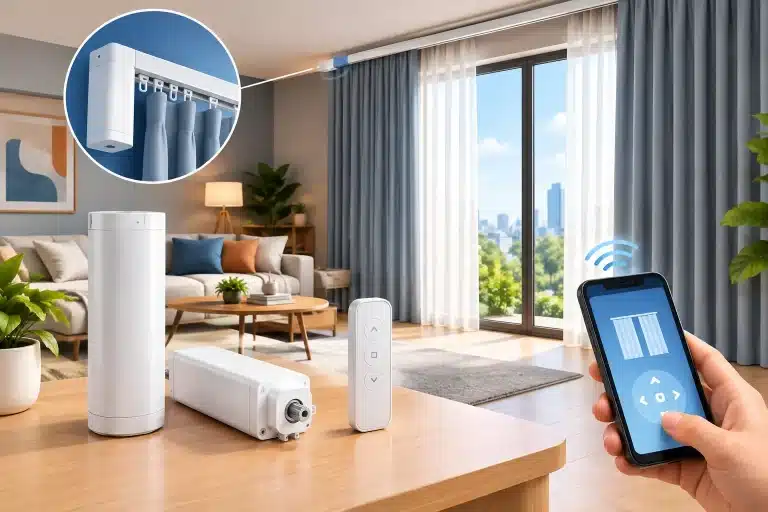
A quality smart curtain system is a made-to-measure motorised track fitted behind your chosen curtain heading. The motor moves the curtains along the track at the touch of a wall switch, remote, mobile phone or voice command, depending on the controls specified. It is a discreet upgrade rather than a gadget on display.
The most suitable system depends on the room and the property. A straightforward wall-to-wall bedroom window may need a single, centre-opening track and a simple remote. A large living-room opening, angled bay or corner glazing arrangement needs more careful consideration. In those spaces, a made-to-measure track layout is far more valuable than an off-the-shelf solution that was never designed around the architecture.
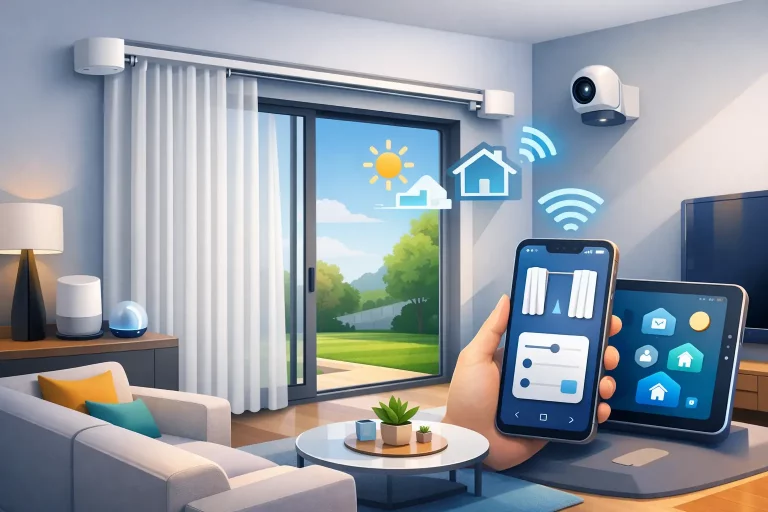
There is also a difference between a motorised curtain track and a genuinely smart setup. Motorisation gives you powered opening and closing. Smart controls add scheduling, app access and, where required, integration with a wider home automation system. Neither is automatically better. If your priority is easy, reliable daily control, a wall switch or handset may be exactly right. If you are already specifying lighting, heating and security scenes, automation integration may be the natural next step.
The best smart curtain systems start with the track
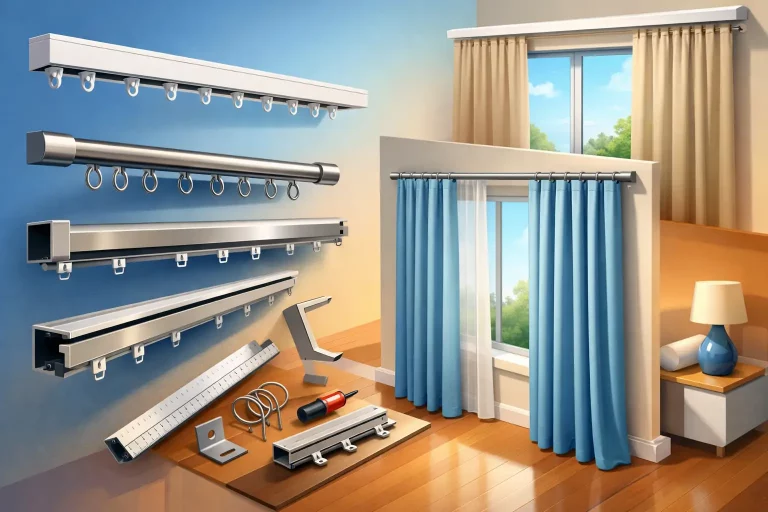
The track is the foundation of the whole installation. It must be built to the correct width, support the finished curtain weight and follow the intended route without compromising how the curtains stack when open.
Straight windows and wall-to-wall openings
Straight tracks are often the simplest option, but they still need accurate planning. The track should extend far enough beyond the window so that open curtains clear as much glass as possible. This matters particularly where you want to maximise daylight or preserve a view.
For wall-to-wall tracks, the position of the motor, the curtain stack and any nearby wardrobes, coving or ceiling details should all be considered. A few millimetres can affect whether curtains run freely or sit neatly at the end of the track.
Bay windows, corners and offsets
Bay windows are one of the strongest reasons to choose a bespoke system. A bay may have gentle bends, sharper angles or an unusual mix of returns. The track needs to match those measurements exactly so the gliders can move around the layout smoothly.
Corners and offset track designs call for the same care. The curtains must travel in the intended direction without bunching, catching or leaving unwanted light gaps. This is where fitting drawings and a discussion before ordering can prevent expensive adjustments later. It is not just a question of measuring the window itself – the available ceiling space, wall projections and curtain heading all influence the final design.
Recesses, pelmets and ceiling details
A recessed track can create a particularly polished appearance, with curtains appearing to emerge from the ceiling. However, the recess must be wide and deep enough for the track, motor and chosen curtain heading. A recess that looks generous on a plan can become restrictive once fabric volume and fixing access are taken into account.
If you are renovating, it is worth bringing curtain-track planning into conversations with your builder or electrician early. A small amount of coordination at first-fix stage can avoid visible cables, inaccessible sockets or a recess that is too narrow for the finished system.
Choose controls around real daily use
The best smart curtain systems should feel simple for everyone in the household. That is why it helps to begin with the moments when you will actually use them.
A remote control is familiar and convenient, particularly for bedrooms and occasional-use rooms. A wall switch offers a dependable fixed control point, ideal beside the bed or near a room entrance. Mobile phone control is useful when you want to check or adjust curtains while out, while timers can establish an automatic routine without requiring anyone to remember.
For a connected home, the curtain system can be incorporated into scenes. Curtains might close alongside exterior lighting in the evening, open with a morning routine, or operate at selected times while you are on holiday. Used well, this is practical rather than performative. It supports privacy, can create the impression that someone is home, and makes the house feel ready for the day or evening.
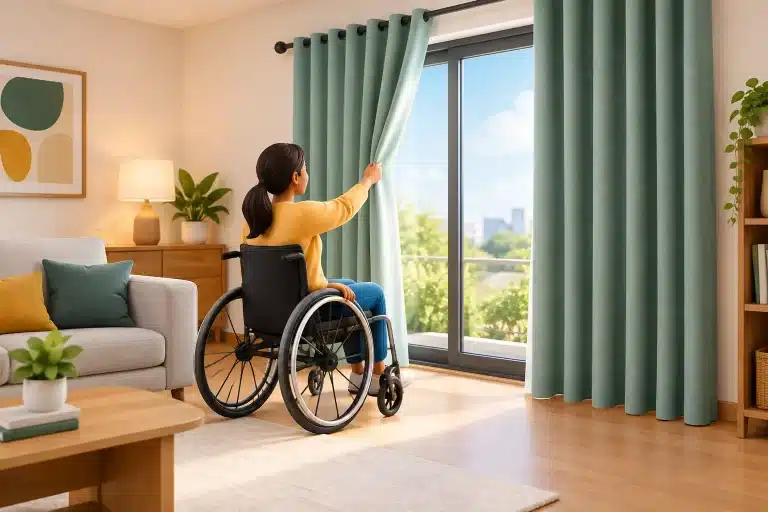
Voice control can be helpful for accessibility and for hands-full moments, but it should not be the only method of operation. A well-planned installation retains straightforward local control, so the curtains remain easy to use for guests, children and anyone who does not wish to use an app.
Power supply is a decision, not an afterthought
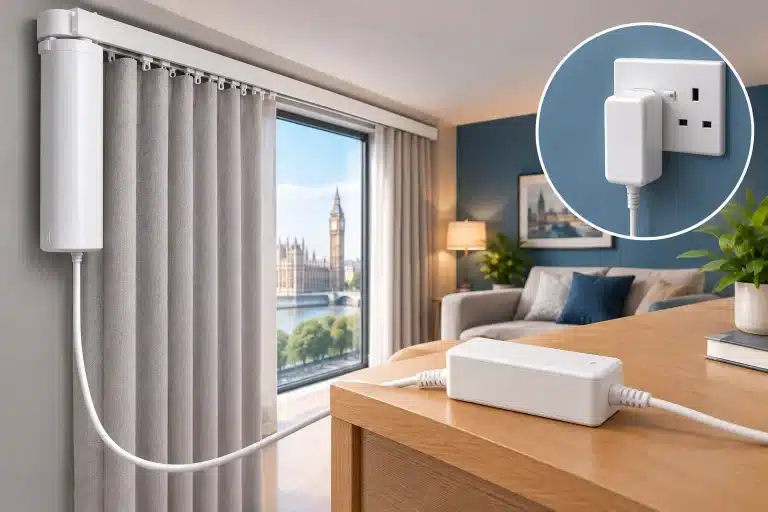
Most premium motorised curtain systems are powered from the mains. This provides consistent performance and avoids the routine of charging batteries, especially on larger or heavier curtains. For a new build, extension or substantial refurbishment, arranging a suitable power point in the right position is usually the cleanest approach.
Battery-powered systems can be useful where running a cable would be disruptive, such as a finished room where décor is not being disturbed. The trade-off is maintenance. Battery charging intervals vary according to curtain size, frequency of use and the motor itself, so it is sensible to consider access before committing to this route.
The motor position is equally important. It needs to be discreet but accessible if future servicing is required. This is another reason to agree the layout before plastering, decorating or installing joinery around the window.
Match the system to the curtains you want
The weight and construction of the curtains affect the motor and track specification. Blackout-lined bedroom curtains, interlined drapes and full-height wave curtains can all look superb, but they are not interchangeable from a mechanical point of view.
A heavier fabric may need a higher-capacity motor. A heading with generous fullness needs enough stacking space at each side. If curtains are to meet in the centre, the overlap should be planned to prevent a visible sliver of light. If they open to one side, consider where the stack will sit and whether it will obstruct part of the glazing.
This is why it is useful to specify the track alongside the curtains, rather than treating the automation as a later addition. Your curtain maker, interior designer and installer can then work from the same dimensions. The result is better movement, cleaner proportions and a finish that looks intentional.
A practical checklist before requesting a quote
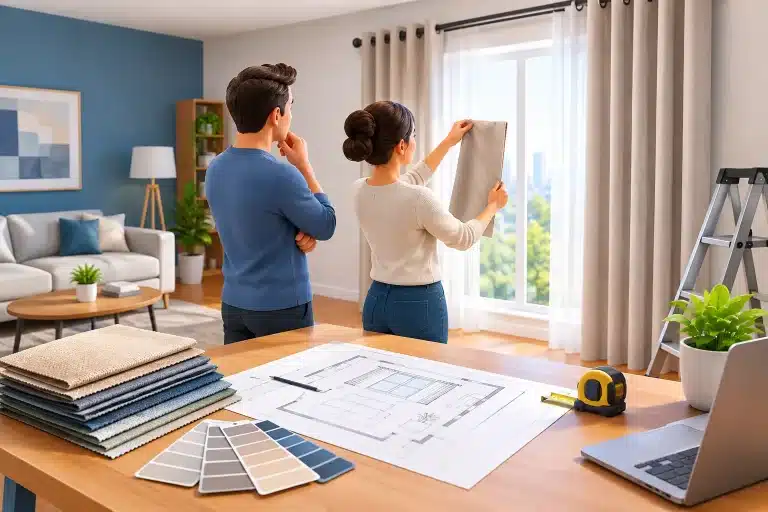
Before asking for a tailored recommendation, gather the room details that will shape the system. Clear photos of the window and surrounding walls are helpful, as are approximate width and drop measurements. Note whether there is a recess, a bay, nearby furniture, radiators, coving, vents or a ceiling bulkhead.
It also helps to decide whether the curtains will be centre-opening or one-way drawing, whether the room is being renovated, and what control you would prefer. If smart home integration is on the wish list, identify the platform or installer involved early. This allows compatibility and wiring requirements to be considered from the outset rather than guessed at later.
At Smart Curtains, this planning-led approach includes checking dimensions and providing fitting drawings, so homeowners can coordinate confidently with their builder, electrician or home automation professional. It is particularly useful where the window is not a standard shape, or where the finished look relies on a concealed track.
When a simpler system is the better system
Not every room needs app control and automated scenes. A guest bedroom may only need a remote-operated track. A mobility-focused installation may benefit most from a clearly positioned wall switch. For a busy family home, scheduled opening and closing can be more valuable than voice commands.
The aim is not to add technology for its own sake. It is to make privacy, daylight and comfort easier to manage. The best specification is the one that remains intuitive after the novelty has passed.
A well-chosen motorised curtain track becomes part of the rhythm of the home: quiet in the early morning, reassuring at night, and especially welcome when you are carrying shopping, settling children or preparing to leave for a holiday. Start with the room, the fabric and the way you want the space to work, then let the system be designed around those details.