A well-planned switch can make motorised curtains feel like a natural part of the room rather than another device to manage. This wall switch placement guide explains where to position curtain controls before plastering, decorating or installing joinery, so everyday use remains simple and the finished space stays uncluttered.
Thank you for reading this post, don't forget to subscribe!For many homeowners, a wall switch is the control they reach for first thing in the morning and last thing at night. It gives guests an obvious way to operate the curtains, provides dependable local control alongside an app or remote, and can be especially useful where accessibility matters. The best location is rarely an afterthought. It needs to work with the way you enter, use and furnish the room.
Start with how the room will be used
Before choosing a height or marking a cable route, consider the moments when the curtains will be operated. In a living room, you may want to close them as you settle down in the evening. In a bedroom, opening and closing from beside the bed is often more useful than returning to the doorway. In a kitchen-diner or open-plan space, the ideal control point may be near the main route through the room rather than beside the window itself.
Think beyond the curtain track. Note the door swings, furniture layout, planned artwork, kitchen units and the position of bedside tables. A switch that looks sensible on an empty wall can become awkward once a tall cabinet or an open door conceals it.
It also helps to decide whether the wall switch is your main control method or a convenient backup. If you intend to use schedules, voice control or a smart home system every day, one carefully placed local switch may be enough. If you prefer tactile controls in more than one part of the room, plan for this at the first-fix stage.
Wall switch placement guide: the key positions
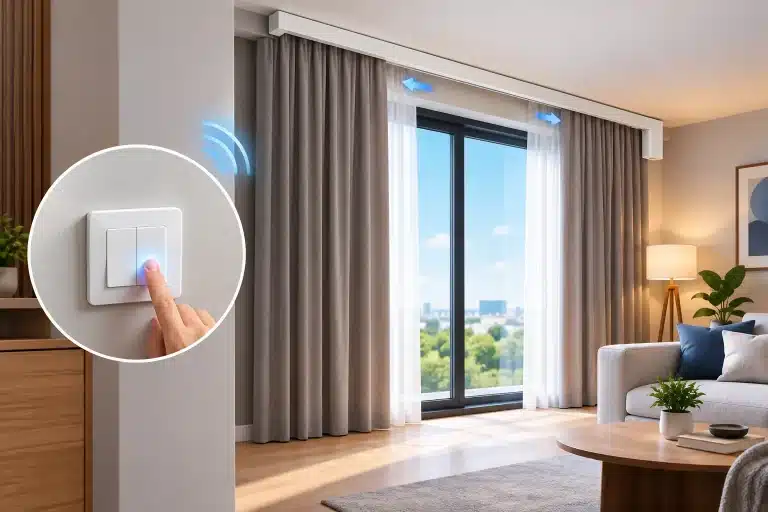
The entrance to the room is usually the most intuitive starting point. Positioning a curtain switch beside the main light switch means you can close curtains when leaving, open them on arrival and make the controls easy for visitors to find. Keeping the plate aligned with existing switches also creates a more considered finish.
That said, entrance control is not always the whole answer. Bedrooms are the clearest example. A second control beside the bed can save the daily walk to the door and is particularly valuable for anyone with limited mobility. It can also make a smart bedroom feel genuinely more comfortable, rather than simply more technical.
For large rooms with several glazed elevations, consider each curtain run separately. A patio door, bay window and side window may not need to operate together. Equally, grouping them may be exactly what you want when privacy is the priority. The correct placement depends on whether the user needs individual control, whole-room control, or both.
Avoid putting a switch directly behind an opening door, where curtain fabric will regularly brush against it, or where fitted furniture is likely to block access. It is also wise to keep it clear of areas exposed to splashes, steam or heavy traffic unless the electrical design specifically accounts for that environment.
Beside the bed
A bedside control should be reachable without stretching over furniture or getting out of bed. It is commonly placed above the bedside table, coordinated with reading lights and charging points. Allow for the eventual size and position of the headboard, not just the current furniture arrangement.
If both sides of the bed need independent access, speak to your electrician and curtain supplier about the chosen control system early. Not every motor or switch arrangement is designed for multiple control points in the same way.
At the doorway
Doorway placement suits lounges, home offices, guest rooms and spaces where a single local control is sufficient. It is often the neatest choice when the curtain switch can sit on the same plate or in a consistent line with lighting controls.
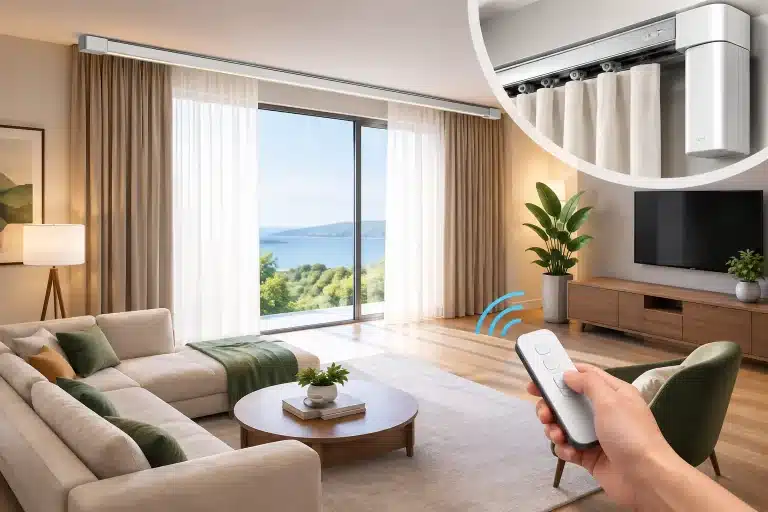
Do not assume the switch must be beside the window. Motorised tracks do not need line-of-sight control, so the switch can sit where it is most convenient and visually appropriate, provided the wiring and system specification support it.
In open-plan spaces
Open-plan rooms need a little more thought because there may be several ways in and out. Choose the route used most often at dusk, when you are most likely to want privacy. A switch close to the seating area may be preferable if the room is entered from several locations and the curtains are mainly used while relaxing.
Where there are multiple curtain zones, a labelled multi-button control can be more practical than several separate plates. It keeps the wall calmer and helps everyone understand what each button operates.
Choose a height that feels natural
There is no single height that works for every household. The switch should be comfortably reachable for the people using it, work with the heights of adjacent controls and suit the room’s design. New-build accessibility guidance and the wider electrical layout may influence the range your electrician recommends, particularly where inclusive access is a priority.
In a renovation, matching existing switch heights can look best, but appearance should not override usability. A lower, reachable control can be a meaningful improvement for a wheelchair user, a child or someone who finds reaching difficult. Beside the bed, the height should relate to the mattress and bedside table rather than follow the hallway switch line.
Ask your electrician to mark the proposed position on the wall before chasing begins. Standing in the finished room footprint and physically reaching for the intended spot is a simple check that catches many avoidable mistakes.
Plan the wiring before walls are closed
Motorised curtain tracks need a suitable power and control plan. Depending on the system, the motor may be powered at one end of the track and the wall switch may require a separate control cable, a compatible low-voltage connection, or integration through a smart home control system. These details vary by motor and should never be guessed.
A common mistake is to install a standard mains switch without confirming the motor’s required input. Curtain controls are not interchangeable, and the wrong switching method can damage equipment or leave the system operating unpredictably. Your electrician should work from the track and motor specification, while your curtain supplier confirms the motor position, cable exit and control requirements.
For a recess, bay, corner or wall-to-wall installation, decide where the motor will sit before electrical work starts. The chosen side affects where power needs to arrive and how discreetly the cable can be concealed. It can also affect access for future servicing.
At Smart Curtains, fitting drawings and planning support help bring these decisions together before installation. Sharing the drawing with your electrician, builder and interior designer gives everyone a clear reference point and reduces the risk of last-minute compromises.
Coordinate controls with your wider smart home
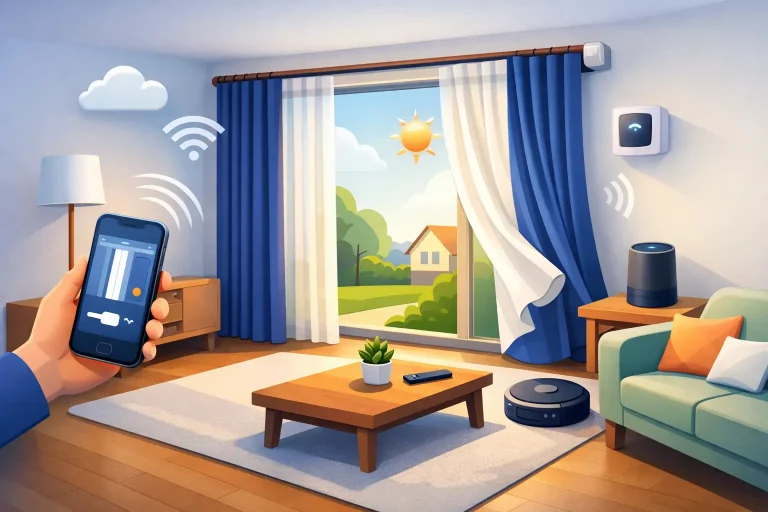
A wall switch and smart control do not need to compete. In a well-designed home, they complement each other. Timers can open curtains in the morning, app control can help when you are away, and a local switch remains immediate when you want to adjust privacy without reaching for your phone.
If you are adding lighting scenes, heating controls or a full home automation system, decide how curtains should behave within those routines. You may want a “goodnight” setting that closes bedroom curtains, or an away mode that varies opening and closing times to make the house look occupied. Mention these plans at quotation stage, because the desired integration may influence the choice of motor and control interface.
Keep future flexibility in mind as well. Even if you are not installing smart home control immediately, allowing an appropriate cable route or back box during renovation can make a later upgrade far less disruptive.
Questions to settle before first fix
Before electrical work begins, make sure the project team can answer these four questions:
- Which end of each track will house the motor and power connection?
- Is the wall control intended for one curtain, a group of curtains, or separate zones?
- Will the system use a manufacturer-approved wired switch, smart input or automation interface?
- Where will furniture, doors, headboards and joinery sit once the room is complete?
These decisions are small on a plan but highly visible in day-to-day life. Taking a few minutes to review them before the walls are finished can preserve both the ease of the automation and the clean, tailored look of the room.
The right switch position should feel almost unremarkable: exactly where your hand expects it to be, easy for everyone in the household to use, and planned neatly around the curtains, lighting and furniture you will live with for years.